Bank Loan Application Form and Checklist

Free Word download β€’ Edit online β€’ Save & share with Drive β€’ Export to PDF

6 pagesβ€’20–25 min to fillβ€’Difficulty: Standard
Learn more ↓
FreeBank Loan Application Form and Checklist Template

At a glance

What it is
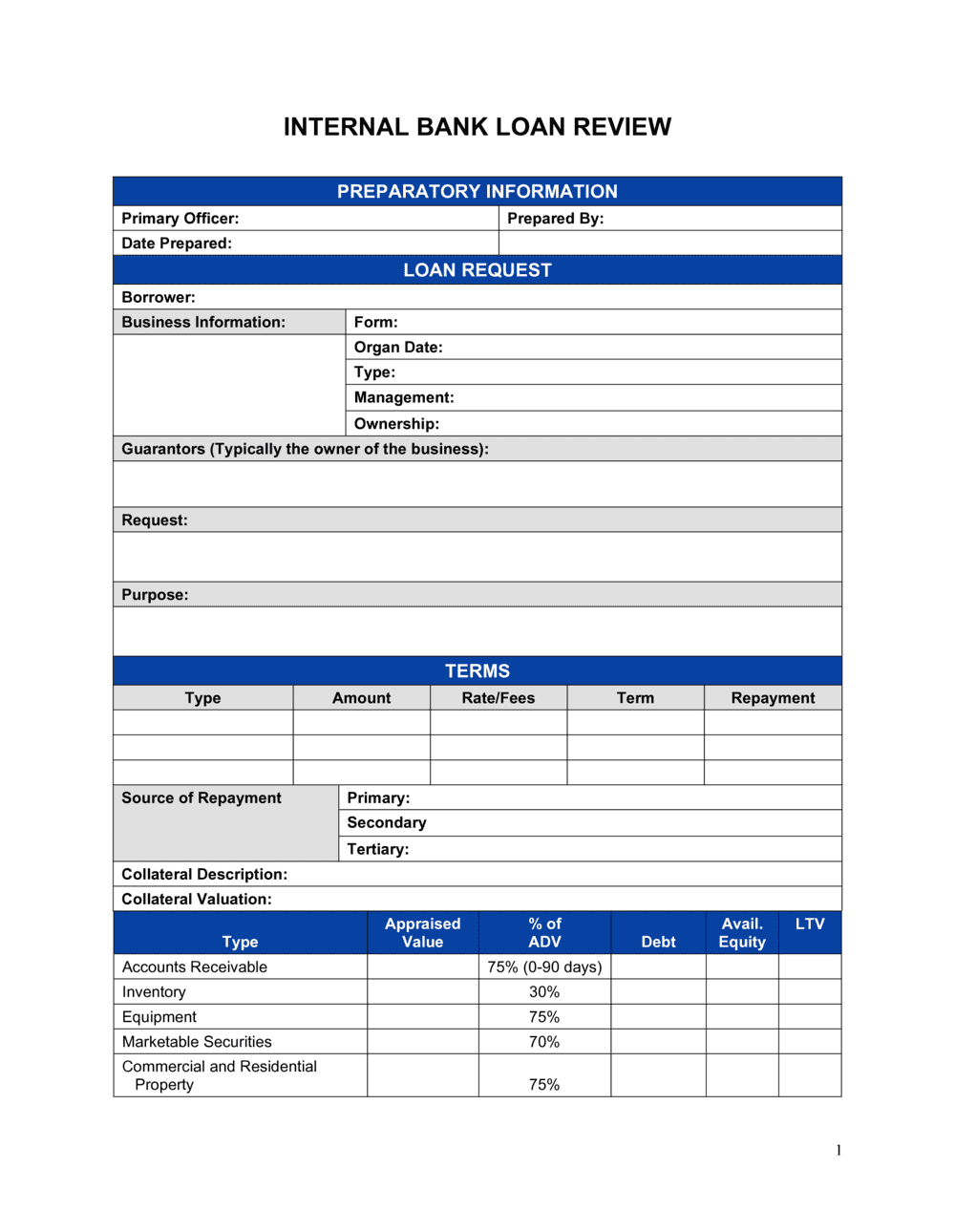
A Bank Loan Application Form and Checklist is a structured two-part package that combines a formal loan request form with a comprehensive document checklist, so business borrowers can organize and present everything a lender needs in a single submission. This free Word download is fully editable β€” fill in your loan purpose, amount, term, collateral details, and financial summary, then use the checklist to confirm every supporting document is attached before you walk into the bank.
When you need it
Use it when applying for a business term loan, SBA loan, line of credit, or commercial mortgage from a bank, credit union, or SBA-approved lender. It is equally useful when a lender asks you to compile a formal credit package for initial underwriting review.
What's inside
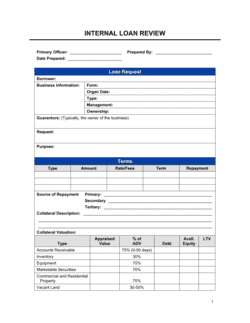
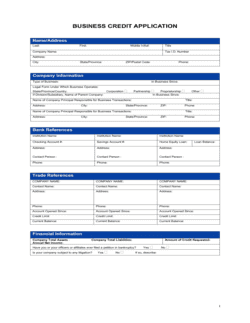
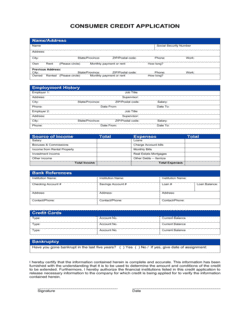
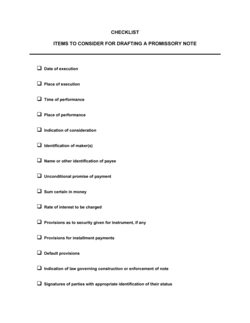
The application form covers business and owner identification, loan purpose, requested amount and term, collateral description, and a financial summary including revenue, liabilities, and net worth. The checklist section prompts you to gather financial statements, tax returns, a business plan with projections, ownership documentation, and any collateral support materials before submission.

What is a Bank Loan Application Form and Checklist?

A Bank Loan Application Form and Checklist is a structured two-part package that business owners use to formally request financing from a bank, credit union, or SBA-approved lender. The application form captures the core credit request β€” business and owner identification, loan purpose, requested amount and term, collateral description, and a condensed financial summary β€” in the standardized format underwriters need to open a file and begin evaluation. The accompanying checklist ensures that every required supporting document (tax returns, financial statements, business plan, projections, and collateral support) is gathered and attached before submission, so the package arrives complete and decision-ready.

Why You Need This Document

Arriving at a lender without a complete, organized application package is the single most common reason small business loan decisions are delayed by weeks or denied outright. Every information request the lender has to issue after submission restarts an internal review clock that typically runs 30–60 days for a conventional loan and up to 90 days for an SBA product. An incomplete package also signals to the loan officer that the business lacks the operational discipline to manage debt responsibly β€” a credibility problem that is difficult to recover from mid-process. This template eliminates both risks: the form ensures every field a lender needs is addressed up front, and the checklist prevents the single most common source of delay β€” a missing tax return or financial statement discovered after submission. For founders and small business owners without a dedicated finance team, it is the fastest path from "I need capital" to a complete, lender-ready package.

Which variant fits your situation?

If your situation is…Use this template
Applying for an SBA 7(a) loan with a federally approved lenderBank Loan Application Form and Checklist
Requesting a short-term working capital line of creditLine of Credit Agreement
Financing a specific piece of equipment or machineryEquipment Financing Agreement
Borrowing from a private investor rather than a bankLoan Agreement
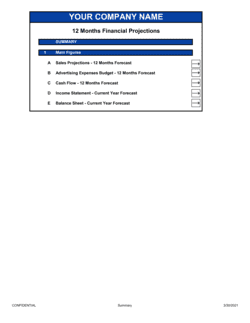
Presenting financial projections as part of a larger credit packageFinancial Projections Template (12 Months)
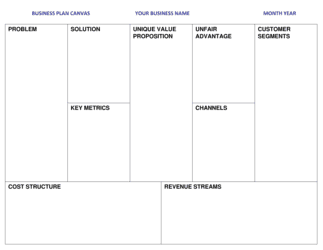
Supporting the loan application with a full business planBusiness Plan
Applying for a commercial real estate or property mortgageCommercial Lease Agreement

Common mistakes to avoid

❌ Submitting an incomplete document package

Why it matters: Each missing document triggers a separate information request, and most lenders restart their internal review clock on receipt of each new item β€” adding weeks to an already 30–60 day process.

Fix: Work through the checklist in full before submission and attach every item, even if a document requires an explanation (e.g., an amended tax return).

❌ Using trade name instead of legal entity name

Why it matters: Lenders run credit, UCC lien, and court judgment searches under the registered legal name. A name mismatch causes search failures and delays that can push the application past a funding deadline.

Fix: Confirm the exact registered name in your state's business registry before completing any field on the form.

❌ Vague or undifferentiated loan purpose

Why it matters: Underwriters are required to match the loan product, rate, and term to the specific use of funds β€” 'working capital' alone is insufficient for SBA products and triggers mandatory follow-up.

Fix: Break the use of funds into at least three specific line items with dollar amounts that sum to the requested loan amount.

❌ Omitting personal financial information for minority owners above 20%

Why it matters: SBA Standard Operating Procedures require personal financial statements and tax returns from all owners holding 20% or more β€” a single missing owner's package is grounds for outright denial on SBA products.

Fix: Identify every owner at or above the 20% threshold before completing the form and collect their personal financial statement and last three years of personal tax returns in advance.

The 8 key fields, explained

Business and owner identification

Loan purpose and use of funds

Requested loan amount and term

Collateral description

Business financial summary

Existing debt schedule

Owner personal financial information

Supporting documents checklist

How to fill it out

  1. 1

    Enter legal entity and owner details

    Fill in the registered legal business name, entity type, EIN, and state of formation. List every owner with 20% or more equity by full legal name and ownership percentage.

    πŸ’‘ Pull the exact legal name from your Secretary of State filing β€” even a minor spelling difference can cause a name mismatch on the credit pull.

  2. 2

    Write a specific loan purpose and use-of-funds breakdown

    State exactly what the money will buy and break the total into spending categories with dollar amounts. The sum of the categories must equal the requested loan amount exactly.

    πŸ’‘ Get vendor quotes before completing this section β€” a quote number cited in the use-of-funds narrative strengthens credibility and speeds underwriting.

  3. 3

    Set the requested amount, term, and loan type

    Enter the total amount, the repayment period you can support based on projected cash flow, and whether you are applying for a term loan, line of credit, or SBA product.

    πŸ’‘ Calculate your monthly payment at an estimated rate and confirm it fits comfortably within projected operating cash flow before submitting β€” a DSCR below 1.15 will require a co-borrower or additional collateral.

  4. 4

    Describe and value your collateral

    List each pledged asset with its description, current market value (not purchase price), and any existing liens. For real estate, note the most recent assessed value or appraisal.

    πŸ’‘ Attach a copy of the most recent appraisal, tax assessment, or equipment schedule β€” self-reported values without support are discounted by underwriters.

  5. 5

    Complete the business financial summary

    Transfer key figures from your most recent year-end financial statements: gross revenue, net income, total assets, total liabilities, and calculated owner's equity. Compute your DSCR.

    πŸ’‘ If your financials were prepared by a CPA, note that on the form β€” lender-reviewed or CPA-prepared statements carry more weight than internally generated numbers.

  6. 6

    List all existing debt obligations

    Enter every current loan and credit facility with balance, payment, and maturity β€” including any debt secured by personal assets that affects business cash flow.

    πŸ’‘ Match this schedule exactly to the liabilities on your balance sheet β€” any discrepancy triggers a clarification request and adds days to the process.

  7. 7

    Work through the documents checklist before submission

    Go line by line through the checklist and physically confirm each document is attached, current, and complete. Do not submit until every required item is checked off.

    πŸ’‘ Bundle documents in the same order as the checklist and label each tab or file to match β€” a well-organized package signals operational competence and is noted positively by loan officers.

Frequently asked questions

What is a bank loan application form?

A bank loan application form is a structured document a business submits to a lender to formally request financing. It captures the borrower's identity, loan purpose, requested amount and term, collateral, and financial summary in a standardized format that lenders use to open an underwriting file. Combining it with a documents checklist ensures the submission is complete on arrival, which reduces back-and-forth and shortens the approval timeline.

What documents do banks typically require for a business loan?

Most business lenders require three years of business tax returns, three years of personal tax returns for all owners with 20% or more equity, a year-to-date profit and loss statement, a current balance sheet, a business plan with financial projections, and documentation for any collateral offered. SBA lenders also require the SBA Form 1919 borrower information form and a personal financial statement on SBA Form 413. The checklist in this template covers all standard requirements.

What is a good DSCR for a business loan?

Most banks and SBA lenders require a minimum debt service coverage ratio of 1.25, meaning the business generates $1.25 in net operating income for every $1.00 in annual debt payments. A ratio below 1.0 means the business cannot cover its debt from operations and will typically result in denial unless a co-borrower or substantial additional collateral is offered. Calculate your DSCR before applying to identify whether the requested loan amount is supportable.

Do I need a business plan to apply for a bank loan?

For most term loans and all SBA loans, yes. Lenders use the business plan to evaluate management quality, market viability, and the realism of financial projections. For existing businesses seeking financing below $150,000, some community banks accept a shorter executive summary with two-year projections in place of a full plan. The document checklist in this template flags the business plan as a required attachment and links to the Business in a Box Business Plan template.

What credit score is needed for a business bank loan?

Conventional bank lenders typically require a personal credit score of 680 or above for the primary owner. SBA 7(a) lenders generally look for 640 or higher, though individual lender requirements vary. Scores below 640 do not automatically disqualify an application if collateral is strong and DSCR is above 1.25, but they trigger additional scrutiny and may require a co-borrower. Check your personal and business credit reports before submitting the application.

How long does it take to get a business bank loan approved?

Conventional bank loans typically take 2–6 weeks from complete submission to funding. SBA 7(a) loans run 30–90 days depending on whether the lender is SBA Preferred (faster) or non-Preferred. The single largest source of delay is an incomplete application package β€” lenders pause their internal clock each time they issue an information request. Arriving with every checklist item complete can cut the process by 10–20 business days.

Can a startup apply for a business bank loan?

Yes, but conventional bank loans are difficult to obtain without at least two years of operating history and tax returns to support repayment. SBA Microloan and SBA 7(a) programs have more flexible requirements for startups, particularly when the owner has strong personal credit, relevant industry experience, and adequate collateral. Startups should include a detailed business plan with three-year projections as part of the application package.

What is a personal guarantee on a business loan?

A personal guarantee is a commitment from the business owner to repay the loan from personal assets if the business defaults. Most banks and all SBA lenders require unlimited personal guarantees from all owners with 20% or more equity. Signing a personal guarantee means your home, personal savings, and other personal assets can be pursued by the lender in the event of default β€” regardless of the business's corporate structure.

How this compares to alternatives

vs Business Plan

A business plan is a standalone strategic document covering market analysis, operations, team, and financials β€” it is one attachment within the loan package, not a substitute for the application form itself. The loan application form captures the specific credit request details (amount, term, collateral) that the business plan does not. Both are required for most SBA and conventional bank submissions.

vs Loan Agreement

A loan agreement is the binding contract signed after a lender approves the application β€” it documents repayment terms, interest rate, covenants, and default provisions. The bank loan application form is the pre-approval request that initiates underwriting. Applicants complete the form first; the lender produces the loan agreement if approved.

vs Financial Projections Template

Financial projections are a required attachment to the loan package, not the package itself. The application form and checklist organize the full submission β€” including the projections β€” into a single lender-ready package. Use the financial projections template to build the attachment, then reference it on the checklist.

vs Line of Credit Agreement

A line of credit agreement documents a revolving credit facility after approval. The bank loan application form is used to apply for any type of business credit β€” including a line of credit β€” and covers the same core information regardless of the loan product. Once approved for a line of credit, the lender issues a separate agreement governing draws and repayment.

Industry-specific considerations

Retail and E-commerce

Inventory financing and seasonal working capital lines require detailed inventory turnover data and prior-year revenue by quarter alongside the standard application package.

Construction and Trades

Equipment and vehicle financing applications require equipment schedules, existing lien documentation, and a contract backlog summary to demonstrate future revenue.

Food and Beverage

Restaurant and food-service loans typically require health department permits, lease agreements, and build-out cost estimates as part of the collateral and use-of-funds documentation.

Professional Services

Service businesses with limited hard collateral rely heavily on DSCR and personal credit β€” projections must show clear revenue predictability, such as signed retainer contracts or a multi-year client list.

Template vs pro β€” what fits your needs?

PathBest forCostTime
Use the templateSmall business owners and founders preparing a standard term loan or SBA applicationFree2–4 hours to complete form and gather documents
Template + professional reviewApplicants with complex ownership structures, prior bankruptcies, or collateral requiring narrative explanation$200–$500 for a CPA or SBDC advisor review1–3 days
Custom draftedLarge commercial loans above $1M, syndicated credit facilities, or complex SBA CDC/504 real estate transactions$1,000–$5,000 for a commercial loan consultant or business banker1–3 weeks

Glossary

Loan Purpose
A clear description of how the borrowed funds will be used β€” for example, equipment purchase, inventory, real estate acquisition, or working capital.
Collateral
An asset pledged by the borrower that the lender can seize and sell if the loan is not repaid β€” common examples include real estate, equipment, and receivables.
Debt Service Coverage Ratio (DSCR)
Annual net operating income divided by total annual debt payments β€” a ratio above 1.25 is typically required by most business lenders.
Loan-to-Value Ratio (LTV)
The loan amount expressed as a percentage of the appraised value of the collateral β€” lower LTV ratios signal less risk to the lender.
Personal Guarantee
A commitment by a business owner to repay the loan personally if the business defaults, making the owner's personal assets liable.
SBA Loan
A business loan partially guaranteed by the U.S. Small Business Administration, enabling lenders to offer more favorable terms to borrowers who might not qualify conventionally.
Amortization Schedule
A table showing the breakdown of each loan payment into principal and interest over the full repayment term.
Working Capital
Current assets minus current liabilities β€” the liquid buffer a business has to cover short-term obligations and day-to-day operations.
Pro Forma Financial Statements
Forward-looking income statements, balance sheets, and cash flow statements built on assumptions rather than historical data, required by most lenders for new or expanding businesses.
Underwriting
The lender's process of evaluating a borrower's creditworthiness, collateral, and repayment capacity before approving a loan.

Part of your Business Operating System

This document is one of 3,000+ business & legal templates included in Business in a Box.

  • Fill-in-the-blanks β€” ready in minutes
  • 100% customizable Word document
  • Compatible with all office suites
  • Export to PDF and share electronically

Create your document in 3 simple steps.

From template to signed document β€” all inside one Business Operating System.
1
Download or open template

Access over 3,000+ business and legal templates for any business task, project or initiative.

2
Edit and fill in the blanks with AI

Customize your ready-made business document template and save it in the cloud.

3
Save, Share, Send, Sign

Share your files and folders with your team. Create a space of seamless collaboration.

Save time, save money, and create top-quality documents.

β˜…β˜…β˜…β˜…β˜…

"Fantastic value! I'm not sure how I'd do without it. It's worth its weight in gold and paid back for itself many times."

Managing Director Β· Mall Farm
Robert Whalley
Managing Director, Mall Farm Proprietary Limited
β˜…β˜…β˜…β˜…β˜…

"I have been using Business in a Box for years. It has been the most useful source of templates I have encountered. I recommend it to anyone."

Business Owner Β· 4+ years
Dr Michael John Freestone
Business Owner
β˜…β˜…β˜…β˜…β˜…

"It has been a life saver so many times I have lost count. Business in a Box has saved me so much time and as you know, time is money."

Owner Β· Upstate Web
David G. Moore Jr.
Owner, Upstate Web

Run your business with a system β€” not scattered tools

Stop downloading documents. Start operating with clarity. Business in a Box gives you the Business Operating System used by over 250,000 companies worldwide to structure, run, and grow their business.

Start freeΒ Β·Β No credit card required