Income Statement_Monthly Template

Free Excel download • Edit online • Save & share with Drive • Export to PDF

5 pages25–35 min to fillDifficulty: ComplexSignature requiredLegal review recommended
Learn more ↓
FreeXLSIncome Statement_Monthly Template

At a glance

What it is
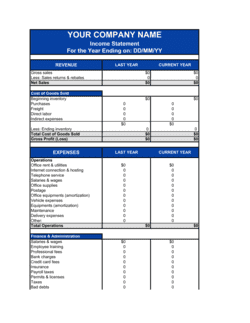
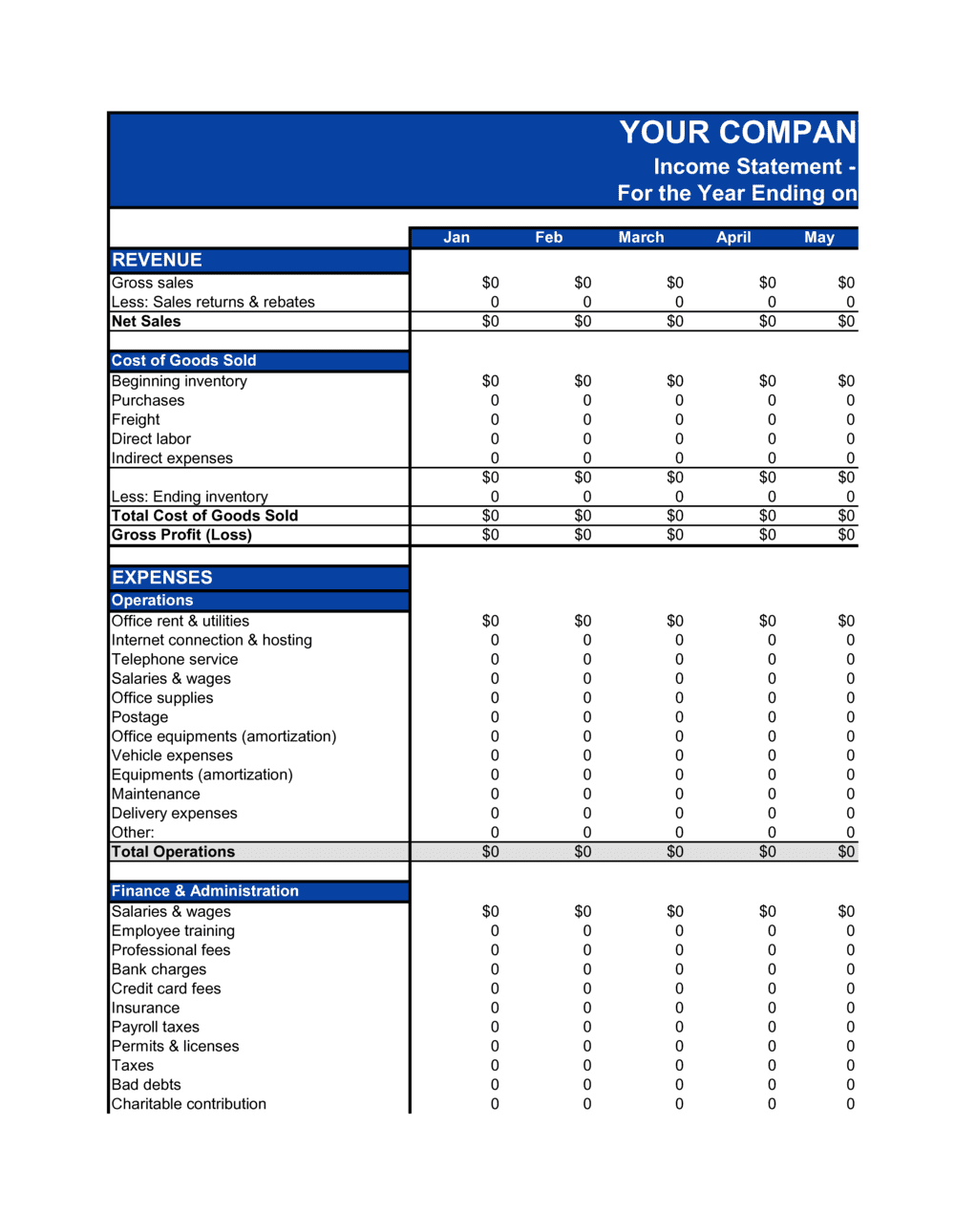
A Monthly Income Statement is a formal financial reporting document that summarizes a business's revenues, cost of goods sold, operating expenses, and net income or loss for a single calendar month. This free Word download gives you a structured, lender-ready template you can edit online and export as PDF for internal review, board reporting, or creditor disclosure.
When you need it
Use it at the close of each accounting month to record and communicate financial performance — to lenders requiring monthly reporting covenants, investors tracking progress against projections, or management making operational decisions based on current-period results.
What's inside
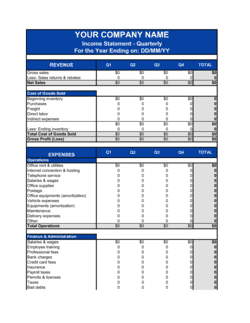
Revenue lines by category, cost of goods sold and gross profit calculation, operating expense breakdown by line item, EBITDA and operating income, interest and tax provisions, and a net income or net loss figure with month-over-month comparison columns.

What is a Monthly Income Statement?

A Monthly Income Statement is a formal financial reporting document that records a business's revenues, cost of goods sold, operating expenses, depreciation, interest, taxes, and net income or net loss for a single calendar month. Also referred to as a monthly profit and loss statement, it is one of three core financial statements — alongside the balance sheet and cash flow statement — that together provide a complete picture of financial health. Prepared on an accrual basis under GAAP or IFRS, the monthly income statement captures economic activity as it occurs rather than when cash changes hands, making it the most accurate single-period measure of business performance available to management, lenders, and investors.

Why You Need This Document

Operating without a signed, formally prepared monthly income statement leaves management flying blind and exposes the business to three concrete risks. First, most commercial loan agreements include monthly financial reporting covenants — missing a submission or submitting an informal summary can trigger a technical default, giving the lender the right to accelerate repayment. Second, without a structured comparison of actuals to budget, margin compression and cost overruns go undetected until they have compounded for quarters. Third, investors and board members who receive inconsistent or informally prepared monthly reports lose confidence in management's ability to track and control the business. This template gives you a consistent, lender-ready format that satisfies reporting covenants, enables month-over-month variance analysis, and produces the EBITDA subtotals that financial stakeholders require — without starting from a blank page every month-end close.

Which variant fits your situation?

If your situation is…Use this template
Reporting financial performance for a full fiscal yearAnnual Income Statement
Summarizing performance across four quarters side by sideQuarterly Income Statement
Reporting a single project's revenue and costs in isolationProject Profit and Loss Statement
Combining income statement, balance sheet, and cash flow in one packageFinancial Statements Package
Projecting forward revenues and expenses before they occurFinancial Projections (12 Months)
Tracking operating expenses only without a full income statementMonthly Expense Report
Reporting financials for a nonprofit with fund accounting requirementsNonprofit Statement of Activities

Common mistakes to avoid

❌ Mixing cash-basis and accrual-basis entries in the same statement

Why it matters: Hybrid recording produces revenue and expense figures that are not comparable to prior periods or to budget, making the statement unreliable for any analytical purpose.

Fix: Choose one accounting basis and apply it consistently to every line. If you operate on a cash basis, note it in the statement header and ensure lenders accept that basis.

❌ Omitting the income tax accrual on monthly statements

Why it matters: Skipping the monthly accrual overstates net income in 11 months and creates a large artificial loss in the month taxes are actually paid, distorting monthly trend analysis.

Fix: Apply your effective tax rate to income before taxes each month and record the accrual as a current liability on the balance sheet until the payment is made.

❌ Publishing a single-column statement with no prior period or budget comparison

Why it matters: A standalone actual figure tells management and investors nothing about whether performance is improving, deteriorating, or on track against plan.

Fix: Add prior-month and budget columns with a variance column for every line item. Attach a brief written commentary on the three largest variances.

❌ Including non-operating items in operating expenses

Why it matters: Burying interest expense, one-time legal settlements, or asset write-offs in operating expenses understates EBIT and EBITDA — the two metrics most lenders and investors use to evaluate the business.

Fix: Place interest expense, gains and losses on asset sales, and other non-operating items below the operating income subtotal in a clearly labeled non-operating section.

❌ Using trade names or informal entity names on submitted statements

Why it matters: Lenders and investors match statements to loan agreements and cap-table records by legal entity name. A mismatch triggers compliance review delays and, in covenant contexts, can be treated as a reporting failure.

Fix: Always use the exact registered legal entity name as it appears on the certificate of incorporation or articles of organization.

❌ Presenting a net loss without parentheses or an explicit minus sign

Why it matters: Ambiguous formatting — particularly when statements are printed in black and white or converted to PDF — causes readers to misread a loss as profit, creating material misrepresentation risk.

Fix: Use consistent accounting notation: enclose losses in parentheses or precede them with a minus sign on every line and in the net income total.

The 10 key clauses, explained

Reporting period and entity identification

In plain language: Identifies the legal entity name, the specific month covered, and the accounting basis (accrual or cash) used to prepare the statement.

Sample language
[COMPANY LEGAL NAME] | Income Statement for the Month Ended [MONTH DD, YYYY] | Prepared on an [Accrual / Cash] Basis | Currency: [USD / CAD / GBP / EUR]

Common mistake: Using a trade name instead of the registered legal entity name. When the statement is submitted to a lender or investor, a mismatch between the entity name and loan documents triggers compliance flags.

Revenue section

In plain language: Lists each revenue stream by category — product sales, service fees, subscriptions, licensing — with subtotals and a net revenue total after returns and discounts.

Sample language
Product Sales: $[X] | Service Revenue: $[X] | Subscription Revenue: $[X] | Less: Returns and Allowances: ($[X]) | Net Revenue: $[X]

Common mistake: Reporting gross revenue without deducting returns and allowances. Overstated revenue misleads management decisions and violates GAAP presentation requirements.

Cost of goods sold (COGS)

In plain language: Itemizes the direct costs tied to the revenue recognized in the period — raw materials, direct labor, and production overhead — leading to a gross profit subtotal.

Sample language
Materials: $[X] | Direct Labor: $[X] | Manufacturing Overhead: $[X] | Total COGS: $[X] | Gross Profit: $[X] (Gross Margin: [X]%)

Common mistake: Including operating expenses — such as sales salaries or office rent — in COGS. This understates gross margin and overstates operating income, distorting both internal analysis and external benchmarking.

Operating expenses breakdown

In plain language: Separates each category of overhead — salaries and wages, rent, marketing, utilities, insurance, and professional fees — into individual line items rather than a single lump sum.

Sample language
Salaries and Wages: $[X] | Rent and Occupancy: $[X] | Marketing and Advertising: $[X] | Utilities: $[X] | Insurance: $[X] | Professional Fees: $[X] | Total Operating Expenses: $[X]

Common mistake: Lumping all expenses into a single 'General and Administrative' line. This prevents variance analysis and obscures which cost categories are driving margin compression.

Depreciation and amortization

In plain language: States the monthly non-cash D&A charges allocated from the fixed asset schedule and intangible asset schedule, separated from cash operating expenses.

Sample language
Depreciation — Property and Equipment: $[X] | Amortization — Intangible Assets: $[X] | Total D&A: $[X]

Common mistake: Omitting D&A entirely or burying it inside an operating expense line. D&A must be separated to allow EBITDA calculation, which most lender covenants and valuation analyses require.

Operating income (EBIT)

In plain language: Calculates earnings before interest and taxes by subtracting total operating expenses and D&A from gross profit — the clearest measure of core business performance.

Sample language
Gross Profit: $[X] | Less: Total Operating Expenses: ($[X]) | Less: Depreciation and Amortization: ($[X]) | Operating Income (EBIT): $[X]

Common mistake: Skipping the EBIT subtotal and jumping directly to net income. Without EBIT, readers cannot separate operating performance from financing decisions and tax planning outcomes.

Interest income and expense

In plain language: Records interest earned on cash balances and interest paid on outstanding debt separately, showing the net financing cost for the period.

Sample language
Interest Income: $[X] | Interest Expense — Term Loan: ($[X]) | Interest Expense — Line of Credit: ($[X]) | Net Interest: ($[X])

Common mistake: Netting interest income and expense into a single line without showing the gross amounts. Lenders monitoring debt-service coverage ratios need gross interest expense stated separately.

Income tax provision

In plain language: Records the estimated income tax obligation for the period — either an actual quarterly installment or an accrued monthly estimate — based on the applicable statutory rate.

Sample language
Income Before Taxes: $[X] | Income Tax Provision ([X]% effective rate): ($[X]) | Net Income: $[X]

Common mistake: Leaving the tax provision blank on monthly statements because taxes are paid quarterly. Omitting the accrual overstates net income each month and creates a large single-month charge when taxes are actually paid.

Net income (or net loss)

In plain language: The final bottom-line result for the month — the profit or loss remaining after all revenue, costs, expenses, interest, and taxes have been accounted for.

Sample language
NET INCOME: $[X] | NET LOSS: ($[X]) | Earnings Per Share (if applicable): $[X]

Common mistake: Failing to label a net loss with parentheses or a minus sign. Ambiguous formatting causes readers to misread a loss as a profit, which is particularly problematic in lender covenant reporting.

Month-over-month and budget comparison columns

In plain language: Presents each line item across three columns — current month actual, prior month actual, and current month budget — with a variance column showing dollar and percentage differences.

Sample language
[LINE ITEM] | Current Month: $[X] | Prior Month: $[X] | Budget: $[X] | Variance ($): $[X] | Variance (%): [X]%

Common mistake: Publishing a single-column actual-only statement without comparison data. Without a prior-period or budget column, the statement conveys almost no analytical value to management or investors.

How to fill it out

  1. 1

    Enter the entity name, period, and accounting basis

    Type the full registered legal entity name, the last day of the reporting month, and specify whether the statement is prepared on an accrual or cash basis. Add the reporting currency.

    💡 If your company operates in multiple currencies, state the functional currency and the exchange rate used to translate any foreign-currency amounts.

  2. 2

    Populate revenue lines by category

    List each distinct revenue stream on its own line — product sales, service fees, subscription revenue, licensing — and enter the month's recognized amounts. Deduct returns and allowances to arrive at net revenue.

    💡 Use the same revenue categories every month. Changing line-item labels month to month makes trend analysis impossible and confuses lenders comparing statements.

  3. 3

    Calculate cost of goods sold and gross profit

    Enter direct material costs, direct labor, and manufacturing overhead for the period. The template calculates COGS total and gross profit automatically. Confirm the gross margin percentage is consistent with your pricing model.

    💡 If gross margin drops more than 2 percentage points from the prior month, investigate before finalizing — it usually signals an unrecorded cost or a pricing error.

  4. 4

    Enter operating expenses line by line

    Record each overhead category separately: salaries and wages, payroll taxes and benefits, rent, marketing, utilities, insurance, and professional fees. Do not combine unrelated categories into a single line.

    💡 Accrue expenses that have been incurred but not yet invoiced — unpaid rent, unbilled professional fees, and earned-but-unpaid salaries — so the month reflects true economic activity.

  5. 5

    Add depreciation and amortization from your asset schedules

    Pull the monthly D&A amount from your fixed-asset and intangible-asset schedules and enter it as a separate line item below operating expenses. This enables lenders and analysts to calculate EBITDA directly from the statement.

    💡 Keep a simple fixed-asset schedule in a separate tab that lists each asset, its cost, useful life, and monthly charge — it makes audit support trivial.

  6. 6

    Record interest income and expense separately

    Enter interest earned on cash deposits and interest paid on each debt instrument on separate lines. Calculate net interest and carry it forward to income before taxes.

    💡 Match interest expense to the loan amortization schedule for each facility — discrepancies between the income statement and the amortization table are a common audit finding.

  7. 7

    Accrue the income tax provision

    Estimate the monthly tax provision by applying your effective tax rate to income before taxes. Even if no payment is due this month, the accrual must be recorded to avoid distorting net income.

    💡 For early-stage companies with a current-year loss, record a zero provision and add a note explaining the net operating loss carryforward position.

  8. 8

    Complete the comparison columns and review variances

    Fill in prior-month actuals and the current-month budget for each line. Review every variance greater than 10% or $[MATERIALITY THRESHOLD] and document an explanation before distributing the statement.

    💡 A one-paragraph variance commentary attached to the statement — explaining the top three drivers of deviation from budget — converts a financial table into an actionable management report.

Frequently asked questions

What is a monthly income statement?

A monthly income statement is a financial report that summarizes a business's revenues, cost of goods sold, operating expenses, and net income or loss for a single calendar month. It is the shortest-interval version of the standard income statement (also called a profit and loss statement) and is used for internal management decisions, lender covenant reporting, and investor tracking between annual audits.

What is the difference between an income statement and a profit and loss statement?

They are the same document. "Income statement" is the term used under US GAAP and IFRS; "profit and loss statement" or "P&L" is the informal equivalent used in everyday business conversation. Both present revenues, expenses, and the resulting net income or loss for a defined period. The choice of label does not affect the content or structure.

What line items must a monthly income statement include?

A complete monthly income statement includes net revenue broken down by category, cost of goods sold with a gross profit subtotal, operating expenses listed individually by type, depreciation and amortization as a separate line, operating income (EBIT), interest income and expense, income tax provision, and net income or net loss. Omitting any of these creates gaps that prevent the statement from supporting lender covenant calculations or accurate internal analysis.

Should a monthly income statement use accrual or cash-basis accounting?

GAAP and IFRS require accrual-basis accounting for any financial statement that will be shared with lenders, investors, or external stakeholders. Accrual accounting records revenue when earned and expenses when incurred, regardless of cash timing, producing a more accurate picture of monthly performance. Cash-basis statements are acceptable for internal use in very small businesses but are typically not accepted under bank loan covenants or investor reporting agreements.

How does a monthly income statement differ from a balance sheet?

An income statement covers a period of time — one month — showing what the business earned and spent. A balance sheet is a point-in-time snapshot showing what the business owns (assets), owes (liabilities), and the residual equity at a specific date. Net income from the income statement flows into retained earnings on the balance sheet, connecting the two documents. Together with the cash flow statement, they form the complete three-statement financial package.

Do lenders require monthly income statements?

Many commercial loan agreements include monthly financial reporting covenants that require borrowers to submit income statements within 30 to 45 days of month-end. Failing to deliver on time is typically treated as a covenant default, which can trigger a lender's right to accelerate the loan. A formatted, consistently prepared monthly income statement satisfies these requirements and demonstrates financial management discipline to the lender.

What is EBITDA and why does it appear on a monthly income statement?

EBITDA stands for Earnings Before Interest, Taxes, Depreciation, and Amortization. It is calculated by adding D&A back to operating income (EBIT) and is used as a proxy for operating cash generation. Most commercial loan covenants are written around EBITDA-based metrics — such as a minimum EBITDA-to-debt-service ratio — which is why D&A must be shown as a separate line item on the monthly statement rather than buried in operating expenses.

How far back should monthly income statements be retained?

The IRS recommends retaining financial records for at least 3 years from the date of the related tax return, and up to 7 years if the return included items that could be subject to extended audit periods. In Canada, CRA requires a 6-year retention period. For businesses with active loan covenants or under audit, retain all monthly statements for the full duration of the loan or audit period plus 3 years. Store both the editable source file and a signed, dated PDF copy for each month.

How this compares to alternatives

vs Annual Income Statement

An annual income statement aggregates twelve months of activity into a single year-end report used for tax filings, audited financial statements, and annual investor reporting. A monthly statement provides the granular, current-period view management and lenders need to monitor performance in real time. Both should be maintained — monthly for operational control, annual for external compliance.

vs Balance Sheet

A balance sheet is a point-in-time snapshot of assets, liabilities, and equity — it shows what the business owns and owes at a single date. The income statement covers a period of time and shows what the business earned and spent. Net income from the monthly income statement flows directly into retained earnings on the balance sheet, making the two documents interdependent components of a complete financial package.

vs Cash Flow Statement

An income statement records revenue when earned and expenses when incurred under accrual accounting, regardless of cash movement. A cash flow statement tracks actual cash inflows and outflows and reconciles the difference between net income and cash generated. A profitable income statement can coexist with a negative cash flow — which is why both documents are required for a complete financial picture.

vs Financial Projections (12 Months)

Financial projections are forward-looking estimates of revenues and expenses built on assumptions, used for fundraising and planning before activity occurs. A monthly income statement records actual results after the period closes. Projections set the budget targets that the monthly income statement measures actual performance against in variance analysis.

Industry-specific considerations

Retail and e-commerce

Monthly gross margin by product category, returns and allowances as a percentage of gross revenue, and inventory write-down charges tracked as a separate COGS line.

SaaS and technology

MRR recognized as revenue, deferred revenue movement disclosed in a footnote, and cloud infrastructure costs segregated within COGS to show gross margin on a software-only basis.

Food and beverage

Food cost percentage (target 28–35% of revenue) tracked as a COGS subtotal, labor cost as a percentage of sales, and occupancy costs shown separately given their fixed-cost significance.

Professional services

Billable labor separated from non-billable overhead in COGS, realization rate and utilization rate derivable from the revenue and direct labor lines, and project-level gross margin visible in the revenue breakdown.

Manufacturing

Materials, direct labor, and manufacturing overhead broken out individually within COGS to enable production efficiency analysis and standard-cost variance tracking.

Healthcare

Payer-mix revenue categories (Medicare, Medicaid, commercial insurance, self-pay) shown separately, with contractual adjustments deducted from gross charges to arrive at net patient revenue.

Jurisdictional notes

United States

US GAAP, maintained by FASB, governs the preparation of income statements for entities that issue financial statements to external stakeholders. Public companies must follow SEC Regulation S-X for income statement presentation. Most commercial loan covenants require GAAP-basis monthly statements; SBA loan agreements typically require monthly financials within 45 days of month-end. Cash-basis statements may be accepted by some community lenders for very small borrowers but should be clearly labeled.

Canada

Publicly accountable enterprises in Canada use IFRS as adopted by the Accounting Standards Board. Private enterprises may use Accounting Standards for Private Enterprises (ASPE), which permits some simplifications in income statement presentation. CRA requires financial records to be retained for 6 years. Quebec businesses should note that financial statement labels and accompanying notes may need to be provided in French for provincially regulated entities.

United Kingdom

UK companies follow FRS 102 (UK GAAP) or, for large and listed entities, UK-adopted IFRS. The Companies Act 2006 mandates specific profit-and-loss account formats for companies filing with Companies House. Small and micro-entity exemptions reduce disclosure requirements but do not eliminate the need for a properly structured monthly statement for internal or lender purposes. Monthly management accounts shared with lenders under facility agreements must be labeled as unaudited.

European Union

EU-listed companies prepare consolidated financial statements under IFRS as endorsed by the European Commission. Member states apply national GAAP for non-listed entities, which varies significantly — German HGB, French PCG, and Dutch GAAP each impose different income statement formats and classification rules. The EU Accounting Directive (2013/34/EU) sets minimum requirements across member states. Cross-border lenders operating within the EU often require IFRS-basis statements regardless of the borrower's domestic GAAP.

Template vs lawyer — what fits your deal?

PathBest forCostTime
Use the templateSmall businesses and startups preparing monthly financials for internal use or straightforward lender reportingFree30–60 minutes per month once the template is set up
Template + legal reviewBusinesses under active loan covenants, investor reporting agreements, or preparing for a credit facility review$150–$400 per month (bookkeeper or accountant review)1–2 days after month-end close
Custom draftedAudited financial statement preparation, SEC-reporting entities, or businesses with complex multi-entity consolidation requirements$2,000–$15,000+ per year (CPA firm engagement)2–4 weeks after period-end

Glossary

Revenue (Net Sales)
Total income earned from the sale of goods or services during the month, after deducting returns, allowances, and discounts.
Cost of Goods Sold (COGS)
The direct costs attributable to producing the goods or services sold in the period — materials, direct labor, and manufacturing overhead.
Gross Profit
Revenue minus COGS — the amount remaining to cover operating expenses and generate a profit before overhead is deducted.
Gross Margin
Gross profit expressed as a percentage of revenue, used to benchmark production efficiency and pricing power against industry norms.
Operating Expenses (OpEx)
Recurring costs of running the business that are not directly tied to production — rent, salaries, marketing, utilities, and administrative costs.
EBITDA
Earnings Before Interest, Taxes, Depreciation, and Amortization — a measure of operating cash generation often used in lender covenants and valuation multiples.
Depreciation and Amortization (D&A)
Non-cash charges that spread the cost of tangible assets (depreciation) and intangible assets (amortization) over their useful lives.
Operating Income (EBIT)
Gross profit minus all operating expenses and D&A — the profit generated purely from core business operations before financing costs and taxes.
Net Income
The bottom-line figure after deducting all revenues, COGS, operating expenses, interest, and income taxes from revenue — the amount the business earned or lost in the month.
Accrual Accounting
A method that records revenues when earned and expenses when incurred, regardless of when cash is actually received or paid — the basis required for GAAP-compliant statements.
Variance Analysis
A comparison of actual results against budget or prior-period figures, used to identify the drivers of over- or under-performance on each line item.

Part of your Business Operating System

This document is one of 3,000+ business & legal templates included in Business in a Box.

  • Fill-in-the-blanks — ready in minutes
  • 100% customizable Word document
  • Compatible with all office suites
  • Export to PDF and share electronically

Create your document in 3 simple steps.

From template to signed document — all inside one Business Operating System.
1
Download or open template

Access over 3,000+ business and legal templates for any business task, project or initiative.

2
Edit and fill in the blanks with AI

Customize your ready-made business document template and save it in the cloud.

3
Save, Share, Send, Sign

Share your files and folders with your team. Create a space of seamless collaboration.

Save time, save money, and create top-quality documents.

★★★★★

"Fantastic value! I'm not sure how I'd do without it. It's worth its weight in gold and paid back for itself many times."

Managing Director · Mall Farm
Robert Whalley
Managing Director, Mall Farm Proprietary Limited
★★★★★

"I have been using Business in a Box for years. It has been the most useful source of templates I have encountered. I recommend it to anyone."

Business Owner · 4+ years
Dr Michael John Freestone
Business Owner
★★★★★

"It has been a life saver so many times I have lost count. Business in a Box has saved me so much time and as you know, time is money."

Owner · Upstate Web
David G. Moore Jr.
Owner, Upstate Web

Run your business with a system — not scattered tools

Stop downloading documents. Start operating with clarity. Business in a Box gives you the Business Operating System used by over 250,000 companies worldwide to structure, run, and grow their business.

Start free · No credit card required