Operating Budget Template

Free Excel download β€’ Use online β€’ Print or share

12 pagesβ€’30–40 min to useβ€’Difficulty: Complexβ€’Signature requiredβ€’Legal review recommended
Learn more ↓
FreeXLSOperating Budget Template

At a glance

What it is
An Operating Budget is a formal financial planning document that projects a company's revenues, operating expenses, and net income for a defined period β€” typically one fiscal year. This free Word download gives you a structured, board-ready template you can edit online and export as PDF, covering every major cost category from cost of goods sold to general and administrative expenses and capital allocations.
When you need it
Use it at the start of each fiscal year to set spending authority, during board or investor review cycles when formal approval is required, or whenever a new business unit, project, or grant program needs a documented financial plan.
What's inside
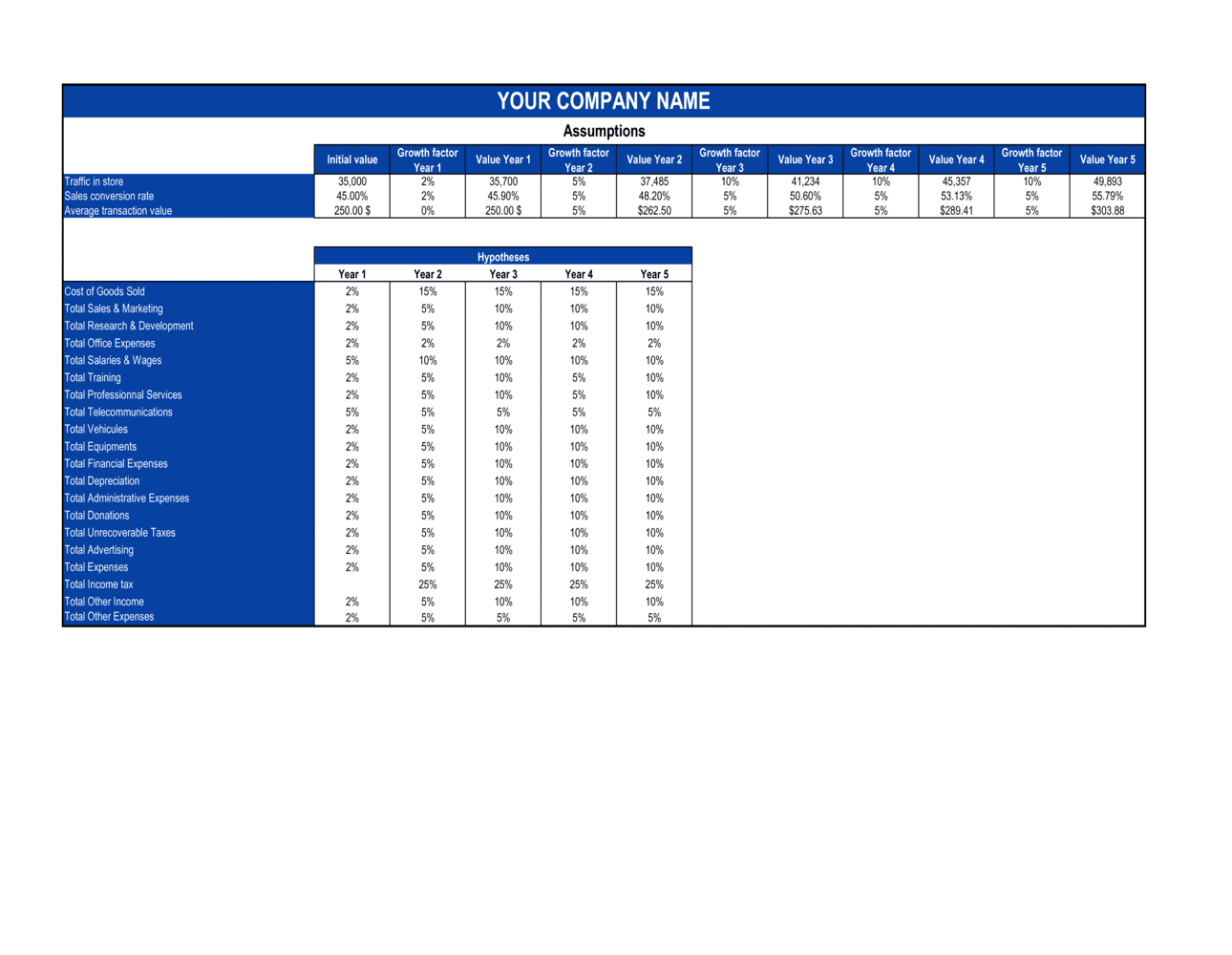
Revenue projections by category, cost of goods sold, departmental operating expense budgets, salary and headcount plans, capital expenditure allocations, contingency reserves, variance tracking framework, and an approval and authorization block binding the document to named signatories.

What is an Operating Budget?

An Operating Budget is a formal financial planning document that projects an organization's revenues, operating expenses, and net income for a defined period β€” almost always one fiscal year. It establishes the spending authority for every department, sets the revenue and profitability targets the business is accountable to, and creates the governance framework that controls how money is allocated and approved throughout the year. Unlike a casual spreadsheet estimate, a properly executed operating budget is signed by the individuals with financial authority, referenced in board resolutions and loan covenants, and subject to a monthly variance reporting cycle that keeps the organization on track.

Why You Need This Document

Without a formally approved operating budget, spending decisions are made without clear limits, departmental overruns go undetected until year-end, and board members or lenders have no document to hold management accountable against. Banks, investors, and grant funders routinely require an approved operating budget as a condition of financing β€” and an undocumented or informally managed budget is one of the most common triggers for qualified audit opinions in nonprofits and government contractors. A signed, structured operating budget closes these gaps: it defines who can spend what, requires written justification when actuals deviate from plan, and ensures that the financial commitments your organization makes are traceable to a named approving authority. This template gives you a board-ready starting point that covers every major component β€” from revenue assumptions to contingency reserves β€” in a format built for real organizational governance.

Which variant fits your situation?

If your situation is…Use this template
Planning revenues and expenses for a full fiscal yearAnnual Operating Budget
Tracking monthly budget vs. actual performanceMonthly Budget vs. Actuals Report
Planning capital purchases such as equipment or facilitiesCapital Expenditure Budget
Forecasting cash inflows and outflows week by weekCash Flow Forecast
Building a 3–5 year long-range financial planFinancial Projections (Multi-Year)
Budgeting for a specific project with a defined start and end dateProject Budget Template
Preparing a departmental budget for a single cost centerDepartment Budget Template

Common mistakes to avoid

❌ Budgeting base salary without fully loaded costs

Why it matters: Payroll taxes, benefits, and recruiting fees typically add 20–40% to base salary. Omitting them produces a budget that is structurally underfunded from day one.

Fix: Apply a fully loaded multiplier of 1.25–1.40Γ— to every salaried position and document the components β€” payroll taxes, health, retirement, and recruiting β€” as separate sub-lines.

❌ No departmental split on operating expenses

Why it matters: A single operating-expense total with no departmental breakdown makes it impossible to identify which team overspent when actuals exceed budget.

Fix: Assign every expense line to a named department and a named budget owner before the document is approved.

❌ Setting a contingency reserve with no drawdown conditions

Why it matters: Without defined approval requirements, the contingency line becomes an informal discretionary fund that managers draw against without governance, undermining the entire budget control framework.

Fix: Add explicit language requiring written approval from a named authority and a variance report within a defined number of business days for every contingency drawdown.

❌ No variance reporting cadence

Why it matters: A budget reviewed only at year-end reveals overruns too late to correct β€” by the time the problem is visible, six to twelve months of overspending have already occurred.

Fix: Include a monthly variance reporting requirement in the budget document itself, with a threshold β€” such as 10% or $5,000 per line β€” that triggers a mandatory written explanation.

❌ Approving the budget after the fiscal year has started

Why it matters: A retroactive budget approval provides no spending governance for the elapsed period and can create legal exposure if grant terms, loan covenants, or board resolutions require prior approval.

Fix: Schedule the budget approval meeting no later than two weeks before fiscal year start, and build in a buffer for signature routing.

❌ Omitting the spending authority matrix

Why it matters: Without clear thresholds, every purchase decision either gets escalated unnecessarily or is made without oversight β€” both patterns slow operations and create audit exposure.

Fix: Attach a schedule defining approval tiers β€” for example, under $5,000 to budget owner, $5,000–$25,000 to CFO, above $25,000 to CEO or board β€” and reference it in the budget body.

The 10 key clauses, explained

Parties, Period, and Authorization

In plain language: Identifies the organization and the individuals authorized to approve the budget, states the fiscal period covered, and records the approval date.

Sample language
This Operating Budget is approved by [AUTHORIZED SIGNATORY NAME], [TITLE], on behalf of [COMPANY LEGAL NAME] ('Organization') for the fiscal year commencing [START DATE] and ending [END DATE].

Common mistake: Naming a department or committee rather than a specific individual as the approving authority. When budget disputes arise, an unnamed approver makes enforcement and accountability impossible.

Revenue Projections

In plain language: Sets out projected revenues by product line, service category, or business unit, along with the assumptions underlying each figure.

Sample language
Projected total revenue for the budget period is $[AMOUNT], comprising: [PRODUCT/SERVICE LINE A]: $[AMOUNT] based on [UNITS Γ— PRICE ASSUMPTION]; [PRODUCT/SERVICE LINE B]: $[AMOUNT] based on [ASSUMPTION].

Common mistake: Stating revenue totals without documenting the unit-level assumptions. When actuals diverge, there is no baseline to diagnose whether volume, price, or mix drove the variance.

Cost of Goods Sold (COGS)

In plain language: Itemizes the direct costs of producing goods or delivering services, including materials, direct labor, and overhead allocated to production.

Sample language
Projected COGS for the budget period is $[AMOUNT], representing [X]% of projected revenue. Components: Direct materials $[AMOUNT]; Direct labor $[AMOUNT]; Manufacturing overhead $[AMOUNT].

Common mistake: Lumping indirect overhead into COGS rather than operating expenses, which inflates the cost of production and understates gross margin β€” misleading management and investors alike.

Departmental Operating Expenses

In plain language: Breaks down operating expenses by department or cost center β€” sales, marketing, R&D, operations, G&A β€” with a named budget owner for each.

Sample language
Sales and Marketing: $[AMOUNT] | Budget Owner: [NAME], [TITLE]. Research and Development: $[AMOUNT] | Budget Owner: [NAME], [TITLE]. General and Administrative: $[AMOUNT] | Budget Owner: [NAME], [TITLE].

Common mistake: Consolidating all operating expenses into a single line with no departmental split. This prevents accountability β€” when overruns occur, no one owns the variance.

Salary and Headcount Plan

In plain language: Lists planned headcount by department, including new hires, with associated salary, benefits, and payroll tax costs for the budget period.

Sample language
Total budgeted headcount: [X] FTE. New hires: [ROLE] in [DEPARTMENT], start date [DATE], annual fully loaded cost $[AMOUNT]. Total salary and benefits budget: $[AMOUNT].

Common mistake: Budgeting base salary only and omitting payroll taxes (6.2–7.65% in the US), benefits, and recruiting costs. The fully loaded cost of an employee typically runs 1.2–1.4Γ— base salary.

Capital Expenditure Allocation

In plain language: Authorizes specific capital purchases β€” equipment, software, leasehold improvements β€” by item, amount, and the individual authorized to commit the expenditure.

Sample language
Authorized capital expenditures for the budget period: [ITEM DESCRIPTION] $[AMOUNT], authorized by [NAME]; [ITEM DESCRIPTION] $[AMOUNT], authorized by [NAME]. Total CapEx budget: $[AMOUNT].

Common mistake: Including capital expenditures in the operating expense budget rather than as a separate CapEx line. This conflates cash spending with P&L impact and produces misleading profitability figures.

Contingency Reserve

In plain language: Sets aside a defined percentage of total operating expenses as an unallocated reserve for unforeseen costs, with conditions governing when and how it may be drawn.

Sample language
A contingency reserve of $[AMOUNT] ([X]% of total operating expenses) is established. Drawdown requires written approval from [TITLE] and must be documented with a variance report within [X] business days.

Common mistake: Setting a contingency reserve with no drawdown conditions. Without rules, the reserve becomes a discretionary slush fund rather than a controlled buffer β€” defeating its governance purpose.

Spending Authority and Approval Thresholds

In plain language: Defines who may commit spending within the budget without additional approval, at what dollar thresholds additional sign-off is required, and what is expressly prohibited without board or executive approval.

Sample language
Expenditures up to $[AMOUNT] may be approved by the relevant Budget Owner. Expenditures between $[AMOUNT] and $[AMOUNT] require CFO approval. Expenditures exceeding $[AMOUNT] or any unbudgeted item above $[AMOUNT] require Board approval.

Common mistake: No spending authority matrix at all. Without clear thresholds, managers either escalate every decision (slowing operations) or spend freely without oversight β€” both outcomes are damaging.

Variance Reporting and Budget Amendments

In plain language: Requires periodic comparison of actuals to budget, sets thresholds that trigger a formal variance explanation, and defines the process for amending the budget mid-year.

Sample language
Monthly variance reports comparing actuals to budget shall be prepared by the [FINANCE FUNCTION] and submitted to [APPROVER] by the [X]th business day following month end. Any line item variance exceeding [X]% or $[AMOUNT] requires a written explanation and corrective action plan.

Common mistake: Treating the budget as a static document filed at year-start and never revisited. Without a variance reporting cycle, material deviations are discovered at year-end rather than early enough to correct course.

Governing Approvals and Signatures

In plain language: Records the formal approval of the budget by the authorized signatories β€” CEO, CFO, and board chair where required β€” making the document binding on the organization.

Sample language
Approved and authorized by: [CEO NAME], Chief Executive Officer, Date: [DATE]. [CFO NAME], Chief Financial Officer, Date: [DATE]. [BOARD CHAIR NAME], Board Chair, Date: [DATE] (if applicable).

Common mistake: Obtaining only one signature when governance documents (bylaws, operating agreement, or grant terms) require dual or board-level approval. A single-signature budget can be challenged as improperly authorized.

How to fill it out

  1. 1

    Identify the fiscal period and authorized signatories

    Enter the exact start and end dates of the budget period and the full legal names and titles of every individual whose signature is required to authorize spending.

    πŸ’‘ Cross-reference your bylaws or operating agreement to confirm who holds budget approval authority before the document goes for signatures.

  2. 2

    Build the revenue projection by category

    Break projected revenue into at least three to five categories β€” product lines, service types, or business units. For each, document the unit volume, unit price, and any seasonality assumptions underlying the total.

    πŸ’‘ Use prior-year actuals as the baseline and document explicitly where you are projecting growth above trend β€” investors and boards will challenge unsupported increases.

  3. 3

    Calculate COGS and set the gross margin target

    Itemize direct materials, direct labor, and production overhead separately. Calculate gross margin as a percentage and confirm it is consistent with prior periods or document why it has changed.

    πŸ’‘ If gross margin drops more than two percentage points from the prior year, add a written explanation β€” auditors and board members will ask.

  4. 4

    Allocate operating expenses by department with named budget owners

    Assign every expense category to a department and name the individual responsible for managing that budget. Include salary, benefits, software subscriptions, travel, and any department-specific line items.

    πŸ’‘ Send each budget owner a draft of their section and ask them to confirm the numbers before the document goes for final approval β€” this prevents disputes mid-year.

  5. 5

    Build the headcount and salary plan

    List current headcount by department and any planned new hires with anticipated start dates. Calculate the fully loaded cost for each position β€” base salary plus payroll taxes, benefits, and recruiting fees.

    πŸ’‘ For new hires starting mid-year, prorate their cost based on the number of months remaining in the fiscal year, not a full annual amount.

  6. 6

    List capital expenditure items with individual authorizations

    Enter each planned capital purchase as a separate line with the item description, estimated cost, and the named individual authorized to execute the purchase. Total the CapEx budget and confirm it is funded within your cash plan.

    πŸ’‘ Distinguish between CapEx approved at this stage and CapEx that still requires a separate purchase authorization β€” note the difference explicitly.

  7. 7

    Set the contingency reserve and drawdown rules

    Calculate the contingency reserve as a percentage of total operating expenses (3–10% is typical). Document the specific conditions under which the reserve may be drawn and the approval required.

    πŸ’‘ A 5% contingency on a $2M operating budget is $100K β€” enough to absorb most surprises without a mid-year amendment cycle.

  8. 8

    Define the spending authority matrix and obtain signatures

    Set dollar thresholds for each approval level β€” budget owner, CFO, and board β€” and attach the matrix as a schedule. Then route the completed document for signatures in the order your governance documents require.

    πŸ’‘ Execute the budget before the fiscal year starts. A budget approved three months into the year provides no governance for the period already elapsed.

Frequently asked questions

What is an operating budget?

An operating budget is a formal financial plan that projects a business's revenues, operating expenses, and net income for a defined period β€” typically one fiscal year. It sets the financial targets and spending limits that govern day-to-day operations and serves as the benchmark against which actual performance is measured each month. It is distinct from a capital budget, which covers long-lived asset purchases, and a cash flow forecast, which tracks timing of receipts and disbursements.

What should an operating budget include?

A complete operating budget covers revenue projections by category, cost of goods sold, departmental operating expenses with named budget owners, a salary and headcount plan with fully loaded costs, a capital expenditure allocation, a contingency reserve with drawdown conditions, a spending authority matrix, and a variance reporting framework. It should conclude with a formal approval and signature block binding the document to the fiscal year it covers.

Who needs to approve an operating budget?

Approval requirements depend on the organization's governance documents β€” bylaws, operating agreement, or grant terms. For most companies, the CFO and CEO co-sign the operating budget; boards typically approve budgets above a materiality threshold or where the bylaws require it. Nonprofits and government contractors almost always require formal board approval before the fiscal year begins. Check your governing documents before routing for signatures.

What is the difference between an operating budget and a cash flow forecast?

An operating budget projects revenues and expenses on an accrual basis β€” it shows profitability regardless of when cash actually moves. A cash flow forecast tracks the timing of actual cash receipts and disbursements, which can differ significantly from the accrual P&L because of receivables, payables, and CapEx. Both are needed: the operating budget governs spending authority; the cash flow forecast tells you whether you have enough cash to fund it.

How often should an operating budget be updated?

Most organizations prepare a full operating budget once per fiscal year, then produce a rolling re-forecast β€” typically quarterly β€” that updates revenue and expense projections based on year-to-date actuals. A formal budget amendment, requiring the same approval level as the original, is used when a material line item needs to change by more than a defined threshold (commonly 10% of the line or $25,000, whichever is larger).

What is zero-based budgeting and when should I use it?

Zero-based budgeting requires every expense to be justified from scratch each period rather than incremented from the prior year's actuals. It is most useful when an organization has grown quickly without scrutinizing costs, when a turnaround or restructuring is underway, or when a new leadership team wants a clean baseline. The tradeoff is time β€” zero-based budgeting typically takes three to four times longer to prepare than an incremental approach.

Is an operating budget a legally binding document?

An operating budget approved by the required signatories is generally binding on the organization as an internal governance document β€” it authorizes spending up to defined limits and creates accountability for named budget owners. In some contexts, such as grant agreements, loan covenants, or government contracts, the approved budget is incorporated by reference into a binding external agreement, making deviations a potential breach. Consult a lawyer if your budget will be attached to an external contract.

What is a budget variance and how should it be reported?

A budget variance is the difference between a budgeted figure and the actual result for the same period. Favorable variances mean actual results were better than planned (higher revenue or lower costs); unfavorable variances are the reverse. Best practice is to report variances monthly by department, flag any line item variance exceeding a defined threshold β€” typically 10% or a fixed dollar amount β€” and require a written explanation and corrective action plan from the budget owner within a set number of business days.

Do I need a lawyer or accountant to prepare an operating budget?

For most small and mid-size businesses, a structured template completed by a knowledgeable CFO, controller, or founder is sufficient. Engage a CPA or financial advisor when the budget will be attached to a bank covenant, grant agreement, or investor reporting requirement. Engage a lawyer when the budget document itself will be incorporated by reference into a binding contract, when board approval is required under your governing documents and the process is disputed, or when the organization operates in a regulated industry with specific budget disclosure obligations.

How this compares to alternatives

vs Cash Flow Forecast

A cash flow forecast tracks the timing of actual cash receipts and payments, which differs from the accrual-based operating budget because of receivables, payables, and CapEx timing. An operating budget tells you whether the business is profitable; a cash flow forecast tells you whether it can pay its bills. Both are required for complete financial governance.

vs Financial Projections (Multi-Year)

Financial projections cover a 3–5 year horizon for strategic planning or capital raising and are built on high-level assumptions. An operating budget is a one-year document with monthly detail, named budget owners, spending authority thresholds, and variance reporting obligations. Projections set the strategic direction; the operating budget operationalizes it for the current year.

vs Project Budget

A project budget covers the costs of a specific initiative with a defined start and end date β€” a product launch, a facility build-out, or a marketing campaign. An operating budget covers the entire organization's ongoing operations for a fiscal year. Large projects may have their own budget that rolls up into the organizational operating budget as a line item.

vs Business Plan

A business plan is an external-facing strategic document covering market opportunity, competitive positioning, and multi-year financial projections designed to attract investors or lenders. An operating budget is an internal governance document authorizing specific spending for one fiscal year. The business plan sets the strategic narrative; the operating budget allocates the resources to execute it.

Industry-specific considerations

Nonprofit organizations

Board approval of the annual operating budget is typically required by bylaws; grant-funded programs require separate program budgets that reconcile to the overall operating plan.

SaaS / Technology

Headcount dominates operating costs at 60–75% of total opex; R&D and sales capacity planning drive the budget cycle, with ARR growth and net revenue retention as the primary revenue assumptions.

Manufacturing

COGS complexity is highest in this sector β€” materials, direct labor, and plant overhead must be budgeted separately, with sensitivity analysis for commodity price and exchange rate movements.

Healthcare

Regulatory compliance costs, credentialing expenses, and malpractice insurance create fixed cost floors that must be budgeted before discretionary spending is allocated.

Professional services

Billable utilization targets (typically 65–75%) drive revenue projections; salary and benefits as a share of revenue (the leverage ratio) is the key profitability metric monitored against budget.

Retail / E-commerce

Seasonality adjustments are essential β€” Q4 holiday revenue and inventory build-up require monthly rather than annual budget breakdowns, and markdown risk must be reserved for.

Jurisdictional notes

United States

No federal law mandates a specific operating budget format for private companies, but SBA loan programs, HUD grants, and many federal contracts require an approved budget as a condition of funding. Nonprofits with annual revenues above $750,000 are subject to OMB Uniform Guidance, which sets detailed budget approval and reporting requirements. State nonprofit acts in Delaware, California, and New York require board approval of the annual budget.

Canada

Canada Revenue Agency does not prescribe a budget format, but federally incorporated nonprofits under the Canada Not-for-profit Corporations Act must present an annual budget to members for approval. Provincial grants and transfer payment agreements typically require an approved operating budget as an attachment. Quebec organizations operating under the Civil Code should ensure budget approval procedures align with their constituting documents.

United Kingdom

Charities registered with the Charity Commission in England and Wales must manage financial affairs in accordance with their governing document, which typically requires trustee approval of the annual budget. Companies House does not mandate an operating budget for private limited companies, but loan agreements with UK banks routinely include budget covenant requirements. Scotland and Northern Ireland have separate charity regulators with comparable requirements.

European Union

EU-funded project budgets must comply with the applicable grant regulation β€” for Horizon Europe and Structural Funds, detailed budget breakdowns and prior approval of significant reallocations between budget lines are mandatory. Member state requirements for corporate budget approval vary β€” German GmbH operating agreements frequently require shareholder approval of the annual business plan and budget. GDPR does not directly govern budget documents, but budgets covering data processing activities may be subject to records-of-processing requirements if they contain personal data.

Template vs lawyer β€” what fits your deal?

PathBest forCostTime
Use the templateSmall and mid-size businesses preparing an internal annual budget for management and board reviewFree1–3 weeks (preparation) + 1 day (approval)
Template + legal reviewOrganizations where the budget will be attached to a bank loan covenant, grant agreement, or investor reporting package$500–$2,000 (CPA or financial advisor review)2–4 weeks
Custom draftedRegulated industries, government contractors, or organizations where the budget document itself is incorporated into a binding external contract$2,000–$8,000+ (CPA plus legal review)4–8 weeks

Glossary

Operating Budget
A formal plan projecting a business's revenues, operating costs, and net income for a defined period, typically one fiscal year.
Cost of Goods Sold (COGS)
The direct costs attributable to producing the goods or services sold β€” materials, direct labor, and manufacturing overhead.
Gross Margin
Revenue minus COGS, expressed as a dollar amount or percentage, indicating how much revenue remains to cover operating expenses.
EBITDA
Earnings Before Interest, Taxes, Depreciation, and Amortization β€” a proxy for operating cash generation commonly used to evaluate budget performance.
Variance
The difference between a budgeted figure and the actual result for the same period, reported as favorable or unfavorable.
Capital Expenditure (CapEx)
Spending on long-lived assets β€” equipment, property, or software β€” that is capitalized rather than expensed in the period incurred.
Contingency Reserve
A budget line set aside to absorb unexpected costs without requiring a formal budget amendment, typically 3–10% of total operating expenses.
Budget Authority
The formal permission granted to a named individual or role to commit spending up to a specified dollar limit within the approved budget.
Headcount Plan
The section of an operating budget that details planned full-time, part-time, and contract positions by department, including start dates and associated costs.
Fiscal Year
A 12-month accounting period that a business uses for financial planning and reporting, which may or may not align with the calendar year.
Zero-Based Budgeting
A budgeting method that requires every expense to be justified from scratch each period, rather than incremented from the prior year's actuals.
Budget Amendment
A formal revision to an approved operating budget, typically requiring the same authorization level as the original approval.

Part of your Business Operating System

This document is one of 3,000+ business & legal templates included in Business in a Box.

  • Fill-in-the-blanks β€” ready in minutes
  • 100% customizable Word document
  • Compatible with all office suites
  • Export to PDF and share electronically

Create your document in 3 simple steps.

From template to signed document β€” all inside one Business Operating System.
1
Download or open template

Access over 3,000+ business and legal templates for any business task, project or initiative.

2
Edit and fill in the blanks with AI

Customize your ready-made business document template and save it in the cloud.

3
Save, Share, Send, Sign

Share your files and folders with your team. Create a space of seamless collaboration.

Save time, save money, and create top-quality documents.

β˜…β˜…β˜…β˜…β˜…

"Fantastic value! I'm not sure how I'd do without it. It's worth its weight in gold and paid back for itself many times."

Managing Director Β· Mall Farm
Robert Whalley
Managing Director, Mall Farm Proprietary Limited
β˜…β˜…β˜…β˜…β˜…

"I have been using Business in a Box for years. It has been the most useful source of templates I have encountered. I recommend it to anyone."

Business Owner Β· 4+ years
Dr Michael John Freestone
Business Owner
β˜…β˜…β˜…β˜…β˜…

"It has been a life saver so many times I have lost count. Business in a Box has saved me so much time and as you know, time is money."

Owner Β· Upstate Web
David G. Moore Jr.
Owner, Upstate Web

Run your business with a system β€” not scattered tools

Stop downloading documents. Start operating with clarity. Business in a Box gives you the Business Operating System used by over 250,000 companies worldwide to structure, run, and grow their business.

Free Forever PlanΒ Β·Β No credit card required