- Equity Investment
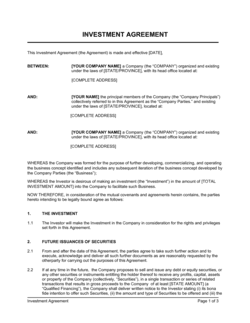
- Capital provided to a company in exchange for a percentage ownership stake, with no obligation to repay — return comes from dividends or a future sale.
- Equity Stake
- The percentage of a company owned by an investor, calculated as their shares divided by the total outstanding shares.
- Valuation
- The estimated monetary value of the company at the time of investment, used to determine how much equity a given investment buys.
- Pre-Money Valuation
- The company's agreed value before the new investment is received — the baseline used to calculate the investor's ownership percentage.
- Term Sheet
- A non-binding document summarizing the key terms of a proposed investment, including valuation, equity percentage, voting rights, and protective provisions.
- Angel Investor
- A high-net-worth individual who invests their own capital in early-stage companies in exchange for equity, often at the seed or pre-seed stage.
- Use of Proceeds
- A breakdown of how investment capital will be deployed across the business — product development, hiring, marketing, operations, and working capital.
- Dilution
- The reduction in an existing shareholder's ownership percentage that occurs when new shares are issued to incoming investors.
- Cap Table
- A spreadsheet listing all shareholders, their share classes, ownership percentages, and the effect of new investment rounds on each holder.
- Return on Investment (ROI)
- The financial gain an investor expects relative to their initial capital, typically realized through a dividend, acquisition, or IPO exit.