Marketing Budget Template

Free Excel download β€’ Use online β€’ Print or share

2 pagesβ€’20–30 min to useβ€’Difficulty: Standardβ€’Signature requiredβ€’Legal review recommended
Learn more ↓
FreeXLSMarketing Budget Template

At a glance

What it is
A Marketing Budget is a formal planning and authorization document that defines the total funds allocated to marketing activities for a given period, breaks down spending by channel and campaign, and establishes internal accountability for expenditure. This free Word download gives you a structured, board-ready starting point you can edit online and export as PDF for stakeholder sign-off, agency briefings, or finance reconciliation.
When you need it
Use it at the start of each fiscal year, quarter, or campaign cycle when marketing leadership needs formal approval from finance or the executive team before committing spend. It is also required when engaging external agencies or vendors who need a defined scope and budget ceiling.
What's inside
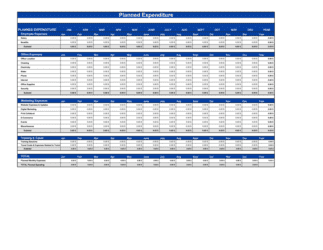
Total budget authorization, channel-by-channel spend allocations, campaign objectives tied to key performance indicators, vendor and agency line items, contingency reserves, approval authority levels, and a variance tracking framework for monthly budget-versus-actual reconciliation.

What is a Marketing Budget?

A Marketing Budget is a formal planning and authorization document that defines the total funds approved for marketing activities over a given period, allocates those funds across channels and campaigns, establishes measurable KPIs for each spend line, and records the approval authority chain that governs how money may be committed and reallocated. Unlike an informal spreadsheet, a properly structured and signed marketing budget creates internal accountability β€” it ties specific individuals to specific spending decisions and provides the documentation trail required for finance reconciliation, vendor management, and audit compliance.

Why You Need This Document

Without a signed marketing budget, spend authority is ambiguous and overspending is almost inevitable. Agencies expand scope without a documented ceiling, channel managers shift funds informally without a reallocation record, and finance teams reject expense claims that lack a traceable authorization. The consequences are concrete: variance explanations consume executive time at quarter-end, unbudgeted commitments appear on the P&L as surprises, and audit findings cite missing internal controls. A completed and approved marketing budget closes these gaps before the first dollar is committed β€” giving the marketing team a clear mandate, finance a reliable forecast, and every vendor a defined scope. This template gives you the structure to go from an informal spending intention to a board-ready authorization document in under four hours.

Which variant fits your situation?

If your situation is…Use this template
Planning spend across all channels for the full fiscal yearAnnual Marketing Budget
Tracking spend and ROI for a single campaign or product launchCampaign Budget Plan
Allocating budget across paid search, social, SEO, and displayDigital Marketing Budget
Presenting a high-level marketing investment request to a boardMarketing Plan
Tracking actual spend against approved budget month by monthMarketing Budget Tracker
Planning trade show, event, and sponsorship spend separatelyEvent Marketing Budget
Setting agency retainer and project fees for the yearAgency Scope of Work

Common mistakes to avoid

❌ Aggregating all digital spend into one line item

Why it matters: A single 'digital marketing' line item prevents variance analysis by channel and makes it impossible to identify which tactic is overspending or underperforming during the period.

Fix: Break digital into separate line items for paid search, paid social, programmatic display, SEO/content, and email at a minimum. Add sub-lines for individual platforms (Google Ads, Meta, LinkedIn) if spend exceeds $10,000 per platform.

❌ Omitting a contingency reserve

Why it matters: Without a reserve, any unplanned opportunity β€” a competitive response, a viral moment, or a price increase from a key vendor β€” either goes unfunded or forces an unbudgeted spend that creates a variance requiring explanation.

Fix: Allocate 8–12% of total budget as a named contingency line with a documented release process. Treat it as a structured tool, not a slush fund.

❌ Approving budget amendments via email only

Why it matters: Email approvals are easily disputed during audits and may not capture whether the approver reviewed the full revised document or only a summary. Finance teams regularly reject expense claims that lack a properly authorized amendment.

Fix: Require a signed amendment document for any change exceeding a defined threshold β€” $5,000 or 5% of any line item is a common floor β€” and store it alongside the original budget.

❌ Setting KPI targets without prior-period benchmarks

Why it matters: A CPA target of $80 is approved without challenge in a budget review β€” but if last year's actual CPA was $45, the new target signals a 78% performance decline that deserves scrutiny before the budget is signed.

Fix: Add a 'prior period actual' column next to every KPI target in the budget document. Require reviewers to acknowledge the comparison before signing.

❌ Authorizing agency spend without a per-engagement ceiling

Why it matters: Agencies operating under a named retainer without a project-fee cap routinely propose additional projects that each seem small but collectively exceed the approved budget by 30–50%.

Fix: Include both a monthly retainer ceiling and a per-project threshold above which additional written authorization is required, and reference the relevant agency contract by date and version.

❌ Circulating the budget for approval before channel owners have reviewed their lines

Why it matters: Finance-approved budgets that channel owners did not validate are consistently overspent in Q1, because the owners were not accountable to the numbers from the outset.

Fix: Require each channel owner to sign off on their specific line items before the document is elevated to CMO and CFO for final authorization. Capture these sign-offs in the document itself.

The 10 key clauses, explained

Budget period and scope

In plain language: Defines the fiscal period the budget covers, the business unit or brand it applies to, and whether it supersedes any prior budget authorization.

Sample language
This Marketing Budget covers the period [START DATE] through [END DATE] for [BUSINESS UNIT / BRAND NAME] and supersedes all prior budget authorizations for the same period.

Common mistake: Omitting the fiscal period end date β€” this creates disputes about whether mid-year re-forecasts require fresh approval or fall within the original authorization.

Total authorized spend

In plain language: States the maximum total amount approved for marketing expenditure during the period, in a specific currency, before any individual line items are detailed.

Sample language
Total authorized marketing expenditure for the period shall not exceed [CURRENCY] [TOTAL AMOUNT] without written amendment signed by [APPROVING AUTHORITY].

Common mistake: Stating the budget as a range (e.g., '$200K–$250K') rather than a specific ceiling β€” this removes the meaningful spend control the document is designed to create.

Channel and campaign allocations

In plain language: Breaks the total budget into individual line items by channel, campaign, or tactic, with a dollar amount and percentage of total for each.

Sample language
Allocation: Paid Search: $[AMOUNT] ([X]%); Social Media Advertising: $[AMOUNT] ([X]%); Content and SEO: $[AMOUNT] ([X]%); Events and Sponsorships: $[AMOUNT] ([X]%); Contingency Reserve: $[AMOUNT] ([X]%).

Common mistake: Combining all digital spend into a single line item rather than separating channels β€” this prevents meaningful variance analysis and makes it impossible to identify which tactic is over- or under-spending.

Campaign objectives and KPIs

In plain language: Links each major spend allocation to a measurable business objective and at least one key performance indicator, establishing the basis for evaluating return on spend.

Sample language
Paid Search allocation of $[AMOUNT] is intended to generate [X] qualified leads at a target CPA of $[AMOUNT]. Performance will be reviewed monthly against [PLATFORM] reporting.

Common mistake: Listing KPIs without baseline benchmarks β€” a target CPA of $50 is meaningless without stating whether the prior-period CPA was $40 or $120.

Vendor and agency commitments

In plain language: Identifies approved external suppliers, their contracted fee structures, and the maximum amounts that may be committed to each without additional authorization.

Sample language
[AGENCY NAME] is authorized for a monthly retainer of $[AMOUNT] and project fees not to exceed $[AMOUNT] per engagement. Any scope exceeding $[THRESHOLD] requires written approval from [APPROVING AUTHORITY].

Common mistake: Authorizing agencies by name without a spend ceiling β€” this routinely leads to scope creep where agency invoices exceed the approved budget with no documented authorization chain.

Approval authority levels

In plain language: Specifies which roles may approve routine spend, which require escalation to senior leadership, and what dollar threshold triggers board or CFO review.

Sample language
Marketing Manager: approves expenditures up to $[AMOUNT] per line item. CMO / VP Marketing: approves $[AMOUNT]–$[AMOUNT]. CFO co-signature required for any single commitment exceeding $[AMOUNT].

Common mistake: Setting approval thresholds too high β€” a $50,000 single-approver threshold on a $200,000 budget means a single misjudgment can commit 25% of the total without any check.

Contingency reserve and reallocation process

In plain language: Defines the size of the contingency reserve, the conditions under which it may be accessed, and the process for reallocating underspent line items to higher-performing channels.

Sample language
A contingency reserve of $[AMOUNT] ([X]% of total budget) is held for unplanned spend. Release of contingency funds requires written approval from [APPROVING AUTHORITY] within [X] business days of request.

Common mistake: Not defining a reallocation process β€” when a campaign underperforms, teams routinely shift budget informally without documentation, making year-end reconciliation inaccurate.

Reporting and variance review schedule

In plain language: Establishes how often budget-versus-actual reports are produced, who receives them, and what variance threshold triggers a formal review or budget amendment.

Sample language
Monthly budget-versus-actual reports shall be prepared by [ROLE] by the [X]th business day of each month. Variances exceeding [X]% of any line item in a single month require a written explanation submitted to [APPROVING AUTHORITY].

Common mistake: Setting variance thresholds only in dollar terms rather than percentages β€” a $5,000 overspend is immaterial on a $500,000 line but critical on a $20,000 one.

Amendment and revision process

In plain language: States how the budget may be formally amended β€” required signatories, notice period, and whether a mid-year reforecast replaces or supplements the original authorization.

Sample language
Amendments to this budget require written notice to [APPROVING AUTHORITY] at least [X] business days before the proposed effective date and must be signed by [SIGNATORY LIST]. Amended budgets supersede prior versions in their entirety.

Common mistake: Allowing email approval of budget amendments without a formal amendment document β€” email approvals are easily disputed, lost, or misinterpreted when audited.

Signatures and effective date

In plain language: Records the names, titles, and signatures of all parties authorizing the budget, and the date the document becomes effective.

Sample language
Authorized by: [NAME], [TITLE], [DATE] | Approved by: [NAME], [TITLE], [DATE] | Effective Date: [DATE].

Common mistake: Circulating a budget for approval without capturing individual signature dates β€” this creates ambiguity about whether later-signing approvers have reviewed the same version as earlier ones.

How to fill it out

  1. 1

    Define the budget period and scope

    Enter the exact start and end dates, the business unit or brand covered, and whether this document replaces a prior authorization. Confirm the fiscal calendar with finance before populating any numbers.

    πŸ’‘ Align the budget period to your company's fiscal year, not the calendar year, to simplify variance reporting and audit reconciliation.

  2. 2

    Set the total authorized spend ceiling

    Enter a single, specific maximum figure in your operating currency. This ceiling must be agreed with the CFO or finance lead before channel allocations are drafted.

    πŸ’‘ Build your total ceiling from the bottom up β€” sum all channel estimates first, then add a 10% contingency β€” rather than top-down from a percentage of revenue alone.

  3. 3

    Allocate spend by channel and campaign

    Break the total into individual line items for each channel (paid search, social, email, content, events, PR, etc.) with a dollar amount and percentage of total. Use prior-year actuals as the starting baseline.

    πŸ’‘ Express each line as both a dollar amount and a percentage β€” percentages make it easier to spot imbalances when reviewing the plan as a whole.

  4. 4

    Attach KPIs and objectives to each allocation

    For every major line item, document the business objective it supports (e.g., lead generation, brand awareness, retention) and the primary KPI used to measure success (e.g., CPA, ROMI, click-through rate).

    πŸ’‘ Include prior-period benchmark figures next to each KPI target so reviewers can assess whether goals are ambitious, conservative, or consistent with history.

  5. 5

    List approved vendors and agency commitments

    Identify each external supplier by legal name, describe their contracted scope, and set the maximum spend authorized for each without further approval.

    πŸ’‘ Cross-reference vendor amounts against signed contracts or statements of work to confirm the budget reflects actual committed fees.

  6. 6

    Set approval authority thresholds

    Define which roles may approve spend at each tier β€” routine line-item spend, mid-range reallocations, and large single commitments β€” and document the escalation path for each.

    πŸ’‘ Threshold amounts should reflect the seniority of the approver, not the size of the total budget. A CMO approving any amount up to the full budget ceiling defeats the purpose of tiered authority.

  7. 7

    Document the contingency reserve and reallocation rules

    Set a contingency percentage (typically 5–15% of total budget), specify who can release it and under what conditions, and write out the process for shifting underspent funds to better-performing channels.

    πŸ’‘ Tie contingency releases to a specific request form or email template so every release is documented in the same format for year-end audit purposes.

  8. 8

    Obtain signatures before the period begins

    Route the completed budget to all required signatories β€” typically the CMO, CFO, and CEO or board delegate β€” and collect dated signatures before the first spend commitment is made.

    πŸ’‘ Use a digital signature tool to timestamp each approval individually. This prevents disputes about whether a later signatory reviewed an amended version.

Frequently asked questions

What is a marketing budget?

A marketing budget is a formal document that defines the total funds authorized for marketing activities over a specific period β€” typically a fiscal year or quarter β€” and breaks that total into allocations by channel, campaign, and vendor. It establishes spend ceilings, approval authority levels, KPIs for each allocation, and a framework for tracking actual spend against plan. Beyond internal planning, a signed marketing budget functions as an authorization record that protects both the marketing team and finance from uncontrolled expenditure.

What should a marketing budget include?

At minimum: total authorized spend ceiling, channel-by-channel allocations with percentages of total, campaign objectives and KPIs for each line, approved vendor and agency commitments with spend ceilings, approval authority thresholds, a contingency reserve with a release process, a variance reporting schedule, an amendment process, and dated signatures from all authorizing parties. Missing any of these creates accountability gaps that lead to overspending, disputed expenses, or audit findings.

How do I determine the right total marketing budget?

The most common approaches are percentage-of-revenue (typically 5–15% for B2B and 10–20% for B2C, though ranges vary significantly by industry and growth stage), objective-and-task (building from campaign goals up to a total), and competitive parity (matching or benchmarking against estimated competitor spend). For early-stage companies, objective-and-task is generally more defensible because it ties every dollar to a specific outcome rather than an arbitrary revenue ratio.

What is a reasonable contingency reserve for a marketing budget?

A contingency reserve of 8–12% of total budget is standard for most organizations. Early-stage companies or those entering new markets often hold 15% given higher uncertainty. Established companies with stable channel mixes and multi-year historical data can operate with 5–8%. The reserve should be a named line item with a documented release process β€” not an informal understanding β€” to preserve its value as a planning tool.

Who should approve a marketing budget?

At minimum, the CMO or VP of Marketing and the CFO or Finance Director should sign off before spend begins. For budgets above a material threshold β€” typically $500,000 or more, or 10% of company revenue β€” board or CEO approval is standard. Individual channel line items should be validated by the channel owners before elevation to executive approval, creating a documented accountability chain from the ground up.

How often should a marketing budget be reviewed?

Monthly budget-versus-actual reviews are standard for most organizations. A formal mid-year reforecast β€” where the full budget is updated against actual H1 performance and revised for H2 β€” is typical for companies with budgets above $200,000 or significant campaign-level variability. Ad hoc reviews are triggered when a single channel exceeds its variance threshold, typically defined as 10–15% over or under plan for two consecutive months.

What is the difference between a marketing budget and a marketing plan?

A marketing plan defines strategy, target audiences, positioning, channel rationale, and campaign concepts β€” the what and why of marketing activity. A marketing budget defines the financial authorization and accountability framework for executing that strategy β€” the how much, approved by whom, and measured against what. Both documents are needed; a plan without a budget is aspirational, and a budget without a plan lacks strategic context.

Do small businesses need a formal signed marketing budget?

Yes, even small businesses benefit significantly from a signed budget. For businesses spending more than $5,000 per month on marketing, an unsigned informal budget consistently leads to scope creep with agencies, channels receiving disproportionate spend without performance evidence, and year-end tax or expense reconciliation problems. A one-page signed document with a total ceiling and four to six line items is sufficient for most small businesses and takes under an hour to prepare with a template.

Can a marketing budget be amended after it is signed?

Yes, but amendments should follow a documented process. The most defensible approach is a written amendment signed by the same parties who signed the original β€” not an email exchange β€” that states the specific lines being changed, the new amounts, and the effective date. The amendment should be stored alongside the original document. Informal verbal or email-only amendments create disputes during audits and remove the accountability value the original document was designed to create.

How this compares to alternatives

vs Marketing Plan

A marketing plan defines strategy, target audiences, positioning, and channel rationale. A marketing budget is the financial authorization document that funds execution of that strategy. The plan tells you what to do and why; the budget tells you how much you are allowed to spend, approved by whom, and measured against what KPIs. Both are required; neither substitutes for the other.

vs Annual Operating Budget

An annual operating budget covers all company expenditures β€” payroll, rent, R&D, and marketing combined. A marketing budget is a departmental sub-budget that is typically submitted to and incorporated into the operating budget. The marketing budget provides channel-level granularity and KPI accountability that a company-wide operating budget cannot capture.

vs Campaign Budget Plan

A campaign budget plan covers the spend for a single marketing initiative β€” one product launch, one event, one seasonal campaign. A marketing budget covers all activity for the full period across every channel and campaign. Campaign budgets are typically sub-documents that must stay within the ceilings defined in the annual or quarterly marketing budget.

vs Agency Scope of Work

An agency scope of work is a contract between a company and an external agency defining deliverables, timelines, and fees for a specific engagement. A marketing budget is an internal authorization document that sets the ceiling within which agency fees are approved. The SOW governs the vendor relationship; the marketing budget governs internal spending authority. Both are needed when engaging an agency.

Industry-specific considerations

SaaS / Technology

Heavy weighting toward paid search, content, and product-led growth spend with MQL and pipeline-value KPIs tied to each channel allocation.

Retail / E-commerce

Seasonal campaign budgets with Q4 holdbacks released based on inventory confirmation, blended ROAS targets by platform, and return-on-ad-spend variance thresholds.

Professional Services

Event, thought leadership, and referral channel allocations dominate; individual partner or practice-group sub-budgets tracked separately against client revenue targets.

Consumer Packaged Goods

Above-the-line and below-the-line split tracked separately with trade marketing and shopper marketing as distinct line items requiring retailer-specific approval.

Healthcare / MedTech

Regulatory review requirements for promotional materials create lead-time dependencies that must be reflected in the campaign spend release schedule.

Financial Services

Compliance pre-approval of all creative and channel copy required before spend can be committed, with documented approval references tied to each budget line.

Jurisdictional notes

United States

No federal law mandates a formal marketing budget, but publicly traded companies must ensure marketing expenditures are accurately reflected in SEC filings and that internal controls over spending authorization satisfy Sarbanes-Oxley Section 302 and 404 requirements. State sales tax obligations may arise from digital advertising spend in certain states. FTC guidelines on endorsements and advertising disclosures should be referenced in the budget's KPI and creative approval notes.

Canada

Canadian companies must ensure marketing spend is documented in a manner consistent with CRA expense substantiation requirements, particularly for deductibility of advertising costs. Quebec's Bill 96 imposes French-language requirements on commercial advertising directed at Quebec consumers, which may require separate budget line items for translation and localized creative. CASL compliance costs for email marketing programs should be a distinct line item.

United Kingdom

UK companies must ensure marketing expenditure complies with ASA and CAP Code requirements, and that digital advertising spend β€” particularly influencer and affiliate programs β€” includes budget provision for mandatory disclosure compliance. Post-Brexit VAT treatment of digital advertising services purchased from non-UK suppliers should be confirmed with a tax advisor before finalizing agency line items.

European Union

GDPR compliance costs β€” consent management platforms, data processing agreements with ad-tech vendors, and cookie consent tooling β€” should be explicit line items within any digital marketing budget for EU-facing campaigns. The EU Digital Services Act introduces additional transparency obligations for large platforms that may affect retargeting and audience-targeting spend efficiency. Member state advertising regulations vary; local legal review is advisable for campaigns targeting more than three member states.

Template vs lawyer β€” what fits your deal?

PathBest forCostTime
Use the templateMarketing teams preparing annual or quarterly budgets for internal approval at companies without complex vendor agreements or multi-entity structuresFree2–4 hours to complete
Template + legal reviewCompanies committing more than $500,000 annually, engaging multiple agencies under contract, or operating across multiple legal entities or jurisdictions$300–$800 for a finance or legal advisor review1–3 days
Custom draftedEnterprise marketing organizations, regulated industries requiring compliance pre-approval chains, or multi-country budgets with currency and statutory reporting obligations$1,500–$5,000+1–3 weeks

Glossary

Budget Authorization
Formal approval by a designated authority β€” typically a CFO or CEO β€” granting permission to commit and spend allocated funds.
Channel Allocation
The distribution of total marketing spend across individual tactics or platforms such as paid search, social media, email, content, and events.
Cost Per Acquisition (CPA)
Total spend on a channel or campaign divided by the number of new customers acquired through that activity.
Return on Marketing Investment (ROMI)
The incremental revenue attributable to marketing spend expressed as a percentage of that spend, used to evaluate channel efficiency.
Contingency Reserve
A percentage of the total budget β€” typically 5–15% β€” held back for unplanned opportunities, price increases, or campaign adjustments mid-period.
Budget Variance
The difference between planned (budgeted) spend and actual spend for a given period, reported as a dollar amount and a percentage.
Above-the-Line (ATL) Spend
Marketing expenditure on mass-reach channels β€” television, radio, outdoor, and national press β€” aimed at broad brand awareness.
Below-the-Line (BTL) Spend
Targeted marketing spend on direct mail, email, search ads, sponsorships, and in-store promotions aimed at specific audience segments.
Media Mix
The combination of paid, owned, and earned channels selected to reach a target audience within a given budget and time frame.
Accrual Accounting
A method of recording expenses in the period they are incurred rather than when cash is paid, which affects how marketing commitments appear on a budget.
Holdback
A portion of approved budget withheld pending performance milestones, commonly used with agency contracts or multi-phase campaigns.

Part of your Business Operating System

This document is one of 3,000+ business & legal templates included in Business in a Box.

  • Fill-in-the-blanks β€” ready in minutes
  • 100% customizable Word document
  • Compatible with all office suites
  • Export to PDF and share electronically

Create your document in 3 simple steps.

From template to signed document β€” all inside one Business Operating System.
1
Download or open template

Access over 3,000+ business and legal templates for any business task, project or initiative.

2
Edit and fill in the blanks with AI

Customize your ready-made business document template and save it in the cloud.

3
Save, Share, Send, Sign

Share your files and folders with your team. Create a space of seamless collaboration.

Save time, save money, and create top-quality documents.

β˜…β˜…β˜…β˜…β˜…

"Fantastic value! I'm not sure how I'd do without it. It's worth its weight in gold and paid back for itself many times."

Managing Director Β· Mall Farm
Robert Whalley
Managing Director, Mall Farm Proprietary Limited
β˜…β˜…β˜…β˜…β˜…

"I have been using Business in a Box for years. It has been the most useful source of templates I have encountered. I recommend it to anyone."

Business Owner Β· 4+ years
Dr Michael John Freestone
Business Owner
β˜…β˜…β˜…β˜…β˜…

"It has been a life saver so many times I have lost count. Business in a Box has saved me so much time and as you know, time is money."

Owner Β· Upstate Web
David G. Moore Jr.
Owner, Upstate Web

Run your business with a system β€” not scattered tools

Stop downloading documents. Start operating with clarity. Business in a Box gives you the Business Operating System used by over 250,000 companies worldwide to structure, run, and grow their business.

Free Forever PlanΒ Β·Β No credit card required