Record of Purchase Form, Warranty Registration Template

Free Word download β€’ Edit online β€’ Save & share with Drive β€’ Export to PDF

1 pageβ€’15–25 min to fillβ€’Difficulty: Standard
Learn more ↓
FreeRecord of Purchase Form, Warranty Registration Template

At a glance

What it is
A Record of Purchase Form Warranty Registration is a structured form that captures buyer contact details, product information, and proof-of-purchase data at the time of sale or product activation. This free Word download lets you collect and log the information needed to validate warranties, process claims, and maintain a customer product database.
When you need it
Use it when a customer purchases a product covered by a manufacturer or seller warranty and you need a standardized record to activate coverage, verify purchase dates, and support any future service or replacement claims.
What's inside
Buyer contact information, product identification details, purchase date and retailer, warranty terms summary, and a declaration field confirming the buyer's acknowledgment of those terms.

What is a Record of Purchase Form Warranty Registration?

A Record of Purchase Form Warranty Registration is a structured business form that documents a buyer's product purchase and formally activates the associated warranty coverage. It captures the buyer's contact details, the product's model and serial number, the date and location of purchase, and the buyer's acknowledgment of the warranty terms β€” creating an auditable record that both the seller and the buyer can reference if a warranty claim arises. Without this record, disputes over purchase dates, coverage eligibility, and authorized-dealer status must be resolved through incomplete receipts and correspondence rather than a single authoritative document.

Why You Need This Document

Every warranty claim begins with the same question: is this purchase covered? A completed registration form answers that question immediately β€” it ties a specific serial number to a verified purchase date, a named buyer, and an acknowledged set of warranty terms. Without it, your customer service team is left cross-referencing receipts, chasing down retailer records, and making judgment calls that expose you to either over-paying claims you could have denied or under-serving customers with valid ones. This template gives sellers and manufacturers a consistent, easy-to-complete form that closes the registration gap at point of sale, reduces claim processing time, and creates the documented paper trail needed to enforce authorized-dealer requirements and commercial-use exclusions.

Which variant fits your situation?

If your situation is…Use this template
Registering a consumer electronics product with a manufacturerProduct Warranty Registration Form
Documenting a commercial equipment purchase for service recordsEquipment Purchase Record Form
Processing a customer warranty claim after a defect is reportedWarranty Claim Form
Issuing a written warranty certificate to the buyerProduct Warranty Certificate
Tracking all product sales and warranty dates in a single logSales and Warranty Tracking Log
Capturing buyer feedback alongside purchase registrationProduct Registration and Survey Form
Recording vehicle or machinery purchase for extended warrantyVehicle Purchase and Warranty Record Form

Common mistakes to avoid

❌ Using registration date instead of purchase date

Why it matters: Warranty periods run from the date of purchase, not the date of registration. Using the wrong date shortchanges the buyer or, if undetected, inadvertently extends coverage beyond the intended period.

Fix: Label the field explicitly as 'Date of Purchase (as shown on receipt)' and require a receipt copy for any registration submitted more than 30 days after purchase.

❌ Omitting the serial number field

Why it matters: Without a serial number, you cannot uniquely tie the registration to a specific unit β€” making it impossible to detect duplicate claims, gray-market products, or tampered units.

Fix: Make the serial number field mandatory and include instructions on where to locate it on the product, with a diagram if the product is complex.

❌ No intended-use declaration

Why it matters: Most manufacturer warranties explicitly exclude commercial or industrial use. Without a use declaration, buyers who misrepresent residential use can successfully claim warranty service they are not entitled to.

Fix: Add a clearly labeled checkbox for personal, commercial, or industrial use, and reference the relevant exclusion clause in the warranty terms summary on the same form.

❌ Failing to reference or attach the warranty terms document

Why it matters: A buyer acknowledgment signature is only meaningful if the terms were accessible. Without a clear reference to the actual warranty document, acknowledgment fields are difficult to enforce in a dispute.

Fix: Print the warranty terms on the reverse side of the form or include a URL and QR code to the digital version, and update both whenever terms change.

The 9 key fields, explained

Buyer contact information

Product description

Model number

Serial number

Date of purchase

Retailer or dealer information

Purchase price

Warranty terms acknowledgment

Intended use declaration

How to fill it out

  1. 1

    Enter your company and product details in the header

    Add your business name, logo, and the full product name, model number, and warranty period duration to the form header before distributing it.

    πŸ’‘ Pre-fill the product name, model number, and warranty period for each product SKU so buyers only need to enter their personal and purchase details.

  2. 2

    Collect the buyer's full contact information

    Capture full name, mailing address, phone number, and email address. For commercial buyers, include the company name and an accounts contact.

    πŸ’‘ Ask for a secondary email or phone number for commercial buyers β€” AP contacts change frequently and you need a reliable channel for warranty notifications.

  3. 3

    Record the serial number directly from the product

    Have the buyer or sales staff locate and transcribe the serial number from the physical product label at the time of purchase, not from packaging.

    πŸ’‘ Note the label location in the form instructions β€” 'see bottom panel' or 'see back label' β€” to prevent buyers from guessing or leaving the field blank.

  4. 4

    Confirm the exact purchase date

    Enter the date the transaction was completed, cross-referencing the sales receipt or invoice if available. Do not use the registration submission date.

    πŸ’‘ Attach a copy of the receipt to the completed form β€” this creates an independent purchase-date record that resolves disputes faster than relying on the form alone.

  5. 5

    Verify the retailer is an authorized dealer

    Enter the retailer's name and location, then confirm against your authorized dealer list before approving coverage.

    πŸ’‘ Flag registrations from marketplace sellers (eBay, third-party Amazon listings) for manual review β€” gray-market purchases are commonly excluded from manufacturer warranties.

  6. 6

    Have the buyer acknowledge the warranty terms

    Direct the buyer to the warranty terms document β€” printed insert or URL β€” and collect their initials and date in the acknowledgment field.

    πŸ’‘ Print the warranty terms on the reverse side of a paper form, or include a QR code linking to the digital terms, so the buyer cannot later claim they never saw them.

  7. 7

    File or enter the completed form into your warranty database

    Store paper forms in a product-specific folder and enter key data points β€” serial number, purchase date, buyer email, and warranty expiration β€” into your CRM or warranty tracking log.

    πŸ’‘ Set an automated reminder 30 days before each warranty expiration to proactively contact the buyer about extended coverage options.

Frequently asked questions

What is a record of purchase form warranty registration?

It is a structured form that documents a buyer's purchase of a product and formally activates the associated warranty coverage. It captures buyer contact details, product identification data (model and serial number), purchase date, retailer information, and the buyer's acknowledgment of warranty terms. Sellers and manufacturers use it to maintain an auditable record of covered products and to process future warranty claims accurately.

Is warranty registration required for coverage to be valid?

In many jurisdictions, a manufacturer cannot legally require registration as a condition of warranty coverage for consumer products β€” coverage typically begins at the point of purchase regardless. However, registration is still valuable because it establishes a documented record of the purchase date, authorizes communication with the buyer, and expedites claim processing. Always check applicable consumer protection laws for your market.

What information should a warranty registration form collect?

At minimum: buyer name and contact details, product name and model number, serial number, date of purchase, and the retailer or dealer from which the product was bought. A well-designed form also captures the purchase price, intended use (personal vs. commercial), and a signed acknowledgment that the buyer has read the warranty terms.

Can I use a paper form or does warranty registration need to be online?

Both formats are valid. Paper forms work well at point-of-sale for physical retail environments; online forms are more practical for e-commerce and allow automatic database entry. Whichever format you use, the data should ultimately be stored in a searchable warranty database indexed by serial number and purchase date so claims can be validated quickly.

How long should I retain completed warranty registration forms?

Retain records for the full warranty period plus at least two years after expiration to cover any dispute or litigation window. For products with extended or lifetime warranties, maintain records indefinitely. If your product is subject to safety regulations or recall obligations, your retention obligation may be longer β€” consult applicable product liability rules in your jurisdiction.

What is the difference between a warranty registration form and a warranty certificate?

A warranty registration form is completed by the buyer to activate coverage and record purchase details. A warranty certificate is issued by the seller or manufacturer to the buyer as written confirmation of the specific warranty terms, coverage period, and exclusions. Both documents should reference the same serial number and purchase date to create a complete, matched record.

Can warranty coverage be denied if the buyer did not register?

This depends on the jurisdiction and the type of product. For consumer goods in the US, the Magnuson-Moss Warranty Act limits a manufacturer's ability to condition a written warranty on registration. For commercial products and B2B transactions, registration requirements are generally enforceable as contractual conditions. Always state registration requirements clearly in the warranty terms document and on the form itself.

How do I handle warranty registrations for products purchased as gifts?

Add a checkbox on the form indicating whether the product was purchased as a gift, and include a field for the gift recipient's name and contact details separate from the purchaser's information. Warranty coverage typically transfers with the product, so the recipient's details β€” not the buyer's β€” are what you need for service communications and claim processing.

What happens to warranty coverage when a product is resold?

Most manufacturer warranties are non-transferable and cover only the original buyer. Some extended warranties and service contracts are transferable for a fee. Your registration form should state the transferability policy clearly, and your warranty database should allow you to flag a serial number as resold and void or transfer coverage accordingly.

How this compares to alternatives

vs Warranty Certificate

A warranty certificate is issued by the seller to the buyer as written proof of the warranty terms, coverage period, and exclusions. A record of purchase and warranty registration form is completed by the buyer to activate coverage and document purchase details. They document the same transaction from opposite sides β€” the certificate states what is covered; the registration proves who bought it and when.

vs Sales Receipt

A sales receipt confirms that payment was received for a specific product on a specific date. A warranty registration form captures that same purchase date but adds product identification data, buyer contact details, and an explicit warranty activation record. A receipt alone is often insufficient to process a warranty claim without the accompanying registration.

vs Warranty Claim Form

A warranty registration form is completed at the time of purchase to activate coverage. A warranty claim form is completed later when the buyer reports a defect and requests repair, replacement, or refund. The registration record is the foundation a claim form references to verify that coverage is active and the purchase date falls within the warranty period.

vs Purchase Order

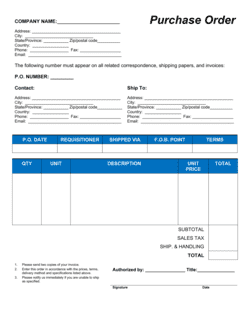
A purchase order is issued by a buyer before delivery to authorize a transaction. A record of purchase warranty registration form is completed after delivery to activate warranty coverage on the received product. Purchase orders document the intent to buy; registration forms document the post-delivery product ownership and coverage activation.

Industry-specific considerations

Electronics and appliances

Serial number and model number tracking is critical for unit-level warranty validation and recall management across high-volume consumer products.

Construction and trades

Equipment and tool warranties require purchase date and authorized dealer verification to distinguish standard wear-and-tear exclusions from covered defects.

Retail and e-commerce

Online purchase registrations must capture marketplace seller details to verify authorized-dealer status and enforce gray-market exclusions.

Healthcare and medical devices

Regulatory requirements may mandate device registration and purchase records for traceability, recall compliance, and post-market surveillance obligations.

Template vs pro β€” what fits your needs?

PathBest forCostTime
Use the templateSmall and mid-size product sellers, retailers, and manufacturers needing a standardized paper or digital registration formFree10 minutes per form setup
Template + professional reviewBusinesses selling products in regulated categories (medical devices, children's products) or multiple jurisdictions$100–$300 (legal or compliance review)1–2 days
Custom draftedHigh-volume manufacturers with ERP-integrated warranty databases, tiered coverage programs, or complex recall-management obligations$500–$2,000+ (custom form and workflow development)1–2 weeks

Glossary

Warranty Registration
The process by which a buyer records their purchase with the manufacturer or seller to formally activate product warranty coverage.
Proof of Purchase
Documentation β€” typically a receipt, invoice, or registration form β€” that confirms a product was legitimately bought on a specific date.
Serial Number
A unique alphanumeric identifier assigned to an individual unit of a product, used to track ownership, warranty status, and service history.
Model Number
A code assigned by the manufacturer to identify a specific product design or configuration, distinct from the serial number that identifies a single unit.
Warranty Period
The defined length of time during which a manufacturer or seller agrees to repair or replace a defective product at no cost to the buyer.
Limited Warranty
A warranty that covers only specific defects or parts, or that applies only under defined conditions, as opposed to a full warranty covering all defects unconditionally.
Extended Warranty
A service contract that extends coverage beyond the standard manufacturer warranty period, typically sold separately at the time of purchase.
Warranty Claim
A formal request by a buyer asking the manufacturer or seller to honor warranty terms and repair, replace, or refund a defective product.
Date of Purchase
The calendar date on which the buyer completed the transaction, used as the baseline for calculating warranty period start and expiration dates.
Authorized Dealer
A retailer or distributor officially sanctioned by the manufacturer to sell its products, often a prerequisite for warranty eligibility.

Part of your Business Operating System

This document is one of 3,000+ business & legal templates included in Business in a Box.

  • Fill-in-the-blanks β€” ready in minutes
  • 100% customizable Word document
  • Compatible with all office suites
  • Export to PDF and share electronically

Create your document in 3 simple steps.

From template to signed document β€” all inside one Business Operating System.
1
Download or open template

Access over 3,000+ business and legal templates for any business task, project or initiative.

2
Edit and fill in the blanks with AI

Customize your ready-made business document template and save it in the cloud.

3
Save, Share, Send, Sign

Share your files and folders with your team. Create a space of seamless collaboration.

Save time, save money, and create top-quality documents.

β˜…β˜…β˜…β˜…β˜…

"Fantastic value! I'm not sure how I'd do without it. It's worth its weight in gold and paid back for itself many times."

Managing Director Β· Mall Farm
Robert Whalley
Managing Director, Mall Farm Proprietary Limited
β˜…β˜…β˜…β˜…β˜…

"I have been using Business in a Box for years. It has been the most useful source of templates I have encountered. I recommend it to anyone."

Business Owner Β· 4+ years
Dr Michael John Freestone
Business Owner
β˜…β˜…β˜…β˜…β˜…

"It has been a life saver so many times I have lost count. Business in a Box has saved me so much time and as you know, time is money."

Owner Β· Upstate Web
David G. Moore Jr.
Owner, Upstate Web

Run your business with a system β€” not scattered tools

Stop downloading documents. Start operating with clarity. Business in a Box gives you the Business Operating System used by over 250,000 companies worldwide to structure, run, and grow their business.

Start freeΒ Β·Β No credit card required