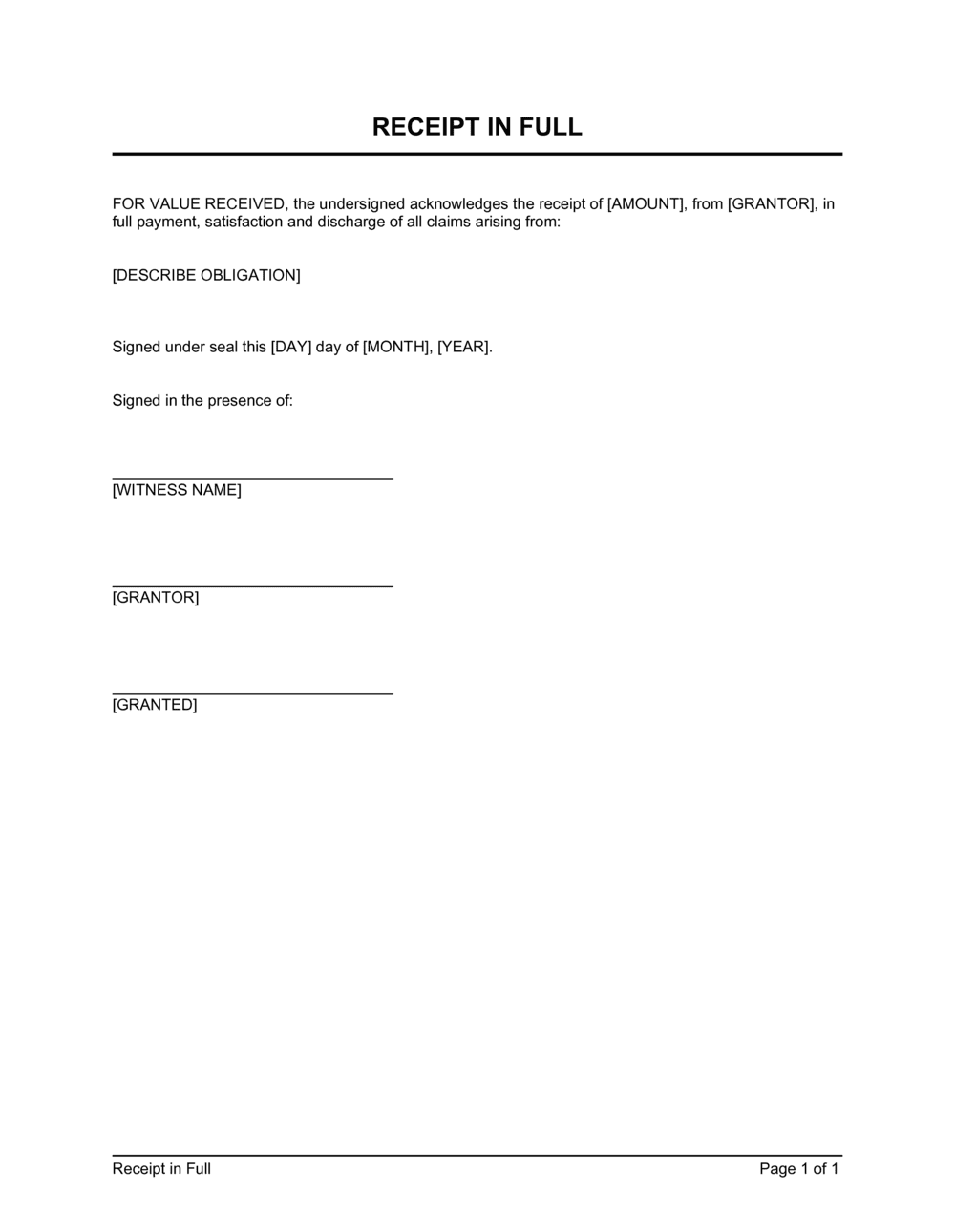
Receipt Template

Free Word download β€’ Edit online β€’ Save & share with Drive β€’ Export to PDF

1 pageβ€’20–30 min to fillβ€’Difficulty: Standardβ€’Signature requiredβ€’Legal review recommended
Learn more ↓
FreeReceipt Template

At a glance

What it is
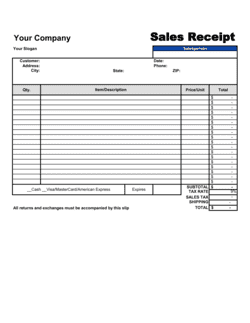
A Receipt is a legally recognized written acknowledgment confirming that a payment has been received by one party from another in exchange for goods, services, or settlement of an obligation. This free Word download gives you a structured, professional receipt you can edit online, customize with your branding, and export as PDF to provide to payers as proof of completed payment.
When you need it
Issue a receipt any time you collect payment β€” in cash, by check, by electronic transfer, or by card β€” and need to provide the payer with formal written confirmation. It is especially important for cash transactions where no bank record exists, for high-value sales, and for any payment that may later be disputed.
What's inside
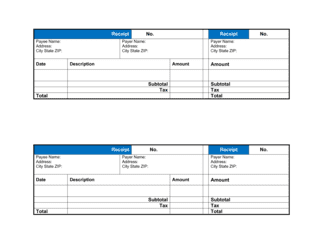
Seller and buyer identification, receipt number and date, a description of the goods or services paid for, the amount received, payment method, applicable taxes, balance due (if any), and an acknowledgment signature confirming the transaction is complete.

What is a Receipt?

A Receipt is a legally recognized written acknowledgment confirming that a payment has been received by one party β€” the payee β€” from another party β€” the payer β€” in exchange for goods, services, a rental obligation, or the settlement of a debt. Unlike an invoice, which requests future payment, a receipt records a transaction that has already been completed. It identifies both parties, states the exact amount received, describes what the payment was for, records the payment method and date, and bears the payee's authorized signature to confirm the acknowledgment is genuine. For cash transactions where no bank record exists, a signed receipt is often the only documentary evidence of the payment.

Why You Need This Document

Operating without properly issued receipts creates financial, legal, and tax exposure across every industry. Tax authorities in the US, Canada, the UK, and the EU require itemized receipts to substantiate business expense deductions and to recover input tax credits β€” a lump-sum cash payment with no receipt is presumed non-deductible. In payment disputes, an unsigned or vague receipt is easily challenged, leaving the payee unable to prove the amount received or the payer unable to prove the obligation was satisfied. For landlords, the absence of rent receipts is one of the most common triggers for housing tribunal claims. For nonprofits, a technically deficient donation receipt means donors cannot claim their tax deductions, which directly reduces future giving. This template gives you a structured, professionally formatted receipt that covers every required element β€” parties, amount in words and figures, payment method, tax itemization, and authorized signature β€” so every transaction you process is fully documented from the moment payment changes hands.

Which variant fits your situation?

If your situation is…Use this template
Confirming a cash payment for a product saleSales Receipt
Documenting monthly rent payment from a tenantRent Receipt
Acknowledging a charitable donation for tax purposesDonation Receipt
Confirming a deposit payment before work beginsDeposit Receipt
Recording payment received for professional servicesPayment Receipt
Issuing acknowledgment for a returned item or refundRefund Receipt
Documenting payment in full settlement of a debt or disputePayment in Full Receipt

Common mistakes to avoid

❌ Omitting the receipt number

Why it matters: Receipts without a unique sequential number cannot be tracked, reconciled against invoices, or referenced in a dispute. Tax auditors flag unnumbered receipts as potential cash income under-reporting.

Fix: Assign a sequential receipt number in a consistent format (REC-YYYY-NNNN) and maintain a receipt register that matches your invoice records.

❌ Recording only the numeral amount without writing it out

Why it matters: Numeric amounts on handwritten or poorly secured documents can be altered after signing. A receipt that reads '$1,500' can be changed to '$11,500' without the written amount as a check.

Fix: Always write the amount in both numerals and full words β€” 'One Thousand Five Hundred Dollars and 00/100' β€” and have both the payee and payer initial the amount field on high-value receipts.

❌ Issuing a receipt without an authorized signature

Why it matters: An unsigned receipt is a blank form, not an acknowledgment. Without a signature from an authorized representative, the payee can later claim the receipt was never formally issued or the payment was not actually received.

Fix: Designate one or more authorized signatories for receipts and ensure only those individuals sign. Train staff never to issue unsigned receipt documents.

❌ No itemized tax breakdown on taxable transactions

Why it matters: Business payers need an itemized tax amount to claim input tax credits (VAT/GST recovery) or deduct expenses. A receipt showing only a lump-sum total is insufficient for most tax authority requirements.

Fix: Include a separate line showing the pre-tax subtotal, the applicable tax rate and jurisdiction, the tax amount, and the total received. Use a consistent format across all receipts.

❌ Using vague or generic descriptions in the payment description field

Why it matters: A receipt that says 'for services' or 'goods purchased' cannot be tied to a specific contract or invoice, making it nearly useless as evidence in a payment dispute or audit.

Fix: Reference the specific invoice number, contract date, product name, or rental period covered. A single identifying reference transforms a generic receipt into traceable financial evidence.

❌ Failing to state whether the payment is partial or final

Why it matters: Without explicit payment-in-full or balance-due language, a payer who has made a final payment may later dispute whether a further amount is owed, and a payee collecting a deposit has no written record that the remaining balance is still outstanding.

Fix: Include a mandatory payment status field on every receipt and complete it for every transaction β€” either 'Payment in Full β€” no balance due' or 'Partial Payment β€” balance of $[X] due [DATE]'.

The 9 key clauses, explained

Parties β€” Payee and Payer Identification

In plain language: Identifies the business or individual receiving the payment and the person or entity making it, including contact details and any applicable tax identification numbers.

Sample language
Received by: [PAYEE BUSINESS NAME], [ADDRESS], [TAX ID / EIN]. Received from: [PAYER FULL NAME / COMPANY NAME], [ADDRESS], [PHONE / EMAIL].

Common mistake: Using a trade name instead of the registered legal entity for the payee. If the receipt is later used in a legal dispute or tax audit, a mismatched name can complicate enforcement or disqualify the document.

Receipt Number and Date

In plain language: Assigns a unique sequential identifier to the receipt and records the exact date the payment was received β€” not the date the document was prepared.

Sample language
Receipt No.: [REC-2026-0112] | Date of Payment Received: [DATE].

Common mistake: Using the document preparation date rather than the actual payment receipt date. The discrepancy creates audit problems and can invalidate the receipt as evidence of when a payment obligation was fulfilled.

Description of Goods, Services, or Obligation Paid

In plain language: Describes what the payment is for β€” the specific goods sold, services rendered, rental period covered, or debt being settled β€” with enough detail to identify the transaction unambiguously.

Sample language
Payment received for: [DESCRIPTION OF GOODS / SERVICES / OBLIGATION], covering [PERIOD / PROJECT / ITEM], as referenced in Invoice No. [XXXX] / Agreement dated [DATE].

Common mistake: Writing a vague description such as 'services' or 'goods.' If the payer later disputes what was purchased or the payee needs to demonstrate the payment satisfied a specific obligation, a vague description is nearly useless.

Amount Received

In plain language: States the exact dollar amount received, written both in numerals and words to prevent alteration or misreading.

Sample language
Amount Received: $[1,250.00] (One Thousand Two Hundred Fifty Dollars and 00/100).

Common mistake: Stating only the numeral without the written-out amount. Handwritten or printed numerals can be altered; writing the amount in words protects against fraud and ambiguity.

Payment Method

In plain language: Records how the payment was made β€” cash, check number, credit/debit card type and last four digits, bank transfer reference, or digital payment platform and transaction ID.

Sample language
Payment Method: [Cash / Check No. XXXX / Credit Card ending in XXXX / Bank Transfer Ref. XXXXXXXX / [PLATFORM] Transaction ID: XXXXXXXX].

Common mistake: Omitting the payment method on cash transactions. Cash receipts without a documented payment method are the most commonly challenged in disputes and tax audits because there is no independent bank record to corroborate them.

Tax Breakdown

In plain language: Identifies any sales tax, VAT, or GST included in or added to the amount received, stated as both a rate and a dollar amount, so the net and tax components are clear.

Sample language
Subtotal: $[1,150.00] | [Sales Tax / VAT / GST] ([8.25]%): $[94.87] | Total Received: $[1,244.87].

Common mistake: Combining tax into the total without itemizing the rate and amount. Tax authorities in most jurisdictions require itemized tax disclosure on receipts used for business expense claims or VAT recovery.

Balance Due or Payment in Full

In plain language: Explicitly states whether this payment satisfies the full outstanding obligation or whether a balance remains, and if so, how much.

Sample language
This payment [SATISFIES IN FULL / leaves an outstanding balance of $[AMOUNT]] the obligation referenced above.

Common mistake: Omitting this clause entirely on partial payments. Without it, the payer may reasonably believe the obligation is settled, and recovering the remaining balance becomes harder without a documented acknowledgment of what was still owed.

Acknowledgment and Payee Signature

In plain language: A signed or stamped confirmation by the payee β€” or an authorized representative β€” that the payment described has been received, converting the document from a template into a legally effective receipt.

Sample language
I, the undersigned, acknowledge receipt of the above-described payment on behalf of [PAYEE BUSINESS NAME]. Authorized Signature: ___________________ | Name: [PRINTED NAME] | Title: [TITLE] | Date: [DATE].

Common mistake: Leaving the signature block blank or having an unauthorized employee sign. An unsigned receipt is not an acknowledgment β€” it is just a form β€” and a receipt signed by someone without authority to bind the business can be challenged as invalid.

Terms and Conditions or Notes

In plain language: Optional field for recording any special conditions attached to the payment β€” return policies, warranty information, partial-payment schedule, or any caveats on finality.

Sample language
Notes: [This payment constitutes a non-refundable deposit / Subject to 30-day return policy / Remaining balance of $[AMOUNT] due on [DATE]].

Common mistake: Using this field to include vague boilerplate without reading it. Terms pasted from an unrelated template β€” such as arbitration clauses or liability caps β€” may be unenforceable or create unintended obligations on a simple cash transaction.

How to fill it out

  1. 1

    Enter the payee and payer details

    Add your full legal business name, address, and tax identification number in the payee block. Enter the payer's legal name or company name and their contact details in the payer block.

    πŸ’‘ Save a version of the template pre-filled with your business details as a master file so you only need to update the payer information for each new transaction.

  2. 2

    Assign a sequential receipt number and enter the payment date

    Use a consistent numbering format such as REC-YYYY-NNNN and record the exact date the payment was physically received or cleared β€” not the date you are preparing the document.

    πŸ’‘ If you process receipts in batches, note the date of each individual payment in the body of the receipt rather than the batch preparation date.

  3. 3

    Describe the goods, services, or obligation being paid

    Write a specific description identifying what the payment covers β€” product name, service type, rental period, or invoice number β€” with enough detail to match the corresponding contract or invoice.

    πŸ’‘ Cross-reference the invoice number or contract date in this field. Linking the receipt to the underlying obligation makes it enforceable evidence if the payment is ever disputed.

  4. 4

    Enter the amount received in numerals and words

    State the exact amount received in both numeric and written-out form. If the amount includes taxes, itemize the subtotal, tax rate, tax amount, and total separately.

    πŸ’‘ For cash transactions, count the notes and coins in the presence of the payer before completing this field β€” corrections after signing undermine the receipt's credibility.

  5. 5

    Record the payment method and transaction reference

    Select the payment method and add the relevant identifier β€” check number, card last four digits, bank transfer reference, or digital platform transaction ID.

    πŸ’‘ For electronic transfers, copy the exact transaction reference from the bank confirmation into the receipt. This creates a direct link between the receipt and the bank record.

  6. 6

    State whether the obligation is paid in full or a balance remains

    Check or complete the payment-in-full or balance-due field explicitly. If a balance remains, state the exact amount and the due date for the next payment.

    πŸ’‘ If this is the final payment in a series, the payment-in-full language provides important legal protection β€” it prevents the payer from later claiming additional amounts are owed.

  7. 7

    Sign and date the receipt

    Have an authorized representative of the payee sign the acknowledgment block and print their name and title. Date the signature on the same day the payment is received.

    πŸ’‘ Provide the payer with a signed copy immediately β€” delays in issuing receipts create doubt about when or whether payment was actually received.

  8. 8

    File both copies and reconcile with your records

    Retain the original signed receipt in your accounting files and give the payer a duplicate. Cross-reference the receipt number against your invoice register or accounts-receivable ledger.

    πŸ’‘ Export a PDF copy before filing the Word document. PDF ensures the formatting and content cannot be inadvertently edited after signing.

Frequently asked questions

What is a receipt?

A receipt is a written acknowledgment issued by the payee β€” the seller, landlord, or service provider β€” confirming that a specific payment has been received from the payer. It records the transaction date, the amount paid, the payment method, and what the payment was for. A signed receipt serves as legally recognized evidence that a payment obligation has been fulfilled and is used for accounting, tax, and dispute-resolution purposes.

What is the difference between a receipt and an invoice?

An invoice is a request for payment issued before or at the time of delivery β€” it states what is owed and when it is due. A receipt confirms that payment has already been made and the obligation is satisfied. Both documents relate to the same transaction but represent opposite sides of the payment timeline. Businesses should retain both for complete accounting records.

Is a receipt a legally binding document?

A receipt is not a contract in the traditional sense β€” it does not create new obligations β€” but it is legally recognized evidence of a completed transaction in most jurisdictions. A signed receipt can be introduced in court or arbitration to prove that a payment was made or received on a specific date for a specific purpose. In disputes over cash transactions where no bank record exists, a signed receipt is often the only documentary evidence available.

When is a signed receipt required?

While no universal law mandates signed receipts for every transaction, several situations make them essential: cash payments above a nominal threshold, rent payments under a tenancy agreement, deposits before work begins, and payments in settlement of a disputed debt. Many jurisdictions also require receipts for any consumer transaction above a set amount, and tax authorities require them to substantiate business expense claims.

Does a receipt need to be signed to be valid?

In most jurisdictions, a receipt without a payee signature is treated as an unverified record rather than a formal acknowledgment. A signature by an authorized representative of the payee confirms that the described payment was actually received and converts the document from a form into enforceable evidence. For high-value or disputed transactions, obtaining both parties' signatures significantly strengthens the receipt's evidentiary weight.

What should I include on a receipt for tax purposes?

Tax authorities in most jurisdictions require receipts used for business expense claims to include the payee's legal name and tax identification number, the payer's name, the date of payment, a specific description of the goods or services, the subtotal, an itemized tax amount showing the applicable rate, and the total paid. Receipts for VAT or GST recovery additionally need to identify the tax registration number of the payee and the specific tax jurisdiction.

What is the difference between a receipt and a proof of purchase?

A receipt is a specific document issued by the payee at the time of payment to acknowledge the transaction. Proof of purchase is a broader term that includes any document evidencing a completed sale β€” a receipt, a bank statement, an email confirmation, or a stamped invoice. For warranty claims, returns, and insurance purposes, a formal signed receipt is the strongest form of proof of purchase because it explicitly acknowledges payment and identifies what was bought.

How long should I keep receipts?

Retention requirements vary by jurisdiction. In the US, the IRS recommends keeping receipts for at least 3 years for most tax filings and up to 7 years for transactions that may relate to a tax claim. In Canada, the CRA requires most business records for 6 years from the end of the tax year. In the UK, HMRC requires 5 years from the January 31 filing deadline for self-assessment taxpayers. For high-value asset purchases, receipts should be kept for the life of the asset plus the applicable audit period.

How this compares to alternatives

vs Invoice

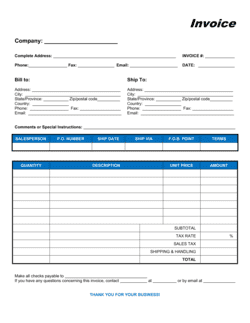
An invoice requests payment before or at the time of delivery and creates a formal accounts-receivable entry. A receipt confirms that payment has been made and closes the transaction. They document the same exchange at different points in time β€” the invoice triggers payment, the receipt proves it was received. Both should be retained for complete accounting records.

vs Bill of Sale

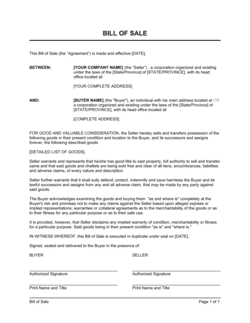
A bill of sale transfers legal ownership of an asset β€” a vehicle, equipment, or personal property β€” from seller to buyer and documents the agreed price and conditions of sale. A receipt merely confirms that a specified payment was received. For high-value asset transfers, both documents are needed: the bill of sale establishes title; the receipt proves the purchase price was paid.

vs Payment Agreement

A payment agreement sets out the terms of a future payment obligation β€” schedule, amount, interest, and consequences of default. A receipt documents that a payment has already been made. Use a payment agreement before money changes hands to govern the obligation; issue a receipt each time a payment is actually received under that agreement.

vs Petty Cash Receipt

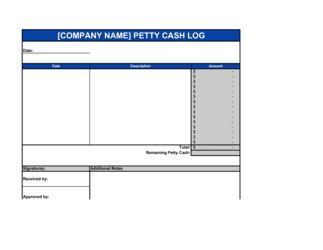
A petty cash receipt is an internal accounting document used to record small, incidental cash disbursements from a petty cash fund β€” it is not issued to a customer or client. A standard receipt is issued externally to confirm payment received from a third party. Petty cash receipts support internal reconciliation; customer receipts support external transaction evidence.

Industry-specific considerations

Retail and E-commerce

Point-of-sale receipts must itemize each product, applicable sales tax by state, return policy, and payment method β€” requirements enforced by consumer protection laws in most US states and under EU consumer rights directives.

Real Estate and Property Management

Rent receipts are legally required in many provinces and states, must state the rental period covered and any arrears balance, and are used by tenants as evidence in disputes with landlords before housing tribunals.

Construction and Trades

Deposit and progress-payment receipts reduce lien risk by creating a documented payment trail against the contract value, and are required by bonding companies and general contractors as part of project close-out documentation.

Nonprofit and Charitable Organizations

Donation receipts must include the organization's registered charity number, a statement of whether any goods or services were provided in exchange for the donation, and the date β€” all required by the IRS, CRA, HMRC, and equivalent authorities for donor tax deductions.

Jurisdictional notes

United States

Most US states require retailers to provide a receipt for any cash transaction above a nominal amount, with several states mandating receipts for all sales above $15. The IRS requires receipts to itemize taxes for business expense substantiation under IRC Β§162. In litigation, a signed receipt is admissible as a business record under Federal Rule of Evidence 803(6). Electronic receipts are legally equivalent to paper under the E-SIGN Act (15 U.S.C. Β§7001).

Canada

Charitable donation receipts in Canada must include the organization's CRA registration number and meet strict CRA requirements under the Income Tax Act to qualify for donor tax credits. For business expense deductions, the CRA requires receipts to show supplier name, date, amount, and a description of goods or services. Quebec requires that receipts issued to consumers be in French under the Charter of the French Language. The CRA typically requires business records β€” including receipts β€” to be retained for 6 years.

United Kingdom

HMRC requires VAT-registered businesses to issue VAT receipts for all taxable supplies above Β£250, which must include the supplier's VAT registration number, the tax point date, the VAT rate, and the amount of VAT charged. For sales under Β£250, a simplified VAT receipt may be issued. Gift Aid donation receipts require a specific declaration from the donor. Under the Consumer Rights Act 2015, receipts support consumer rights claims for refunds, repairs, and replacements.

European Union

EU VAT Directive 2006/112/EC requires VAT invoices β€” which function as receipts β€” to include the supplier's VAT identification number, the buyer's VAT number for B2B transactions, a sequential invoice number, and the VAT amount broken out by rate. Consumer receipts under EU consumer rights law must provide clear information on return and warranty rights. Several member states β€” including France and Italy β€” have mandatory electronic receipt (e-receipt) requirements for B2C transactions at point of sale. GDPR applies to any personal data stored in receipt records.

Template vs lawyer β€” what fits your deal?

PathBest forCostTime
Use the templateStandard business-to-consumer and business-to-business payment transactions, rent receipts, and service payment confirmationsFree5 minutes per receipt
Template + legal reviewHigh-value transactions, partial payments against a disputed debt, or receipts that need to reference complex contractual terms$100–$300 (paralegal or accountant review)1–2 hours
Custom draftedSettlement receipts in litigation, large-value commercial transactions with title transfer implications, or regulated industries requiring specific statutory language$300–$1,500+1–3 days

Glossary

Receipt
A written acknowledgment issued by a payee confirming that a specific payment has been received from a payer.
Payee
The party who receives the payment β€” the seller, landlord, service provider, or creditor issuing the receipt.
Payer
The party who makes the payment β€” the buyer, tenant, client, or debtor named on the receipt.
Receipt Number
A unique sequential identifier assigned to each receipt for record-keeping, tax, and audit trail purposes.
Payment in Full
Language on a receipt stating that the amount received satisfies the entire outstanding obligation, with no further balance owed.
Consideration
The thing of value exchanged β€” money paid in return for goods, services, or settlement of an obligation β€” that makes the transaction legally meaningful.
Balance Due
The amount remaining unpaid after a partial payment is received, stated on the receipt to confirm the transaction is not yet fully settled.
Payment Method
The mechanism used to transfer funds β€” cash, check, credit card, bank transfer, or digital payment platform.
Acknowledgment
A signed or stamped confirmation by the payee that the described payment has been received, making the receipt enforceable as evidence.
Tax Invoice
A document that combines invoice and receipt functions by both requesting and confirming payment while specifying tax amounts β€” required in many jurisdictions for VAT or GST compliance.
Donation Acknowledgment
A specialized receipt issued by a tax-exempt organization to a donor, containing the specific language required by tax authorities for the donor to claim a deduction.
Proof of Purchase
Any document β€” including a receipt β€” that evidences a completed transaction and can be used to support warranty claims, returns, or expense reimbursements.

Part of your Business Operating System

This document is one of 3,000+ business & legal templates included in Business in a Box.

  • Fill-in-the-blanks β€” ready in minutes
  • 100% customizable Word document
  • Compatible with all office suites
  • Export to PDF and share electronically

Create your document in 3 simple steps.

From template to signed document β€” all inside one Business Operating System.
1
Download or open template

Access over 3,000+ business and legal templates for any business task, project or initiative.

2
Edit and fill in the blanks with AI

Customize your ready-made business document template and save it in the cloud.

3
Save, Share, Send, Sign

Share your files and folders with your team. Create a space of seamless collaboration.

Save time, save money, and create top-quality documents.

β˜…β˜…β˜…β˜…β˜…

"Fantastic value! I'm not sure how I'd do without it. It's worth its weight in gold and paid back for itself many times."

Managing Director Β· Mall Farm
Robert Whalley
Managing Director, Mall Farm Proprietary Limited
β˜…β˜…β˜…β˜…β˜…

"I have been using Business in a Box for years. It has been the most useful source of templates I have encountered. I recommend it to anyone."

Business Owner Β· 4+ years
Dr Michael John Freestone
Business Owner
β˜…β˜…β˜…β˜…β˜…

"It has been a life saver so many times I have lost count. Business in a Box has saved me so much time and as you know, time is money."

Owner Β· Upstate Web
David G. Moore Jr.
Owner, Upstate Web

Run your business with a system β€” not scattered tools

Stop downloading documents. Start operating with clarity. Business in a Box gives you the Business Operating System used by over 250,000 companies worldwide to structure, run, and grow their business.

Start freeΒ Β·Β No credit card required