- Grantor
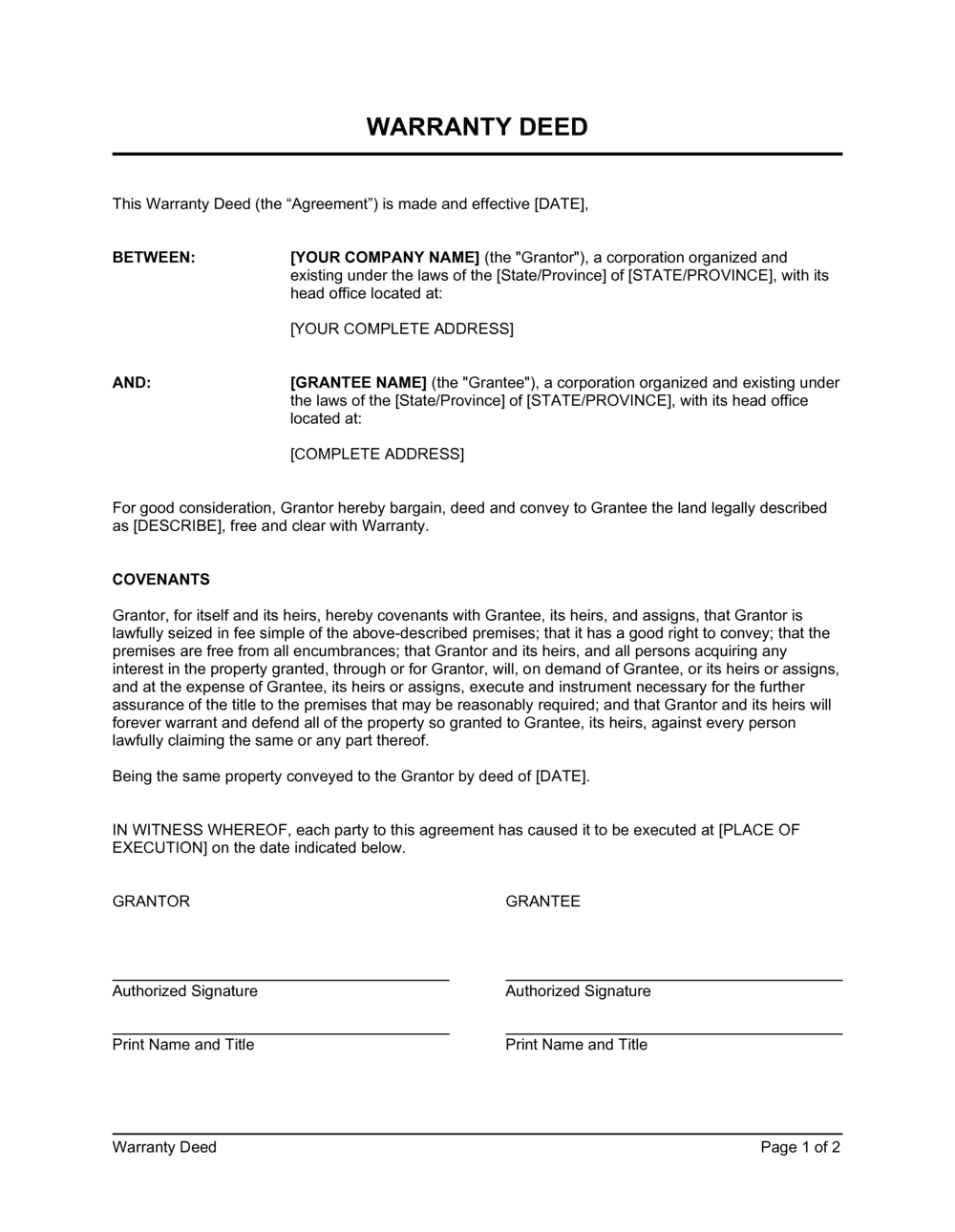
- The current owner of the property who is transferring title to the buyer or recipient.
- Grantee
- The person or entity receiving ownership of the property under the deed.
- Legal Description
- A precise written description of a parcel of land using metes and bounds, lot and block, or government survey method — not a street address.
- Consideration
- The value exchanged for the property transfer, typically the purchase price, stated in the deed to satisfy contractual and recording requirements.
- Covenant of Seisin
- The grantor's guarantee that they actually own the property and have the legal right to convey it.
- Covenant of Quiet Enjoyment
- The grantor's promise that the grantee's possession will not be disturbed by any third party claiming superior title.
- Encumbrance
- Any lien, easement, mortgage, judgment, or restriction that affects the property's title or limits the grantee's use.
- Notarization
- The process by which a notary public verifies the identity of the signing parties and witnesses execution, required for deed recording in most jurisdictions.
- Recording
- The act of filing a properly executed deed with the county recorder, register of deeds, or land registry office to provide public notice of the ownership transfer.
- Title Search
- An examination of public records to trace the chain of ownership of a property and identify any outstanding liens, encumbrances, or defects in title.
- Chain of Title
- The chronological sequence of all recorded ownership transfers for a property, running from the original grant to the current owner.
- Title Insurance
- A policy that protects a buyer or lender against financial loss from undiscovered title defects, liens, or ownership disputes not revealed by a title search.