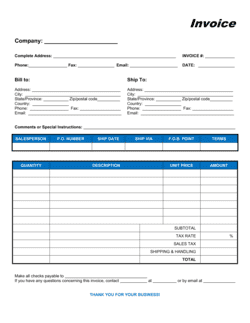
Notice of NSF Check Charge and Late Fee Owed Template

Free Word download β€’ Edit online β€’ Save & share with Drive β€’ Export to PDF

1 pageβ€’15–25 min to fillβ€’Difficulty: Standard
Learn more ↓
FreeNotice of NSF Check Charge and Late Fee Owed Template

At a glance

What it is
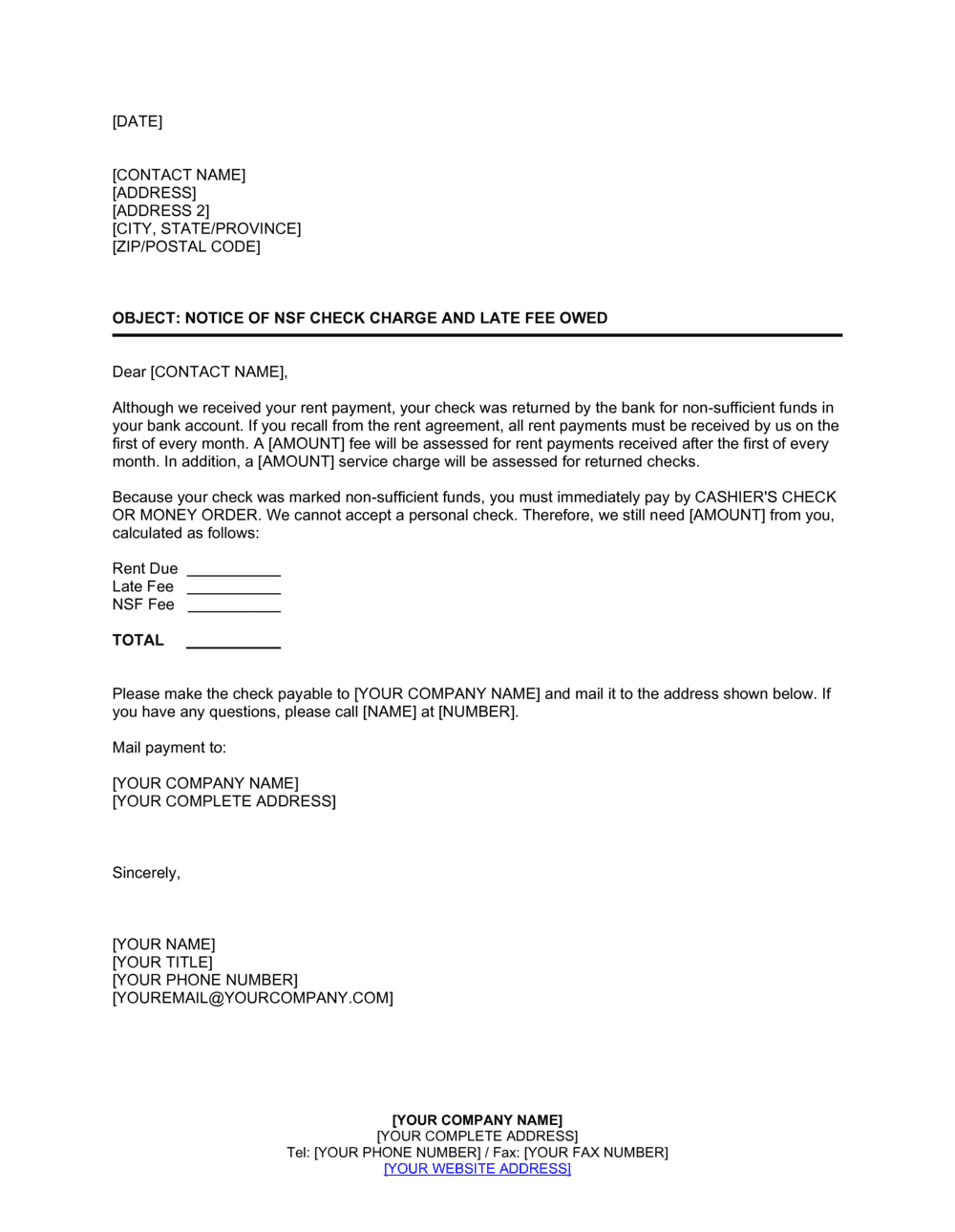
A Notice of NSF Check Charge and Late Fee Owed is a formal business letter sent to a customer whose payment check was returned by the bank due to non-sufficient funds (NSF). It documents the original check details, states the NSF bank fee charged to the business, and notifies the customer of any accrued late fee, specifying the total amount now owed. This free Word download is ready to edit online and send within minutes.
When you need it
Send it as soon as your bank notifies you that a customer's check has been returned unpaid. Prompt written notice protects your right to collect the NSF fee and any contractual or statutory late fee, and creates a paper trail for collections or small claims court if needed.
What's inside
Sender and recipient contact details, returned check identification (check number, date, original amount), the NSF bank fee amount, the late fee calculation, a clear statement of the total balance due, and a deadline for remittance with accepted payment methods.

What is a Notice of NSF Check Charge and Late Fee Owed?

A Notice of NSF Check Charge and Late Fee Owed is a formal business letter sent to a customer or debtor whose payment check was returned by the bank due to non-sufficient funds. It serves three purposes at once: it documents the specific returned check event, it formally notifies the recipient of the NSF bank fee passed through to them, and it states any accrued late fee based on the original invoice or contract terms β€” presenting a clear, itemized total balance due with a firm payment deadline. Unlike an informal follow-up call or email, a properly structured written notice creates an auditable paper trail that supports collections referral, check-verification reporting, or small claims court filing if the customer fails to pay.

Why You Need This Document

A returned check is not just a failed payment β€” it is a bank-verified event that triggers specific legal remedies and fee-recovery rights in most jurisdictions. Without a written notice, you have no documented record that the customer was formally informed of the returned check, no basis for charging the NSF fee beyond the original invoice amount, and no starting point for the collections timeline. Relying on a phone call or informal email leaves your business unable to demonstrate the customer received notice β€” a requirement in many states before you can pursue bad-check penalties or report to check-verification services. This template gives you a consistent, professional notice you can complete in under ten minutes, send via certified mail, and file as evidence β€” protecting both the fees you are owed and your right to escalate if payment is not received.

Which variant fits your situation?

If your situation is…Use this template
Check returned and no late fee applies β€” NSF charge onlyNSF Check Charge Notice (No Late Fee)
Repeated NSF occurrence β€” escalating to demand letterDemand for Payment Letter
NSF on a tenant's rent checkReturned Rent Check Notice
Referring the matter to a collections agency after no responseDebt Collection Letter
Threatening legal action if payment is not received within a set deadlineFinal Demand for Payment Letter
Issuing a formal receipt once replacement payment is receivedPayment Receipt

Common mistakes to avoid

❌ Accepting a personal check as replacement payment

Why it matters: A second returned check adds another NSF fee, resets your collections timeline, and signals to the customer that there are no real consequences.

Fix: Explicitly state in the notice β€” and enforce β€” that only cashier's checks, money orders, or electronic transfers are accepted for replacement payment.

❌ Omitting the late fee contractual basis

Why it matters: Without a reference to the original invoice or contract that authorizes the late fee, a customer can successfully dispute the charge and withhold that portion of the payment.

Fix: Always cite the invoice number, agreement date, and the specific late fee clause (e.g., '1.5% per month on overdue balances') that supports the charge.

❌ Sending the notice to the wrong contact

Why it matters: A notice sent to a general customer email instead of accounts payable can sit unread for weeks, making your payment deadline meaningless.

Fix: Confirm the correct billing contact and mailing address before sending, and follow up with a phone call to confirm receipt within 48 hours.

❌ Threatening collections or legal action with no intention to follow through

Why it matters: Customers who test the deadline and face no consequence will repeat the behavior, and your future notices will carry no weight.

Fix: Only state consequences you will actually enforce. If the deadline passes without payment, take the stated next step within 5 business days.

The 9 key clauses, explained

Sender and recipient header

In plain language: Identifies your business and the customer receiving the notice, including full names, addresses, and the date of the letter.

Sample language
[BUSINESS NAME] | [ADDRESS] | [CITY, STATE, ZIP] | [DATE] To: [CUSTOMER FULL NAME] | [CUSTOMER ADDRESS] | [CITY, STATE, ZIP]

Common mistake: Using a nickname or trading name instead of the business's registered legal name β€” this can complicate debt recovery if the matter escalates to court.

Subject line

In plain language: A short heading that immediately identifies the purpose of the letter and the check in question.

Sample language
RE: Returned Check Notice β€” Check No. [CHECK NUMBER], Original Amount $[AMOUNT], Dated [CHECK DATE]

Common mistake: Omitting the check number and date from the subject line, making it harder for the customer's accounts payable team to locate and match the original transaction.

Notification of returned check

In plain language: States the fact that the named check was returned by the bank, names the bank, and cites the return reason.

Sample language
Please be advised that your check number [CHECK NUMBER], in the amount of $[AMOUNT], dated [DATE], drawn on [CUSTOMER BANK NAME], was returned to us by our bank on [RETURN DATE] marked '[NSF / ACCOUNT CLOSED / STOP PAYMENT]'.

Common mistake: Failing to state the bank's return reason. Without it, the customer can claim they were unaware of the issue, and the notice carries less weight as evidence.

NSF bank charge

In plain language: Discloses the fee your bank charged you for the returned item and notifies the customer that this cost is being passed on.

Sample language
As a result of the returned item, our bank has charged us a processing fee of $[NSF FEE AMOUNT]. This fee is your responsibility and is included in the total amount due below.

Common mistake: Omitting the NSF fee entirely and only demanding the original check amount β€” leaving money on the table and potentially forfeiting the right to collect it later.

Late fee calculation

In plain language: Explains how the late fee was calculated, referencing the original invoice or contract, the due date, and the rate or fixed charge applied.

Sample language
Pursuant to our [agreement / invoice terms] dated [INVOICE DATE], a late fee of $[LATE FEE AMOUNT] ([X]% per [month / day] / flat fee) has accrued from [DUE DATE] through [CURRENT DATE] on the outstanding balance of $[ORIGINAL AMOUNT].

Common mistake: Stating a late fee amount without referencing the contractual basis for it. If the customer disputes the charge, you need a citation to the original agreement or invoice terms.

Total amount due

In plain language: Presents a clear itemized summary of every charge β€” original check amount, NSF fee, and late fee β€” followed by the total balance owed.

Sample language
Original Check Amount: $[AMOUNT] NSF Bank Fee: $[NSF FEE] Late Fee: $[LATE FEE] TOTAL AMOUNT DUE: $[TOTAL]

Common mistake: Burying the total in a paragraph instead of presenting it as a line-item breakdown β€” customers are more likely to dispute a lump-sum demand than a clearly itemized statement.

Payment deadline and accepted methods

In plain language: Sets a firm date by which payment must be received and lists the acceptable payment methods, explicitly excluding personal checks.

Sample language
Payment in full of $[TOTAL] is due no later than [DEADLINE DATE β€” typically 10 business days from letter date]. Accepted payment methods: cashier's check, money order, or electronic transfer to [ACCOUNT DETAILS / PAYMENT PORTAL LINK]. Personal checks will not be accepted.

Common mistake: Accepting a personal check as replacement payment. A second dishonored check resets the collections timeline and adds more bank fees.

Consequences of non-payment

In plain language: Notifies the customer of the next steps the business may take β€” collections referral, small claims filing, or reporting to a check verification service β€” if payment is not received by the deadline.

Sample language
If payment is not received by [DEADLINE DATE], we reserve the right to refer this matter to a collections agency, report the returned check to [CHECK VERIFICATION SERVICE], and/or pursue the balance through legal proceedings, which may include small claims court.

Common mistake: Threatening consequences you have no intention of following through on. If the customer calls the bluff and you take no action, future notices lose all credibility.

Closing and contact information

In plain language: Ends the letter professionally, invites the customer to contact you with questions, and provides a direct phone number or email to facilitate prompt resolution.

Sample language
We appreciate your prompt attention to this matter. Please contact [CONTACT NAME] at [PHONE NUMBER] or [EMAIL ADDRESS] if you have any questions regarding this notice. Sincerely, [AUTHORIZED REPRESENTATIVE NAME] [TITLE] | [BUSINESS NAME]

Common mistake: Closing the letter without a direct contact point. Customers who have a quick question and can't reach anyone easily may delay payment simply due to friction.

How to fill it out

  1. 1

    Enter your business and customer details

    Fill in your registered business name, address, and contact information in the sender block. Add the customer's full legal name and billing address in the recipient block.

    πŸ’‘ Use the same business name that appears on the original invoice β€” discrepancies create confusion in accounts payable and can delay payment.

  2. 2

    Identify the returned check

    Enter the check number, original dollar amount, check date, and the name of the customer's bank. Add the date your bank notified you of the return and the stated reason (NSF, closed account, stop-payment).

    πŸ’‘ Attach a copy of the bank's return notice or the returned check image as an exhibit β€” it removes any ambiguity about the transaction.

  3. 3

    State the NSF bank fee

    Enter the exact fee your bank charged for the returned item. This is typically shown on your bank statement or online banking return notification.

    πŸ’‘ Keep the bank statement or transaction record on file β€” you may need to produce it if the customer disputes the NSF fee amount.

  4. 4

    Calculate and document the late fee

    Reference the original invoice or contract that specifies your late fee terms. Calculate the accrued fee from the original due date to the letter date and enter both the rate and the dollar amount.

    πŸ’‘ If your original invoice or contract did not include a late fee clause, you cannot add one retroactively β€” leave this section blank or remove it.

  5. 5

    Present the itemized total

    List the original check amount, NSF fee, and late fee as separate line items, then state the total clearly. Confirm all arithmetic before finalizing.

    πŸ’‘ A one-cent arithmetic error gives the customer a reason to delay payment while 'verifying the numbers.' Double-check the total.

  6. 6

    Set the payment deadline and acceptable methods

    Enter a specific calendar date β€” typically 10 business days from the letter date β€” and list accepted payment methods. Explicitly exclude personal checks.

    πŸ’‘ 10 business days gives the customer enough time to act while keeping pressure on resolution. Shorter deadlines increase disputes; longer ones slow cash recovery.

  7. 7

    Send via certified mail and keep a copy

    Print and send the letter via certified mail with return receipt requested. Keep a copy of the letter and the delivery confirmation together in the customer's account file.

    πŸ’‘ Certified mail creates a timestamped delivery record that is admissible in small claims court if the matter escalates.

Frequently asked questions

What is an NSF check charge and late fee notice?

An NSF check charge and late fee notice is a formal business letter sent to a customer whose payment check was returned by their bank due to non-sufficient funds. It identifies the returned check, states the bank fee the business incurred, calculates any accrued late charge, presents the total amount now owed, and sets a deadline for payment in an acceptable form.

How much can I charge for an NSF fee?

NSF fee amounts are typically governed by state law and vary from $15 to $50 depending on the jurisdiction. Some states cap the fee you can pass on to a customer. In addition to any statutory limit, your right to charge a fee may depend on whether your original invoice, contract, or posted store policy disclosed the fee before the transaction. Review your state's returned-check statutes before setting your fee amount.

Can I charge a late fee in addition to the NSF fee?

Yes, provided your original invoice or contract included a late fee clause. If the customer agreed to payment terms that carry a late fee for overdue balances, the returned check makes the original amount overdue β€” triggering that clause. If no late fee was disclosed upfront, you generally cannot add one retroactively.

Should I send this notice by certified mail?

Sending by certified mail with return receipt requested is strongly recommended. It creates a timestamped, court-admissible record that the customer received the notice, which is important if you later pursue the balance through small claims court or a collections agency. Email alone is rarely sufficient documentation for legal proceedings.

What happens if the customer ignores the notice?

If the customer does not respond by the stated deadline, your next options typically include sending a formal demand for payment, referring the balance to a collections agency, reporting the returned check to a check verification service such as ChexSystems, or filing a claim in small claims court. Many jurisdictions allow you to seek additional damages β€” sometimes two to three times the check amount β€” for dishonored checks under bad-check statutes.

Can I report the customer to a check verification service?

Yes. Services such as TeleCheck and ChexSystems track returned-check history and can flag the customer's ability to pay by check at other businesses. Reporting is generally permitted once you have provided written notice and given the customer a reasonable opportunity to remedy the situation. Follow the reporting service's specific procedures to ensure compliance.

Do I need a lawyer to send an NSF notice?

No. For a standard NSF notice covering a single returned check and documented fees, a well-drafted template is entirely sufficient. Legal assistance is worth considering if the amount is large enough to warrant a formal demand letter, if the customer disputes the charges, or if you are preparing to file in court.

What payment methods should I accept for a returned check replacement?

Accept only guaranteed payment forms β€” cashier's checks, money orders, or electronic transfers (ACH, wire, or a payment portal link). Never accept a personal check as replacement payment, since a second returned check adds fees, restarts your collections timeline, and signals that there are no real consequences for non-payment.

How this compares to alternatives

vs Demand for Payment Letter

A demand for payment letter is a broader debt-recovery document used when any invoice goes unpaid β€” not necessarily tied to a returned check. The NSF notice is check-specific, documents bank fees, and serves as the first formal step. If the NSF notice goes unanswered, a demand for payment letter is typically the appropriate escalation.

vs Debt Collection Letter

A debt collection letter is a later-stage document sent when internal collection efforts have failed and the account is being referred to a third party or attorney. The NSF notice comes first β€” it is an internal business communication aimed at immediate resolution, not a collections escalation.

vs Past Due Invoice Reminder

A past due invoice reminder notifies a customer that a payment deadline has passed on an open invoice. An NSF notice addresses a specific payment that was attempted and dishonored by the bank β€” it adds bank fees and late charges on top of the original balance, making it a distinct document with different legal implications.

vs Late Payment Notice

A late payment notice informs a customer that their account balance is overdue and accruing charges. An NSF notice is triggered by a specific event β€” a returned check β€” and must document that event, the bank's return reason, and the resulting fees. The two letters serve different triggers and carry different evidentiary weight in collections.

Industry-specific considerations

Property Management

Returned rent checks trigger both NSF fees and contractual late rent charges; prompt written notice is often required before a landlord can proceed with eviction steps.

Retail

Point-of-sale check acceptance policies must disclose NSF fees upfront; posted fee schedules support recovery and compliance with state returned-check statutes.

Professional Services

Service agreements should include a returned-check fee clause; the NSF notice references that clause to justify both the bank charge and any accrued late fee.

Healthcare

Patient payment policies must clearly state NSF fees to comply with billing regulations; the notice is often sent alongside a corrected billing statement.

Template vs pro β€” what fits your needs?

PathBest forCostTime
Use the templateAny business recovering a standard returned check with documented NSF and late feesFree5–10 minutes per notice
Template + professional reviewBusinesses with high check volumes needing a reviewed template aligned to their state's returned-check fee statutes$100–$300 (one-time attorney review of template and fee schedule)1–3 days
Custom draftedLarge retailers or property managers with complex multi-state operations or contested high-value returned checks$300–$8003–7 days

Glossary

NSF (Non-Sufficient Funds)
A status assigned by a bank when a check is presented for payment but the account holder's balance is too low to cover it.
Returned Check
A check that a bank has declined to process and sent back to the depositing party because the payer's account lacked sufficient funds or was closed.
NSF Fee
A flat fee charged by the payee's bank β€” typically $15–$40 β€” for processing a check that was subsequently returned unpaid.
Late Fee
A charge applied when a payment is not received by the contractually agreed due date, often expressed as a fixed dollar amount or a daily percentage of the balance.
Dishonored Check
A check that a bank refuses to honor for any reason, including insufficient funds, a closed account, a stop-payment order, or a signature mismatch.
Demand for Payment
A formal written request requiring a debtor to pay a specific amount by a stated deadline, often serving as a precursor to legal action.
Remittance
The act of sending payment to satisfy an outstanding balance, typically referencing the invoice or notice number to which it applies.
Stop-Payment Order
An instruction from an account holder to their bank to refuse payment on a specific check before it clears.
Collections
The process of pursuing an overdue debt through internal follow-up, a third-party collections agency, or legal proceedings.
Small Claims Court
A local civil court that handles disputes involving relatively small amounts of money β€” typically under $5,000–$10,000 depending on the jurisdiction β€” without requiring legal representation.

Part of your Business Operating System

This document is one of 3,000+ business & legal templates included in Business in a Box.

  • Fill-in-the-blanks β€” ready in minutes
  • 100% customizable Word document
  • Compatible with all office suites
  • Export to PDF and share electronically

Create your document in 3 simple steps.

From template to signed document β€” all inside one Business Operating System.
1
Download or open template

Access over 3,000+ business and legal templates for any business task, project or initiative.

2
Edit and fill in the blanks with AI

Customize your ready-made business document template and save it in the cloud.

3
Save, Share, Send, Sign

Share your files and folders with your team. Create a space of seamless collaboration.

Save time, save money, and create top-quality documents.

β˜…β˜…β˜…β˜…β˜…

"Fantastic value! I'm not sure how I'd do without it. It's worth its weight in gold and paid back for itself many times."

Managing Director Β· Mall Farm
Robert Whalley
Managing Director, Mall Farm Proprietary Limited
β˜…β˜…β˜…β˜…β˜…

"I have been using Business in a Box for years. It has been the most useful source of templates I have encountered. I recommend it to anyone."

Business Owner Β· 4+ years
Dr Michael John Freestone
Business Owner
β˜…β˜…β˜…β˜…β˜…

"It has been a life saver so many times I have lost count. Business in a Box has saved me so much time and as you know, time is money."

Owner Β· Upstate Web
David G. Moore Jr.
Owner, Upstate Web

Run your business with a system β€” not scattered tools

Stop downloading documents. Start operating with clarity. Business in a Box gives you the Business Operating System used by over 250,000 companies worldwide to structure, run, and grow their business.

Free Forever PlanΒ Β·Β No credit card required