1
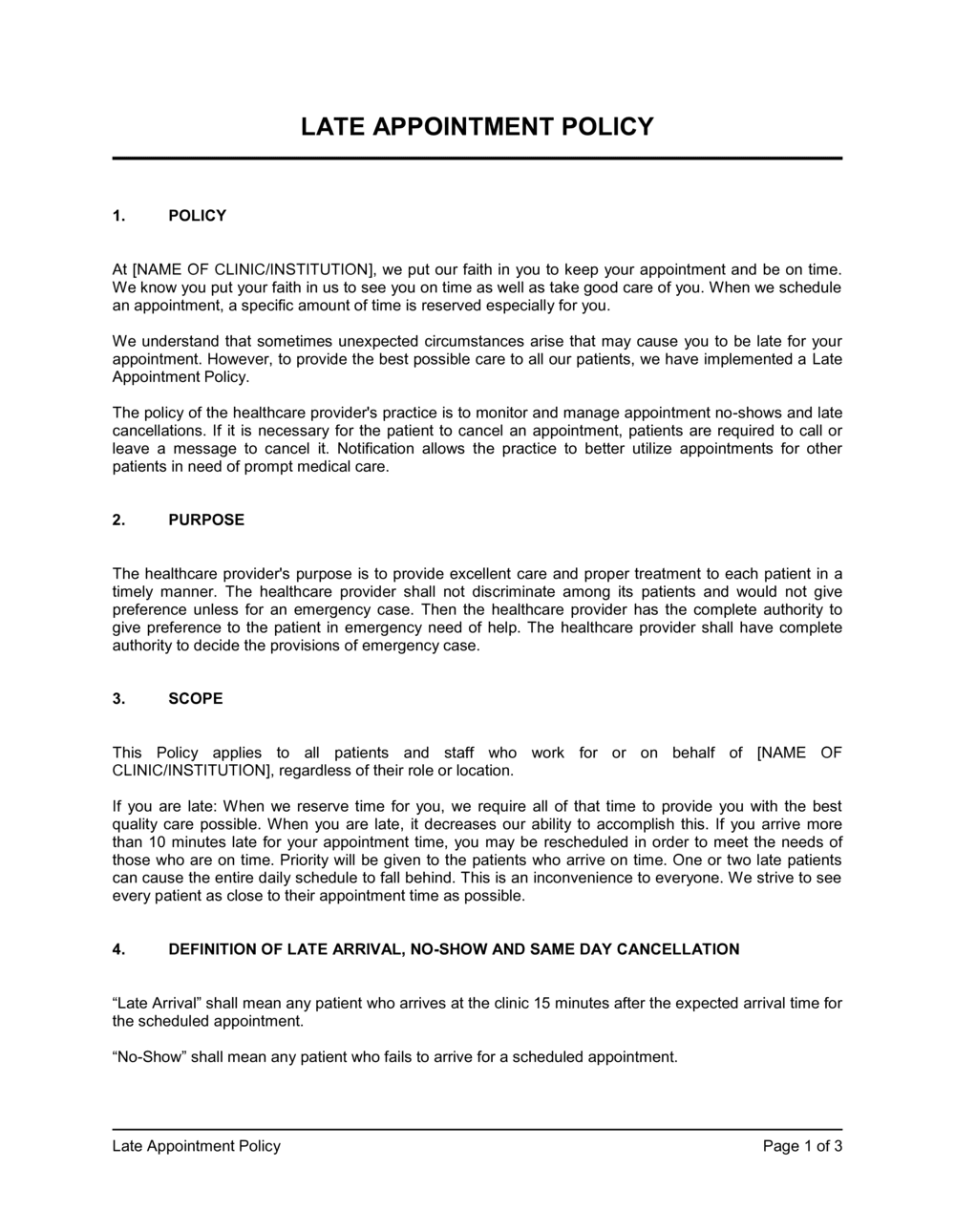
Set your grace period in minutes
Decide on a specific grace period — 5, 10, or 15 minutes — based on your average service duration. Shorter services (30-minute slots) warrant a 5-minute grace period; longer sessions (60–90 minutes) can absorb up to 15 minutes.
💡 Match the grace period to your booking software's buffer time so the two policies align automatically.
2
Define your fee amounts and collection method
Enter a flat dollar fee or percentage of service value for no-shows and late cancellations. Confirm you have a payment collection mechanism — card on file, deposit, or online pre-payment — before publishing the policy.
💡 A fee equal to 50% of the service value is the most commonly enforced amount across salon, spa, and wellness businesses.
3
Set the cancellation notice window
Choose a minimum notice period — 24 hours is standard for most service businesses; 48 hours is appropriate for high-value or long-duration appointments.
💡 Align your notice window with your booking system's cancellation deadline to avoid manual fee disputes.
4
Write the late-arrival decision tree for staff
Fill in the procedure section with the specific steps your front desk or service provider should follow — check grace period, offer truncated service, log the incident, collect or waive the fee.
💡 Print the decision tree as a single laminated reference card for the front desk — staff follow written steps more consistently than remembered training.
5
Define who can approve exceptions
Name the specific role — not a person — authorized to waive fees and set a per-client annual limit on discretionary waivers.
💡 Requiring manager approval for waivers reduces the rate of informal exceptions by roughly half in most service businesses.
6
Set the repeat-offender threshold and consequence
Enter the number of incidents that triggers escalation (typically 2–3 within 90 days) and the specific consequence — pre-payment required, deposit held, or booking suspended.
💡 A 90-day rolling window catches habitual offenders faster than a calendar-year reset, which allows bad patterns to restart every January.
7
Add the client communication touchpoints
Specify when clients receive the policy — at booking confirmation, 24-hour reminder, and check-in — and how acknowledgment is captured.
💡 Including the policy summary (grace period and fee amounts) in the SMS or email reminder reduces late arrivals more than any other single intervention.
8
Review and publish with an effective date
Set an effective date at least 30 days in the future for existing clients, and notify them directly. New clients receive the policy at their first booking.
💡 Give existing clients a one-time goodwill warning before the first fee is charged — it reduces disputes and demonstrates fairness.