Notice of Change in Rent Template

Free Word download β€’ Edit online β€’ Save & share with Drive β€’ Export to PDF

1 pageβ€’15–25 min to fillβ€’Difficulty: Standard
Learn more ↓
FreeNotice of Change in Rent Template

At a glance

What it is
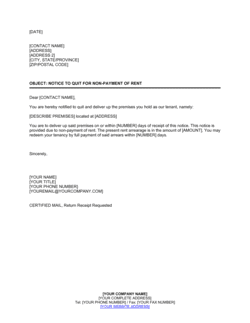
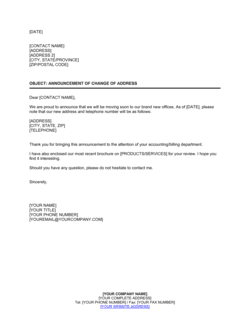
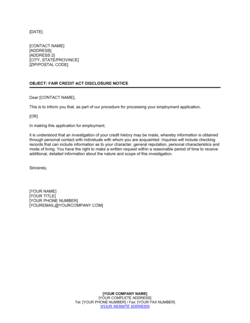
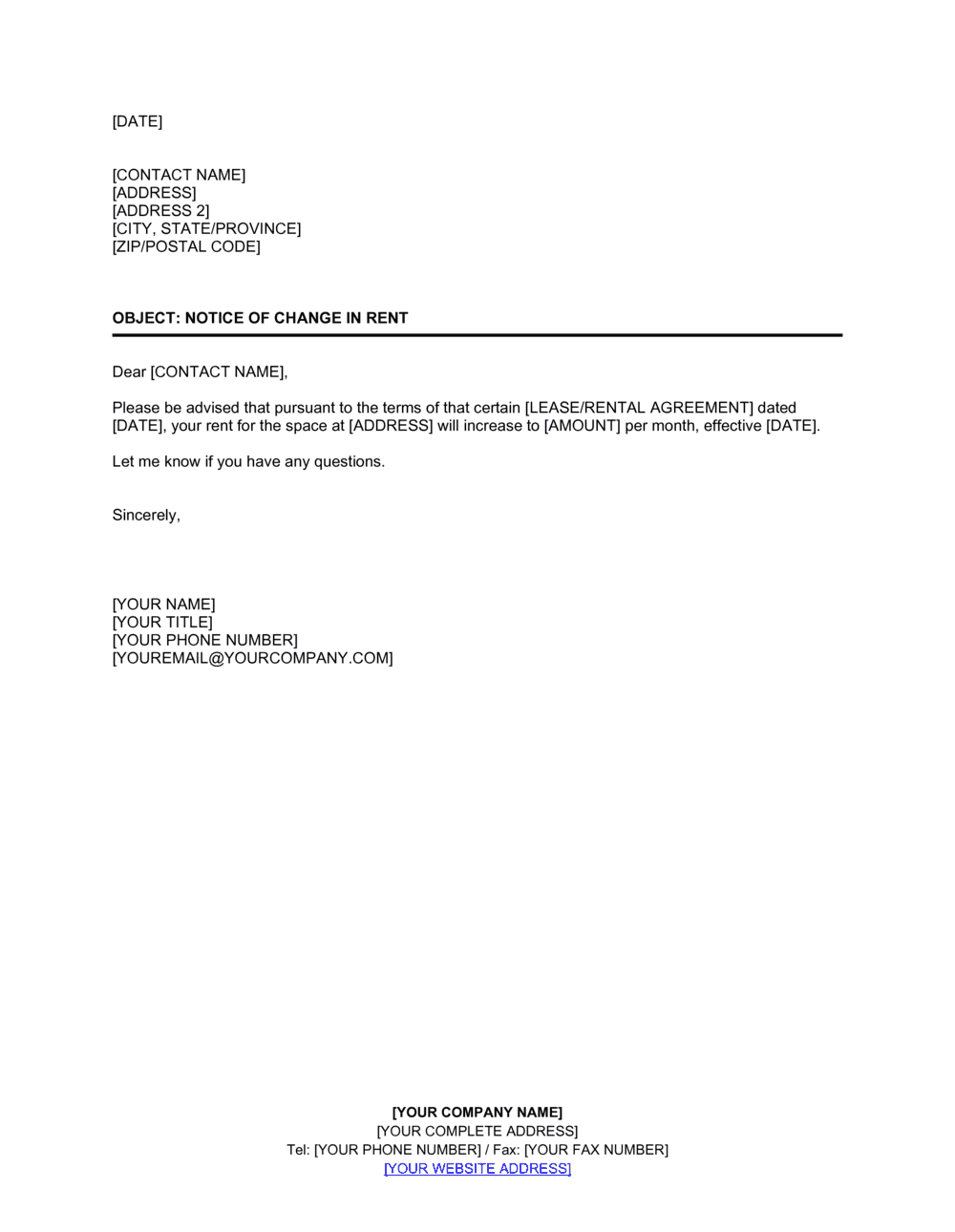
A Notice of Change in Rent is a formal written letter a landlord or property manager sends to a tenant to officially communicate an upcoming increase or decrease in monthly rent. This free Word download gives you a ready-to-edit template you can customize in minutes and deliver by mail, email, or hand delivery β€” producing a clear paper trail for both parties.
When you need it
Use it whenever you need to adjust the rent amount at the end of a lease term, upon lease renewal, or during a month-to-month tenancy where the lease permits rent adjustments with proper notice. It is also appropriate when reducing rent as a goodwill gesture or in response to a maintenance dispute.
What's inside
Landlord and tenant contact details, the property address, the current and new rent amount, the effective date of the change, the required notice period, and a signature block for the landlord. Optional clauses cover the reason for the adjustment and acknowledgment instructions.

What is a Notice of Change in Rent?

A Notice of Change in Rent is a formal written letter a landlord or property manager sends to a tenant to officially communicate an upcoming adjustment to the monthly rent amount. It documents the current rent, the new rent, and the date the change takes effect β€” giving the tenant the advance warning required by law or lease agreement. Unlike a lease amendment, this notice does not require the tenant's signature to be effective; it is a unilateral communication exercising a right the landlord holds under the existing tenancy or applicable law. It applies equally to rent increases and rent decreases, and it creates a dated paper trail both parties can rely on if a dispute arises.

Why You Need This Document

Adjusting rent without a written notice is one of the most common and costly mistakes landlords make. In most jurisdictions, an oral rent change is legally unenforceable β€” meaning a tenant can continue paying the old amount with no legal obligation to pay the new figure until proper written notice is issued and the full notice period has elapsed. Beyond enforceability, an undocumented rent change leaves you without any record if the tenant disputes the new amount, claims they never agreed to the increase, or stops paying and forces a collections or eviction proceeding. A properly completed and delivered notice closes all of these gaps in under 15 minutes, protects your rental income, and demonstrates the professional standards tenants expect. This template gives you a ready-to-use starting point that covers every required component β€” so you can issue the notice confidently and move on.

Which variant fits your situation?

If your situation is…Use this template
Increasing rent for a residential tenant on a month-to-month leaseNotice of Change in Rent (Residential)
Notifying a commercial tenant of a CPI-adjusted rent increaseCommercial Rent Increase Notice
Providing formal notice that the lease will not be renewedNotice of Non-Renewal of Lease
Terminating a month-to-month tenancy entirelyNotice to Vacate
Offering a reduced rent as part of a lease modification agreementLease Amendment
Documenting agreed new terms in a full lease renewalLease Renewal Agreement

Common mistakes to avoid

❌ Giving insufficient advance notice

Why it matters: A notice that doesn't meet the statutory minimum is invalid β€” the rent change cannot take effect until proper notice is reissued and the full period lapses, delaying your income increase by weeks or months.

Fix: Check your state or provincial housing law before setting any dates, and add a buffer of at least five extra days beyond the minimum to account for delivery delays.
❌ Omitting the dollar amount of the new rent

Why it matters: Stating only a percentage increase forces the tenant to calculate the new figure, and arithmetic errors lead to underpayments and disputes that take time to resolve.

Fix: Always include the explicit new monthly rent amount in dollars alongside any percentage figure so both parties are working from the same number.

❌ Addressing the notice to only one tenant on a multi-tenant lease

Why it matters: If the lease names multiple tenants and only one receives the notice, the other tenants can argue they were never properly notified, potentially invalidating the rent change.

Fix: List every tenant named on the lease in the notice header and deliver a copy to each one.

❌ No proof of service

Why it matters: Without documented delivery β€” certified mail receipt, email confirmation, or a signed copy β€” a tenant can claim the notice was never received, forcing you to restart the notice period.

Fix: Use certified mail with return receipt, or ask the tenant to sign and return an acknowledgment copy, and file both documents with the original lease.

The 9 key clauses, explained

Header and date

In plain language: Identifies the document as a formal notice, states the date it was prepared, and establishes the paper trail.

Sample language
Date: [DATE] Re: Notice of Change in Rent β€” [PROPERTY ADDRESS]

Common mistake: Using a vague date like 'as of this writing' instead of a specific calendar date β€” this makes it impossible to calculate the notice period.

Landlord and tenant identification

In plain language: Names the landlord or property management company sending the notice and the tenant receiving it, along with mailing addresses.

Sample language
From: [LANDLORD NAME / PROPERTY MANAGEMENT COMPANY], [LANDLORD ADDRESS] To: [TENANT FULL NAME], [RENTAL PROPERTY ADDRESS]

Common mistake: Addressing the notice only to the primary tenant when the lease lists multiple tenants β€” all named tenants should be listed to avoid disputes about who received notice.

Reference to the existing lease

In plain language: Cites the original lease agreement by date and property address to anchor the notice in the contractual relationship.

Sample language
This notice is provided pursuant to your Residential Lease Agreement dated [ORIGINAL LEASE DATE] for the property located at [PROPERTY ADDRESS].

Common mistake: Omitting the lease reference entirely, which weakens the legal connection between the notice and the tenant's existing obligation.

Current rent amount

In plain language: States the rent amount currently being paid so the tenant can see exactly what is changing.

Sample language
Your current monthly rent is [CURRENT RENT AMOUNT] USD, due on the [DAY] of each month.

Common mistake: Leaving out the current amount β€” tenants sometimes dispute the baseline figure, and omitting it removes a clear reference point.

New rent amount

In plain language: Clearly states the new monthly rent figure that will apply from the effective date.

Sample language
Effective [EFFECTIVE DATE], your monthly rent will change to [NEW RENT AMOUNT] USD, representing an increase / decrease of [DOLLAR / PERCENTAGE CHANGE].

Common mistake: Stating only the percentage increase without the new dollar amount, forcing the tenant to calculate the figure themselves and creating room for misunderstanding.

Effective date and notice period

In plain language: Specifies when the new rent takes effect and confirms that the required notice period has been met.

Sample language
This notice is provided [NUMBER] days in advance of the effective date of [EFFECTIVE DATE], in accordance with [STATE / PROVINCE] law and the terms of your lease.

Common mistake: Failing to verify the local statutory notice period before setting the effective date β€” in many jurisdictions 30 days is the minimum for residential tenants, and some require 60 or 90 days.

Payment instructions

In plain language: Reminds the tenant of how and where to submit payment, and notes any change in payment method if applicable.

Sample language
Please continue to remit payment to [PAYMENT ADDRESS / PORTAL] by the [DAY] of each month. All other terms of your lease remain unchanged.

Common mistake: Omitting payment instructions when the landlord has switched banking details or online portals, leading to payments going to an outdated account.

Tenant acknowledgment request

In plain language: Asks the tenant to sign and return a copy of the notice, or reply in writing, to confirm receipt and acceptance.

Sample language
Please sign and return the enclosed copy of this notice to acknowledge receipt. Your continued tenancy after [EFFECTIVE DATE] constitutes acceptance of the new rent amount.

Common mistake: Skipping the acknowledgment request and assuming receipt β€” without a signed acknowledgment or proof of service, the landlord has no documented confirmation the tenant received the notice.

Landlord signature block

In plain language: Closes the letter with the landlord's or authorized agent's name, title, and contact information.

Sample language
Sincerely, [LANDLORD / AGENT NAME] [TITLE, IF APPLICABLE] [PHONE NUMBER] [EMAIL ADDRESS]

Common mistake: Using a stamped or printed name without a handwritten or e-signature β€” some jurisdictions require an authenticated signature for a rental notice to be legally valid.

How to fill it out

  1. 1

    Verify the required notice period for your jurisdiction

    Before filling in any dates, confirm the minimum advance notice your state, province, or municipality requires for a rent change β€” commonly 30 days, but often 60 or 90 days for residential tenancies. Check both local law and your existing lease.

    πŸ’‘ Search '[your state/province] rent increase notice requirement' on the official housing authority website rather than relying on general articles β€” laws change and vary by city.

  2. 2

    Enter landlord and tenant details

    Fill in your full legal name or property management company name, your address, and the tenant's full name as it appears on the lease. List all named tenants if there are multiple leaseholders.

    πŸ’‘ Use the exact name on the lease β€” a notice addressed to a nickname or abbreviation can be challenged as improperly served.

  3. 3

    Reference the original lease

    Enter the exact date the lease was signed and the full property address to clearly tie the notice to the existing rental agreement.

    πŸ’‘ Keep a copy of the original lease on file alongside this notice so you can produce both if a dispute arises.

  4. 4

    State the current and new rent amounts

    Enter the current monthly rent, the new monthly rent, and the dollar or percentage difference. Spell out both figures in full β€” do not rely on the tenant to calculate the change.

    πŸ’‘ Including both the dollar change and the percentage change (e.g., '$150 increase, 8.3%') gives the tenant immediate context and reduces calls asking for clarification.

  5. 5

    Set the effective date

    Calculate the effective date by counting forward from your planned delivery date by at least the required notice period. Enter the specific calendar date β€” day, month, and year.

    πŸ’‘ Schedule delivery with a few extra days of buffer to account for postal delays β€” a notice that arrives one day too late resets the clock entirely.

  6. 6

    Deliver the notice and document service

    Send the notice by certified mail, email with read receipt, or personal hand delivery, depending on what your lease and local law permit. Retain your proof of delivery β€” tracking number, delivery confirmation, or a signed copy.

    πŸ’‘ Certified mail with return receipt requested creates the strongest proof of service and is accepted in virtually every jurisdiction.

Frequently asked questions

How much notice is required for a rent increase?

The required notice period depends on your jurisdiction and lease type. In most US states, landlords must provide at least 30 days' written notice for a rent increase on a month-to-month tenancy. Several states β€” including California, Oregon, and Washington β€” require 60 or 90 days for increases above a certain percentage. In Canada, most provinces require 90 days' written notice. Always check your specific state, province, or local ordinance before setting an effective date.

Can a landlord raise rent during a fixed-term lease?

Generally, no β€” rent cannot be increased mid-term on a fixed-term lease unless the lease contains an explicit escalation clause permitting it. A rent change notice is typically used at or before the end of the lease term to set the new amount for the renewal period. Attempting to raise rent before the lease expires without a contractual basis is typically unenforceable.

Does a rent increase notice need to be in writing?

In virtually every jurisdiction, yes. Oral notice of a rent increase is not legally sufficient, and most landlord-tenant laws specifically require written notice delivered to the tenant. Written notice also protects the landlord by creating a dated paper trail that can be produced if the change is later disputed.

What if the tenant refuses to sign the acknowledgment?

A tenant's refusal to sign does not invalidate the notice if it was properly delivered. The acknowledgment is a convenience, not a legal requirement. Retain your proof of delivery β€” certified mail receipt or email confirmation β€” and note on your copy of the notice that the tenant declined to sign. Most leases include a clause stating that continued tenancy after the effective date constitutes acceptance of the new terms.

Can a landlord lower rent using the same notice?

Yes. A Notice of Change in Rent can document a rent decrease just as easily as an increase. This is relevant when a landlord offers a temporary reduction during a vacancy incentive period, as a goodwill gesture during a maintenance dispute, or to bring rent in line with a softening market. The same notice structure applies β€” effective date, current amount, new amount, and delivery method.

Is there a maximum amount a landlord can increase rent?

In rent-controlled or rent-stabilized jurisdictions β€” including many cities in California, New York, New Jersey, and Oregon β€” rent increases are capped at a set percentage, often tied to CPI. In non-rent-controlled areas, there is typically no statutory maximum. Confirm whether your property is subject to local rent control ordinances before issuing any notice, as violating a rent cap can expose the landlord to penalties.

Does this template work for commercial tenants?

The template can be adapted for commercial leases, but commercial tenancies are governed by contract law rather than residential landlord-tenant statutes β€” meaning notice periods, escalation rules, and dispute procedures are set by the lease itself rather than local housing law. Review the commercial lease agreement carefully before issuing a rent change notice, as the required notice period and format may differ from residential requirements.

What delivery method should I use to serve the notice?

Certified mail with return receipt requested is the most widely accepted and legally defensible delivery method. Personal hand delivery with a signed acknowledgment is also strong. Email is acceptable in many jurisdictions if the lease includes an email-delivery clause, but should be supplemented with a read receipt or delivery confirmation. Check your lease and local law β€” some jurisdictions specify permitted delivery methods in their landlord-tenant statutes.

How this compares to alternatives

vs Lease Renewal Agreement

A lease renewal agreement is a full bilateral contract that resets all terms β€” rent, duration, and conditions β€” for a new term and requires signatures from both parties. A notice of change in rent is a unilateral communication adjusting only the rent amount within an existing tenancy. Use the notice for month-to-month rent adjustments; use a renewal agreement when formalizing an entirely new lease term.

vs Lease Amendment

A lease amendment modifies one or more specific clauses of an existing lease and requires both parties to sign, making it a bilateral modification. A notice of change in rent is a landlord-initiated document that does not require the tenant's signature to take effect. Use an amendment when both parties are negotiating new terms; use this notice when the landlord is exercising a unilateral right permitted by the lease or local law.

vs Notice to Vacate

A notice to vacate instructs the tenant to leave the property by a specified date β€” it ends the tenancy. A notice of change in rent adjusts the financial terms while the tenancy continues. If a tenant refuses to pay the new rent amount after proper notice, a separate notice to vacate or demand for payment may follow, but the two documents serve entirely different purposes.

vs Eviction Notice

An eviction notice is a formal legal demand requiring a tenant to cure a default β€” such as non-payment β€” or leave the property, and is the first step in eviction proceedings. A notice of change in rent is a proactive communication adjusting future rent with no immediate legal consequence. Sending a rent change notice does not constitute an eviction notice, and the two documents should never be combined.

Industry-specific considerations

Residential Real Estate

Residential landlords use this notice to comply with statutory notice periods and rent-control regulations when adjusting monthly rent for single-family homes, apartments, or condos.

Commercial Real Estate

Commercial property owners issue rent change notices at lease renewal or when CPI escalation clauses are triggered, with notice periods governed by the lease rather than housing statutes.

Property Management

Property management firms use standardized notice templates across large portfolios to ensure consistent, compliant delivery to hundreds of tenants simultaneously.

Retail and Hospitality

Landlords of retail and hospitality spaces issue rent change notices when percentage-of-sales clauses or market-rate adjustments apply at the end of a lease term.

Template vs pro β€” what fits your needs?

PathBest forCostTime
Use the templateIndividual landlords and property managers issuing standard residential or commercial rent change noticesFree10–15 minutes
Template + professional reviewLandlords in rent-controlled jurisdictions, large multi-unit portfolios, or situations involving a disputed tenancy$100–$300 (real estate attorney or paralegal review)1–2 days
Custom draftedComplex commercial lease escalations, rent disputes with litigation risk, or properties subject to multiple overlapping local ordinances$400–$1,2003–7 days

Glossary

Notice Period
The minimum number of days β€” typically 30 to 60 β€” a landlord must give a tenant before a rent change takes effect, as required by local law or the lease agreement.
Effective Date
The specific calendar date on which the new rent amount becomes payable, stated explicitly in the notice.
Month-to-Month Tenancy
A rental arrangement that renews automatically each month with no fixed end date, allowing either party to make changes with proper notice.
Fixed-Term Lease
A rental agreement with a defined start and end date, during which rent generally cannot be increased unless the lease expressly permits it.
CPI Adjustment
A rent increase tied to the Consumer Price Index, used to keep rent in line with inflation rather than applying a flat percentage.
Rent Control
Local or state regulations that cap how much and how often a landlord may increase rent on qualifying residential properties.
Proof of Service
Documentation confirming that the notice was delivered to the tenant β€” by mail, email, or personal delivery β€” on a specific date.
Holdover Tenant
A tenant who continues to occupy the property after the original lease term has expired, typically converting to a month-to-month arrangement.
Escalation Clause
A lease provision that pre-authorizes periodic rent increases β€” often tied to CPI or a fixed percentage β€” without requiring a separate notice each time.

Part of your Business Operating System

This document is one of 3,000+ business & legal templates included in Business in a Box.

  • Fill-in-the-blanks β€” ready in minutes
  • 100% customizable Word document
  • Compatible with all office suites
  • Export to PDF and share electronically

Create your document in 3 simple steps.

From template to signed document β€” all inside one Business Operating System.
1
Download or open template

Access over 3,000+ business and legal templates for any business task, project or initiative.

2
Edit and fill in the blanks with AI

Customize your ready-made business document template and save it in the cloud.

3
Save, Share, Send, Sign

Share your files and folders with your team. Create a space of seamless collaboration.

Save time, save money, and create top-quality documents.

β˜…β˜…β˜…β˜…β˜…

"Fantastic value! I'm not sure how I'd do without it. It's worth its weight in gold and paid back for itself many times."

Managing Director Β· Mall Farm
Robert Whalley
Managing Director, Mall Farm Proprietary Limited
β˜…β˜…β˜…β˜…β˜…

"I have been using Business in a Box for years. It has been the most useful source of templates I have encountered. I recommend it to anyone."

Business Owner Β· 4+ years
Dr Michael John Freestone
Business Owner
β˜…β˜…β˜…β˜…β˜…

"It has been a life saver so many times I have lost count. Business in a Box has saved me so much time and as you know, time is money."

Owner Β· Upstate Web
David G. Moore Jr.
Owner, Upstate Web

Run your business with a system β€” not scattered tools

Stop downloading documents. Start operating with clarity. Business in a Box gives you the Business Operating System used by over 250,000 companies worldwide to structure, run, and grow their business.

Free Forever PlanΒ Β·Β No credit card required