Commercial Sales Invoice Template

Free Word download β€’ Edit online β€’ Save & share with Drive β€’ Export to PDF

1 pageβ€’20–30 min to fillβ€’Difficulty: Standardβ€’Signature requiredβ€’Legal review recommended
Learn more ↓
FreeCommercial Sales Invoice Template

At a glance

What it is
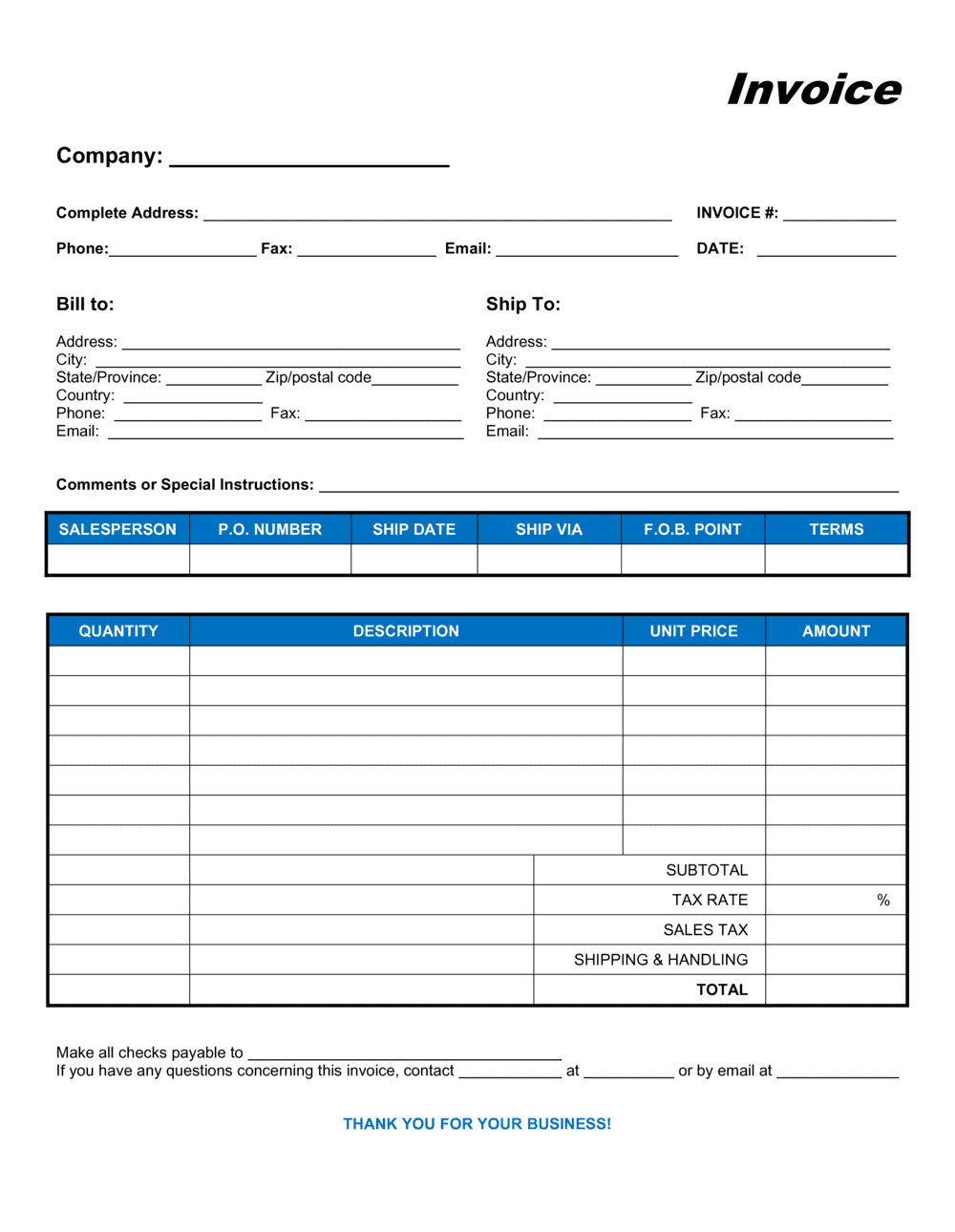
A Sales Invoice is a legally binding commercial document a seller issues to a buyer to formally record a transaction and demand payment for goods sold. This free Word download gives you a professionally structured, court-ready billing document you can edit online and export as PDF β€” covering itemized goods, pricing, taxes, payment terms, and enforceable late-payment obligations.
When you need it
Issue it at the point of delivery or shipment of physical goods to create an enforceable payment obligation. It is also required when a buyer's accounts-payable team demands a formal invoice before releasing payment, or when cross-border sales require a documented record for customs and VAT.
What's inside
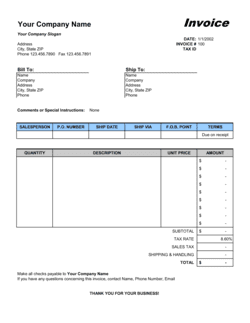
Seller and buyer identification, invoice number and date, itemized goods with quantities and unit prices, subtotal, applicable taxes, total amount due, payment terms and due date, late-payment penalty clause, and governing law. Signature blocks for both parties are included for transactions where buyer acknowledgment is required.

What is a Sales Invoice?

A Sales Invoice is a legally binding commercial document issued by a seller to a buyer after physical goods have been delivered, formally demanding payment and recording every material term of the transaction. It identifies both parties by their legal entity names, itemizes each product sold with SKU references, quantities, and unit prices, calculates applicable taxes, states the total amount due in a specified currency, and sets the exact payment deadline. Beyond triggering payment, a properly drafted sales invoice creates the seller's accounts-receivable entry, establishes the evidentiary foundation for a collections claim, and β€” when it includes a retention-of-title clause β€” preserves the seller's right to reclaim goods if the buyer fails to pay.

Why You Need This Document

Sending goods without a legally complete sales invoice is one of the most common β€” and expensive β€” mistakes small and mid-sized businesses make. Without a specific due date, buyers' AP departments apply their own payment schedules, typically extending your terms by 15 to 45 days. Without a retention-of-title clause, you become an unsecured creditor the moment goods leave your loading dock, losing all recourse to recover inventory if the buyer becomes insolvent. Without a late-payment penalty clause, chronically slow payers have no contractual incentive to prioritize your invoice over others. And without correct tax identification and jurisdiction-appropriate tax rates, you expose both yourself and your buyer to penalties that can dwarf the original invoice amount. This template gives you a court-ready, audit-compliant sales invoice that closes every one of those gaps β€” in the time it takes to fill in your product details.

Which variant fits your situation?

If your situation is…Use this template
Billing for professional services rather than physical goodsService Invoice
International shipment requiring customs and trade documentationCommercial Invoice
Requesting a deposit before goods are manufactured or shippedProforma Invoice
Reversing or partially crediting a prior sales invoiceCredit Note
Recurring monthly billing for a product subscription or supply contractRecurring Invoice
Billing for construction materials and labor on a projectConstruction Invoice
Documenting a buyer-initiated purchase before deliveryPurchase Order

Common mistakes to avoid

❌ Vague product descriptions

Why it matters: Descriptions like 'Merchandise' or 'Electronic Goods' cause invoices to be queried by AP teams and held by customs authorities, delaying payment and shipment release by days or weeks.

Fix: Include the full product name, SKU, model number, and a brief plain-language description for every line item. Mirror the language on your packing slip and delivery documentation.

❌ Missing or incorrect tax identification

Why it matters: Corporate buyers and government purchasers in most jurisdictions cannot legally process a payment or claim a VAT or GST credit without a valid seller tax ID on the invoice.

Fix: Add your EIN, VAT number, or GST registration number to the seller block of your template so it appears automatically on every invoice you generate.

❌ No specific payment due date

Why it matters: Terms such as 'payable on receipt' or 'due promptly' have no legal precision and are interpreted inconsistently by AP departments, consistently resulting in slower payment and weaker enforcement in court.

Fix: Calculate and print a specific calendar date β€” for example, 'Due: June 15, 2026' β€” on every invoice based on your agreed payment terms.

❌ Omitting a retention-of-title clause for credit sales

Why it matters: Without explicit retention-of-title language, courts in most common-law jurisdictions default to transferring ownership at the point of delivery, leaving the seller with an unsecured debt claim and no right to recover goods if the buyer becomes insolvent.

Fix: Include a retention-of-title clause stating the seller retains ownership until the full invoice amount is received, and ensure the buyer receives written notice of this term before or at delivery.

❌ Applying the wrong jurisdiction's tax rate

Why it matters: Charging a buyer the seller's home-state sales tax rate on a cross-border sale can create a tax liability for both parties β€” the seller for collecting tax it wasn't authorized to collect, and the buyer for being charged tax it cannot credit.

Fix: Determine the applicable tax rate based on the buyer's delivery address and the taxability of the specific goods in that jurisdiction using a tax compliance tool or professional advice before issuing.

❌ Reusing or skipping invoice numbers

Why it matters: Duplicate or non-sequential invoice numbers create reconciliation errors in accounting systems, raise audit flags, and make it significantly harder to prove a specific invoice was issued and received in a collections dispute.

Fix: Use a strict sequential numbering system β€” never reuse a voided number. If a number is skipped or an invoice is cancelled, record the void in your accounting system rather than leaving a gap unexplained.

The 10 key clauses, explained

Parties and seller identification

In plain language: Identifies the seller's full legal entity name, registered address, tax identification number, and contact details, alongside the buyer's legal name and billing address.

Sample language
[SELLER LEGAL NAME], a [ENTITY TYPE] registered at [ADDRESS], Tax ID: [EIN/VAT NUMBER], hereby invoices [BUYER LEGAL NAME] of [BUYER ADDRESS] for the goods described below.

Common mistake: Using a trading name instead of the registered legal entity name. If the seller name on the invoice doesn't match the entity on the bank account or tax filing, collections and VAT reclaim become significantly harder.

Invoice number and issue date

In plain language: Assigns a unique sequential identifier to the invoice and records the date it was created, establishing the start of the payment clock.

Sample language
Invoice Number: INV-[YEAR]-[SEQUENCE] | Issue Date: [DATE]

Common mistake: Reusing invoice numbers after voiding a transaction. Duplicate numbers create accounting reconciliation errors and raise red flags during tax audits.

Itemized goods description

In plain language: Lists each product sold with its SKU or product code, description, quantity, unit of measure, unit price, and extended line total.

Sample language
Item: [PRODUCT NAME] | SKU: [SKU CODE] | Qty: [QUANTITY] [UNIT] | Unit Price: $[AMOUNT] | Line Total: $[AMOUNT]

Common mistake: Using vague descriptions such as 'Merchandise' or 'Goods.' Customs authorities, auditors, and buyers' AP teams all require specific product descriptions; vagueness delays payment and can hold shipments at the border.

Pricing, discounts, and subtotal

In plain language: Calculates the subtotal from all line items, deducts any agreed trade discounts, and states the net amount before tax.

Sample language
Subtotal: $[AMOUNT] | Trade Discount ([X]%): -$[AMOUNT] | Net Before Tax: $[AMOUNT]

Common mistake: Applying a discount to the pre-discount subtotal and then calculating tax on the full pre-discount figure. This overcharges the buyer and creates a tax liability discrepancy.

Tax calculation

In plain language: States the applicable tax type (sales tax, VAT, or GST), the rate applied, and the tax amount calculated on the post-discount net.

Sample language
Sales Tax / VAT ([X]% applied to $[NET AMOUNT]): $[TAX AMOUNT]

Common mistake: Applying the seller's home-state or home-country tax rate to buyers in a different jurisdiction. Tax obligations depend on the buyer's location and the nature of the goods β€” applying the wrong rate exposes both parties to penalties.

Total amount due and currency

In plain language: States the final sum the buyer owes, including all taxes, expressed in the transaction currency with the currency code explicitly stated.

Sample language
TOTAL DUE: [CURRENCY CODE] $[TOTAL AMOUNT] | Currency: [USD / CAD / GBP / EUR]

Common mistake: Omitting the currency code on invoices sent to buyers in other countries. USD and CAD, or GBP and EUR, are easy to confuse β€” ambiguity in currency has led to significant underpayment disputes.

Payment terms and due date

In plain language: Specifies when payment is due (the exact calendar date), the accepted payment methods, and any early-payment discount offered.

Sample language
Payment Due: [DATE] (Net [30/60] from issue date) | Accepted Methods: [ACH / Wire Transfer / Check / Credit Card] | Early Payment Discount: [X]% if paid within [X] days

Common mistake: Writing 'due on receipt' instead of a specific calendar date. Buyers' AP systems require a date to schedule payment; 'on receipt' is routinely interpreted as 30 days or more.

Late-payment penalty clause

In plain language: Establishes a contractual interest charge on overdue balances, expressed as a monthly or annual rate, and sets a grace period before the charge begins to accrue.

Sample language
Balances unpaid after [DATE] will accrue interest at [1.5]% per month ([18]% per annum) from the due date until paid in full. A grace period of [5] business days applies before interest begins to accrue.

Common mistake: Setting a late-payment rate that exceeds the usury limit in the buyer's jurisdiction. Several US states cap contractual interest; an unenforceable rate may void the entire penalty clause.

Title of goods and retention of title

In plain language: Specifies when legal ownership of the goods transfers from seller to buyer, and β€” if applicable β€” states that the seller retains title until full payment is received.

Sample language
Title to and risk of loss of the goods passes to Buyer upon [DELIVERY / FULL PAYMENT]. Seller retains title to all goods until payment of the Total Due is received in full.

Common mistake: Omitting a title-transfer clause entirely. Without it, courts apply default rules that may transfer ownership at shipment β€” leaving the seller with no recourse to reclaim goods if the buyer fails to pay.

Governing law and dispute resolution

In plain language: Specifies which jurisdiction's laws govern the invoice and how disputes over payment or goods quality are resolved.

Sample language
This invoice and any dispute arising from it shall be governed by the laws of [STATE / PROVINCE / COUNTRY]. Disputes not resolved within [30] days shall be submitted to binding arbitration in [CITY] under the rules of [AAA / LCIA / ICAC].

Common mistake: Choosing a governing law with no connection to either party's location. Courts may decline to enforce a governing law clause that is entirely unrelated to the transaction, defaulting to the buyer's local law instead.

How to fill it out

  1. 1

    Enter seller and buyer legal details

    Add your full registered entity name, address, and tax ID (EIN, VAT, or GST number) to the seller block. Enter the buyer's legal name, billing address, and AP contact. If the buyer issued a purchase order, include the PO number.

    πŸ’‘ Confirm the buyer's legal entity name with their accounts-payable team before issuing the first invoice β€” a mismatch between the invoice and their system causes automatic rejection.

  2. 2

    Assign a sequential invoice number and set the issue date

    Use a consistent numbering format such as INV-2026-0001 and enter today's date as the issue date. The issue date starts the payment clock for Net 30 or Net 60 terms.

    πŸ’‘ A YYYY-NNNN format keeps invoices sortable by year and prevents number collisions when you cross calendar years.

  3. 3

    List each product as a separate line item

    Enter the product name, SKU or item code, quantity, unit of measure, unit price, and the calculated line total for every product included in the shipment. Descriptions should be specific enough for customs and AP review.

    πŸ’‘ Mirror the product descriptions on your delivery note or packing slip exactly β€” discrepancies between the two documents are the most common trigger for goods held at customs.

  4. 4

    Apply discounts and calculate the pre-tax subtotal

    Deduct any agreed trade or volume discounts from the sum of all line totals to arrive at the net pre-tax amount. Document the discount percentage and the dollar value of the discount on the invoice face.

    πŸ’‘ Get discount terms in writing before shipping β€” verbal discount agreements are difficult to enforce if a dispute arises after delivery.

  5. 5

    Calculate and apply the correct tax

    Determine the applicable tax type (sales tax, VAT, or GST) based on the buyer's location and the nature of the goods. Apply the correct rate to the post-discount subtotal and state the tax amount and rate explicitly.

    πŸ’‘ For US interstate sales, use a tax compliance tool to verify nexus and rate β€” applying your home-state rate to an out-of-state buyer is one of the most common and costly errors in B2B invoicing.

  6. 6

    State the total, currency, and payment terms

    Enter the final total due with the explicit currency code. Set a specific calendar due date based on your agreed terms (Net 30, Net 60, etc.) and list all accepted payment methods with full bank or payment-portal details.

    πŸ’‘ Including a direct payment link in the payment instructions section reduces average time-to-pay by approximately one week compared to invoices with bank details only.

  7. 7

    Add the late-payment penalty and title clause

    Enter the monthly interest rate for overdue balances and the grace period before interest begins to accrue. Confirm the rate does not exceed usury limits in the buyer's jurisdiction. Fill in the title-transfer trigger β€” delivery or full payment.

    πŸ’‘ Check the buyer's jurisdiction's statutory interest rate for commercial debt β€” in the UK, for example, the Late Payment of Commercial Debts Act sets a default rate of 8% above base rate, which you can reference in the clause.

  8. 8

    Obtain signatures and send

    For transactions where buyer acknowledgment is required β€” high-value orders, international sales, or credit sales β€” have both parties sign the invoice before or at delivery. Export as PDF and send to the buyer's AP contact.

    πŸ’‘ Send the signed PDF by email and request a read receipt or delivery confirmation; this timestamp becomes evidence of delivery if the invoice goes unpaid.

Frequently asked questions

What is a sales invoice?

A sales invoice is a legally binding commercial document issued by a seller to a buyer after goods have been delivered, requesting payment for those goods. It itemizes what was sold, the quantity, unit prices, taxes, and the total amount due, and sets a specific payment deadline. It also creates the accounts-receivable entry in the seller's accounting system and serves as primary evidence in a collections or dispute proceeding.

What is the difference between a sales invoice and a regular invoice?

A sales invoice specifically documents the sale of physical goods β€” products, inventory, or merchandise β€” while a general invoice may cover services, subscriptions, or mixed transactions. Sales invoices often include additional elements such as product SKUs, quantities, units of measure, shipping terms, and retention-of-title clauses that service invoices do not require. For legal and tax purposes, the distinction matters because goods and services are taxed differently in many jurisdictions.

Is a sales invoice legally binding?

A sales invoice is generally enforceable when it documents a completed transaction and is issued against an underlying contract, purchase order, or accepted quotation. Courts in most common-law and civil-law jurisdictions treat a signed or acknowledged sales invoice as evidence of a debt. However, an invoice alone β€” without an underlying agreement or delivery confirmation β€” may be challenged. Including a signed delivery receipt, purchase order reference, and governing law clause significantly strengthens enforceability.

When should I issue a sales invoice?

Issue a sales invoice at the point of delivery or shipment of goods β€” this starts the payment clock and creates the accounts-receivable entry. For credit sales, issue immediately upon dispatch. For COD (cash on delivery) transactions, issue at the point of handover. For international shipments, the invoice must accompany the goods for customs clearance and should be issued no later than the date of shipment.

Does a sales invoice need to be signed?

For straightforward domestic sales, a signature is not always required β€” the buyer's purchase order combined with a delivery receipt typically creates the payment obligation. However, for high-value orders, international sales, credit sales to new buyers, or any transaction where retention of title is asserted, obtaining the buyer's signature on the invoice is strongly recommended. A signed invoice is significantly easier to enforce in collections or court proceedings.

What is a retention-of-title clause and why does it matter?

A retention-of-title (ROT) clause states that the seller retains legal ownership of the goods until the buyer pays the invoice in full. Without it, ownership typically transfers to the buyer at delivery β€” meaning if the buyer becomes insolvent before paying, you are an unsecured creditor with no right to reclaim the goods. With a properly drafted ROT clause, you may be able to recover unpaid goods from a buyer's liquidation estate. ROT clauses must be brought to the buyer's attention in writing before or at delivery to be enforceable in most jurisdictions.

How is a sales invoice different from a purchase order?

A purchase order is issued by the buyer before delivery to authorize the seller to proceed with a transaction. A sales invoice is issued by the seller after delivery to demand payment. They document the same transaction from opposite sides: the purchase order creates the buyer's commitment; the sales invoice creates the seller's payment claim. Both documents should reference each other by number so the buyer's AP system can match and approve the payment.

What tax information must a sales invoice include?

At minimum, a compliant sales invoice must state the applicable tax type (sales tax, VAT, or GST), the rate applied, the net pre-tax amount, and the tax amount calculated separately. For VAT-registered sellers in the UK and EU, the seller's VAT registration number is mandatory on any invoice above the local threshold β€” without it, the buyer cannot reclaim input VAT. US sellers with nexus in multiple states must apply the correct rate for the buyer's delivery address, not the seller's location.

How do I handle a disputed sales invoice?

First, identify whether the dispute relates to the goods (quality, quantity, or delivery) or the invoice terms (price, discount, or tax). For goods disputes, issue a credit note against the original invoice and reissue once the matter is resolved. For terms disputes, document the agreed adjustment in writing before modifying the invoice. If the buyer simply refuses to pay, send a formal demand letter referencing the invoice number, the due date, and the late-payment penalty clause β€” then escalate to your collections process or a collections attorney if payment is not received within 14 days.

How this compares to alternatives

vs Proforma Invoice

A proforma invoice is issued before delivery as a formal quotation or deposit request β€” it estimates the transaction but does not create a legal payment obligation or an accounts-receivable entry. A sales invoice is issued after delivery and is a binding payment demand. Use a proforma to confirm pricing and terms before production begins, then issue the sales invoice upon shipment.

vs Credit Note

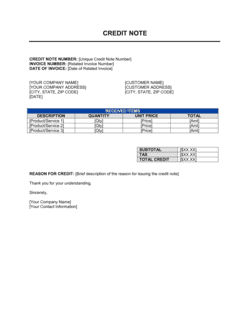
A credit note reduces or cancels a previously issued sales invoice β€” used for returned goods, pricing errors, or negotiated adjustments. It is the accounting mirror image of the sales invoice and must reference the original invoice number to be processed correctly. Issue a credit note rather than amending the original invoice to maintain a clean, auditable transaction trail.

vs Purchase Order

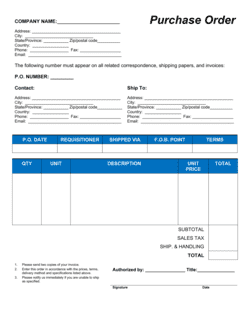
A purchase order is issued by the buyer before delivery to authorize and document the intended purchase. A sales invoice is issued by the seller after delivery to demand payment. They document opposite sides of the same transaction and should cross-reference each other by number. A signed purchase order strengthens the enforceability of the subsequent sales invoice in a dispute.

vs Service Invoice

A service invoice bills for professional services β€” consulting hours, creative work, or maintenance β€” rather than physical goods. It typically does not include SKUs, units of measure, or shipping terms, and rarely requires a retention-of-title clause. Sales invoices are appropriate when the primary transaction involves tangible goods, while service invoices govern intangible deliverables.

Industry-specific considerations

Manufacturing and wholesale

Bulk unit pricing with volume discounts, FOB shipping terms, retention-of-title clauses for large credit orders, and multi-currency handling for international buyers.

Retail and e-commerce

SKU-level line items, state-by-state sales tax compliance for US nexus, consumer return and credit-note workflows, and integration with order management systems.

Construction and building materials

Progress billing tied to delivery milestones, materials and labor split, lien-right preservation notices attached to invoices, and retention holdback amounts.

Food and beverage

Perishable goods require immediate invoicing at delivery; credit terms are typically shorter (Net 7–14); weight or volume units of measure; and country-of-origin labeling references.

Import and export

Commercial invoice requirements for customs clearance, Incoterms (FOB, CIF, DDP) that determine risk and title transfer, country-of-origin declaration, and multi-currency invoicing with exchange-rate documentation.

Technology hardware and equipment

Serial number and asset-tag references per line item, warranty start-date triggered by invoice date, extended payment terms for capital equipment, and leasing versus purchase distinctions.

Jurisdictional notes

United States

Sales tax obligations depend on the seller's nexus in the buyer's state β€” since the 2018 South Dakota v. Wayfair ruling, economic nexus thresholds (typically $100,000 in sales or 200 transactions per state per year) require sellers to collect and remit the buyer's state rate, not the seller's. Late-payment interest rates on invoices are subject to usury limits that vary by state; confirm that your penalty rate does not exceed the applicable cap. UCC Article 2 governs the sale of goods and implies certain default terms β€” including when title transfers β€” that your invoice should address explicitly.

Canada

Canadian sales invoices must include the seller's GST/HST registration number for transactions above the $30,000 small-supplier threshold. The applicable rate depends on the province of delivery β€” HST applies in Ontario, New Brunswick, Nova Scotia, PEI, and Newfoundland, while separate GST plus PST applies in BC, Saskatchewan, and Manitoba. Quebec has its own QST system. Invoices to Quebec-based buyers from provincially regulated sellers must be issued in French. The Interest Act limits compound interest clauses unless the rate is expressed as an annual percentage.

United Kingdom

VAT-registered sellers must issue a valid VAT invoice for all taxable supplies above the registration threshold (currently Β£90,000 turnover). The invoice must include the seller's VAT registration number, the VAT rate, and the VAT amount as a separate line. The Late Payment of Commercial Debts (Interest) Act 1998 entitles sellers to statutory interest at 8% above the Bank of England base rate on overdue B2B invoices β€” even without a contractual penalty clause β€” along with a fixed debt recovery charge of Β£40–£100 depending on invoice value. Retention-of-title clauses are enforceable under the Sale of Goods Act 1979 provided the buyer receives clear written notice before or at delivery.

European Union

EU VAT Directive 2006/112/EC sets mandatory invoice contents including the seller's VAT ID, the buyer's VAT ID for B2B intra-EU supplies, the applicable VAT rate, and a reverse-charge statement where applicable. Cross-border B2B sales within the EU typically trigger the reverse-charge mechanism, shifting the VAT obligation to the buyer. The EU Late Payment Directive (2011/7/EU) entitles sellers to statutory interest at 8% above the ECB reference rate and a minimum €40 debt recovery fee on commercial invoices paid after 30 days by public authorities or 60 days by private buyers. GDPR applies to personal data included on invoices β€” buyer contact names and email addresses must be handled in accordance with your data processing obligations.

Template vs lawyer β€” what fits your deal?

PathBest forCostTime
Use the templateStandard domestic B2B or B2C sales of goods with straightforward Net 30 or Net 60 payment termsFree10–15 minutes per invoice
Template + legal reviewHigh-value credit sales, cross-border transactions, or invoices with retention-of-title and late-payment penalty clauses$150–$400 for a one-time legal or accountant review1–2 days
Custom draftedInternational trade with complex Incoterms, regulated goods categories, or enterprise buyers requiring bespoke contract-level terms on the invoice face$500–$2,000+1–2 weeks

Glossary

Sales Invoice
A legally binding demand for payment issued by a seller to a buyer after goods have been delivered, specifying what was sold, the price, and when payment is due.
Payment Terms
The agreed conditions under which the buyer must pay β€” for example, Net 30 means the full amount is due within 30 days of the invoice date.
Late-Payment Penalty
A contractual charge applied to balances not paid by the due date, typically expressed as a monthly percentage rate such as 1.5% per month.
Purchase Order (PO) Number
A reference number issued by the buyer before delivery to authorize the purchase; including it on the invoice helps the buyer match and approve payment faster.
Line Item
A single row on the invoice representing one product or SKU with its description, quantity, unit price, and extended total.
Tax Invoice
A sales invoice that meets specific regulatory requirements β€” including the seller's tax registration number β€” allowing the buyer to claim a VAT or GST credit.
Title of Goods
Legal ownership of the goods; a sales invoice often specifies when title transfers from seller to buyer β€” at shipment, at delivery, or upon full payment.
Retention of Title (ROT)
A clause stating the seller retains legal ownership of the goods until the buyer pays in full, allowing the seller to reclaim goods if payment is not made.
FOB (Free on Board)
A shipping term specifying the point at which the buyer assumes risk and cost for goods in transit β€” FOB Origin means at the seller's loading dock; FOB Destination means at the buyer's delivery point.
Credit Note
A document issued to reduce or cancel a previously sent sales invoice, used for returns, pricing errors, or negotiated adjustments.
Accounts Receivable
Money owed to a business by its customers for goods or services delivered but not yet paid for; sales invoices create the accounts-receivable entry.
Aging Report
An accounts-receivable report grouping outstanding invoices by how long they have been unpaid β€” typically 0–30, 31–60, 61–90, and 90+ days.

Part of your Business Operating System

This document is one of 3,000+ business & legal templates included in Business in a Box.

  • Fill-in-the-blanks β€” ready in minutes
  • 100% customizable Word document
  • Compatible with all office suites
  • Export to PDF and share electronically

Create your document in 3 simple steps.

From template to signed document β€” all inside one Business Operating System.
1
Download or open template

Access over 3,000+ business and legal templates for any business task, project or initiative.

2
Edit and fill in the blanks with AI

Customize your ready-made business document template and save it in the cloud.

3
Save, Share, Send, Sign

Share your files and folders with your team. Create a space of seamless collaboration.

Save time, save money, and create top-quality documents.

β˜…β˜…β˜…β˜…β˜…

"Fantastic value! I'm not sure how I'd do without it. It's worth its weight in gold and paid back for itself many times."

Managing Director Β· Mall Farm
Robert Whalley
Managing Director, Mall Farm Proprietary Limited
β˜…β˜…β˜…β˜…β˜…

"I have been using Business in a Box for years. It has been the most useful source of templates I have encountered. I recommend it to anyone."

Business Owner Β· 4+ years
Dr Michael John Freestone
Business Owner
β˜…β˜…β˜…β˜…β˜…

"It has been a life saver so many times I have lost count. Business in a Box has saved me so much time and as you know, time is money."

Owner Β· Upstate Web
David G. Moore Jr.
Owner, Upstate Web

Run your business with a system β€” not scattered tools

Stop downloading documents. Start operating with clarity. Business in a Box gives you the Business Operating System used by over 250,000 companies worldwide to structure, run, and grow their business.

Start freeΒ Β·Β No credit card required