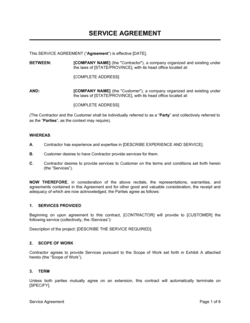
Notice of Late Fee Owed Template

Free Word download β€’ Edit online β€’ Save & share with Drive β€’ Export to PDF

1 pageβ€’15–25 min to fillβ€’Difficulty: Standard
Learn more ↓
FreeNotice of Late Fee Owed Template

At a glance

What it is
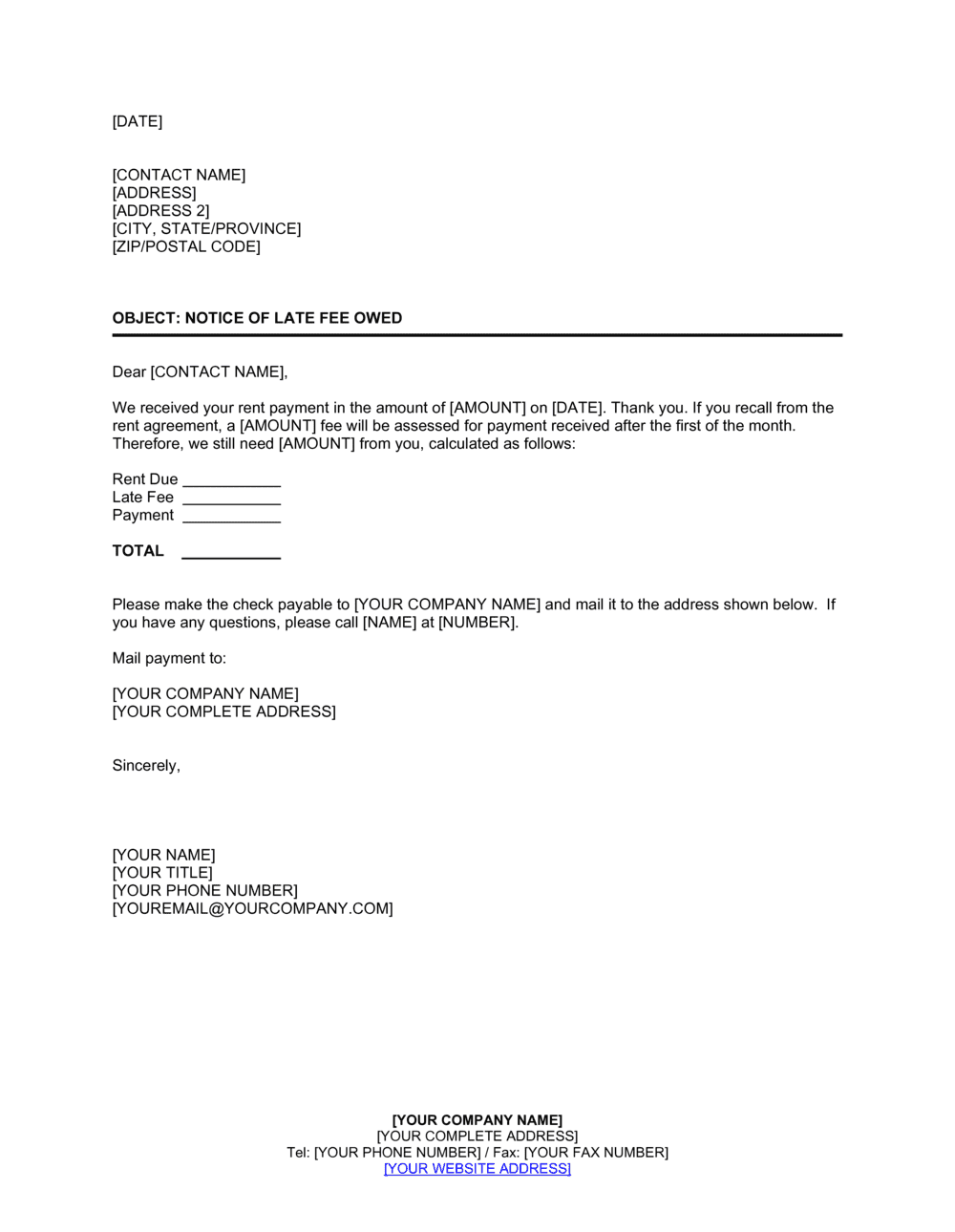
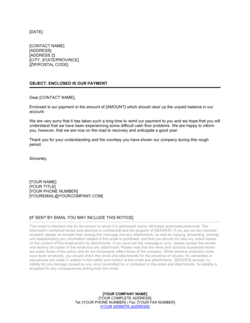
A Notice of Late Fee Owed is a formal business letter sent to a client, tenant, or customer to inform them that a late fee has been assessed on an overdue balance. This free Word download is ready to edit online β€” fill in the original invoice details, the fee amount, and the new total due, then export as PDF and send in minutes.
When you need it
Send it as soon as a payment deadline has passed and a late fee has been triggered under the terms of an existing contract, lease, invoice, or service agreement. It is typically the first formal step before escalating to collections or suspending service.
What's inside
Sender and recipient details, reference to the original invoice or agreement, the original amount and due date, the late fee calculation, the updated total now owed, a revised payment deadline, and accepted payment methods.

What is a Notice of Late Fee Owed?

A Notice of Late Fee Owed is a formal business letter sent to a client, tenant, or customer to inform them that a late fee has been added to an overdue balance under the terms of an existing contract, lease, or invoice. It identifies the original invoice or agreement, restates the amount that was due and the date it was due, calculates the fee that has been applied, and presents the new total the recipient must pay by a revised deadline. Unlike a casual payment reminder, a notice of late fee owed creates a written record that the charge was formally communicated β€” an important paper trail if the matter escalates to collections or a dispute.

Why You Need This Document

Letting overdue invoices age without a formal late fee notice sends the signal that your payment terms are optional. Clients and tenants who experience no consequence for paying late will continue to pay late, quietly compressing your cash flow one billing cycle at a time. A written notice enforces the fee you contractually earned, creates a documented escalation path, and β€” critically β€” establishes that the recipient was formally put on notice before any collections or legal action begins. Without this paper trail, a collections agency or small claims court has less to work with. This template gives you a professional, clearly structured notice you can complete and send in under ten minutes, helping you recover what you are owed while keeping the tone firm and the relationship intact.

Which variant fits your situation?

If your situation is…Use this template
First notice after payment is a few days lateNotice of Late Fee Owed
Payment is significantly overdue and no response has been receivedPast Due Payment Reminder Letter
Formally demanding full payment before legal actionDemand Letter for Payment
Notifying a tenant of unpaid rent plus assessed late feesLate Rent Notice
Informing a customer their account will be sent to collectionsCollections Warning Letter
Suspending service due to a repeatedly overdue accountNotice of Service Suspension
Waiving a late fee as a one-time goodwill gesture in writingLate Fee Waiver Letter

Common mistakes to avoid

❌ No contractual basis cited for the fee

Why it matters: A late fee applied without reference to an authorizing contract clause or invoice term can be disputed and refused. The recipient has no obligation to pay a charge they never agreed to.

Fix: Always cite the specific section of the contract, lease, or invoice terms that permits the late fee. If no such clause exists, you cannot enforce the charge.

❌ Vague or missing revised deadline

Why it matters: A notice that says 'please pay promptly' gives the recipient no actionable deadline and no incentive to prioritize payment over other obligations.

Fix: State a specific calendar date β€” e.g., 'payment must be received by June 15, 2026' β€” and specify what escalation step follows if that date is missed.

❌ Addressing the wrong party

Why it matters: Sending the notice to a project contact instead of the accounts payable department means it may sit unopened while the deadline passes.

Fix: Confirm the correct billing contact and AP email address before sending. For business clients, call ahead to verify and ask for the AP department's direct email.

❌ Omitting the original invoice details

Why it matters: Without the original invoice number, amount, and due date, the recipient cannot verify the fee calculation and is more likely to dispute or ignore the notice.

Fix: Always include a summary of the original transaction β€” invoice number, amount, due date, and days overdue β€” before presenting the late fee calculation.

The 9 key clauses, explained

Sender and recipient header

In plain language: Identifies who is sending the notice and to whom it is addressed, including full contact details for both parties.

Sample language
[SENDER COMPANY NAME] | [ADDRESS] | [EMAIL] | [PHONE] Date: [DATE] [RECIPIENT FULL NAME] [RECIPIENT ADDRESS]

Common mistake: Addressing the letter to a contact name rather than the legal entity responsible for payment β€” this weakens enforceability if the notice is later referenced in a dispute.

Subject line and reference

In plain language: States the purpose of the letter immediately and ties it to the original invoice or agreement by reference number.

Sample language
Re: Notice of Late Fee β€” Invoice #[INVOICE NUMBER] | Original Due Date: [DATE]

Common mistake: Omitting the invoice or agreement reference number, making it difficult for the recipient's accounts payable team to locate the underlying transaction.

Opening statement

In plain language: A direct, professional opening that informs the recipient a late fee has been applied because the referenced payment was not received by its due date.

Sample language
This notice is to inform you that a late fee of $[AMOUNT] has been assessed on Invoice #[INVOICE NUMBER] because payment of $[ORIGINAL AMOUNT] was not received by [DUE DATE].

Common mistake: Opening with an apology or overly softened language that obscures the fact that a formal charge has been applied. The notice should be professional but clear.

Original invoice summary

In plain language: Restates the key facts of the original invoice β€” amount, due date, and the number of days it is now overdue.

Sample language
Original Invoice Amount: $[AMOUNT] | Invoice Date: [DATE] | Payment Due Date: [DATE] | Days Overdue: [NUMBER]

Common mistake: Skipping the original invoice details and only stating the new total. Without the baseline, the recipient cannot verify whether the fee was applied correctly.

Late fee calculation

In plain language: Shows exactly how the late fee was calculated β€” whether it is a flat fee, a percentage of the original balance, or a per diem charge β€” and cites the contract clause that authorizes it.

Sample language
Per Section [X] of our Agreement dated [DATE], a late fee of [X]% per month (or $[FLAT AMOUNT]) is assessed on balances unpaid after [NUMBER] days. Late fee assessed: $[AMOUNT].

Common mistake: Stating the fee amount without citing the contractual basis for it. Without a reference to the governing agreement or invoice terms, the recipient can dispute the charge as unauthorized.

Updated total amount owed

In plain language: Clearly states the new total balance the recipient must pay, combining the original overdue amount and the assessed late fee.

Sample language
Original Amount Due: $[AMOUNT] Late Fee: $[AMOUNT] Total Amount Now Owed: $[TOTAL AMOUNT]

Common mistake: Burying the updated total in a paragraph rather than presenting it as a clearly formatted summary. Recipients who miss the number are more likely to pay only the original amount.

Revised payment deadline

In plain language: Sets a specific new date by which the full updated balance must be received, and warns of consequences if payment is not made by that date.

Sample language
Please remit payment of $[TOTAL AMOUNT] in full no later than [REVISED DUE DATE]. Failure to pay by this date may result in additional fees, suspension of services, or referral to a collections agency.

Common mistake: Using vague language like 'as soon as possible' instead of a firm calendar date. Without a deadline, there is no clear trigger for escalation.

Payment instructions

In plain language: Provides complete, actionable instructions for how to pay β€” including accepted methods, bank details or portal link, and what to reference in the payment.

Sample language
Payment may be submitted by [CHECK / ACH / WIRE / ONLINE PORTAL]. Please reference Invoice #[INVOICE NUMBER] on all payments. Bank details: [BANK NAME], Routing: [ROUTING NUMBER], Account: [ACCOUNT NUMBER].

Common mistake: Providing only one payment method. Limiting options unnecessarily delays payment, particularly for clients with AP systems that require ACH or check.

Contact information and signature

In plain language: Invites the recipient to reach out with questions and closes the letter with the sender's name, title, and contact details.

Sample language
If you have any questions regarding this notice, please contact [NAME] at [EMAIL] or [PHONE]. We appreciate your prompt attention to this matter. Sincerely, [SENDER NAME] [TITLE] [COMPANY NAME]

Common mistake: Closing without a direct contact. Recipients who have questions will delay payment rather than guess who to contact.

How to fill it out

  1. 1

    Enter sender and recipient details

    Add your full business name, address, phone, and email at the top. Then enter the recipient's legal name and billing address. Use the legal entity name, not just a contact person's name.

    πŸ’‘ Save a pre-filled version with your company header as a master file so you only need to update the recipient block for each new notice.

  2. 2

    Add the date and reference numbers

    Enter today's date and include the original invoice number, account number, or agreement identifier in the subject line so the notice is immediately linkable to the underlying transaction.

    πŸ’‘ If the client uses a purchase order number, include that too β€” it speeds up matching in their AP system.

  3. 3

    Fill in the original invoice summary

    State the original invoice amount, invoice date, payment due date, and the number of days the payment is now overdue. This baseline makes the fee calculation transparent and harder to dispute.

    πŸ’‘ Double-check the due date against your records before sending. Notifying someone of a late fee on an invoice that isn't actually past due creates unnecessary conflict.

  4. 4

    Calculate and document the late fee

    Apply the fee formula from your contract or invoice terms β€” flat rate or percentage β€” and show the math. Cite the specific clause or section that authorizes the charge.

    πŸ’‘ If your original invoice did not include late fee terms, you cannot legally enforce one now. Going forward, add a late fee clause to every invoice and agreement you issue.

  5. 5

    State the updated total and revised deadline

    Format the original amount, late fee, and new total as a clear summary block. Set a specific revised due date β€” typically 7–14 days from the notice date β€” and state what happens if it is missed.

    πŸ’‘ A 10-day deadline balances urgency with enough time for the recipient's AP cycle to process the payment.

  6. 6

    Provide complete payment instructions

    List every accepted payment method with full details β€” bank routing and account numbers for ACH, a portal URL for online payments, or a mailing address for checks. Specify what reference number to include.

    πŸ’‘ Including a direct payment link (e.g., a hosted invoice URL) can cut time-to-payment by several days compared to bank details alone.

  7. 7

    Review, export as PDF, and send

    Proofread all amounts, dates, and reference numbers before exporting. Send as a PDF attached to a short professional email that restates the total due and the deadline in the message body.

    πŸ’‘ Send via a method that provides delivery confirmation β€” email with read receipt, or certified mail for high-value disputes. Keep a copy on file.

Frequently asked questions

What is a notice of late fee owed?

A notice of late fee owed is a formal business letter sent to a client, tenant, or customer to inform them that a late fee has been assessed on an overdue payment. It states the original amount due, the fee applied, the new total balance, and a revised deadline for payment. It serves as both a billing document and a written record that the fee was properly communicated.

When should I send a late fee notice?

Send it as soon as the payment due date has passed and any applicable grace period has expired. Most businesses send the notice within 1–5 business days of the missed deadline. Waiting longer reduces the urgency of the message and delays your cash flow. For recurring billing, set a calendar reminder to trigger the notice automatically on a fixed schedule.

Can I charge a late fee if it wasn't in the original contract or invoice?

In most jurisdictions, no. A late fee is enforceable only if the recipient previously agreed to it β€” through a signed contract, a lease, or invoice terms they accepted. Applying a fee retroactively without prior agreement gives the recipient grounds to refuse payment. Going forward, include a clear late fee clause in every contract and invoice you issue before work begins.

What is a reasonable late fee amount?

Common late fee structures are a flat fee (e.g., $25–$50 per invoice) or a percentage of the overdue balance (typically 1–2% per month, or 12–24% per year). Some jurisdictions cap the maximum interest rate that can be charged on overdue commercial invoices, so check local usury or interest limits before setting your rate. Whatever rate you choose, state it clearly in your original contract or invoice terms.

Does a late fee notice need to be signed?

A signature is not required for a late fee notice to be effective as a business communication. However, the letter should be sent from a named individual with a title, and ideally via a method that provides delivery confirmation β€” such as email with a read receipt or certified mail β€” so you have a record that notice was given.

What happens if the recipient ignores the late fee notice?

If the recipient does not respond by the revised deadline, the next steps typically include a second demand letter with a final warning, suspension of services, referral to a collections agency, or β€” for larger amounts β€” a formal demand letter preceding small claims or civil court action. Document every notice you send, with dates and delivery confirmation, to support any future legal or collections process.

Should I waive the late fee if the client asks?

That is a business decision, not a legal one. Many businesses offer a one-time goodwill waiver for long-standing clients with an otherwise clean payment history. If you waive the fee, do so in writing with a Late Fee Waiver Letter and note that the waiver does not modify the underlying payment terms or future obligations. Oral waivers create ambiguity about what was actually agreed.

How is a late fee notice different from a past-due payment reminder?

A past-due payment reminder asks the recipient to pay the original balance that was missed β€” it is a courtesy follow-up with no new charges. A notice of late fee owed formally informs the recipient that an additional charge has been applied under the contract terms. The reminder comes first; if it does not produce payment, the late fee notice follows once the fee has been triggered.

How this compares to alternatives

vs Past Due Payment Reminder Letter

A past-due payment reminder is a courtesy follow-up asking the recipient to pay the original overdue balance. It does not add a new charge. A notice of late fee owed formally informs the recipient that an additional fee has been applied under contract terms and demands a higher total. Send the reminder first; issue the late fee notice once the contractual fee has been triggered.

vs Demand Letter for Payment

A demand letter is a formal pre-legal document that demands full payment of an outstanding balance under threat of legal action. It is used after courtesy notices and late fee letters have been ignored. A notice of late fee owed is an earlier-stage document focused on communicating a specific new charge, not on threatening litigation.

vs Invoice

An invoice is the original billing document requesting payment for goods or services rendered. A notice of late fee owed is a follow-up document issued after an invoice goes unpaid past its due date, adding a contractually authorized charge to the original balance. They document two distinct moments in the same payment cycle.

vs Collections Warning Letter

A collections warning letter notifies the recipient that their account will be referred to a third-party collections agency if payment is not received by a final deadline. It is a late-stage escalation document. A notice of late fee owed is an earlier communication focused on the fee charge itself, typically issued before collections escalation is warranted.

Industry-specific considerations

Real estate and property management

Late fee notices for residential and commercial tenants reference the lease clause, state-mandated grace periods, and the exact fee formula β€” typically a flat amount or 5–10% of monthly rent.

Professional services

Consultants and agencies use late fee notices to enforce Net 15 or Net 30 invoice terms, often citing a 1.5% monthly fee on balances unpaid beyond the grace period.

Construction and contracting

Contractors tie late fee notices to milestone payment schedules and may reference lien rights alongside the overdue fee to increase urgency.

Healthcare and medical billing

Medical practices and billing services use late fee notices for patient balances not covered by insurance, subject to state-specific limits on interest rates charged to consumers.

Template vs pro β€” what fits your needs?

PathBest forCostTime
Use the templateFreelancers, small business owners, landlords, and billing staff sending standard late fee noticesFree5–10 minutes per notice
Template + professional reviewBusinesses adding jurisdiction-specific interest rate language or notices tied to complex commercial leases$50–$150 (paralegal or accountant review)1–2 hours
Custom draftedHigh-value disputes, regulated industries, or notices that may precede formal legal action$200–$600 (attorney-drafted demand)1–3 days

Glossary

Late Fee
A predetermined charge assessed when a payment is received after its contractual due date, expressed as a flat amount or a percentage of the overdue balance.
Grace Period
A defined number of days after the due date during which payment may be received without triggering a late fee.
Net 30 / Net 15
Payment terms specifying that the full invoice amount is due 30 or 15 days after the invoice date.
Per Diem Fee
A daily late charge that continues to accrue for each calendar day the payment remains outstanding past the due date.
Account Balance
The total amount currently owed by the recipient, including the original invoice amount plus any assessed late fees.
Reference Number
The invoice number, account number, or agreement identifier used to link the notice to the specific transaction that triggered the fee.
Demand Date
The revised deadline stated in the notice by which the full updated balance β€” including the late fee β€” must be received.
Remittance Instructions
The specific payment methods and details β€” bank transfer, check, online portal β€” provided so the recipient can pay without follow-up.

Part of your Business Operating System

This document is one of 3,000+ business & legal templates included in Business in a Box.

  • Fill-in-the-blanks β€” ready in minutes
  • 100% customizable Word document
  • Compatible with all office suites
  • Export to PDF and share electronically

Create your document in 3 simple steps.

From template to signed document β€” all inside one Business Operating System.
1
Download or open template

Access over 3,000+ business and legal templates for any business task, project or initiative.

2
Edit and fill in the blanks with AI

Customize your ready-made business document template and save it in the cloud.

3
Save, Share, Send, Sign

Share your files and folders with your team. Create a space of seamless collaboration.

Save time, save money, and create top-quality documents.

β˜…β˜…β˜…β˜…β˜…

"Fantastic value! I'm not sure how I'd do without it. It's worth its weight in gold and paid back for itself many times."

Managing Director Β· Mall Farm
Robert Whalley
Managing Director, Mall Farm Proprietary Limited
β˜…β˜…β˜…β˜…β˜…

"I have been using Business in a Box for years. It has been the most useful source of templates I have encountered. I recommend it to anyone."

Business Owner Β· 4+ years
Dr Michael John Freestone
Business Owner
β˜…β˜…β˜…β˜…β˜…

"It has been a life saver so many times I have lost count. Business in a Box has saved me so much time and as you know, time is money."

Owner Β· Upstate Web
David G. Moore Jr.
Owner, Upstate Web

Run your business with a system β€” not scattered tools

Stop downloading documents. Start operating with clarity. Business in a Box gives you the Business Operating System used by over 250,000 companies worldwide to structure, run, and grow their business.

Free Forever PlanΒ Β·Β No credit card required