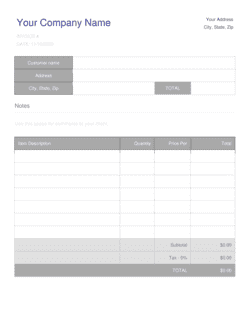
Disputed Balance Notice Template

Free Word download β€’ Edit online β€’ Save & share with Drive β€’ Export to PDF

1 pageβ€’15–25 min to fillβ€’Difficulty: Standard
Learn more ↓
FreeDisputed Balance Notice Template

At a glance

What it is
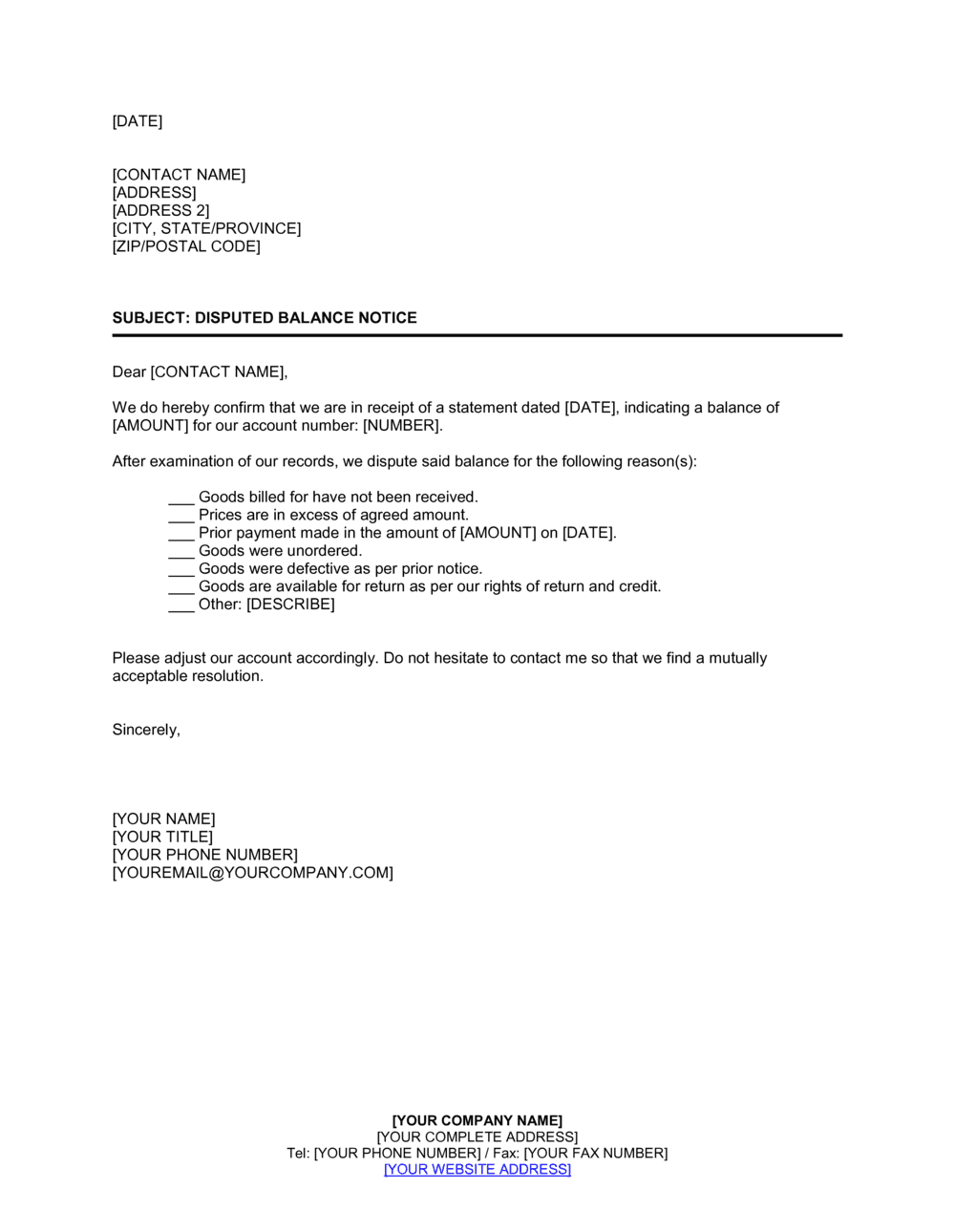
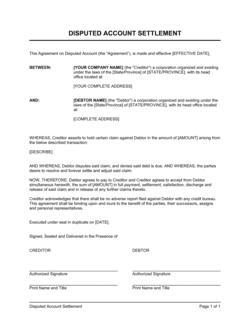
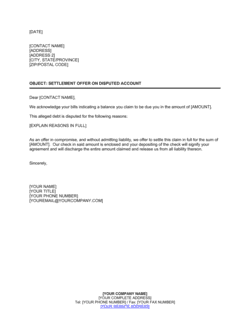
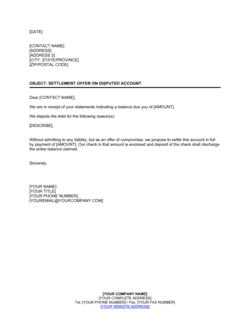
A Disputed Balance Notice is a formal written letter a buyer or debtor sends to a creditor or vendor to challenge the accuracy of an outstanding balance on an invoice, statement, or account. This free Word download lets you fill in the relevant invoice numbers, dispute grounds, and supporting figures, then export as PDF and send by email or post in under 15 minutes.
When you need it
Use it when you receive an invoice or account statement containing charges you believe are incorrect, duplicated, unsupported by a contract, or already paid. Sending a formal written notice creates a documented record that you disputed the amount before any payment deadline or collection action.
What's inside
Sender and recipient details, a reference to the specific invoice or account number, a clear statement that the balance is disputed, a concise explanation of the grounds for the dispute, the amount you acknowledge as correct (if any), and a request for a corrected statement or written response within a defined timeframe.

What is a Disputed Balance Notice?

A Disputed Balance Notice is a formal written letter sent by a buyer, client, or debtor to a vendor or creditor to officially challenge the accuracy of an outstanding balance on an invoice or account statement. It identifies the specific invoice or account being disputed, explains the grounds for the challenge β€” such as a duplicate charge, pricing discrepancy, delivery shortfall, or prior payment not credited β€” and requests a corrected invoice or written explanation within a defined timeframe. Unlike an informal email query, a written notice creates a timestamped, auditable record that both parties can reference if the dispute escalates.

Why You Need This Document

Failing to dispute a billing error in writing leaves you in a weak position if the vendor pursues collection, charges late fees, or places your account on hold. An informal phone call or email thread rarely constitutes a formal dispute under commercial contract terms β€” meaning interest can continue to accrue and collection timelines keep running. A properly formatted Disputed Balance Notice stops that clock, documents your position before any payment deadline, and gives the vendor's accounts receivable team the specific information they need to investigate and issue a credit note. For accounts payable teams managing multiple vendors, it also provides the paper trail required for internal audit purposes. This template structures the notice correctly β€” clear reference numbers, unambiguous dispute language, an undisputed payment offer, and a response deadline β€” so you can send a professional, effective letter in under 30 minutes.

Which variant fits your situation?

If your situation is…Use this template
Disputing an invoice amount before the payment due dateDisputed Balance Notice
Requesting a credit or refund for an overcharge already paidRefund Request Letter
Responding to a debt collection notice for an amount you disputeDebt Validation Letter
Formally rejecting goods and disputing the related invoiceGoods Rejection Notice
Requesting a corrected invoice after identifying a billing errorCredit Note Request Letter
Escalating a dispute after the vendor has not responded to prior noticeDemand Letter

Common mistakes to avoid

❌ Using vague or tentative language

Why it matters: Phrases like 'we have concerns about this invoice' are not treated as formal disputes by AR departments and will not pause collection timelines or late-fee accrual.

Fix: Use explicit language: 'We formally dispute the balance of $[X] on Invoice #[Y].' Directness is legally and operationally necessary.

❌ Setting no response deadline

Why it matters: Without a deadline, the vendor has no urgency to investigate or issue a credit note, and the disputed balance continues to age on their records.

Fix: State a specific number of business days β€” 14 is standard β€” and note that you will escalate if no response is received by that date.

❌ Withholding the full invoice when only part of it is wrong

Why it matters: Refusing to pay the undisputed portion signals bad faith, damages the vendor relationship, and can accelerate collection action against the entire balance.

Fix: Separate the undisputed and disputed amounts explicitly in the letter and commit to paying the undisputed portion by the original due date.

❌ Omitting reference documents from attachments

Why it matters: A dispute without supporting evidence β€” a PO, prior invoice, or payment receipt β€” gives the vendor no basis to investigate and makes the claim easy to reject.

Fix: Attach numbered copies of every document cited in the letter. Label each attachment to match the reference in the body of the notice.

The 9 key clauses, explained

Sender and Recipient Block

In plain language: Identifies both parties β€” the sender disputing the balance and the vendor or creditor receiving the notice β€” including company names, addresses, and contacts.

Sample language
[SENDER COMPANY NAME] | [ADDRESS] | [CITY, STATE, ZIP] | [DATE] | To: [RECIPIENT COMPANY NAME], Attn: [ACCOUNTS RECEIVABLE CONTACT], [ADDRESS]

Common mistake: Addressing the letter to a project contact rather than the accounts receivable department β€” the notice may sit unread while collection processes continue.

Subject Line and Reference Numbers

In plain language: States clearly that the letter is a formal dispute and cites the specific invoice number, account number, and statement date being challenged.

Sample language
RE: Formal Dispute of Invoice #[INVOICE NUMBER] dated [DATE] β€” Account #[ACCOUNT NUMBER]

Common mistake: Omitting the invoice or account number in the subject line, making it impossible for the recipient to match the letter to their records quickly.

Opening Statement of Dispute

In plain language: A direct, unambiguous sentence declaring that the balance shown on the referenced invoice or statement is disputed and that payment in full is withheld pending resolution.

Sample language
We write to formally notify you that the balance of $[DISPUTED AMOUNT] shown on Invoice #[INVOICE NUMBER] dated [DATE] is disputed in its entirety / in part, and payment of the disputed portion will be withheld pending resolution.

Common mistake: Using hedging language like 'we have some concerns about' β€” ambiguous phrasing does not constitute a formal dispute and may not stop collection or late-fee accrual.

Grounds for the Dispute

In plain language: A concise, factual explanation of why the balance is incorrect β€” pricing discrepancy, duplicate charge, goods not received, services not rendered, or prior payment not credited.

Sample language
The disputed amount arises because: (a) Invoice #[NUMBER] duplicates charges previously billed on Invoice #[PRIOR INVOICE NUMBER] dated [DATE]; and/or (b) the unit price of $[AMOUNT] exceeds the agreed rate of $[CONTRACTED RATE] per Purchase Order #[PO NUMBER].

Common mistake: Providing a vague explanation without referencing specific documents β€” the vendor cannot investigate or issue a credit note without precise details.

Undisputed Amount and Payment Offer

In plain language: States any portion of the invoice or balance the sender accepts as correct and offers to pay by the original due date, preserving goodwill and demonstrating good faith.

Sample language
We acknowledge and will remit the undisputed amount of $[UNDISPUTED AMOUNT] by [DUE DATE] via [PAYMENT METHOD]. Payment of the remaining $[DISPUTED AMOUNT] is withheld pending your response.

Common mistake: Withholding the entire invoice when only part of it is disputed β€” this creates a larger credit risk signal for the vendor and can accelerate collection action unnecessarily.

Supporting Documentation Reference

In plain language: Lists the attachments included with the notice that substantiate the dispute β€” prior invoices, purchase orders, payment receipts, delivery notes, or correspondence.

Sample language
Enclosed for your reference: (1) Copy of Invoice #[PRIOR INVOICE NUMBER] β€” duplicate charge; (2) Purchase Order #[PO NUMBER] confirming agreed unit price; (3) Bank remittance dated [DATE] confirming prior payment.

Common mistake: Referring to documents as 'enclosed' without actually attaching them β€” the dispute is then unsupported and easy for the vendor to dismiss.

Request for Corrected Statement or Response

In plain language: Explicitly asks the vendor to issue a corrected invoice or credit note, or to provide a written explanation of the charges, within a stated number of business days.

Sample language
We respectfully request that you issue a corrected invoice or credit note for the disputed amount of $[AMOUNT], or provide written justification of the charges, within [14] business days of this notice.

Common mistake: Setting no response deadline β€” open-ended requests are routinely deprioritized, leaving the dispute unresolved and the account aging.

Reservation of Rights

In plain language: A brief standard clause stating that sending this notice does not waive any legal rights the sender may have regarding the disputed amount.

Sample language
This notice is sent without prejudice to any rights or remedies available to [SENDER COMPANY NAME] under the applicable agreement or at law, all of which are expressly reserved.

Common mistake: Omitting this clause entirely β€” without it, a written partial payment or acknowledgment could be construed as settling the full dispute in some jurisdictions.

Closing and Authorized Signature

In plain language: A professional closing that invites the recipient to contact a named person to resolve the matter, followed by the sender's name, title, and company.

Sample language
Please direct any questions to [CONTACT NAME] at [EMAIL] or [PHONE]. We look forward to your prompt response and a mutually agreeable resolution. Sincerely, [AUTHORIZED SIGNATORY NAME], [TITLE], [COMPANY NAME]

Common mistake: Closing without providing a named contact β€” AP teams at the vendor need a specific person to call, or the dispute sits in a queue rather than getting resolved.

How to fill it out

  1. 1

    Gather the invoice and supporting documents

    Collect the invoice or statement being disputed, the relevant purchase order, any prior payment receipts, delivery notes, or prior correspondence. You will reference these in the letter and attach copies.

    πŸ’‘ Bank remittance confirmations and email threads with agreed pricing are the two most persuasive attachments β€” gather them before drafting.

  2. 2

    Enter sender and recipient details

    Fill in your company name, address, and date in the sender block. In the recipient block, use the vendor's legal entity name and address the letter to the accounts receivable department, not your sales or project contact.

    πŸ’‘ Call the vendor's main line to confirm the correct AR contact name and email before sending β€” misdirected letters delay resolution by days or weeks.

  3. 3

    Complete the subject line with reference numbers

    Enter the invoice number, invoice date, and your account number in the subject line. If multiple invoices are involved, list all of them.

    πŸ’‘ The reference line is the first thing AR staff read β€” a complete reference cuts their lookup time and signals you have a well-organized dispute.

  4. 4

    State the dispute clearly in the opening paragraph

    Use unambiguous language β€” 'we formally dispute the balance of $X' β€” and state whether the dispute covers the full amount or only a specific portion.

    πŸ’‘ Avoid qualifiers like 'believe' or 'feel.' A dispute notice is a factual statement, not an opinion.

  5. 5

    Describe the grounds with specific document references

    Explain in two to four sentences exactly why the balance is wrong, citing the invoice number, PO number, or payment date that supports your position.

    πŸ’‘ Number each ground separately if there is more than one β€” it makes the vendor's response easier to track and yours easier to follow up on.

  6. 6

    State the undisputed amount you will pay

    Identify any portion of the invoice you accept and confirm you will pay it by the original due date. If the full amount is disputed, state that clearly.

    πŸ’‘ Paying the undisputed portion on time protects your credit standing with the vendor and demonstrates good faith.

  7. 7

    List attached documents and set a response deadline

    Enumerate every attachment by name and number. Then specify a response deadline β€” 14 business days is standard β€” and name the contact the vendor should reach out to.

    πŸ’‘ Send the letter by email with read receipt and follow up by certified post for high-value disputes over $5,000.

Frequently asked questions

What is a disputed balance notice?

A disputed balance notice is a formal written letter from a buyer or debtor to a creditor or vendor formally challenging the accuracy of an outstanding balance on an invoice or account statement. It states the specific grounds for the dispute, identifies the amount contested, and requests a corrected invoice or written explanation within a set timeframe. Sending it in writing creates an auditable record that protects both parties.

When should I send a disputed balance notice?

Send it as soon as you identify a discrepancy on an invoice or statement β€” ideally before the payment due date. Disputing before the due date establishes that you acted promptly and typically prevents late fees from accruing on the contested portion. Waiting until after the due date or until a collection notice arrives weakens your position and may not stop penalties.

Does a disputed balance notice stop collection action?

A written dispute notice does not automatically halt collection under most commercial contracts, but it creates a documented record that can be used to contest late fees, credit holds, or collection proceedings. In consumer credit contexts, the Fair Debt Collection Practices Act (FDCPA) in the US requires collectors to pause collection of a disputed consumer debt pending verification. For business-to-business disputes, the outcome depends on the contract terms and applicable law.

Do I need to pay anything while the dispute is pending?

Best practice is to pay the undisputed portion of the invoice by the original due date and formally withhold only the contested amount. This demonstrates good faith, protects your payment history with the vendor, and reduces the likelihood of collection action against the full balance. Withholding the entire invoice when only part of it is wrong can damage the commercial relationship unnecessarily.

What documents should I attach to a disputed balance notice?

Attach any document that substantiates your position: the original purchase order showing agreed pricing, a bank remittance confirming prior payment, a prior invoice showing the duplicate charge, delivery documentation showing goods were short-shipped, or email correspondence confirming a credit was promised. Number each attachment and reference it by number in the body of the letter.

What is the difference between a disputed balance notice and a demand letter?

A disputed balance notice is sent by the party who owes money to challenge the amount claimed. A demand letter is sent by the party owed money to demand payment of an outstanding balance. They are mirror images β€” one contests the debt, the other collects it. If a dispute is not resolved, the creditor may eventually send a demand letter, at which point the disputed balance notice becomes part of the response record.

How long should I give the vendor to respond?

Fourteen business days is the standard response window for commercial disputes and gives the vendor's AR team time to investigate and issue a credit note or explanation. For urgent situations β€” such as a balance approaching a credit-hold threshold β€” 5 to 7 business days is reasonable. State the deadline explicitly in the letter and follow up in writing if it passes without a response.

Can a small business use this template without a lawyer?

Yes. A disputed balance notice is a straightforward commercial correspondence document β€” it does not create legal liability or require legal expertise to draft. A template handles the standard structure for the vast majority of routine billing disputes. Involve a lawyer only if the disputed amount is significant (typically over $10,000), the vendor has already initiated legal proceedings, or the dispute involves a complex contract interpretation question.

How this compares to alternatives

vs Demand Letter

A demand letter is sent by the creditor to demand payment of an outstanding balance. A disputed balance notice is sent by the debtor to contest that balance. They are opposite instruments β€” one pursues collection, the other challenges it. If a dispute escalates without resolution, the creditor's next step is typically a demand letter.

vs Debt Acknowledgment Letter

A debt acknowledgment letter confirms that a balance is owed and commits to a repayment plan. A disputed balance notice explicitly rejects that the full amount is owed. Sending an acknowledgment when you actually intend to dispute the balance waives your ability to challenge it later.

vs Credit Note

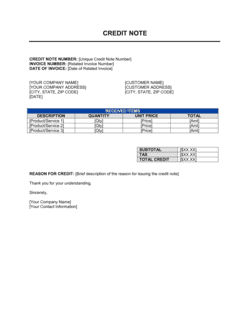
A credit note is issued by the vendor to reduce or cancel an invoice β€” it is the resolution document that typically follows a successful dispute. A disputed balance notice is the document that initiates the process. Send the notice first; the credit note is what you are requesting in return.

vs Past Due Notice

A past due notice is sent by the creditor to a debtor who has not paid. A disputed balance notice is the debtor's formal response explaining why payment has been withheld. If a past due notice arrives for a balance you have already disputed in writing, attach a copy of your original notice to your response.

Industry-specific considerations

Construction and Trades

Disputing invoices that include change-order charges not formally approved in writing or materials billed above the contracted unit rate.

Retail and Wholesale

Challenging supplier invoices that include shortfalls in delivered quantities, damaged goods billed at full price, or pricing that deviates from volume-discount agreements.

Professional Services

Contesting time-and-materials invoices that exceed the agreed budget cap or include hours not reflected in approved timesheets.

Healthcare

Disputing vendor or supplier invoices for medical supplies or services that do not match delivery records or contracted pricing schedules.

Template vs pro β€” what fits your needs?

PathBest forCostTime
Use the templateBusinesses and individuals disputing routine billing errors, duplicate charges, or pricing discrepancies on standard commercial invoicesFree15–30 minutes
Template + professional reviewDisputes involving amounts over $10,000 or where the vendor relationship is strategically important$100–$300 for a brief legal or accountant review1–2 days
Custom draftedDisputes that have escalated to formal legal proceedings or involve complex contract interpretation$500–$2,000+3–7 days

Glossary

Disputed Balance
An amount on an invoice or account statement that the recipient formally contests as incorrect, unsupported, or already satisfied.
Invoice Number
The unique identifier assigned to a specific invoice, used to reference the exact document being disputed.
Account Statement
A summary document from a creditor listing all charges, payments, and the current outstanding balance across one or more transactions.
Grounds for Dispute
The specific reason a balance is being challenged β€” such as a pricing error, duplicate charge, delivery shortfall, or prior payment not credited.
Undisputed Amount
The portion of the invoice or balance the sender acknowledges as correct and is prepared to pay by the due date.
Credit Note
A document issued by a seller to reduce or cancel a previously issued invoice, typically issued in response to a successful dispute.
Collection Action
Steps a creditor takes to recover an unpaid balance, including demand letters, collection agency referral, or legal proceedings.
Audit Trail
A chronological record of documents and communications that demonstrates the history of a transaction or dispute.
Response Deadline
The date by which the recipient of the dispute notice is asked to reply with a corrected statement or written explanation.
Purchase Order (PO)
A buyer-issued document authorizing a specific purchase at agreed terms β€” used as evidence when an invoice exceeds or deviates from those terms.

Part of your Business Operating System

This document is one of 3,000+ business & legal templates included in Business in a Box.

  • Fill-in-the-blanks β€” ready in minutes
  • 100% customizable Word document
  • Compatible with all office suites
  • Export to PDF and share electronically

Create your document in 3 simple steps.

From template to signed document β€” all inside one Business Operating System.
1
Download or open template

Access over 3,000+ business and legal templates for any business task, project or initiative.

2
Edit and fill in the blanks with AI

Customize your ready-made business document template and save it in the cloud.

3
Save, Share, Send, Sign

Share your files and folders with your team. Create a space of seamless collaboration.

Save time, save money, and create top-quality documents.

β˜…β˜…β˜…β˜…β˜…

"Fantastic value! I'm not sure how I'd do without it. It's worth its weight in gold and paid back for itself many times."

Managing Director Β· Mall Farm
Robert Whalley
Managing Director, Mall Farm Proprietary Limited
β˜…β˜…β˜…β˜…β˜…

"I have been using Business in a Box for years. It has been the most useful source of templates I have encountered. I recommend it to anyone."

Business Owner Β· 4+ years
Dr Michael John Freestone
Business Owner
β˜…β˜…β˜…β˜…β˜…

"It has been a life saver so many times I have lost count. Business in a Box has saved me so much time and as you know, time is money."

Owner Β· Upstate Web
David G. Moore Jr.
Owner, Upstate Web

Run your business with a system β€” not scattered tools

Stop downloading documents. Start operating with clarity. Business in a Box gives you the Business Operating System used by over 250,000 companies worldwide to structure, run, and grow their business.

Free Forever PlanΒ Β·Β No credit card required