1
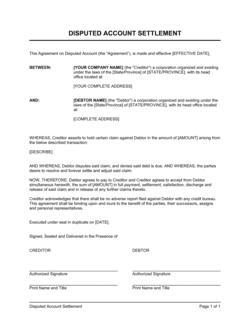
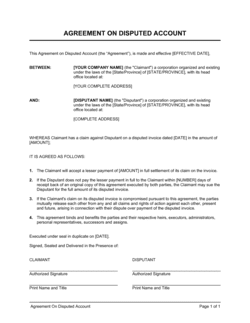
Identify both parties using full legal names
Enter the creditor's and debtor's registered legal entity names — not trade names or individuals' first names. For individuals, use the full legal name as it appears on government-issued ID.
💡 Cross-reference invoices, contracts, or credit applications to confirm the exact legal entity name before sending. A mismatch can void the release.
2
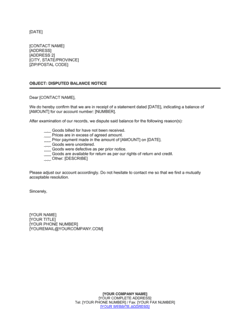
Reference the disputed account precisely
Include the original account number, the date the obligation arose, and a one-sentence description of what it covers — for example, 'unpaid invoices for software development services rendered between January 1 and March 31, 2025.'
💡 Attach copies of the disputed invoices or statements as Exhibit A so the account reference is unambiguous and the release covers the correct obligation.
3
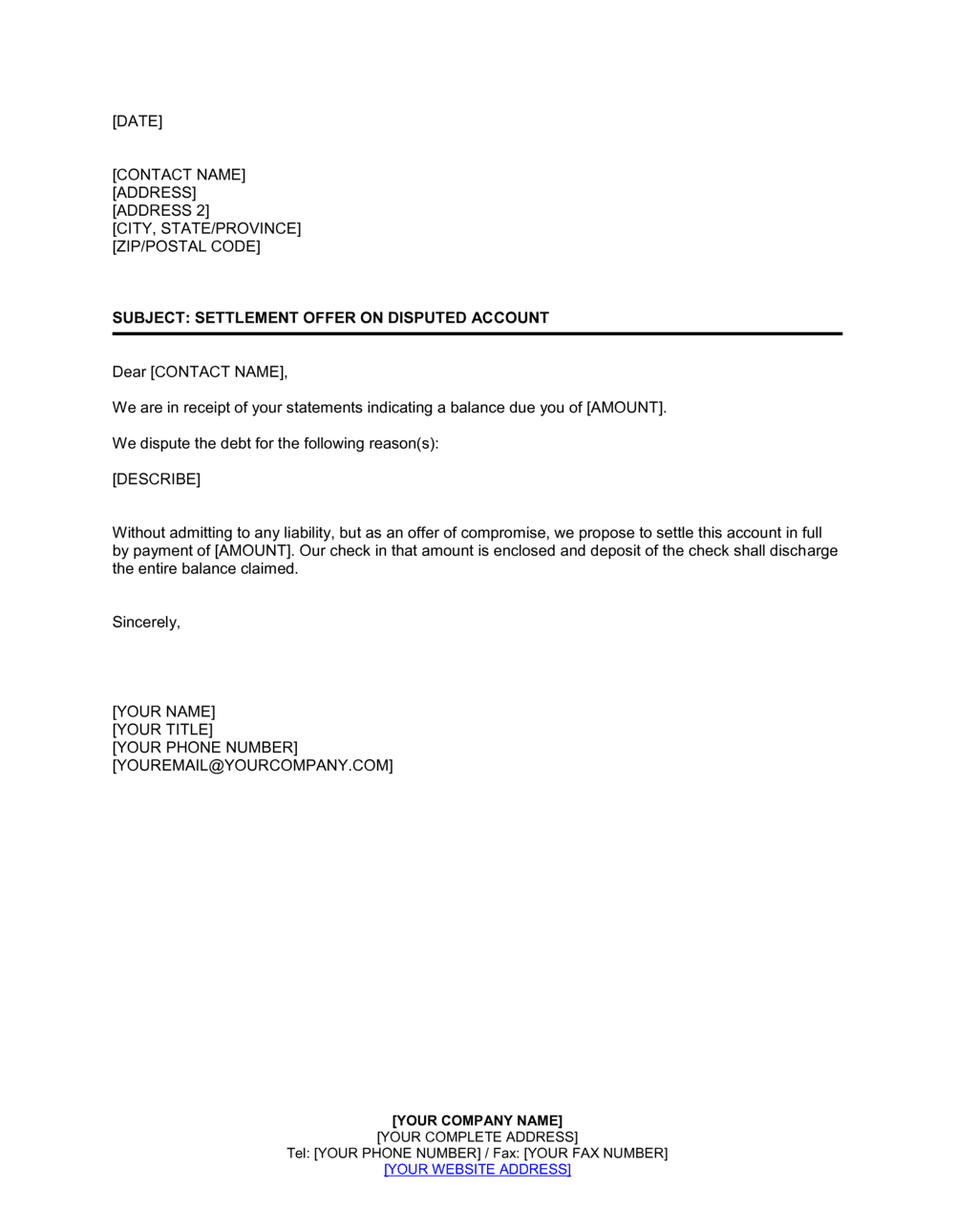
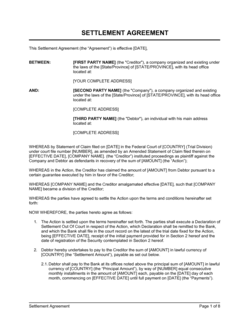
State the full claimed amount and the settlement amount
Enter the total balance the creditor claims, the disputed amount or reason for dispute, and the exact settlement figure being offered. Avoid ranges — use a single specific dollar amount.
💡 Settlement amounts of 40–70% of the claimed balance are common for genuinely disputed commercial accounts. Going below 40% typically triggers rejection and extends the dispute.
4
Set payment terms with a specific due date
Choose lump sum or installments. For installments, list each payment date and amount in a schedule. State the payment method — wire transfer, certified check, or ACH — and confirm where funds should be sent.
💡 Certified check or wire transfer is safer than ACH for settlement payments — the funds are confirmed cleared before the release takes effect.
5
Add a default and reinstatement clause
Specify that failure to pay on time reinstates the full original balance immediately, less any amounts already received. Include a short cure period — typically 3–5 business days — before reinstatement triggers.
💡 A 3-business-day cure window reduces disputes about bank processing delays while still protecting the creditor from serial late payments.
6
Draft the release language carefully
Decide whether the release is mutual or unilateral. For most commercial disputed accounts, a mutual release is appropriate. Include 'known or unknown' claims to prevent either party from returning with a new theory of recovery.
💡 In California, a release of unknown claims must specifically reference Civil Code §1542 to be effective — add this waiver if California law governs.
7
Mark the offer letter as without prejudice
Both the transmittal letter and the agreement itself should carry the 'without prejudice' designation. This protects the offering party if negotiations break down.
💡 In the UK, 'without prejudice' and 'without prejudice save as to costs' have different legal effects — use the latter if you intend to rely on the offer in any subsequent costs argument.
8
Sign and retain originals before payment
Both parties must sign the agreement before any settlement payment is made. Keep a fully executed copy with all attachments in your records. Confirm cleared funds before treating the release as effective.
💡 Timestamp electronic signatures and store the executed agreement in a secure location — disputes about whether a release was signed before or after payment are common.