1
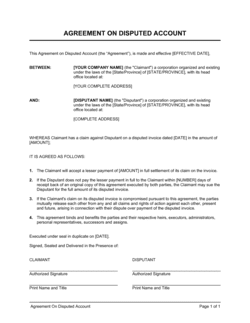
Identify both parties and the disputed account
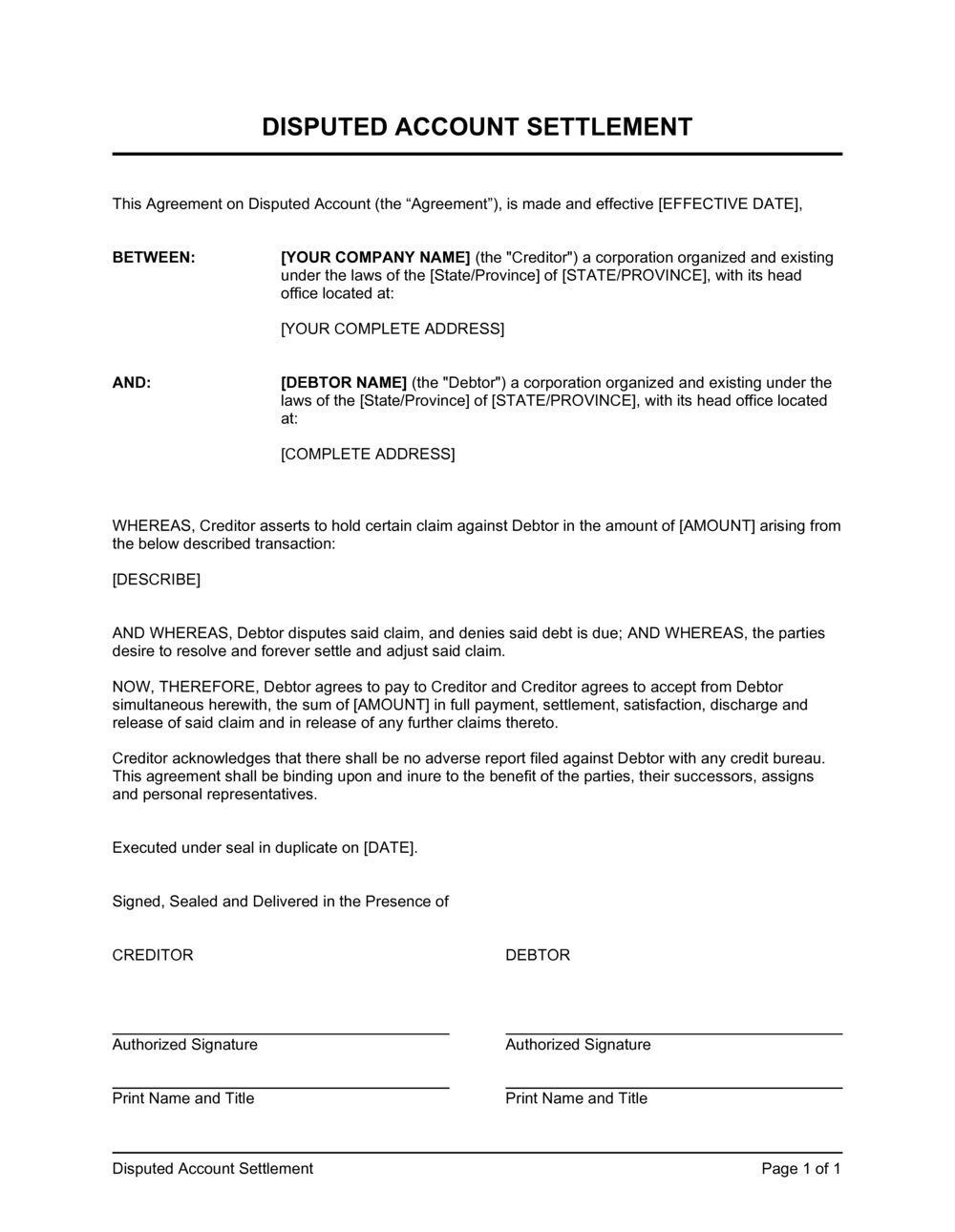
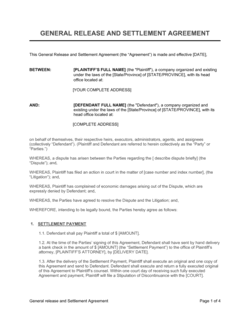
Enter the full registered legal names of the creditor and debtor. Reference the specific account number, invoice numbers, or contract reference that is the subject of the dispute — not just a general description of the relationship.
💡 Pull the exact entity names from the original contract or invoice to ensure they match — mismatched names are the most common reason settlements are challenged.
2
Summarize the dispute briefly
Write a two-to-three sentence description of what is being disputed — the original amount claimed, what the debtor objects to, and the nature of the disagreement. This does not need to adjudicate fault; it simply anchors the release clause.
💡 Keep the dispute description factual and neutral. Inflammatory language in this section can create new claims rather than extinguish old ones.
3
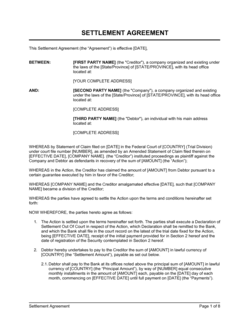
Enter the original balance and settlement amount
State the full original amount the creditor claims is owed, then state the agreed settlement figure. The difference between the two is the deficiency amount you will reference in the deficiency waiver clause.
💡 Express both amounts as specific dollar figures with currency — never as percentages or ranges. Ambiguous amounts have been litigated successfully to void settlements.
4
Define the payment schedule and method
Choose lump sum or installments. For installments, list each payment amount and due date explicitly. Specify the payment method — wire transfer, ACH, or check — and include account or mailing details.
💡 Add a five-business-day grace period before a missed installment triggers the default clause. Courts look unfavorably on hair-trigger default provisions.
5
Confirm the mutual release is truly bilateral
Review both the creditor release and the debtor release clauses. Ensure the creditor's release is contingent on actual receipt of funds — not just execution of the agreement — and that the debtor's release covers billing and service claims.
💡 Have each party read their own release clause aloud before signing. Parties routinely miss that they are releasing claims they believed were still open.
6
Add the deficiency waiver and default reinstatement terms
Enter the specific deficiency amount the creditor is forgiving and confirm it will not be sold, assigned, or referred to collections. Then set the cure period and reinstatement formula for the default clause.
💡 If the creditor has already sold the receivable or placed it with a collection agency, retrieve and cancel the referral in writing before executing this agreement.
7
Select governing law appropriate to both parties
Choose the law of the state or province where the creditor operates, where the debtor is located, or where the original contract was to be performed — whichever has the clearest connection to the transaction.
💡 Avoid choosing a governing law purely for strategic advantage. Courts in Canada, the UK, and the EU may ignore a choice-of-law clause that has no genuine connection to the transaction.
8
Execute with dated signatures before any payment is made
Both parties must sign the agreement before the first payment is transmitted. Retain a fully executed copy with original or electronic signatures, and note the date of each payment received against the schedule.
💡 Send the executed agreement by email immediately after signing so there is a timestamped record of the fully executed document for both parties.