Notice to Account Debtor of Assignment Template

Free Word download β€’ Edit online β€’ Save & share with Drive β€’ Export to PDF

1 pageβ€’15–25 min to fillβ€’Difficulty: Standard
Learn more ↓
FreeNotice to Account Debtor of Assignment Template

At a glance

What it is
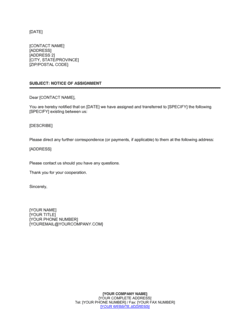
A Notice to Account Debtor of Assignment is a formal written letter an assignor (typically a business selling or pledging its receivables) sends to a debtor to inform them that the right to collect a specific debt or account has been transferred to a third party (the assignee). This free Word download gives you a ready-to-edit template you can customize with the relevant account details and send within minutes.
When you need it
Use it whenever receivables are assigned β€” in factoring arrangements, asset-based lending, business sales, or debt restructuring β€” so the debtor knows to direct future payments to the correct party.
What's inside
Date and party identification, a clear statement of the assignment, the account or invoice reference being assigned, new payment instructions, the effective date of the transfer, and an authorized signature block.

What is a Notice to Account Debtor of Assignment?

A Notice to Account Debtor of Assignment is a formal written letter sent by the original creditor β€” the assignor β€” to a debtor, informing them that the right to collect a specific account or receivable has been legally transferred to a third party called the assignee. The notice establishes the effective date from which the debtor must redirect all payments to the new party and confirms that paying the original creditor after that date will not discharge the obligation. It is a routine but legally critical step in invoice factoring, asset-based lending, business sales, and any other transaction where receivables change ownership.

Why You Need This Document

Without a proper notice of assignment, a debtor who pays the original creditor by habit is generally protected β€” the payment discharges the debt, and the assignee is left pursuing the assignor for funds already spent. The notice closes that gap by formally binding the debtor to the new payment arrangement. For lenders and factors, it is also a compliance requirement: most assignment agreements and UCC Article 9 filings in the US require the debtor to be notified before the assignee can enforce collection rights. Sending a clear, complete notice on the effective date protects the assignee's position, eliminates payment routing disputes, and gives both parties a documented record of when the transfer became binding on the debtor. This template lets you issue a properly structured notice in under ten minutes.

Which variant fits your situation?

If your situation is…Use this template
Assigning receivables to a factoring company for immediate cashNotice to Account Debtor of Assignment (Factoring)
Pledging receivables as collateral under a line of creditNotice to Account Debtor of Assignment (Collateral)
Transferring all accounts as part of a full business saleNotice to Account Debtor of Assignment (Business Sale)
Notifying a debtor after a court-ordered assignmentNotice to Account Debtor of Assignment (Court Order)
Revoking or terminating a prior assignment noticeRevocation of Assignment Notice
Demanding payment directly from an account debtor after defaultDemand Letter for Payment

Common mistakes to avoid

❌ Using ambiguous assignment language

Why it matters: Phrases like 'may assign' or 'intends to transfer' do not establish a completed assignment. A debtor who pays the original creditor can argue the assignment was not yet effective.

Fix: State the assignment in the past tense as a completed fact: 'Assignor has assigned and transferred' β€” not 'will assign' or 'is assigning.'
❌ Omitting specific invoice or account references

Why it matters: A debtor with multiple relationships with the assignor cannot determine which obligation is affected, causing delays and misdirected payments.

Fix: Always include the account number, specific invoice numbers, and original agreement date in the subject line or opening paragraph.

❌ Failing to instruct the debtor to stop paying the assignor

Why it matters: Without an explicit instruction to stop paying the original creditor, debtors who pay out of habit may successfully argue the debt was discharged, forcing the assignee to pursue the assignor instead.

Fix: Include a dedicated sentence stating that payments to the assignor after the effective date do not discharge the obligation and must be redirected to the assignee.

❌ Sending the notice without proof of delivery

Why it matters: If the debtor later disputes receipt of the notice, the assignee's right to collect payment effective from the stated date becomes difficult to enforce.

Fix: Send by certified mail with return receipt or email with read-receipt confirmation, and retain all delivery records with the assignment file.

The 9 key clauses, explained

Date and parties block

In plain language: States the date the letter is sent, the full legal name of the assignor sending the notice, and the full legal name and address of the account debtor receiving it.

Sample language
[DATE] | To: [ACCOUNT DEBTOR LEGAL NAME] | [DEBTOR ADDRESS] | From: [ASSIGNOR LEGAL NAME]

Common mistake: Using a trade name instead of the registered legal entity name for either party β€” mismatched names create confusion about who holds collection rights and can complicate enforcement.

Subject line / reference

In plain language: Identifies the specific account, invoice, or agreement being assigned so the debtor can match the notice to their records.

Sample language
Re: Assignment of Account No. [ACCOUNT NUMBER] / Invoice(s) [INVOICE NUMBERS] β€” Original Agreement Dated [DATE]

Common mistake: Omitting the account or invoice reference number. A vague reference forces the debtor to guess which obligation is affected and increases the risk of misdirected payments.

Statement of assignment

In plain language: The core paragraph declaring that the assignor has assigned and transferred to the assignee all rights to collect the specified account or receivable.

Sample language
Please be advised that [ASSIGNOR LEGAL NAME] ('Assignor') has assigned, transferred, and set over to [ASSIGNEE LEGAL NAME] ('Assignee') all of Assignor's right, title, and interest in and to the above-referenced account, effective [EFFECTIVE DATE].

Common mistake: Using passive or ambiguous language like 'may have transferred' or 'intends to assign.' The notice must state the assignment as a completed fact, or the debtor has no clear obligation to redirect payment.

Effective date

In plain language: States the specific date from which the debtor must direct all payments and communications to the assignee rather than the assignor.

Sample language
This assignment is effective as of [EFFECTIVE DATE]. On and after that date, all amounts due under the above-referenced account shall be payable solely to Assignee.

Common mistake: Leaving the effective date blank or writing 'immediately.' A specific calendar date eliminates disputes about which party is owed for payments made around the transition.

New payment instructions

In plain language: Provides the assignee's full payment details β€” name, mailing address, bank wire instructions, or ACH information β€” so the debtor can redirect future payments without confusion.

Sample language
All future payments shall be made payable to [ASSIGNEE LEGAL NAME] and remitted to: [ASSIGNEE PAYMENT ADDRESS / BANK DETAILS / ACH INFORMATION].

Common mistake: Including payment instructions only in a cover email and not in the body of the notice itself. The notice gets filed or forwarded without the email, leaving accounts payable staff unable to act.

Instruction to cease payment to assignor

In plain language: Explicitly directs the debtor to stop making payments to the assignor and warns that payments to the assignor after the effective date will not discharge the debt.

Sample language
From and after [EFFECTIVE DATE], any payment made to Assignor shall not constitute a valid discharge of your obligation. All payments must be directed to Assignee as set out above.

Common mistake: Omitting this instruction entirely. Without it, a debtor who pays the original creditor by habit may argue the debt was validly discharged, creating a double-payment dispute.

Confirmation of continuing obligation

In plain language: Confirms that the assignment does not alter the debtor's original obligation β€” the amount owed, due date, and terms remain unchanged.

Sample language
This notice does not modify the terms of the original agreement between you and Assignor. The amount due, payment schedule, and all other terms remain in full force and effect.

Common mistake: Leaving this clause out. Debtors sometimes believe an assignment resets or renegotiates their debt β€” a clear confirmation prevents that argument.

Contact information for questions

In plain language: Provides a named contact at the assignee (or assignor) for the debtor to direct questions or disputes about the account.

Sample language
If you have any questions regarding this notice or the account, please contact [CONTACT NAME] at [ASSIGNEE NAME], [PHONE NUMBER], [EMAIL ADDRESS].

Common mistake: Providing only a generic email address with no named contact or phone number. Debtors with legitimate questions about the account cannot get timely answers and may withhold payment pending clarification.

Authorized signature block

In plain language: The letter closes with the name, title, and signature of an authorized representative of the assignor confirming the notice is official.

Sample language
Sincerely, [AUTHORIZED SIGNATORY NAME] | [TITLE] | [ASSIGNOR LEGAL NAME] | [DATE]

Common mistake: Signing with only a first name or an illegible signature with no printed name below. The debtor's AP team needs a printed name and title to file the notice and confirm it came from an authorized source.

How to fill it out

  1. 1

    Enter the date and full legal names of all parties

    Insert today's date, the assignor's full registered legal name and address, and the account debtor's full legal name and billing address at the top of the letter.

    πŸ’‘ Verify the debtor's legal name against the original invoice or agreement β€” billing contacts often differ from the registered entity.

  2. 2

    Complete the subject line with specific account references

    Enter the account number, invoice number(s), and the date of the original agreement so the debtor can immediately match the notice to their records.

    πŸ’‘ If assigning a batch of invoices, list each invoice number in the subject line or attach a schedule β€” one notice can cover multiple invoices.

  3. 3

    State the assignment and assignee's full legal name

    In the main paragraph, insert the assignee's full registered legal name and confirm the assignment as a completed fact, not a future intention.

    πŸ’‘ If the assignee is a financial institution or factor, use the exact entity name from the assignment agreement β€” shorthand names create mismatches.

  4. 4

    Set the effective date

    Enter the specific calendar date on which the assignment takes effect. This is typically the date the assignment agreement was signed or the date of this notice.

    πŸ’‘ Backdate cautiously β€” if the effective date precedes payments already made to the assignor, you may need to address those payments separately.

  5. 5

    Insert the assignee's complete payment instructions

    Provide the assignee's payee name, mailing address, and β€” if applicable β€” bank wire or ACH details. The debtor needs enough information to reroute payment without any follow-up.

    πŸ’‘ For wire payments, include bank name, ABA routing number, account number, and any required reference code in the notice itself.

  6. 6

    Add the contact person for debtor inquiries

    Name a specific contact at the assignee with a direct phone number and email. This reduces payment delays caused by the debtor's inability to verify the notice.

    πŸ’‘ Confirm the contact person is actually available to field debtor calls before issuing the notice β€” misdirected calls to unavailable contacts slow collections.

  7. 7

    Sign and send via a trackable method

    Have an authorized representative of the assignor sign the letter, then send it by email with read-receipt, certified mail, or another method that creates a delivery record.

    πŸ’‘ Retain a copy of the sent notice and any delivery confirmation β€” if a debtor later claims they never received it, your proof of delivery defeats that argument.

Frequently asked questions

What is a notice to account debtor of assignment?

A notice to account debtor of assignment is a formal letter sent by the original creditor (the assignor) to a debtor, informing them that the right to collect a specific account or receivable has been transferred to a third party (the assignee). From the effective date in the notice, the debtor must direct all payments to the assignee rather than the assignor. Without this notice, the debtor may validly pay the original creditor and the assignee would have no recourse against them.

Why is this notice legally important?

In most jurisdictions, an assignment of receivables is effective between the assignor and assignee once agreed β€” but the account debtor is only bound to pay the assignee after receiving proper notice. Until the debtor is notified, a payment made to the original creditor typically discharges the debt. Sending this notice protects the assignee's right to collect and establishes the date from which the debtor's obligation to pay the new party begins.

When is this notice typically used?

It is most commonly used in invoice factoring (when a business sells receivables to a factor for immediate cash), asset-based lending (when receivables are pledged as loan collateral), business sales (when customer accounts transfer to the buyer), and debt portfolio sales (when a lender sells a book of outstanding balances to a third party). Any formal transfer of collection rights requires this notice to be effective against the debtor.

Does this notice change the debtor's original payment terms?

No. The notice transfers who receives payment, not what the debtor owes or when it is due. The original invoice amount, due date, payment schedule, and any agreed terms remain unchanged. A well-drafted notice explicitly confirms this to prevent the debtor from claiming the assignment altered their obligations.

Does the notice need to be signed or notarized?

A signature from an authorized representative of the assignor is standard practice and confirms the notice is official, but notarization is generally not required for a standard commercial assignment notice. Some lenders or assignees may require the notice to be countersigned or acknowledged by the assignee as well β€” check the specific assignment agreement for any such requirements.

What happens if the debtor pays the original creditor after receiving the notice?

Once the debtor has received proper notice of the assignment, a payment made to the original assignor typically does not discharge the debt in most jurisdictions. The debtor would remain obligated to pay the assignee, and their recourse would be to pursue the assignor for the misdirected funds. This is why the notice must explicitly instruct the debtor to stop paying the original creditor from the effective date.

How should the notice be delivered to the debtor?

Best practice is to send it by certified mail with return receipt requested and simultaneously by email with read-receipt or delivery confirmation. Using both methods creates two independent delivery records. Some assignment agreements specify a required delivery method β€” always check the underlying agreement first and follow any stated notice requirements.

Can one notice cover multiple invoices or accounts?

Yes. A single notice can reference multiple invoices or accounts as long as each one is specifically identified β€” by invoice number, account number, or a numbered schedule attached to the notice. Listing each item clearly prevents any ambiguity about which obligations are covered by the assignment.

How this compares to alternatives

vs Demand letter for payment

A demand letter for payment is sent when a debtor is already overdue β€” it requests immediate payment and warns of legal consequences. A notice of assignment is sent proactively to redirect future payments before any default occurs. The assignment notice is an administrative step in a financing transaction; the demand letter is a collections escalation tool.

vs Assignment agreement

An assignment agreement is the contract between the assignor and assignee that effects the legal transfer of rights. The notice to account debtor is a downstream letter that informs the debtor of the transfer already made in the agreement. The agreement creates the assignment; the notice makes it enforceable against the debtor.

vs Notice of default

A notice of default informs a borrower or counterparty that they have breached a contractual obligation and triggers cure or enforcement rights. A notice of assignment does not allege any breach β€” it is a routine administrative notification redirecting payment to a new party. The two letters serve entirely different purposes and are not interchangeable.

vs Debt collection letter

A debt collection letter is sent by a collector to recover an overdue balance, often referencing legal or credit consequences. A notice of assignment is sent by the original creditor or new assignee as a routine step in a financing or sale transaction, regardless of whether the account is current or delinquent. Assignment notices are forward-looking; collection letters are reactive.

Industry-specific considerations

Financial Services

Banks and asset-based lenders routinely issue these notices when activating receivables pledged as collateral under revolving credit facilities.

Staffing and Professional Services

Staffing agencies frequently factor outstanding invoices to maintain payroll cash flow, requiring timely assignment notices to client accounts payable departments.

Manufacturing and Wholesale

High invoice volumes and extended payment terms make factoring and receivables financing common, generating frequent assignment notice requirements across large customer bases.

Construction

Progress billing and retention holdbacks make cash flow management critical; assignment of draw invoices to a lender or factor triggers notice obligations on project owners.

Template vs pro β€” what fits your needs?

PathBest forCostTime
Use the templateBusinesses and lenders sending standard commercial assignment notices for straightforward factoring or loan collateral arrangementsFree5–10 minutes per notice
Template + professional reviewHigh-value receivables assignments, complex multi-party structures, or situations where the assignment agreement specifies particular notice requirements$100–$300 for a brief legal review1–2 business days
Custom draftedCross-border assignments, regulated financial transactions, or portfolio sales requiring jurisdiction-specific notice language$300–$8002–5 business days

Glossary

Assignment
The legal transfer of a right, claim, or interest β€” such as the right to collect a debt β€” from one party (the assignor) to another (the assignee).
Assignor
The original creditor or rights-holder who transfers the receivable or claim to another party.
Assignee
The party receiving the transferred receivable or claim, who becomes the new entity entitled to collect payment.
Account Debtor
The person or business that owes money on a specific account or receivable β€” the party being notified by this letter.
Accounts Receivable
Money owed to a business by its customers for goods delivered or services rendered but not yet paid.
Factoring
A financing arrangement where a business sells its outstanding invoices to a third party (a factor) at a discount in exchange for immediate cash.
Asset-Based Lending
A loan secured by specific business assets β€” most commonly accounts receivable or inventory β€” rather than general creditworthiness.
Notice Requirement
The legal obligation in most jurisdictions to formally inform an account debtor of an assignment before the assignee can enforce payment rights against them.
Effective Date
The specific date on which the assignment takes effect and the debtor's obligation to pay the assignee (rather than the assignor) begins.
UCC Article 9
The US Uniform Commercial Code provision governing secured transactions, including the assignment of accounts receivable as collateral.

Part of your Business Operating System

This document is one of 3,000+ business & legal templates included in Business in a Box.

  • Fill-in-the-blanks β€” ready in minutes
  • 100% customizable Word document
  • Compatible with all office suites
  • Export to PDF and share electronically

Create your document in 3 simple steps.

From template to signed document β€” all inside one Business Operating System.
1
Download or open template

Access over 3,000+ business and legal templates for any business task, project or initiative.

2
Edit and fill in the blanks with AI

Customize your ready-made business document template and save it in the cloud.

3
Save, Share, Send, Sign

Share your files and folders with your team. Create a space of seamless collaboration.

Save time, save money, and create top-quality documents.

β˜…β˜…β˜…β˜…β˜…

"Fantastic value! I'm not sure how I'd do without it. It's worth its weight in gold and paid back for itself many times."

Managing Director Β· Mall Farm
Robert Whalley
Managing Director, Mall Farm Proprietary Limited
β˜…β˜…β˜…β˜…β˜…

"I have been using Business in a Box for years. It has been the most useful source of templates I have encountered. I recommend it to anyone."

Business Owner Β· 4+ years
Dr Michael John Freestone
Business Owner
β˜…β˜…β˜…β˜…β˜…

"It has been a life saver so many times I have lost count. Business in a Box has saved me so much time and as you know, time is money."

Owner Β· Upstate Web
David G. Moore Jr.
Owner, Upstate Web

Run your business with a system β€” not scattered tools

Stop downloading documents. Start operating with clarity. Business in a Box gives you the Business Operating System used by over 250,000 companies worldwide to structure, run, and grow their business.

Free Forever PlanΒ Β·Β No credit card required