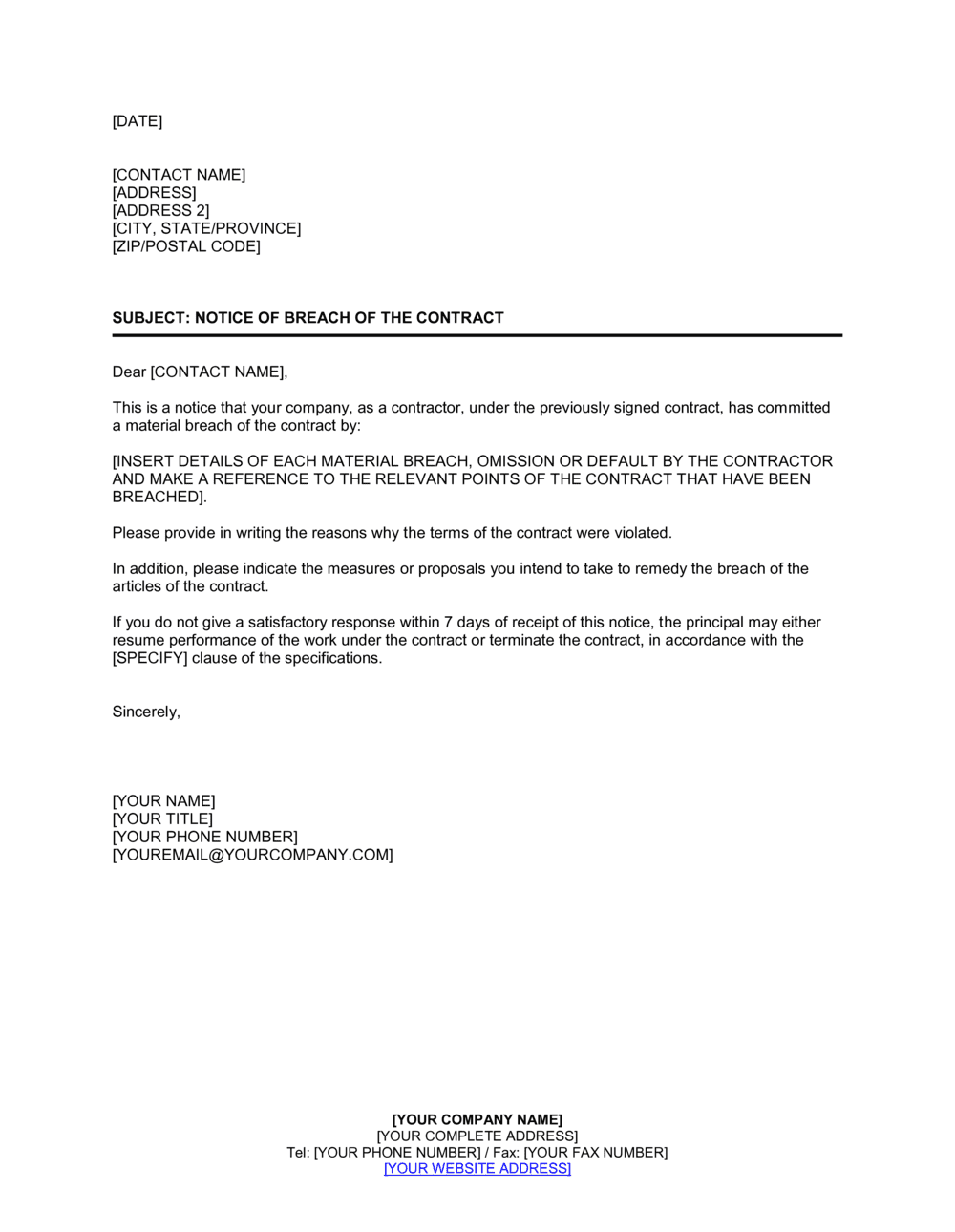
- Breach of Contract
- A failure by one party to fulfill a specific obligation required by a binding agreement, whether by non-performance, late performance, or defective performance.
- Material Breach
- A breach significant enough to defeat the purpose of the contract and entitle the non-breaching party to treat the agreement as terminated and seek damages.
- Cure Period
- A defined window of time — often 10, 14, or 30 days — given to the breaching party to correct the violation before the other party escalates or terminates.
- Notice of Breach
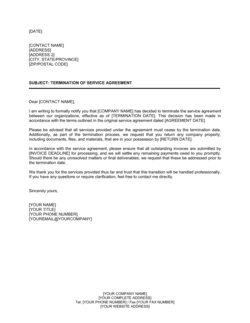
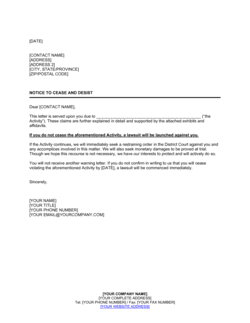
- A formal written communication informing a contracting party that they have violated one or more terms of a binding agreement.
- Remedy
- The specific corrective action demanded — typically payment of money owed, delivery of goods or services, or cessation of a prohibited activity.
- Demand Letter
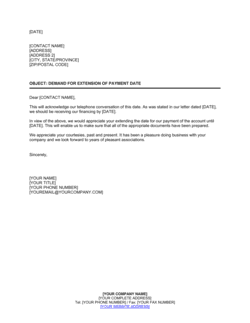
- A formal letter requesting that a party take a specific action, often used as a prerequisite to filing a legal claim or initiating arbitration.
- Liquidated Damages
- A pre-agreed amount specified in the contract itself as compensation for a defined breach, enforceable without proving actual loss.
- Without Prejudice
- A designation indicating that the contents of a communication cannot be used as an admission or evidence in later legal proceedings.
- Force Majeure
- A contract clause excusing a party from performance obligations caused by extraordinary events — such as natural disasters or government actions — beyond their reasonable control.
- Mitigation
- The duty of the non-breaching party to take reasonable steps to reduce their own losses after a breach occurs, rather than allowing damages to accumulate.