Notice of 10 Day Before Collections on Delinquent Account Template

Free Word download β€’ Edit online β€’ Save & share with Drive β€’ Export to PDF

1 pageβ€’15–25 min to fillβ€’Difficulty: Standard
Learn more ↓
FreeNotice of 10 Day Before Collections on Delinquent Account Template

At a glance

What it is
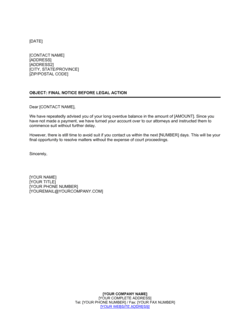
A Notice of 10 Days Before Collections on a Delinquent Account is a formal business letter sent to a customer whose invoice or balance remains unpaid, giving them a final 10-day window to settle before the debt is referred to a collections agency. This free Word download is editable online and exportable as PDF β€” ready to send in under 10 minutes.
When you need it
Send it after prior payment reminders have gone unanswered and you are prepared to escalate the account to a third-party collections agency if payment is not received. It serves as both a final good-faith warning and a documented step in the collections process.
What's inside
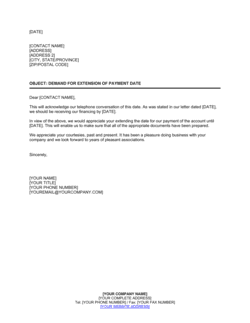
A formal header identifying both parties, a clear statement of the outstanding balance and original due date, the 10-day deadline for payment, an explanation of consequences if the deadline is missed, and contact details for the debtor to arrange immediate payment or discuss the account.

What is a Notice of 10 Days Before Collections on a Delinquent Account?

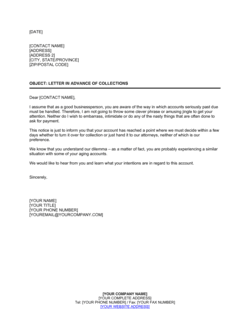
A Notice of 10 Days Before Collections on a Delinquent Account is a formal business letter sent to a customer or debtor whose balance remains unpaid after prior reminders, giving them a final 10-day window to pay before the debt is referred to a third-party collections agency. It identifies the outstanding balance by invoice number and original due date, states a specific deadline as a fixed calendar date, explains the consequences of non-payment, and provides clear instructions for settling the account immediately. Unlike an informal reminder, this notice creates a documented escalation record and signals to the debtor β€” and any subsequent collections agency or court β€” that every reasonable opportunity to resolve the debt voluntarily was provided.

Why You Need This Document

Referring an account to collections without a documented final warning exposes you to disputes, reduces recovery rates, and can damage customer relationships that might otherwise be salvageable. A properly formatted 10-day notice does three things at once: it creates a concrete deadline that prompts action from debtors who have been ignoring softer reminders, it establishes a paper trail that collections agencies and courts expect to see before pursuing the debt further, and it demonstrates good-faith dealing that protects you if the debtor later claims the escalation was unfair or premature. Without this step, you hand the debtor an easy procedural argument β€” and collections agencies charge higher fees or decline accounts that arrive without documentation. This template gives you a professional, consistent notice you can send in under 10 minutes, with every required element already in place.

Which variant fits your situation?

If your situation is…Use this template
First reminder for a mildly overdue accountPast Due Balance Notice
Second warning after the first reminder was ignoredSecond Notice of Past Due Account
Final notice immediately before collections referralNotice of 10 Day Before Collections on Delinquent Account
Formal demand for payment with intent to pursue legal actionDemand for Payment Letter
Disputing a debt claimed by a collections agencyDebt Dispute Letter
Settling an outstanding balance for less than the full amount owedDebt Settlement Agreement
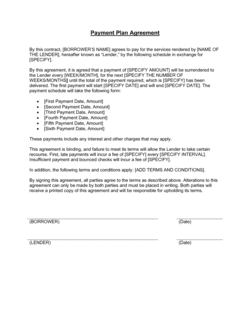
Communicating a payment plan to resolve the delinquent balancePayment Plan Agreement

Common mistakes to avoid

❌ Using a vague deadline instead of a fixed calendar date

Why it matters: Phrases like 'within 10 days' are interpreted differently by every recipient and create disputes about when the deadline actually expired.

Fix: Always calculate and print the exact calendar date β€” for example, 'by May 12, 2026' β€” so there is no room for interpretation.
❌ Threatening collections without intending to follow through

Why it matters: A debtor who receives this letter and then hears nothing for months learns to ignore your notices, making future escalation harder.

Fix: Only send this letter when you are genuinely prepared to refer the account to collections on or shortly after the deadline date.

❌ Including unauthorized late fees in the balance

Why it matters: Overstating the balance β€” by adding fees not specified in the original contract β€” can expose you to a counter-claim and give the debtor grounds to dispute the entire notice.

Fix: Review the original invoice or contract before calculating the total. Only include fees explicitly authorized in the agreed terms.

❌ Sending the notice without any record of prior reminders

Why it matters: A collections agency and any court will expect to see a documentation trail showing the debt was not simply sprung on the debtor without warning.

Fix: Before sending this notice, confirm you have records of at least one or two prior payment reminders β€” by email, letter, or phone β€” and keep copies on file.

The 9 key clauses, explained

Header and sender identification

In plain language: Your business name, address, date, and the recipient's full name and address β€” establishing who sent the notice and to whom.

Sample language
[YOUR COMPANY NAME] [STREET ADDRESS], [CITY, STATE, ZIP] [DATE] [DEBTOR FULL NAME] [DEBTOR ADDRESS]

Common mistake: Using a trade name instead of the registered business name. If the matter escalates to collections or court, the legal entity name must appear on the notice.

Subject line

In plain language: A clear reference line identifying the account, invoice number, and nature of the notice so the recipient immediately understands the purpose.

Sample language
RE: Final Notice β€” Delinquent Account | Invoice #[INVOICE NUMBER] | Balance Due: $[AMOUNT]

Common mistake: Omitting the invoice or account number. Without a reference, the debtor may claim they could not identify which balance the letter referred to.

Opening statement of delinquency

In plain language: A direct, professional statement that the account is overdue, citing the original invoice amount and the date payment was due.

Sample language
Despite our previous communications, our records show that your account with [COMPANY NAME] carries an outstanding balance of $[AMOUNT] that was due on [ORIGINAL DUE DATE] and remains unpaid.

Common mistake: Using aggressive or accusatory language in the opening. A neutral, factual tone is more likely to prompt payment and protects you if the letter is later reviewed by a court or regulator.

10-day cure period deadline

In plain language: The specific calendar date by which full payment must be received, calculated as 10 days from the letter date.

Sample language
You have until [SPECIFIC DATE β€” 10 DAYS FROM LETTER DATE] to remit full payment of $[AMOUNT] to avoid referral of your account to a collections agency.

Common mistake: Stating '10 days from receipt' instead of a fixed calendar date. A specific date removes any ambiguity about when the deadline expires.

Statement of consequences

In plain language: A clear explanation of what will happen if payment is not received by the deadline β€” referral to a collections agency and potential credit reporting.

Sample language
If we do not receive payment in full by [DEADLINE DATE], your account will be referred to [COLLECTIONS AGENCY NAME / 'a third-party collections agency'] without further notice, which may affect your credit rating.

Common mistake: Threatening consequences you are not prepared to follow through on. Empty threats reduce the credibility of future notices and can expose you to claims of bad-faith dealing.

Outstanding balance summary

In plain language: An itemized breakdown of what is owed β€” original invoice amount, any accrued late fees, and the total balance due.

Sample language
Original invoice amount: $[X] | Late fees accrued (per contract at [X]%/month): $[X] | Total balance now due: $[TOTAL]

Common mistake: Overstating the balance by including fees not authorized in the original contract or invoice terms. Incorrect amounts can invalidate the notice and expose you to counter-claims.

Payment instructions

In plain language: Clear instructions on how the debtor can pay β€” accepted methods, payable-to name, bank transfer details, or a payment portal link.

Sample language
To settle this balance immediately, please remit payment by [CHECK PAYABLE TO / BANK TRANSFER / ONLINE PORTAL] using reference number [INVOICE NUMBER]. Contact [NAME] at [PHONE / EMAIL] to arrange payment.

Common mistake: Omitting payment instructions entirely and expecting the debtor to figure out how to pay. Every barrier to payment slows resolution.

Invitation to contact

In plain language: A brief, professional offer to discuss the account if the debtor believes there is an error or wishes to arrange a payment plan β€” keeping the door open for resolution without collections.

Sample language
If you believe this notice has been sent in error, or if you wish to discuss your account or arrange a payment schedule, please contact [NAME] at [PHONE NUMBER] or [EMAIL] no later than [DEADLINE DATE].

Common mistake: Omitting this clause and making the letter appear purely punitive. Offering a contact point often resolves disputes faster than collections and preserves the business relationship.

Closing and authorized signature block

In plain language: A professional closing statement, the sender's printed name, title, and signature, and the company name.

Sample language
Sincerely, [AUTHORIZED REPRESENTATIVE NAME] [TITLE] [COMPANY NAME] [PHONE] | [EMAIL]

Common mistake: Sending the letter without an identified, named sender. An anonymous notice carries less weight and makes follow-up impossible for the debtor.

How to fill it out

  1. 1

    Enter your business details in the header

    Fill in your registered business name, mailing address, and the date the letter will be sent. Use your legal entity name, not a trade name.

    πŸ’‘ Save a pre-filled version of the header as a master file so you only need to update the debtor details and balance for each new notice.

  2. 2

    Identify the debtor and account

    Enter the debtor's full legal name and address. In the subject line, include the invoice number or account reference and the exact outstanding balance.

    πŸ’‘ If the debtor is a company, address the letter to the accounts payable contact by name as well as the legal entity β€” this reduces the chance of it being misfiled.

  3. 3

    State the original invoice amount and due date

    In the opening paragraph, specify the exact amount that was due and the original payment due date, referencing the invoice or contract that created the obligation.

    πŸ’‘ Attach a copy of the original invoice to the letter so the debtor cannot claim they never received or misplaced the bill.

  4. 4

    Calculate and enter the 10-day deadline

    Count forward 10 calendar days from the letter date and enter that specific date as the payment deadline. Do not use vague language like 'within 10 days of receipt.'

    πŸ’‘ If you are mailing the letter, consider adding 2–3 days for delivery and setting the deadline accordingly β€” or send by certified mail and email simultaneously.

  5. 5

    Itemize the total balance due

    List the original invoice amount, any late fees accrued under your contract terms, and the total balance due. Only include fees that are contractually authorized.

    πŸ’‘ If you are unsure whether your late-fee clause is enforceable, leave late fees off the notice β€” an incorrect amount is worse than a conservative one.

  6. 6

    Add clear payment instructions and contact details

    Specify every accepted payment method and include the full details needed to complete payment β€” check payee name, bank transfer routing and account numbers, or a direct portal link.

    πŸ’‘ Including a QR code linking to your payment portal in the PDF version can cut the time to payment significantly.

Frequently asked questions

What is a 10-day notice before collections?

A 10-day notice before collections is a formal letter sent to a customer or debtor whose account is overdue, giving them 10 days to pay in full before the debt is referred to a third-party collections agency. It is typically the final step in an escalating series of payment reminders and serves as both a last good-faith warning and a documented record that notice was provided before collections action began.

When should I send a 10-day collections notice?

Send it after at least one or two earlier payment reminders have gone unanswered and you are ready to refer the account to collections if payment is not received. Most businesses send this notice 45–90 days after the original invoice due date, depending on their standard AR escalation policy. Sending it too early β€” before softer reminders β€” can damage the customer relationship unnecessarily.

Is this notice legally required before sending an account to collections?

In most US states, there is no statutory requirement to send a specific pre-collections notice before referring a consumer debt to a collections agency. However, the Fair Debt Collection Practices Act (FDCPA) governs how third-party collectors may contact debtors, and many businesses send this notice as a matter of good practice to document the escalation trail and reduce disputes. For business-to-business debts, requirements vary by contract and jurisdiction β€” consider reviewing your agreements.

What should I do if the debtor ignores the 10-day notice?

If no payment or response is received by the deadline, follow through on the stated consequence: refer the account to your chosen collections agency and provide them with the debtor's details, the outstanding balance, and copies of all prior communications including this notice. Acting promptly after the deadline reinforces that your notices are credible.

Can I add late fees to the balance in this notice?

Yes, but only if your original contract or invoice terms explicitly authorize late fees and specify the rate. Typically this means a flat fee or a monthly percentage β€” for example, 1.5% per month on overdue balances. Including fees not authorized in the original agreement overstates the debt and can give the debtor grounds to dispute the notice.

Should I send this notice by certified mail?

Sending by certified mail with return receipt provides proof of delivery, which is valuable if the matter later escalates to court or collections arbitration. For added certainty, send both a certified mail copy and an email copy simultaneously, and keep delivery records for both. Some businesses also follow up with a phone call on the same day.

What is the difference between this notice and a demand letter?

A 10-day pre-collections notice warns the debtor that the account will be referred to a collections agency if payment is not made β€” it is an operational AR escalation step. A formal demand letter typically signals intent to pursue legal action (small claims court, civil suit) rather than collections. If the debt is large enough to warrant litigation, a demand letter drafted with legal counsel is the appropriate next step instead of or in addition to collections referral.

How many reminders should I send before this notice?

Most businesses send one or two earlier reminders β€” typically a past-due notice at 7–15 days overdue and a second notice at 30–45 days overdue β€” before issuing this final 10-day pre-collections letter. The exact cadence depends on your industry and customer relationships, but having at least one documented prior reminder on file strengthens your position if the matter is ever disputed.

Do I need a lawyer to send this notice?

No. A 10-day pre-collections notice is a standard business communication and does not require legal drafting for most routine B2B or B2C debts. A high-quality template is sufficient for the vast majority of situations. Consider involving a lawyer if the debt exceeds a significant threshold (typically $5,000–$10,000), if the debtor has raised a formal dispute, or if you are dealing with a regulated industry where consumer-protection rules apply.

How this compares to alternatives

vs Second Notice of Past Due Account

A second past-due notice is an earlier-stage reminder β€” typically sent 30–45 days after the due date β€” that asks for payment without yet threatening collections referral. The 10-day collections notice is a final escalation that names a specific deadline and a specific consequence. Use the second notice first; send this letter only when you are ready to act on the threat.

vs Demand for Payment Letter

A demand letter is typically used when the creditor intends to pursue legal action β€” small claims court or civil litigation β€” rather than a collections agency referral. It often carries a stronger legal tone and may be drafted with attorney involvement. The 10-day collections notice is the appropriate tool when collections (not litigation) is the planned next step.

vs Debt Settlement Agreement

A debt settlement agreement is a contract used when both parties agree to resolve the debt for less than the full amount owed β€” typically after collections negotiations have begun. The 10-day notice precedes settlement; it creates the pressure that often leads a debtor to initiate settlement discussions. If the debtor responds to this notice with a partial-payment offer, a settlement agreement documents the resolution.

vs Payment Plan Agreement

A payment plan agreement documents an arrangement to pay the outstanding balance in installments rather than a lump sum. If a debtor contacts you in response to this notice and proposes installments, a payment plan agreement formalizes those terms. The 10-day notice triggers the conversation; the payment plan closes it without collections involvement.

Industry-specific considerations

Professional Services

Law firms, accounting practices, and consultants use this notice to formalize AR escalation for unpaid project or retainer invoices before engaging a collections agency.

Healthcare

Medical and dental practices send pre-collections notices for patient balances after insurance has processed, being mindful of HIPAA-compliant communication standards.

Construction and Trades

Contractors use this notice alongside mechanic's lien rights to pressure payment on overdue progress billings before pursuing more costly legal remedies.

Retail and Wholesale

Wholesalers and B2B retailers issue this notice to trade accounts with repeated late-payment behavior before restricting credit terms or referring the account externally.

Template vs pro β€” what fits your needs?

PathBest forCostTime
Use the templateSmall businesses and freelancers sending standard pre-collections notices for routine unpaid invoicesFreeUnder 10 minutes per letter
Template + professional reviewBusinesses adding custom late-fee calculations, industry-specific language, or dealing with disputed accounts$50–$150 (paralegal or bookkeeper review)1–2 hours
Custom draftedHigh-value debts over $10,000, regulated industries with consumer-protection obligations, or accounts where litigation is a possibility$200–$600 (attorney review or drafting)1–3 days

Glossary

Delinquent Account
An account on which a payment is past its contractually agreed due date and has not been resolved after prior reminders.
Collections Agency
A third-party company hired by a creditor to pursue unpaid debts on their behalf, typically for a percentage of the amount recovered.
Pre-Collections Notice
A formal letter sent before a debt is referred to a collections agency, giving the debtor a final opportunity to pay voluntarily.
Outstanding Balance
The total unpaid amount owed by the debtor, including the original invoice amount and any applicable late fees or interest.
Escalation
The process of advancing an unpaid account through progressively serious steps β€” from reminders, to formal notices, to collections or legal action.
Accounts Receivable (AR)
Money owed to a business by its customers for goods or services already delivered but not yet paid for.
Late Fee
A charge added to an overdue balance as specified in the original contract or invoice terms, typically expressed as a flat amount or a monthly percentage.
Credit Reporting
The act of reporting an unpaid debt to a credit bureau, which can negatively affect the debtor's credit score and borrowing ability.
Cure Period
A defined timeframe β€” here, 10 days β€” during which the debtor may remedy the default before the creditor takes the next enforcement step.
Demand Letter
A formal written communication requiring a specific action β€” such as payment β€” by a stated deadline, and stating the consequences of non-compliance.

Part of your Business Operating System

This document is one of 3,000+ business & legal templates included in Business in a Box.

  • Fill-in-the-blanks β€” ready in minutes
  • 100% customizable Word document
  • Compatible with all office suites
  • Export to PDF and share electronically

Create your document in 3 simple steps.

From template to signed document β€” all inside one Business Operating System.
1
Download or open template

Access over 3,000+ business and legal templates for any business task, project or initiative.

2
Edit and fill in the blanks with AI

Customize your ready-made business document template and save it in the cloud.

3
Save, Share, Send, Sign

Share your files and folders with your team. Create a space of seamless collaboration.

Save time, save money, and create top-quality documents.

β˜…β˜…β˜…β˜…β˜…

"Fantastic value! I'm not sure how I'd do without it. It's worth its weight in gold and paid back for itself many times."

Managing Director Β· Mall Farm
Robert Whalley
Managing Director, Mall Farm Proprietary Limited
β˜…β˜…β˜…β˜…β˜…

"I have been using Business in a Box for years. It has been the most useful source of templates I have encountered. I recommend it to anyone."

Business Owner Β· 4+ years
Dr Michael John Freestone
Business Owner
β˜…β˜…β˜…β˜…β˜…

"It has been a life saver so many times I have lost count. Business in a Box has saved me so much time and as you know, time is money."

Owner Β· Upstate Web
David G. Moore Jr.
Owner, Upstate Web

Run your business with a system β€” not scattered tools

Stop downloading documents. Start operating with clarity. Business in a Box gives you the Business Operating System used by over 250,000 companies worldwide to structure, run, and grow their business.

Free Forever PlanΒ Β·Β No credit card required