Leveraging Social Media For Client Acquisition and Relationship Building Template

Free Word download β€’ Edit online β€’ Save & share with Drive β€’ Export to PDF

11 pagesβ€’30–40 min to fillβ€’Difficulty: Complex
Learn more ↓
FreeLeveraging Social Media For Client Acquisition and Relationship Building Template

At a glance

What it is
This Leveraging Social Media for Client Acquisition and Relationship Building template is a structured operational plan that guides businesses through selecting the right platforms, defining target audiences, planning content, and measuring results β€” all in a free Word download you can edit online and export as PDF. It turns an informal social presence into a systematic, goal-driven client acquisition engine with clear accountability.
When you need it
Use it when launching a new business, entering a new market, restructuring your marketing function, or whenever social media activity is producing followers but not converting them into paying clients. It is also the right tool when a sales team and a marketing team disagree on what "good" social media performance looks like.
What's inside
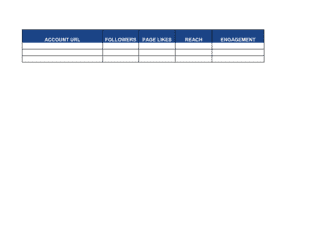
The template covers business objectives and audience profiles, platform selection rationale, content strategy and editorial calendar framework, lead nurturing workflows, community engagement guidelines, paid social integration, and a KPI measurement dashboard β€” giving every stakeholder a shared reference for execution and review.

What is a Leveraging Social Media for Client Acquisition and Relationship Building Template?

A Leveraging Social Media for Client Acquisition and Relationship Building template is a structured operational plan that transforms informal social media activity into a systematic, measurable process for attracting and converting clients. It documents the business's target audience profiles, platform selection rationale, content strategy, lead nurturing workflows, community engagement standards, paid social approach, and the KPIs used to confirm that social activity is producing commercial results β€” not just engagement metrics. Rather than leaving social media to improvisation, the template gives every team member a shared playbook and makes execution accountable to defined business outcomes.

Why You Need This Document

Without a documented social media strategy, most businesses post inconsistently, spread themselves across too many platforms, and have no way to connect their social activity to actual client acquisition. The cost is concrete: time and budget spent on content that generates impressions but no pipeline, a sales team that distrusts marketing because social leads are never tracked or handed off properly, and a brand presence that looks scattered to the very prospects it is trying to impress. A written strategy forces the hard decisions β€” which platforms, which audiences, which content types, and which metrics β€” before any content is published, so every post is working toward a defined outcome. This template provides the structure to make those decisions once, document them clearly, and give your team a repeatable process that compounds over time rather than starting from scratch every quarter.

Which variant fits your situation?

If your situation is…Use this template
Launching a full annual social media roadmap with budget allocationSocial Media Marketing Plan
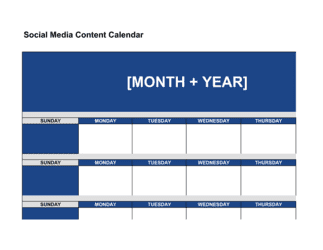
Planning individual posts and campaigns week by weekSocial Media Content Calendar
Defining rules for staff posting on behalf of the businessSocial Media Policy
Outlining the broader marketing strategy across all channelsMarketing Plan
Tracking engagement, reach, and conversion metrics month over monthSocial Media Report
Scoping a paid social advertising campaign with budget and targetingDigital Marketing Plan
Presenting social strategy recommendations to a board or clientMarketing Proposal

Common mistakes to avoid

❌ No link between social metrics and revenue outcomes

Why it matters: Social activity that only reports follower growth and impressions cannot justify budget or headcount β€” and will be cut when resources are constrained.

Fix: Define at least one metric per goal that tracks movement toward a client conversion: demo requests, consultation bookings, or CRM-qualified leads from social.

❌ Spreading activity across too many platforms simultaneously

Why it matters: Managing five platforms with limited resources produces inconsistent, low-quality output on every channel β€” signaling unreliability to the prospects you are trying to impress.

Fix: Start with one primary platform where the ICP is concentrated, achieve consistent output and engagement there, then add a second platform after 60–90 days.

❌ Publishing only promotional content

Why it matters: Audiences disengage from accounts that post only sales messages β€” algorithmic reach drops and follower attrition accelerates, compounding the problem over time.

Fix: Use a content mix where at least 70–80% of posts are educational, insight-driven, or relationship-building β€” promotional posts make up no more than 20–30%.

❌ No defined lead nurturing path after first engagement

Why it matters: A prospect who comments on a post or follows your account is at peak interest β€” without a defined next step, that interest dissipates within 24–48 hours.

Fix: Document a specific workflow for each engagement trigger: comment, DM, profile visit, or lead magnet download β€” with a timed follow-up action and CRM entry.

The 9 key sections, explained

Business objectives and social media goals

Target audience and ideal client profiles

Platform selection and rationale

Content strategy and content pillars

Lead nurturing and client acquisition workflows

Community engagement and relationship building guidelines

Paid social integration

KPIs, measurement, and reporting cadence

Resource requirements and responsibilities

How to fill it out

  1. 1

    Define business objectives first, then social goals

    Start with the revenue or client-count target the business needs to hit, then work backward to set social media goals that contribute measurably to that number.

    πŸ’‘ Each social goal should answer the question: 'If we hit this metric, how does that translate into clients or revenue?' If you can't answer it, revise the metric.

  2. 2

    Build out one or two detailed ideal client profiles

    For each target segment, document job title, company type, pain points, goals, preferred platforms, and content formats. Interview two or three existing clients to ground the profiles in reality.

    πŸ’‘ One specific ICP executed well outperforms three vague ones β€” start with your single highest-value client type.

  3. 3

    Select platforms based on ICP presence, not personal preference

    Audit where each ICP actually spends time online using platform demographic data and your own client research. Commit to one or two platforms at most before expanding.

    πŸ’‘ LinkedIn is the default starting point for B2B client acquisition; Instagram and TikTok lead for B2C and lifestyle categories β€” let the data, not trends, decide.

  4. 4

    Define three to five content pillars and a posting schedule

    Map each pillar to a client pain point or interest, choose the format best suited to each platform, and set a realistic posting frequency you can sustain for 90 days without burning out.

    πŸ’‘ Consistency matters more than frequency β€” three posts per week for 12 weeks outperforms 10 posts in week one and silence after that.

  5. 5

    Design the lead nurturing workflow with specific next steps

    Map every touchpoint from first social interaction to booked consultation or signed agreement. Specify the exact message, timing, and CRM action for each step.

    πŸ’‘ The most common conversion drop-off is between engagement and DM β€” write three to five templated opening messages that feel personal, not automated.

  6. 6

    Set engagement standards and assign response ownership

    Decide who responds to comments and DMs, in what timeframe, and with what tone. Document escalation paths for complaints or sensitive topics.

    πŸ’‘ Set a calendar reminder for the same time each day dedicated to engagement β€” treating it as a scheduled task rather than something you do when you remember prevents gaps.

  7. 7

    Configure your KPI dashboard before publishing content

    Set up tracking in your analytics tool before the strategy launches so you have a clean baseline. Identify the three to five metrics that directly connect to client acquisition.

    πŸ’‘ Native platform analytics are free but limited β€” tools like Sprout Social, Buffer Analyze, or HubSpot Social give cross-platform visibility in a single dashboard.

  8. 8

    Schedule a 30-day and 90-day review checkpoint

    Calendar the first review at 30 days to catch early misalignments, then a full strategy review at 90 days where you assess which content pillars and platforms are generating qualified leads.

    πŸ’‘ At the 90-day mark, drop anything with zero conversion contribution regardless of engagement β€” a highly-liked post that generates no client conversations is a distraction.

Frequently asked questions

What is a social media client acquisition strategy?

A social media client acquisition strategy is a documented plan that defines how a business uses social platforms to attract, engage, and convert prospects into paying clients. It covers platform selection, target audience profiles, content approach, lead nurturing workflows, and the metrics used to measure whether social activity is actually generating clients β€” not just followers.

Which social media platform is best for client acquisition?

The right platform depends entirely on where your ideal clients spend their time. LinkedIn is the most effective channel for B2B professional services, consulting, and SaaS. Instagram and TikTok lead for B2C lifestyle, retail, and visual categories. Facebook remains strong for local service businesses and community-driven brands. The strategy template prompts you to select platforms based on ICP research, not general popularity.

How is this template different from a social media content calendar?

A content calendar plans what to post and when. This strategy template defines why you are posting, who you are targeting, what outcome each post type is designed to drive, and how engagement converts into client relationships. The strategy document is the foundation; the content calendar is a tactical execution tool that sits underneath it.

How long does it take to see client acquisition results from social media?

For organic social strategies, most businesses see measurable qualified lead activity within 60–90 days of consistent, ICP-targeted posting β€” assuming a defined lead nurturing workflow is in place. Paid social can accelerate this to 2–4 weeks when campaigns are properly targeted. Strategies without a defined conversion path beyond content posting rarely produce client results within the first six months.

Do I need a social media manager to implement this strategy?

A dedicated social media manager accelerates implementation, but a small business owner or founder can execute this strategy personally with 5–8 hours per week if the platform selection is disciplined β€” one or two platforms, not five. The resource section of the template helps you map time requirements to roles before you commit to an execution approach.

How do I measure whether social media is actually generating clients?

Track the metrics that sit closest to revenue: consultation bookings attributed to social, CRM leads tagged with a social source, and conversion rate from social-sourced leads to closed clients. Avoid reporting solely on impressions or follower growth β€” those metrics do not confirm that social activity is doing commercial work.

Should I use paid social advertising alongside an organic strategy?

Yes, for most businesses. Organic content builds credibility and long-term audience trust; paid social accelerates reach and enables precise targeting of ICP segments and retargeting of website visitors. The strategy template includes a paid social integration section that defines when and how paid activity supports β€” rather than replaces β€” the organic foundation.

How often should the strategy be reviewed and updated?

Conduct a 30-day checkpoint to catch early execution gaps, then a full strategy review at 90 days using actual performance data. After that, a quarterly review cadence works well for most businesses. Trigger an unscheduled review any time a key metric falls below its target threshold for two or more consecutive reporting periods.

Can this strategy template be used for a B2B business?

Yes β€” the template is designed to work for both B2B and B2C contexts. For B2B businesses, the ICP section is structured around company firmographics and buyer job titles, and the platform section prioritizes LinkedIn and industry communities. The lead nurturing workflow maps naturally to a longer B2B sales cycle with multiple touchpoints before a meeting is booked.

How this compares to alternatives

vs Marketing Plan

A marketing plan covers all channels β€” SEO, email, events, advertising, and social β€” at a strategic level with budget allocation across the full mix. This social media strategy template goes deeper on a single channel, defining platform tactics, content pillars, lead nurturing workflows, and social-specific KPIs. Most businesses need the marketing plan first, then use this template to operationalize the social component.

vs Social Media Content Calendar

A content calendar is a scheduling tool β€” it lists what post goes on which platform on which date. This strategy template is the upstream document that determines what belongs on that calendar and why. Without the strategy, a content calendar produces random activity; without the calendar, the strategy never gets executed.

vs Digital Marketing Plan

A digital marketing plan covers paid search, SEO, email automation, and social media advertising as a coordinated system with shared budget and attribution. This template focuses specifically on using social media for client relationships and acquisition β€” organic and paid β€” without the broader digital channel architecture. Use the digital marketing plan when managing spend across multiple online channels simultaneously.

vs Sales Plan

A sales plan defines quotas, territory, pipeline stages, and outbound prospecting activities. This social media strategy template focuses on the top-of-funnel activities that feed warm prospects into the sales pipeline. The two documents are complementary β€” the social strategy generates and nurtures leads; the sales plan converts them.

Industry-specific considerations

Professional Services

LinkedIn thought leadership and direct outreach to decision-makers drive most client acquisition; trust-building content like case studies and frameworks consistently outperforms promotional posts.

SaaS / Technology

Demo request campaigns on LinkedIn and retargeting of trial users through paid social are the primary acquisition drivers; community building on platforms like Slack and X supports retention.

Retail / E-commerce

Instagram and TikTok product discovery paired with shoppable posts and influencer collaborations dominate acquisition; community engagement and user-generated content reduce paid CAC over time.

Creative and Marketing Agencies

Portfolio showcasing and behind-the-scenes process content on Instagram and LinkedIn attract inbound inquiries; social proof through client results posts is a primary trust signal for prospective buyers.

Template vs pro β€” what fits your needs?

PathBest forCostTime
Use the templateSmall businesses, freelancers, and founders building a social acquisition strategy for the first timeFree4–8 hours to complete the strategy document
Template + professional reviewGrowing businesses that want a social media consultant or marketing director to validate platform choices and content strategy before launch$500–$2,000 for a strategy review or workshop session1–2 weeks
Custom draftedAgencies or mid-market companies that need a fully researched, channel-specific strategy built from audience data and competitor analysis$3,000–$10,000+ for a full social media strategy engagement3–6 weeks

Glossary

Client Acquisition
The process of identifying, attracting, and converting prospects into paying clients through defined marketing and sales activities.
Ideal Client Profile (ICP)
A detailed description of the company or individual most likely to buy your product or service, used to focus targeting and messaging.
Content Pillar
A core theme or topic area that anchors a brand's content output, ensuring consistency and relevance across posts and formats.
Social Selling
Using social media platforms β€” primarily LinkedIn β€” to research prospects, build rapport, and move them toward a purchase decision without traditional cold outreach.
Engagement Rate
The percentage of an audience that interacts with a piece of content (likes, comments, shares, saves) relative to total impressions or followers.
Lead Nurturing
A sequence of targeted communications designed to build trust with a prospect over time until they are ready to become a client.
Conversion Funnel
The staged path a prospect follows from first awareness of a brand to becoming a paying client, typically mapped as awareness, consideration, and decision.
Organic Reach
The number of people who see a piece of content without paid promotion, driven solely by the platform's algorithm and audience sharing.
Paid Social
Advertising on social platforms β€” including boosted posts, sponsored content, and targeted display ads β€” where placement is purchased rather than earned.
Retargeting
Serving paid ads specifically to users who have already visited your website or engaged with your content, increasing conversion probability.
Share of Voice
The percentage of total online conversation within a category or market that mentions your brand, compared to competitors.

Part of your Business Operating System

This document is one of 3,000+ business & legal templates included in Business in a Box.

  • Fill-in-the-blanks β€” ready in minutes
  • 100% customizable Word document
  • Compatible with all office suites
  • Export to PDF and share electronically

Create your document in 3 simple steps.

From template to signed document β€” all inside one Business Operating System.
1
Download or open template

Access over 3,000+ business and legal templates for any business task, project or initiative.

2
Edit and fill in the blanks with AI

Customize your ready-made business document template and save it in the cloud.

3
Save, Share, Send, Sign

Share your files and folders with your team. Create a space of seamless collaboration.

Save time, save money, and create top-quality documents.

β˜…β˜…β˜…β˜…β˜…

"Fantastic value! I'm not sure how I'd do without it. It's worth its weight in gold and paid back for itself many times."

Managing Director Β· Mall Farm
Robert Whalley
Managing Director, Mall Farm Proprietary Limited
β˜…β˜…β˜…β˜…β˜…

"I have been using Business in a Box for years. It has been the most useful source of templates I have encountered. I recommend it to anyone."

Business Owner Β· 4+ years
Dr Michael John Freestone
Business Owner
β˜…β˜…β˜…β˜…β˜…

"It has been a life saver so many times I have lost count. Business in a Box has saved me so much time and as you know, time is money."

Owner Β· Upstate Web
David G. Moore Jr.
Owner, Upstate Web

Run your business with a system β€” not scattered tools

Stop downloading documents. Start operating with clarity. Business in a Box gives you the Business Operating System used by over 250,000 companies worldwide to structure, run, and grow their business.

Free Forever PlanΒ Β·Β No credit card required