Social Media Strategy

Free Word download β€’ Edit online β€’ Save & share with Drive β€’ Export to PDF

17 pagesβ€’25–35 min to fillβ€’Difficulty: Complex
Learn more ↓
FreeSocial Media Strategy Template

At a glance

What it is
A Social Media Strategy is a structured planning document that defines your business's goals on social platforms, identifies your target audience, maps out a platform and content mix, and sets measurable KPIs for tracking performance. This free Word download gives you a ready-to-edit framework you can tailor to your brand and export as PDF to share with stakeholders, agencies, or internal teams.
When you need it
Use it when launching a brand's social presence for the first time, realigning an underperforming social program around clearer goals, or onboarding a new marketing hire or agency who needs a documented direction to execute against.
What's inside
Business objectives and social media goals, audience personas, platform selection rationale, content pillars and posting cadence, community management guidelines, paid amplification approach, and a KPI dashboard with reporting cadence.

What is a Social Media Strategy?

A Social Media Strategy is a structured planning document that defines a business's goals on social platforms, identifies the target audiences it needs to reach, maps out the platform mix and content approach required to reach them, and establishes the KPIs used to measure whether any of it is working. Unlike a content calendar β€” which schedules individual posts β€” a social media strategy sets the direction, rationale, and success criteria that every post, campaign, and community interaction should serve. It connects daily social activity to concrete business outcomes like brand awareness, lead generation, or customer retention.

Why You Need This Document

Without a documented social media strategy, content decisions default to whoever is posting that day, platforms multiply without clear ownership, and performance reviews devolve into debates about whether follower counts are good enough. The cost is concrete: budgets get allocated to platforms where your audience isn't, creative teams produce content that contradicts the brand voice, and paid campaigns run without organic performance data to inform targeting. A written strategy forces alignment before execution begins β€” defining which platforms matter and why, what the brand will and will not say, and exactly which numbers determine success. This template gives you the structure to build that document in a single working session, producing a plan your team, agency, or leadership can actually execute against.

Which variant fits your situation?

If your situation is…Use this template
Planning content in detail for the next 30, 60, or 90 daysSocial Media Content Calendar
Launching a time-bound campaign around a product or eventSocial Media Campaign Plan
Managing a brand crisis or negative coverage on social platformsCrisis Communication Plan
Overseeing the full marketing mix beyond social channelsMarketing Plan
Briefing an external agency or freelancer on social deliverablesSocial Media Marketing Proposal
Tracking social performance metrics on an ongoing basisSocial Media Report
Setting brand voice and visual identity guidelines across channelsBrand Style Guide

Common mistakes to avoid

❌ Targeting every platform simultaneously

Why it matters: A team that tries to maintain a consistent presence on Instagram, LinkedIn, TikTok, X, Facebook, and Pinterest typically produces low-quality content on all six rather than strong content on two or three.

Fix: Select two to three platforms where your target audience is most active and build deep competency there before expanding.

❌ Setting goals with no numbers or deadlines

Why it matters: Vague goals like 'grow engagement' cannot be reported on, cannot motivate a team, and cannot signal when a strategy needs to change.

Fix: Rewrite every goal in SMART format: 'Increase LinkedIn engagement rate from 1.2% to 2.5% by the end of Q3 2026.'

❌ Separating paid and organic social planning entirely

Why it matters: Paid campaigns that ignore organic performance data miss the clearest signal for which creative and messaging resonates with your actual audience.

Fix: Build a feedback loop: review your top three organic posts each month and use their themes and formats as the creative brief for the next paid campaign.

❌ Leaving community management undocumented

Why it matters: When a negative comment or brand mention goes viral, teams without documented escalation guidelines make reactive decisions that often make the situation worse.

Fix: Write response guidelines and escalation paths before you need them β€” document tone rules, off-limits topics, and who approves responses in a crisis.

❌ Measuring only vanity metrics

Why it matters: High follower counts and impression numbers feel good to report but tell you nothing about whether social media is contributing to revenue, pipeline, or brand health.

Fix: Define at least one business-outcome metric per goal β€” website sessions, leads generated, or attributed revenue β€” and report on it alongside engagement figures.

❌ Building a cadence the team cannot sustain

Why it matters: A strategy that calls for daily posting across four platforms with a two-person team will collapse within six weeks, leaving gaps that erode audience trust and algorithmic reach.

Fix: Audit team capacity in hours per week before setting the cadence. A sustainable three-posts-per-week plan executed consistently outperforms an ambitious plan abandoned after two months.

The 9 key sections, explained

Executive summary and business context

Goals and SMART objectives

Target audience and personas

Platform selection and rationale

Content pillars and messaging framework

Posting cadence and content calendar overview

Community management and engagement guidelines

Paid social amplification strategy

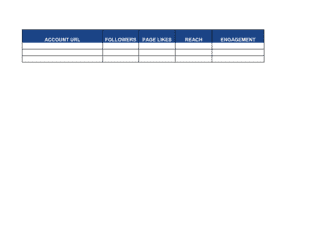
KPIs, measurement framework, and reporting cadence

How to fill it out

  1. 1

    Write the business context and current-state summary

    Document the company's existing social presence β€” which platforms are active, current follower counts, recent engagement rates, and what has and has not worked to date.

    πŸ’‘ Pull three months of historical data from native platform analytics before writing a single word of strategy. Without a baseline, every target number is a guess.

  2. 2

    Define SMART goals tied to business outcomes

    Convert broad business objectives (e.g., 'increase brand awareness') into specific social media targets with a number, platform, and deadline. Write two to four goals maximum β€” more dilutes focus.

    πŸ’‘ Every social goal should connect to a business metric: awareness goals connect to website traffic, engagement goals to lead quality, conversion goals to revenue.

  3. 3

    Build or update your audience personas

    Describe each target segment's demographics, the platforms they use most actively, the content formats they engage with (video, carousel, long-form), and their primary pain points.

    πŸ’‘ Use your existing CRM data and platform audience insights to validate persona assumptions rather than relying on intuition alone.

  4. 4

    Select and assign roles to two or three platforms

    Choose platforms where your audience is demonstrably active β€” confirmed by persona research β€” and assign each a specific role: awareness, community, or conversion. Deprioritize the rest explicitly.

    πŸ’‘ Write one sentence explaining why each excluded platform was left out. This saves the conversation at every future review meeting.

  5. 5

    Define content pillars and set a percentage split

    Choose three to five recurring content themes that reflect your brand's value proposition. Assign a target percentage of total monthly content to each pillar so the mix stays intentional.

    πŸ’‘ A 60-30-10 split β€” 60% educational, 30% social proof, 10% promotional β€” outperforms equal-weight mixes for most B2B and B2C brands on engagement metrics.

  6. 6

    Set a realistic posting cadence for each platform

    Define the number of posts per week and the best publishing times based on platform analytics. Confirm the plan is executable with current team capacity before committing.

    πŸ’‘ Halving your cadence and doubling your production quality almost always improves engagement rate. Frequency matters less than consistency and quality.

  7. 7

    Document community management guidelines

    Write response time targets, escalation rules for sensitive topics, and scripted responses for the five most common comment types your brand receives.

    πŸ’‘ Pre-approve a short-list of response templates with your legal or PR team if your brand operates in a regulated industry or is frequently in the public eye.

  8. 8

    Set up your KPI dashboard and reporting schedule

    List the three to five metrics that directly measure progress against each goal. Identify the tools you will use, assign measurement ownership, and schedule a recurring monthly review.

    πŸ’‘ Tag all social links with UTM parameters from day one β€” retrofitting attribution tracking after six months of untracked campaigns means losing six months of data permanently.

Frequently asked questions

What is a social media strategy?

A social media strategy is a planning document that defines your goals on social platforms, identifies your target audience, selects the right channels, maps out a content and posting approach, and establishes KPIs for measuring performance. It connects day-to-day social activity to concrete business outcomes like lead generation, brand awareness, or customer retention β€” replacing ad-hoc posting with a coordinated, measurable plan.

What should a social media strategy include?

A complete social media strategy covers business context and current-state analysis, SMART goals tied to business outcomes, audience personas, platform selection with roles assigned to each channel, content pillars and brand voice, posting cadence, community management guidelines, paid amplification approach, and a KPI measurement framework with a defined reporting cadence. Missing any of these sections typically means execution drifts from intent within the first 60 days.

How is a social media strategy different from a content calendar?

A social media strategy defines the why and what β€” goals, audience, platforms, content themes, and KPIs. A content calendar operationalizes the strategy by scheduling specific posts with copy, creative, and publishing times for a defined period, typically 30 to 90 days. The strategy is written once per quarter or annually; the calendar is updated monthly or weekly. You need both β€” a calendar without a strategy is just a posting schedule with no direction.

How many social media platforms should a strategy cover?

For most small businesses and startups, two to three platforms is the right number to start. Each platform requires consistent content production, community management, and performance monitoring. Spreading resources across six platforms typically means mediocre execution on all of them. Choose platforms where your specific target audience is demonstrably active, assign each a clear role, and deprioritize the rest explicitly in the strategy document.

What KPIs should a social media strategy track?

KPIs should map directly to your stated goals. Awareness goals call for reach, impressions, and share of voice. Engagement goals call for engagement rate, saves, and comments. Conversion goals require link clicks, UTM-attributed website sessions, leads, and pipeline or revenue influenced. Tracking only follower count and total impressions tells you how many people saw your content β€” not whether it moved the business forward.

How often should a social media strategy be updated?

Review the strategy quarterly against actual KPI performance, and do a full rewrite annually or when a major business change occurs β€” a rebrand, a new product launch, a target market shift, or a significant algorithm change on a primary platform. A strategy that is more than 12 months old without a performance review is likely misaligned with current platform behavior and audience expectations.

Can a small business owner write a social media strategy without a marketing team?

Yes. A structured template handles the framework β€” you supply the business-specific inputs: your goals, your audience, the two or three platforms where your customers spend time, and the content themes that reflect your brand. A complete strategy for a small business can be drafted in four to six hours using a template as the starting point. Consider a one-hour session with a freelance social media strategist ($100–$250) to pressure-test your platform choices and KPI targets before publishing the plan.

What is the difference between a social media strategy and a social media policy?

A social media strategy is an outward-facing plan for how the business uses social channels to achieve marketing and communications goals. A social media policy is an inward-facing HR or compliance document that governs how employees represent the company on social media, what they can and cannot post, and the consequences for violations. Both documents are necessary for organizations of any size β€” they address different audiences and different risks.

How long should a social media strategy document be?

A strategy for a small or mid-size business typically runs 8–15 pages plus any appendices (content calendar, brand voice guide, or competitor audit). An enterprise or agency strategy covering multiple brands or markets may run 25–40 pages. Length is less important than completeness β€” every section in the template should be populated with specific, actionable content rather than left at a generic placeholder level.

How this compares to alternatives

vs Marketing Plan

A marketing plan covers the full marketing mix β€” advertising, email, events, SEO, PR, and social β€” with budgets and timelines for all channels. A social media strategy focuses exclusively on social platforms and goes deeper on content pillars, platform-specific tactics, and community management. The social strategy is typically a chapter within the broader marketing plan, or a standalone document when social is the primary channel.

vs Social Media Content Calendar

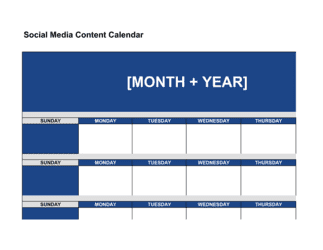
A content calendar schedules specific posts β€” copy, creative, platform, and publish time β€” for the next 30 to 90 days. A social media strategy defines the goals, audience, platform rationale, and content themes that the calendar executes against. The strategy is written first and updated quarterly; the calendar is a tactical execution tool updated monthly or weekly.

vs Social Media Report

A social media report documents past performance β€” reach, engagement, follower growth, conversions β€” for a completed period. A social media strategy is a forward-looking planning document that sets the goals the report will measure. The report tells you whether the strategy worked; the strategy tells you what you were trying to achieve.

vs Social Media Marketing Proposal

A social media marketing proposal is an external document an agency or freelancer submits to a prospective client to win a contract β€” it outlines scope, approach, deliverables, and pricing. A social media strategy is an internal operational document that guides execution once the engagement is underway. Agencies typically produce both: the proposal wins the work, the strategy governs it.

Industry-specific considerations

Retail and e-commerce

Product discovery on Instagram and Pinterest, shoppable posts, influencer collaboration budgets, and seasonal campaign planning tied to promotional calendar.

SaaS and technology

LinkedIn thought leadership targeting buyer personas by job title, community-building in niche forums, and social proof content using customer case studies.

Food and beverage

Visual-first content strategy on Instagram and TikTok, UGC campaigns encouraging customers to post their own photos, and location-based targeting for physical venues.

Professional services

LinkedIn as the primary channel for credibility-building, long-form educational content demonstrating expertise, and strict tone guidelines given regulatory and reputational risk.

Template vs pro β€” what fits your needs?

PathBest forCostTime
Use the templateSmall business owners, in-house social media managers, and founders building a first social strategyFree4–8 hours
Template + professional reviewGrowing businesses adding paid social for the first time or expanding to new platforms and audiences$200–$800 for a freelance social media strategist review session1–2 weeks
Custom draftedEnterprise brands, multi-market campaigns, or agencies onboarding a major client requiring a bespoke deliverable$2,000–$8,000 for a full agency or senior consultant engagement3–6 weeks

Glossary

Content Pillar
A recurring thematic category that organizes social content β€” for example, educational, promotional, behind-the-scenes, or user-generated content.
Posting Cadence
The planned frequency and timing of posts on each platform β€” for example, three times per week on Instagram, daily on X.
Reach
The number of unique accounts that saw a piece of content at least once in a given period.
Engagement Rate
Total engagements (likes, comments, shares, saves) divided by reach or followers, expressed as a percentage.
Organic Social
Content published without paid promotion, relying on algorithmic distribution and follower networks.
Paid Social
Sponsored content or advertisements placed on social platforms with a defined budget, targeting, and bid strategy.
Share of Voice
Your brand's proportion of all social mentions within a defined topic or competitive set, relative to competitors.
Brand Voice
The consistent personality, tone, and style a brand uses across all social communications β€” e.g., authoritative, conversational, or playful.
Social Listening
Monitoring social platforms for mentions of your brand, competitors, or relevant keywords to inform strategy and respond to sentiment.
UTM Parameter
Tags added to a URL to track which social post or campaign drove traffic to your website in analytics tools like Google Analytics.

Part of your Business Operating System

This document is one of 3,000+ business & legal templates included in Business in a Box.

  • Fill-in-the-blanks β€” ready in minutes
  • 100% customizable Word document
  • Compatible with all office suites
  • Export to PDF and share electronically

Create your document in 3 simple steps.

From template to signed document β€” all inside one Business Operating System.
1
Download or open template

Access over 3,000+ business and legal templates for any business task, project or initiative.

2
Edit and fill in the blanks with AI

Customize your ready-made business document template and save it in the cloud.

3
Save, Share, Send, Sign

Share your files and folders with your team. Create a space of seamless collaboration.

Save time, save money, and create top-quality documents.

β˜…β˜…β˜…β˜…β˜…

"Fantastic value! I'm not sure how I'd do without it. It's worth its weight in gold and paid back for itself many times."

Managing Director Β· Mall Farm
Robert Whalley
Managing Director, Mall Farm Proprietary Limited
β˜…β˜…β˜…β˜…β˜…

"I have been using Business in a Box for years. It has been the most useful source of templates I have encountered. I recommend it to anyone."

Business Owner Β· 4+ years
Dr Michael John Freestone
Business Owner
β˜…β˜…β˜…β˜…β˜…

"It has been a life saver so many times I have lost count. Business in a Box has saved me so much time and as you know, time is money."

Owner Β· Upstate Web
David G. Moore Jr.
Owner, Upstate Web

Run your business with a system β€” not scattered tools

Stop downloading documents. Start operating with clarity. Business in a Box gives you the Business Operating System used by over 250,000 companies worldwide to structure, run, and grow their business.

Start freeΒ Β·Β No credit card required