Social Media Plan Template

Free Word download β€’ Edit online β€’ Save & share with Drive β€’ Export to PDF

15 pagesβ€’30–40 min to fillβ€’Difficulty: Complex
Learn more ↓
FreeSocial Media Plan Template

At a glance

What it is
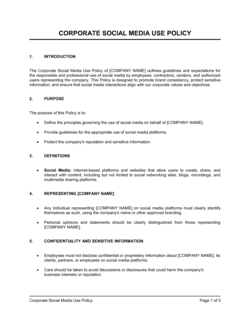
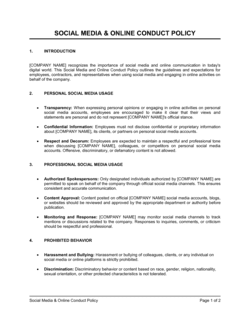
A Social Media Plan is a structured operational document that defines your brand's goals, target audience, channel mix, content strategy, posting cadence, and key performance indicators across social platforms. This free Word download gives you a ready-to-edit framework you can customize for any business and export as PDF to share with your team or stakeholders.
When you need it
Use it when launching a new brand presence, overhauling an underperforming social strategy, onboarding a new marketing hire or agency, or aligning a cross-functional team around a consistent content direction for the quarter or year ahead.
What's inside
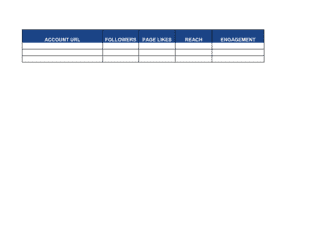
Business and social media goals, audience personas, platform selection rationale, content pillars and posting calendar guidelines, tone of voice, paid vs. organic strategy, and a KPI measurement framework with reporting cadence.

What is a Social Media Plan?

A Social Media Plan is a structured operational document that defines a brand's goals, target audience, platform priorities, content pillars, posting cadence, paid strategy, and performance measurement framework for social media channels. It translates broad marketing objectives β€” awareness, lead generation, community growth, customer retention β€” into specific, executable tactics with named owners and measurable KPIs. Unlike an ad hoc posting schedule or a content calendar, a social media plan provides the strategic rationale behind every content decision, giving teams a shared reference point that holds up under leadership scrutiny and survives staff changes.

Why You Need This Document

Operating social media without a written plan means every post is a one-off decision rather than part of a coherent strategy β€” resulting in inconsistent brand voice, misaligned content, and no defensible basis for budget requests. Teams without a plan routinely spread effort across too many platforms, chase follower vanity metrics instead of revenue-linked KPIs, and lose momentum the moment a key person leaves or a platform algorithm changes. A documented social media plan makes the strategy portable and reviewable: when results fall short, you can audit the plan to find the gap rather than starting from scratch. This template gives you a complete, professional framework to build on in a few hours rather than days.

Which variant fits your situation?

If your situation is…Use this template
Planning content for a single platform such as Instagram or LinkedInChannel-Specific Social Media Plan
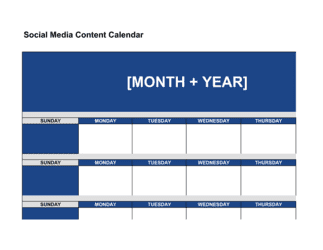
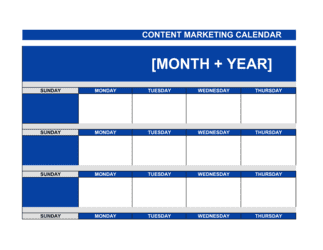
Scheduling and batching posts across multiple platformsSocial Media Content Calendar
Reporting monthly performance to a client or executive teamSocial Media Report
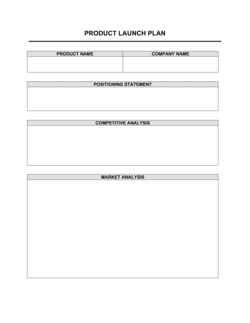
Launching a new product or campaign with dedicated social coverageProduct Launch Plan
Building a broader marketing strategy that includes social as one channelMarketing Plan
Managing a brand crisis or negative public response on socialCrisis Communication Plan
Briefing an influencer or content creator on a campaignInfluencer Brief

Common mistakes to avoid

❌ Planning for too many platforms at once

Why it matters: Splitting a small team across six platforms produces thin, inconsistent content on all of them. Engagement rates drop and no single channel builds momentum.

Fix: Commit fully to two or three platforms that match your audience and content strengths. Expand only after hitting consistent engagement benchmarks on the initial channels.

❌ Setting follower count as the primary KPI

Why it matters: Follower growth can be gamed with low-quality tactics and rarely correlates with revenue or qualified leads. It gives leadership a false sense of progress.

Fix: Replace follower count with engagement rate, link clicks, or social-attributed conversions as the primary KPIs, then report follower growth as secondary context.

❌ Skipping the tone-of-voice section

Why it matters: Without documented voice guidelines, every writer produces a different version of the brand β€” especially when a new hire, freelancer, or agency takes over content.

Fix: Write tone guidelines with at least three concrete examples before publishing a single post. A one-page voice reference reduces rework by giving anyone a clear quality bar.

❌ Building a cadence the team cannot sustain

Why it matters: A plan that requires daily posts across three platforms with a two-person team will fail within weeks, damaging both channel consistency and team morale.

Fix: Set the initial cadence at 60–70% of maximum theoretical output, document it in the plan, and build in a 90-day review to adjust based on actual capacity and results.

❌ Treating paid and organic as separate plans

Why it matters: Organic content that is planned without considering paid amplification misses opportunities; paid budgets that ignore organic performance data waste money on unproven creative.

Fix: Integrate paid and organic in a single section of the plan with a shared content pool. Identify which organic posts are candidates for paid promotion based on early performance signals.

❌ No named owner for community management

Why it matters: Comments and DMs left unanswered for more than 24 hours reduce trust, suppress algorithmic reach on most platforms, and turn minor complaints into visible public issues.

Fix: Name a specific individual responsible for monitoring and responding to comments and messages, state the response-time target (e.g., within 4 business hours), and document an escalation path for negative feedback.

The 10 key sections, explained

Executive summary and business context

Goals and SMART objectives

Target audience and personas

Platform selection and rationale

Content pillars and themes

Tone of voice and brand guidelines

Posting schedule and content calendar guidelines

Paid social strategy

KPIs and measurement framework

Roles, responsibilities, and review cadence

How to fill it out

  1. 1

    Define your business objectives and tie social goals to them

    Start by writing one to three business objectives the social plan must support β€” revenue, leads, brand awareness, retention. Then write a corresponding SMART social goal for each: a specific metric, a target number, and a deadline.

    πŸ’‘ If you cannot draw a straight line from a social metric to a business outcome, that metric should not be in the plan.

  2. 2

    Research and document your target audience

    Pull data from your CRM, Google Analytics, and platform audience insights to build two to three audience personas. Include which platforms each persona uses, what type of content they engage with, and what problems they want solved.

    πŸ’‘ Check your existing top-performing posts first β€” the audience already engaging with you is more useful than an assumed demographic.

  3. 3

    Select and prioritize platforms

    Choose two to three platforms based on audience fit and content format, not on where your competitors happen to be active. Write one sentence per platform explaining the strategic rationale, and one sentence per deprioritized platform explaining why it was excluded.

    πŸ’‘ Start with platforms where your audience already exists and where your content format β€” video, long-form, visual β€” performs best.

  4. 4

    Define three to five content pillars

    Write a name and one-paragraph description for each pillar. For each, list two or three example post formats (carousel, short video, quote graphic) that fit the pillar.

    πŸ’‘ A good pillar test: can you generate 20 post ideas from it without repeating yourself? If not, the pillar is too narrow.

  5. 5

    Set your posting cadence and build a sample calendar week

    Enter the target post frequency per platform and identify the optimal posting windows using platform analytics. Then draft one sample week of posts to validate that the cadence is achievable with your current resources.

    πŸ’‘ Build the calendar at 60–70% of your theoretical maximum capacity; leave room for reactive and timely content.

  6. 6

    Document tone of voice with concrete examples

    Write three adjectives that describe your brand voice, then provide a 'do' and 'don't' example for each. Include a sample caption written in-voice so whoever executes the plan has a clear reference.

    πŸ’‘ Rewrite one of your existing posts in the documented voice to confirm the guidelines are specific enough to produce a different result.

  7. 7

    Set the KPI framework and reporting cadence

    For each goal, name the metric, the tool used to measure it, the target value, and the reporting frequency. Confirm that everyone who needs access to analytics dashboards has it before the plan launches.

    πŸ’‘ Limit your core KPI set to five metrics or fewer. A 20-metric dashboard gets ignored; a five-metric scorecard gets acted on.

  8. 8

    Assign owners and schedule the first quarterly review

    Put a named individual next to every task in the roles section β€” creation, scheduling, community management, and reporting. Calendar the quarterly plan review before the plan goes live.

    πŸ’‘ Share the completed plan with every stakeholder before the first post goes out. Misaligned expectations discovered mid-quarter are far more disruptive than those resolved at kickoff.

Frequently asked questions

What is a social media plan?

A social media plan is a structured document that defines a brand's goals, target audience, platform choices, content strategy, posting cadence, and performance metrics for social media. It translates broad marketing objectives into specific, executable tactics and gives everyone involved in social β€” from content creators to executives β€” a shared reference point for decisions and priorities.

What should a social media plan include?

A complete social media plan covers business goals and SMART social objectives, audience personas, platform selection with rationale, content pillars and tone of voice, a posting schedule, paid social strategy, a KPI measurement framework, and assigned roles with a review cadence. Missing any of these sections typically means the plan cannot be executed consistently or measured accurately.

How is a social media plan different from a content calendar?

A social media plan is the strategic document that defines why, what, and how you post β€” goals, audience, platforms, pillars, and tone. A content calendar is the scheduling tool that maps specific posts to specific dates and platforms. The plan drives the calendar; the calendar executes the plan. Both are needed for a functional social media operation.

How often should a social media plan be updated?

A full review every quarter is standard practice, with a comprehensive annual refresh that resets goals and KPI targets. Significant triggers for an earlier review include a major algorithm change on a priority platform, a brand pivot or product launch, a sustained drop in engagement rate over six or more weeks, or a change in the team responsible for social execution.

How many platforms should a social media plan cover?

Two to three platforms is the right range for most small to mid-size businesses. Choosing platforms based on where your specific audience spends time β€” rather than where competitors happen to be active β€” produces better results with fewer resources. Adding a fourth platform should be contingent on hitting consistent engagement benchmarks on the existing channels first.

What KPIs should a social media plan track?

The best KPIs connect social activity to business outcomes. Engagement rate (interactions divided by reach), link clicks tracked via UTM parameters, social-attributed website sessions, and lead form fills or conversions are more meaningful than impressions or follower count alone. Limit your primary KPI set to five metrics so reporting stays actionable rather than decorative.

Do I need a separate plan for paid and organic social?

No β€” the most effective approach integrates both in a single plan. Organic content builds the content library and tests what resonates; paid amplification scales what already works. Separating them into two documents creates budget and message inconsistencies. The social media plan should include a paid section that references the organic content pillars and identifies criteria for deciding which posts to boost.

Can a small business use this template without a dedicated social media manager?

Yes. The template is designed to be completed by a business owner, marketing generalist, or part-time contractor. The key is to set a cadence that matches available time β€” three posts per week executed consistently outperforms a daily schedule that lapses after a month. The roles section should be filled in with whoever actually owns each task, even if that is a single person wearing multiple hats.

How long should a social media plan be?

For most businesses, eight to fifteen pages covers all necessary sections without becoming unwieldy. A plan that runs longer than twenty pages is usually mixing strategy with execution detail that belongs in a separate content calendar or brand guidelines document. The goal is a plan concise enough to be read and referenced regularly, not filed and forgotten.

How this compares to alternatives

vs Marketing Plan

A marketing plan covers the full spectrum of marketing channels β€” email, SEO, events, advertising, and social β€” within a single strategic document. A social media plan focuses exclusively on social platforms and goes deeper on platform selection, content pillars, posting cadence, and community management. If your business needs a channel-level social strategy rather than an overall marketing roadmap, the social media plan is the right document.

vs Social Media Content Calendar

A content calendar schedules specific posts by date, platform, and format. A social media plan defines the strategy that the calendar executes β€” goals, audience, pillars, and tone. The plan answers why and what; the calendar answers when and who publishes it. Both documents are necessary for a consistent social media operation.

vs Social Media Report

A social media report is a backward-looking performance document that reviews what happened over a defined period β€” reach, engagement, clicks, and conversions against targets. A social media plan is forward-looking, defining strategy and targets for the period ahead. Reports should be evaluated against the targets set in the plan; they are the measurement instrument, not the strategy itself.

vs Brand Style Guide

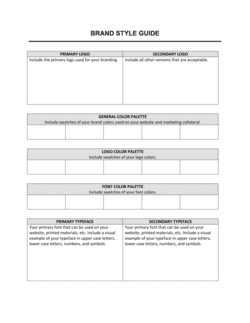
A brand style guide governs visual identity β€” logo use, color palette, typography, and image style β€” across all communications. A social media plan includes tone-of-voice guidelines specific to social copy but does not replace a full brand guide. For teams producing social content at volume, both documents should be in use simultaneously.

Industry-specific considerations

Retail and e-commerce

Product showcase content, seasonal campaign calendars, shoppable post integration, and paid retargeting tied directly to cart abandonment data.

Professional services

Thought-leadership content on LinkedIn, client case study formatting that respects confidentiality, and lead generation through gated content promoted via paid social.

SaaS and technology

Feature announcement cadences, community-building in platform-specific groups, and social proof via G2 or Capterra review sharing tied to product update cycles.

Food and beverage

Visual-first content on Instagram and TikTok, user-generated content campaigns, and location-based paid targeting for brick-and-mortar drive.

Healthcare and wellness

Compliance review step built into the content approval workflow, educational pillars that avoid medical claims, and community management protocols for sensitive audience feedback.

Nonprofit organizations

Donor and volunteer cultivation content pillars, impact storytelling tied to fundraising campaigns, and Meta's nonprofit ad credits factored into the paid strategy.

Template vs pro β€” what fits your needs?

PathBest forCostTime
Use the templateSmall business owners, in-house marketing teams, and solopreneurs managing their own social channelsFree3–6 hours to complete
Template + professional reviewGrowing businesses bringing in a new marketing hire or handing social to an agency for the first time$200–$800 for a marketing consultant review session1–2 days
Custom draftedMid-market brands launching in a new market, businesses recovering from a social crisis, or companies with complex multi-brand or multi-region social operations$1,500–$6,000 for a full agency strategy engagement2–4 weeks

Glossary

Content Pillar
A recurring thematic category that organizes all social content β€” for example, educational tips, behind-the-scenes, or customer success stories.
Posting Cadence
The planned frequency and timing of social media posts on each platform, expressed as posts per day or per week.
Organic Reach
The number of unique accounts that see a post without any paid promotion behind it.
Paid Social
Social media content distributed through paid advertising placements, such as boosted posts, sponsored ads, or retargeting campaigns.
Engagement Rate
Total interactions (likes, comments, shares, saves) on a post divided by total reach or follower count, expressed as a percentage.
Social Listening
Monitoring platforms for mentions of your brand, competitors, or relevant keywords to inform content and identify issues early.
Share of Voice
Your brand's proportion of total mentions or conversations in a defined topic area relative to competitors.
Content Calendar
A scheduling document that maps planned posts by date, platform, format, and responsible owner.
UTM Parameter
A tag appended to a URL that tracks which social post or campaign drove traffic to a website, enabling attribution in analytics tools.
Audience Persona
A semi-fictional profile of an ideal follower or customer, built from demographic data and behavioral research, used to guide content decisions.
CPM (Cost Per Thousand Impressions)
The cost an advertiser pays for one thousand views of a paid social ad, used to compare efficiency across platforms and campaigns.

Part of your Business Operating System

This document is one of 3,000+ business & legal templates included in Business in a Box.

  • Fill-in-the-blanks β€” ready in minutes
  • 100% customizable Word document
  • Compatible with all office suites
  • Export to PDF and share electronically

Create your document in 3 simple steps.

From template to signed document β€” all inside one Business Operating System.
1
Download or open template

Access over 3,000+ business and legal templates for any business task, project or initiative.

2
Edit and fill in the blanks with AI

Customize your ready-made business document template and save it in the cloud.

3
Save, Share, Send, Sign

Share your files and folders with your team. Create a space of seamless collaboration.

Save time, save money, and create top-quality documents.

β˜…β˜…β˜…β˜…β˜…

"Fantastic value! I'm not sure how I'd do without it. It's worth its weight in gold and paid back for itself many times."

Managing Director Β· Mall Farm
Robert Whalley
Managing Director, Mall Farm Proprietary Limited
β˜…β˜…β˜…β˜…β˜…

"I have been using Business in a Box for years. It has been the most useful source of templates I have encountered. I recommend it to anyone."

Business Owner Β· 4+ years
Dr Michael John Freestone
Business Owner
β˜…β˜…β˜…β˜…β˜…

"It has been a life saver so many times I have lost count. Business in a Box has saved me so much time and as you know, time is money."

Owner Β· Upstate Web
David G. Moore Jr.
Owner, Upstate Web

Run your business with a system β€” not scattered tools

Stop downloading documents. Start operating with clarity. Business in a Box gives you the Business Operating System used by over 250,000 companies worldwide to structure, run, and grow their business.

Free Forever PlanΒ Β·Β No credit card required