Business Plan Canvas (One Page) Template

Free download β€’ Use as a template β€’ Print or share

1 pageβ€’40–55 min to useβ€’Difficulty: Expert
Learn more ↓
FreeBusiness Plan Canvas (One Page) Template

At a glance

What it is
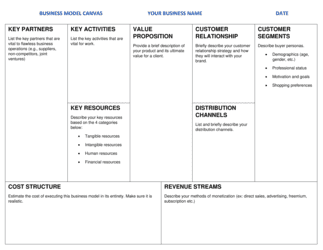
A Business Plan Canvas (One Page) is a single-page visual framework that captures the nine essential building blocks of a business model β€” from customer segments and value proposition to revenue streams and cost structure β€” on one sheet. This free Word download lets you edit each block online and export as PDF for team alignment meetings, investor check-ins, or accelerator applications without producing a 30-page document.
When you need it
Use it when you need to validate an idea quickly, align a founding team around a shared model, or present a business concept to an accelerator, mentor, or early-stage investor who wants the essence without the full plan.
What's inside
Nine interconnected sections covering customer segments, value propositions, channels, customer relationships, revenue streams, key resources, key activities, key partnerships, and cost structure β€” each with guided prompts to fill in concisely.

What is a Business Plan Canvas (One Page)?

A Business Plan Canvas (One Page) is a single-page visual framework that maps the nine interdependent building blocks of a business model β€” customer segments, value proposition, channels, customer relationships, revenue streams, key resources, key activities, key partnerships, and cost structure β€” onto one structured sheet. Rather than narrating a business across 30 pages, the canvas forces founders and strategists to state each element concisely in its own block and then verify that the blocks form a coherent, internally consistent system. It is based on the Business Model Canvas methodology developed by Alexander Osterwalder and is used in more than 470 business schools and thousands of organizations worldwide.

Why You Need This Document

A business idea that exists only as a narrative in a founder's head β€” or scattered across slide decks and email threads β€” cannot be evaluated, challenged, or improved by the people who need to build it with you. The one-page canvas creates a shared reference that co-founders, advisors, and early investors can read in under two minutes and respond to with specific questions. Without it, team conversations loop back to first principles rather than advancing; investor meetings stall because the model logic is unclear; and critical gaps in the revenue or cost model stay invisible until they cause real financial damage. This template gives you a proven nine-block structure, guided prompts for each section, and a format that works equally well in a solo session at a laptop or a team workshop on a whiteboard β€” so you spend your time on the thinking, not the formatting.

Which variant fits your situation?

If your situation is…Use this template
Raising a seed or Series A round requiring detailed financial projectionsBusiness Plan
Applying for an SBA loan or bank financingBank Loan Business Plan
Launching a food service or restaurant conceptRestaurant Business Plan
Starting a nonprofit and presenting to a board or funderNonprofit Business Plan
Pitching a new product to investors in a meeting settingElevator Pitch Template
Planning a 3–5 year internal growth strategy for an existing businessStrategic Planning Template
Forecasting revenue and expenses for the next 12 monthsFinancial Projections (12 Months)

Common mistakes to avoid

❌ Filling every block simultaneously

Why it matters: Jumping between blocks without anchoring to the customer segment produces nine disconnected statements rather than a coherent business model. The blocks are interdependent β€” a change in one cascades through the others.

Fix: Start with customer segments, then value proposition, then revenue streams. Fill the remaining blocks to support those three β€” not independently.

❌ Using adjectives instead of specifics in the value proposition

Why it matters: Phrases like 'seamless experience' or 'best-in-class service' are impossible to evaluate and signal that the founder hasn't identified a concrete customer problem. Reviewers skip these without engaging.

Fix: Replace every adjective with a metric or mechanism. 'Reduces onboarding time from 3 weeks to 2 days for mid-market SaaS teams' is evaluable; 'fast and easy onboarding' is not.

❌ Leaving cost structure blank or marked TBD

Why it matters: Skipping costs means the canvas cannot show whether the revenue streams are sufficient to sustain the model. A canvas without costs is a vision statement, not a business model.

Fix: Use rough estimates and mark them as such. Even '$20K/month fixed costs, primarily salaries' is enough to test whether the revenue model is viable at realistic customer volumes.

❌ Listing partnerships that are not yet confirmed

Why it matters: Presenting aspirational partnerships as real ones misleads co-founders, investors, and advisors who make decisions based on the canvas. When the partnership falls through, the model can break.

Fix: Label unconfirmed partnerships explicitly as 'target' or 'in discussion.' Only list confirmed partners as active components of the model.

❌ Treating the canvas as a final document

Why it matters: A business model canvas is a hypothesis-testing tool, not a finished plan. Teams that treat the first version as settled stop questioning assumptions and miss the early pivots that separate successful ventures from failed ones.

Fix: Set a review cadence β€” monthly for early-stage ventures, quarterly for established businesses. Update the canvas whenever a core assumption is validated or invalidated by market data.

❌ Confusing key activities with daily operational tasks

Why it matters: Listing 'respond to customer emails' or 'update the website' as key activities obscures the strategic processes that actually make the business model work, leaving advisors and investors without a clear picture of execution.

Fix: Limit key activities to the two or three processes that are irreplaceable β€” the ones that directly create, deliver, or protect the value proposition.

The 9 key sections, explained

Customer segments

Value propositions

Channels

Customer relationships

Revenue streams

Key resources

Key activities

Key partnerships

Cost structure

How to fill it out

  1. 1

    Start with customer segments

    Identify one primary customer segment before filling any other block. Define them by a shared problem or job-to-be-done, not just demographics. If you have two genuinely distinct segments, fill a separate canvas for each and compare.

    πŸ’‘ Narrowing to one segment for the first pass prevents the value proposition block from becoming vague and unfocused.

  2. 2

    Write the value proposition in functional language

    For your primary segment, complete this sentence: '[Product/service] helps [customer] who want to [goal] by [specific mechanism], unlike [alternative].' Avoid adjectives like 'easy,' 'fast,' or 'innovative' unless backed by a specific metric.

    πŸ’‘ If you cannot complete the 'unlike [alternative]' part, you have not differentiated β€” go back and sharpen the mechanism.

  3. 3

    Map channels by funnel stage

    List one to two channels for each stage: awareness, consideration, purchase, delivery, and after-sales. Mark the one channel that currently drives or will drive the most revenue as your primary channel.

    πŸ’‘ Limit this block to channels you will actually activate in the next 12 months β€” aspirational channels add noise without adding clarity.

  4. 4

    Define revenue streams with pricing

    For each stream, name the mechanism (subscription, per-seat, transaction fee, license) and include at least an estimated price point or range. If you have multiple streams, note the approximate percentage contribution of each.

    πŸ’‘ If two revenue streams require fundamentally different customer relationships or channels, they may belong on separate canvases.

  5. 5

    Identify key resources and activities

    List only the two or three resources and activities that are genuinely critical to the value proposition. Ask: if we lost this resource or stopped this activity, would the business model break? If the answer is no, remove it.

    πŸ’‘ Intellectual property, proprietary data, and licensed expertise are the resources most commonly underrepresented on startup canvases.

  6. 6

    Fill in cost structure with real numbers

    Even rough estimates (within 50%) are more useful than blank fields. Separate fixed costs (those that exist regardless of revenue) from variable costs (those that scale with customers or units). Identify your single largest cost driver.

    πŸ’‘ If total estimated costs exceed revenue stream projections by more than 3Γ—, flag it β€” the model needs restructuring before you share it externally.

  7. 7

    Review for internal consistency

    Read the nine blocks together as a system. The customer segment should match the value proposition; the channels should fit the customer relationship style; the key activities should directly support delivering the value proposition. Any block that feels disconnected from the others signals a gap in the model.

    πŸ’‘ Have someone unfamiliar with the business read only the canvas β€” if they cannot explain your model back to you in two minutes, the language is too abstract.

  8. 8

    Date and version the canvas

    Add a version number and date to the footer. Business models evolve rapidly in the early stages, and an undated canvas quickly becomes a source of confusion when multiple versions circulate.

    πŸ’‘ Keep a changelog β€” even a one-line note per version ('v2: changed primary channel from outbound to inbound') β€” so you can track how the model evolved and what drove each change.

Frequently asked questions

What is a one-page business plan canvas?

A one-page business plan canvas is a single-page visual framework that maps the nine fundamental building blocks of a business model β€” customer segments, value proposition, channels, customer relationships, revenue streams, key resources, key activities, key partnerships, and cost structure. It condenses the strategic logic of a business onto one sheet, making it fast to produce, easy to share, and simple to update as assumptions change.

What is the difference between a one-page canvas and a full business plan?

A one-page canvas captures the business model hypothesis in a single visual layout β€” typically used for ideation, team alignment, and early investor conversations. A full business plan adds market research, competitive analysis, operational detail, management team bios, and three-to-five year financial projections with a P&L, cash flow statement, and balance sheet. The canvas gets you to a shared model quickly; the full plan is required for formal capital raises and bank loans.

Who should use a one-page business plan template?

First-time founders validating a new idea, accelerator and incubator applicants, small business owners refreshing their strategy, product managers framing a new initiative, and MBA students completing a business model assignment all use the one-page canvas. It is especially useful when the audience needs the strategic logic without the full document β€” mentor sessions, advisory boards, and co-founder recruiting conversations.

Is a one-page business plan enough for investors?

For pre-seed angel investors and accelerator programs, a strong canvas is often sufficient to generate interest and a follow-up meeting. It is rarely sufficient to close a formal investment. Most seed and Series A investors will request a full business plan with financial projections, a cap table, and market sizing evidence before committing capital. Use the canvas to open conversations, not to close rounds.

How long does it take to complete a business plan canvas?

A first draft typically takes one to two hours for a solo founder. A team session using the canvas as a structured discussion tool runs two to four hours and produces a more robust output because assumptions are challenged in real time. Budget another hour to refine language and check internal consistency before sharing externally.

How is this different from the Lean Canvas?

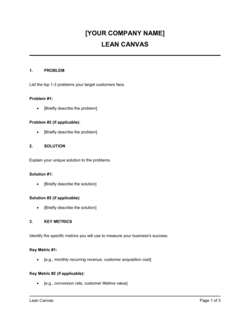
The original Business Model Canvas, developed by Alexander Osterwalder, focuses on the full business model including established customer relationships and key partnerships. The Lean Canvas, developed by Ash Maurya for startups, replaces key partnerships and key resources with 'problem' and 'solution' blocks, and adds an 'unfair advantage' block. Both fit on one page. This template follows the standard nine-block Business Model Canvas structure, which is more widely recognized across investor and corporate audiences.

Can I use a one-page canvas for an existing business?

Yes β€” existing businesses use the canvas for annual strategy reviews, new product line planning, and market expansion analysis. Mapping the current model clearly often surfaces cost structure inefficiencies or underutilized revenue streams that are invisible in a traditional planning document. It is also a fast way to compare your current model against a proposed pivot on a single sheet.

What should I do after completing the canvas?

Identify the two or three assumptions in the canvas that are least validated β€” typically in the customer segment, value proposition, and revenue stream blocks β€” and design the smallest possible experiment to test each one. Then update the canvas with what you learn. The canvas is a living document: version it, date it, and treat each update as evidence that your thinking is improving, not that your original model was wrong.

Does the canvas replace a SWOT analysis?

No β€” they serve different purposes. The canvas describes how the business model creates, delivers, and captures value. A SWOT analysis evaluates internal strengths and weaknesses and external opportunities and threats. Most strategy sessions benefit from running both: the canvas defines the model, and the SWOT stress-tests it against the competitive environment.

How this compares to alternatives

vs Full Business Plan

A full business plan adds market research, competitive analysis, detailed operational sections, management team profiles, and a three-statement financial model to what the canvas covers. Use the canvas for ideation, team alignment, and early investor conversations; use the full plan when a lender, institutional investor, or accelerator requires formal documentation and financial projections.

vs Elevator Pitch Template

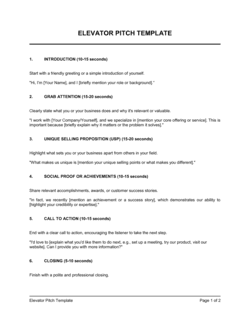
An elevator pitch template structures a verbal or slide-based summary designed for a two-to-three minute conversation. The canvas is a working document used internally to build and validate the model before it is distilled into a pitch. The canvas comes first; the pitch extracts the most compelling elements from it.

vs SWOT Analysis

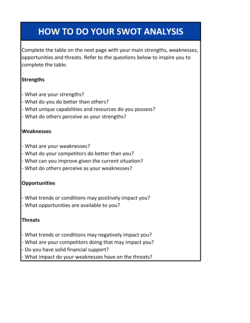
A SWOT analysis evaluates internal strengths and weaknesses alongside external opportunities and threats β€” it is a diagnostic tool, not a model-building one. The canvas defines how value is created and captured; the SWOT stress-tests that model against the competitive environment. Both are commonly used together in strategy workshops.

vs Strategic Planning Template

A strategic plan maps a 3–5 year roadmap for an existing business β€” goals, initiatives, KPIs, and resource allocation β€” and assumes the business model is already defined. The canvas is the right starting point when the model itself is still being designed or tested. Established businesses typically complete the canvas first, then use the strategic plan to execute against it.

Industry-specific considerations

SaaS / Technology

Revenue streams block distinguishes between MRR tiers, usage-based pricing, and professional services; key resources block highlights proprietary code and data assets.

Retail / E-commerce

Channels block maps the split between direct-to-consumer online, marketplace (Amazon, Etsy), and physical retail; cost structure highlights COGS and fulfillment as primary variable costs.

Professional Services

Customer relationships block is central β€” retainer vs. project-based engagement models produce fundamentally different cost structures and key activities.

Food & Beverage

Key partnerships block covers supplier relationships and distribution agreements; cost structure must reflect food cost percentage (target 28–35%) and labor as co-primary drivers.

Healthcare / MedTech

Key resources block must note licensing, certification, and regulatory approvals; revenue streams block distinguishes between payer reimbursement, direct pay, and B2B licensing.

Manufacturing

Key activities block centers on production efficiency and quality control; key partnerships block maps supplier concentration risk and logistics partners.

Template vs pro β€” what fits your needs?

PathBest forCostTime
Use the templateFounders, small business owners, and students who need to map or validate a business model quickly without hiring external helpFree1–4 hours
Template + professional reviewEarly-stage founders preparing for an accelerator interview or seed investor meeting who want an experienced mentor or advisor to challenge assumptions$200–$800 for a startup advisor or business coach session1–2 days
Custom draftedCorporate innovation teams or growth-stage companies running a formal business model redesign with a strategy consultant$2,000–$8,000 for a facilitated workshop and deliverable1–3 weeks

Glossary

Business Model Canvas
A one-page strategic framework developed by Alexander Osterwalder that maps nine components of a business model in a single visual layout.
Value Proposition
The specific combination of products, services, or outcomes that creates value for a defined customer segment and differentiates you from alternatives.
Customer Segment
A distinct group of people or organizations that share common needs, behaviors, or characteristics that your business serves.
Revenue Stream
The mechanism through which your business earns money from each customer segment β€” subscriptions, one-time sales, licensing, usage fees, etc.
Key Resource
The most important physical, intellectual, human, or financial asset required to deliver your value proposition and operate the business model.
Key Activity
The most critical things your business must do well β€” manufacturing, platform development, problem-solving, or supply chain management β€” to make the model work.
Key Partnership
The network of suppliers, co-creators, or strategic allies whose resources, activities, or distribution you rely on to deliver your value proposition.
Cost Structure
All costs incurred to operate the business model, categorized as fixed or variable, and analyzed for the primary cost drivers.
Channel
The means by which your company communicates with and reaches its customer segments to deliver the value proposition β€” direct sales, retail, platform, or partner network.
Customer Relationship
The type of relationship a business establishes and maintains with each customer segment β€” self-service, personal assistance, community, or automated.

Part of your Business Operating System

This document is one of 3,000+ business & legal templates included in Business in a Box.

  • Fill-in-the-blanks β€” ready in minutes
  • 100% customizable Word document
  • Compatible with all office suites
  • Export to PDF and share electronically

Create your document in 3 simple steps.

From template to signed document β€” all inside one Business Operating System.
1
Download or open template

Access over 3,000+ business and legal templates for any business task, project or initiative.

2
Edit and fill in the blanks with AI

Customize your ready-made business document template and save it in the cloud.

3
Save, Share, Send, Sign

Share your files and folders with your team. Create a space of seamless collaboration.

Save time, save money, and create top-quality documents.

β˜…β˜…β˜…β˜…β˜…

"Fantastic value! I'm not sure how I'd do without it. It's worth its weight in gold and paid back for itself many times."

Managing Director Β· Mall Farm
Robert Whalley
Managing Director, Mall Farm Proprietary Limited
β˜…β˜…β˜…β˜…β˜…

"I have been using Business in a Box for years. It has been the most useful source of templates I have encountered. I recommend it to anyone."

Business Owner Β· 4+ years
Dr Michael John Freestone
Business Owner
β˜…β˜…β˜…β˜…β˜…

"It has been a life saver so many times I have lost count. Business in a Box has saved me so much time and as you know, time is money."

Owner Β· Upstate Web
David G. Moore Jr.
Owner, Upstate Web

Run your business with a system β€” not scattered tools

Stop downloading documents. Start operating with clarity. Business in a Box gives you the Business Operating System used by over 250,000 companies worldwide to structure, run, and grow their business.

Free Forever PlanΒ Β·Β No credit card required