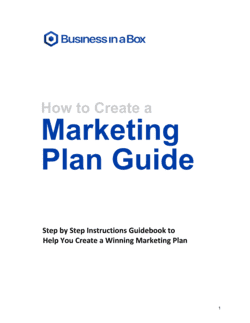
How to Develop a Marketing Plan

Free to read β€’ Save or share with one click

FreeHow to Develop a Marketing Plan Template

At a glance

What it is
A Marketing Plan is a structured document that defines your target market, competitive positioning, marketing objectives, channel strategy, budget allocation, and KPIs for a defined period β€” typically 12 months. This free Word download gives you a step-by-step framework you can edit online and export as PDF to share with leadership, investors, or your marketing team.
When you need it
Use it when launching a new product or service, entering a new market, setting annual marketing budgets, or aligning your team around a unified go-to-market strategy. It is also commonly required by lenders and investors as part of a broader business plan submission.
What's inside
Executive summary, situational analysis, target audience profiles, marketing objectives and KPIs, channel and campaign strategy, content and messaging framework, budget breakdown, and a measurement and reporting plan.

What is a Marketing Plan?

A Marketing Plan is a structured operational document that defines a business's target audience, marketing objectives, channel strategy, budget allocation, and KPIs for a defined period β€” typically a fiscal year. It translates broad business goals into specific, measurable marketing activities and gives every team member a shared framework for deciding where to spend, what to say, and how to measure results. Unlike a marketing strategy, which sets long-term directional positioning, a marketing plan is time-bound and action-oriented: it names owners, sets deadlines, and ties every channel decision to a concrete outcome.

Why You Need This Document

Without a written marketing plan, budget decisions default to habit β€” last year's channel mix gets renewed by inertia rather than performance data, and new initiatives compete for funding based on whoever argues loudest in a meeting. The cost is concrete: teams spread thin across too many channels generate insufficient volume to learn from any of them, campaigns launch without a clear success metric and get cancelled before generating usable data, and leadership has no basis to evaluate whether marketing spend is contributing to revenue. A well-structured marketing plan forces alignment on objectives before a dollar is spent, creates accountability through named KPI owners, and gives you a documented baseline to measure growth against at every monthly review.

Which variant fits your situation?

If your situation is…Use this template
Planning marketing activities for a full 12-month fiscal yearAnnual Marketing Plan
Launching a single product or service to marketProduct Launch Plan
Running a single campaign or promotion with a defined end dateMarketing Campaign Plan
Focusing specifically on digital channels and online advertisingDigital Marketing Plan
Planning content production across blog, video, and social channelsContent Marketing Plan
Tracking marketing spend and ROI across channelsMarketing Budget Template
Presenting a high-level strategy to a board or investor without operational detailMarketing Strategy Presentation

Common mistakes to avoid

❌ Starting with tactics before defining objectives

Why it matters: Choosing channels and campaigns before setting measurable objectives means you have no basis for evaluating whether any activity is working or worth the spend.

Fix: Complete the objectives and KPI section before touching the channel or budget sections. Every tactic should trace back to a named objective.

❌ Setting objectives with no baselines

Why it matters: A target of '500 leads per month' is meaningless without knowing the current volume. Without a baseline, you cannot measure growth or justify budget requests.

Fix: Pull three to six months of historical data for each KPI before writing objectives. If no data exists, run a 30-day measurement sprint to establish one.

❌ Spreading budget evenly across too many channels

Why it matters: Allocating 8% of budget to each of ten channels generates insufficient volume to optimize any single channel β€” you end up with ten inconclusive experiments and no learnable data.

Fix: Concentrate 70% of budget in two to three primary channels in the first half of the year, then test secondary channels with the remaining 30%.

❌ No named owner for each objective or KPI

Why it matters: Objectives owned by 'the team' are effectively owned by no one. When a KPI is missed, accountability diffuses and corrective action stalls.

Fix: Assign a specific named individual β€” not a role or department β€” as the accountable owner for each objective, with a reporting date in the calendar.

❌ Treating the plan as a static document after approval

Why it matters: A marketing plan approved in January and never reviewed is outdated by March. Channel costs shift, competitor moves happen, and seasonal demand changes β€” a static plan leads to wasted spend.

Fix: Schedule a formal monthly review with a standing agenda item to compare actuals against plan and document any reallocation decisions made.

❌ Skipping the competitive analysis section

Why it matters: Without knowing what competitors are doing in your target channels, you risk bidding against them on the same keywords, posting at the same times, or cloning messaging that no longer differentiates.

Fix: Dedicate two to four hours to structured competitor research before finalizing channel and messaging choices. Update it at every quarterly review.

The 9 key sections, explained

Executive Summary

Situational Analysis (SWOT)

Target Audience and Buyer Personas

Marketing Objectives and KPIs

Competitive Analysis

Channel and Campaign Strategy

Content and Messaging Framework

Budget Allocation

Measurement and Reporting Plan

How to fill it out

  1. 1

    Complete the situational analysis before anything else

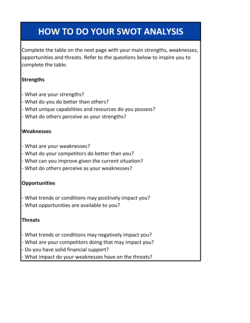
    Run a SWOT using data β€” customer interviews, web analytics, competitor ad spend tools, and market research reports. Each item should be specific enough to inform a budget or channel decision.

    πŸ’‘ Limit each SWOT quadrant to three to five items. More than five per quadrant dilutes focus and makes prioritization harder.

  2. 2

    Define target audiences with behavioral detail

    Build two to three buyer personas based on real customer data β€” CRM records, sales call notes, and support tickets β€” not assumptions. Include goals, objections, preferred channels, and average deal size.

    πŸ’‘ Validate personas with five to ten customer interviews before finalizing. One real conversation surfaces objections that no amount of desk research will find.

  3. 3

    Set SMART marketing objectives

    Write two to five objectives, each with a specific numeric target, a baseline from the prior period, a deadline, and a named owner. Objectives without baselines are unmeasurable.

    πŸ’‘ Cap yourself at five objectives. More than five dilutes team focus and makes every objective feel optional.

  4. 4

    Map the competitive landscape

    Identify three to five direct competitors. For each, document their primary channel, estimated spend level, key message, and one exploitable weakness. Use tools like SimilarWeb, SEMrush, or Meta Ad Library for channel intelligence.

    πŸ’‘ Screenshot competitor ad creative and landing pages at the time of research β€” campaigns change, and you will want a baseline to compare against six months later.

  5. 5

    Select and prioritize your channel mix

    Choose two to three primary channels based on where your target personas actually spend time and where your CAC data (or industry benchmarks) suggest the highest efficiency. Assign a budget range and a quarterly campaign plan to each.

    πŸ’‘ If you have no historical CAC data, run a 30-day paid test on two channels with equal small budgets before committing the full annual allocation.

  6. 6

    Build the budget from objectives down

    Start with each objective's target outcome (e.g., 200 new customers), divide by expected conversion rates at each funnel stage to calculate required impressions and leads, then cost each channel to hit that volume.

    πŸ’‘ Always reserve 10% of the budget as a contingency line. Mid-year opportunities β€” a competitor exiting a channel, a viral content moment β€” reward marketers who have uncommitted funds.

  7. 7

    Define the reporting cadence and decision triggers

    Specify who reviews which metrics, at what cadence (weekly, monthly, quarterly), in which tool, and what threshold triggers a budget reallocation decision.

    πŸ’‘ Set your reallocation trigger before the plan launches β€” deciding in the moment under pressure leads to emotional rather than data-driven choices.

  8. 8

    Write the executive summary last

    Pull the key figures β€” total budget, primary objective, top two channels, and expected outcomes β€” into a one-page summary after all other sections are complete.

    πŸ’‘ If the executive summary cannot be written in one page, the plan has too many objectives. Trim until the summary is crisp.

Frequently asked questions

What is a marketing plan?

A marketing plan is a structured document that defines a business's target audience, marketing objectives, channel strategy, budget allocation, and KPIs for a defined period β€” typically 12 months. It translates business goals into specific marketing activities and gives teams a shared framework for executing, measuring, and adjusting their efforts. It differs from a marketing strategy in that it is operational and time-bound rather than purely directional.

What should a marketing plan include?

A complete marketing plan covers eight core sections: executive summary, situational analysis (SWOT), target audience and buyer personas, marketing objectives with KPIs, competitive analysis, channel and campaign strategy, budget allocation, and a measurement and reporting plan. Plans for investor or lender audiences may also include market sizing and revenue attribution projections.

How long should a marketing plan be?

For most small to mid-size businesses, 10 to 20 pages is the practical range β€” long enough to be actionable, short enough to be read and followed. A one-page marketing plan works for early-stage ideation or internal alignment but lacks the channel and budget detail needed to guide execution. Enterprise plans for large product portfolios can run longer but should be modular so individual teams can work from their relevant sections.

How is a marketing plan different from a business plan?

A business plan covers the full organizational strategy β€” market opportunity, competitive landscape, operations, management team, and financial projections. A marketing plan is one component of a business plan, focused specifically on how the business will attract and acquire customers. A business plan answers whether the business is viable; a marketing plan answers how it will grow.

How often should a marketing plan be updated?

A full review at the start of each fiscal year is standard, with monthly check-ins to compare actuals against plan and quarterly reviews to formally adjust channel mix and budget. A plan that hasn't been touched in six months is likely driving decisions based on stale assumptions about channel costs, competitor activity, and audience behavior.

What is a realistic marketing budget for a small business?

The US Small Business Administration recommends allocating 7–8% of gross revenue to marketing for businesses with revenue under $5M. B2B companies typically spend 5–10% of revenue; B2C companies often spend 10–20%. Early-stage businesses building brand awareness from scratch may need to invest above these benchmarks in the first one to two years to establish channel presence.

Do I need a marketing consultant to write a marketing plan?

For most small businesses and startups, a structured template handles the framework, and the primary investment is time β€” typically 20 to 40 hours to complete thoroughly. Hire a marketing consultant when entering an unfamiliar market, when the budget exceeds $250K and channel selection requires specialist expertise, or when internal team capacity is fully committed to execution. A consultant review of a self-completed plan ($500–$2,000) often delivers more value than full outsourcing.

What KPIs should a marketing plan include?

KPIs should be tied directly to each stated objective. Common marketing KPIs include cost per lead (CPL), marketing-qualified leads (MQLs), customer acquisition cost (CAC), conversion rate by funnel stage, return on ad spend (ROAS), email open and click-through rates, organic traffic growth, and share of voice. Choose three to five KPIs per objective β€” tracking too many dilutes focus and makes reporting unwieldy.

Can a marketing plan be used for a single campaign rather than a full year?

Yes β€” a campaign-level marketing plan covers the same core elements (objective, audience, channel, budget, KPIs) but is scoped to a single initiative with a defined start and end date. It is less comprehensive than an annual plan but follows the same structural logic. For ongoing businesses, campaign plans should sit within and reference the broader annual marketing plan rather than replace it.

How this compares to alternatives

vs Marketing Strategy Template

A marketing strategy defines the long-term positioning, value proposition, and competitive differentiation that guides all marketing decisions. A marketing plan is the operational document that translates strategy into specific channels, campaigns, budgets, and KPIs for a defined period. Strategy answers why and where; a plan answers what, when, and how much.

vs Business Plan

A business plan covers the full organizational strategy including operations, team, and financial projections across all functions. A marketing plan is a standalone deliverable focused solely on customer acquisition and brand growth. Investors expect to see a marketing plan embedded within or attached to a business plan, not substituting for it.

vs Product Launch Plan

A product launch plan is scoped to a single product release β€” covering pre-launch, launch day, and post-launch activities for a finite window. A marketing plan covers all products and channels across an entire fiscal year. Use a launch plan for a specific release and a marketing plan for ongoing annual planning.

vs Marketing Budget Template

A marketing budget template is a financial planning tool that tracks spend by channel and activity. A marketing plan includes the budget as one section but also covers objectives, audience, strategy, and measurement. The budget template is a line-item record; the marketing plan is the strategic document that justifies every line in it.

Industry-specific considerations

SaaS / Technology

MQL-to-SQL conversion rates, product-led growth loops, free trial activation sequences, and channel attribution across long B2B sales cycles.

Retail / E-commerce

Seasonal campaign calendars, ROAS targets by paid channel, email list segmentation, and repeat-purchase rate as a primary retention KPI.

Professional Services

Referral and network-driven acquisition, thought-leadership content as primary awareness channel, and long sales cycles requiring multi-touch nurture sequences.

Food & Beverage / Restaurant

Local SEO, Google Business Profile optimization, social proof and review management, and event-based promotions tied to seasonal demand peaks.

Healthcare / Wellness

Compliance constraints on claims and testimonials, patient education content, local and organic search as primary acquisition channels, and HIPAA-aware email marketing.

Nonprofit / Education

Donor acquisition and retention alongside program awareness, grant reporting requirements that tie marketing spend to measurable community outcomes, and seasonal giving campaign planning.

Template vs pro β€” what fits your needs?

PathBest forCostTime
Use the templateSmall businesses, startups, and marketing managers building an annual plan for internal use or an SBA loan applicationFree20–40 hours over 1–3 weeks
Template + professional reviewBusinesses with marketing budgets above $100K, entering a new market, or presenting to investors or a board$500–$2,000 for a marketing consultant review session2–4 weeks
Custom draftedEnterprise marketing teams, agency client deliverables, or multi-market launches requiring specialist channel expertise$3,000–$15,000 for a full-service agency or fractional CMO engagement4–8 weeks

Glossary

Situational Analysis
An assessment of internal strengths and weaknesses and external opportunities and threats β€” typically conducted as a SWOT analysis β€” that establishes the strategic context for the marketing plan.
Target Audience
The specific group of people or businesses most likely to buy your product or service, defined by demographics, psychographics, or firmographic characteristics.
Buyer Persona
A semi-fictional profile representing a key segment of your target audience, including their goals, pain points, preferred channels, and decision-making process.
Marketing Objective
A specific, measurable outcome the marketing plan is designed to achieve β€” such as generating 500 qualified leads per month or increasing brand awareness by 20% among a defined segment.
KPI (Key Performance Indicator)
A quantitative metric used to track progress toward a marketing objective β€” for example, cost per lead, conversion rate, or customer acquisition cost.
Channel Strategy
The selection and prioritization of marketing channels β€” paid search, email, social, content, events, or outbound β€” through which the business will reach its target audience.
Marketing Mix (4 Ps)
The four controllable variables of a marketing strategy: Product, Price, Place, and Promotion β€” used to position an offering relative to competitors.
CAC (Customer Acquisition Cost)
Total marketing and sales spend divided by the number of new customers acquired in the same period β€” a primary efficiency metric for any marketing plan.
Conversion Rate
The percentage of people who complete a desired action β€” such as signing up, requesting a demo, or making a purchase β€” out of the total who were exposed to a campaign.
Marketing Funnel
A model describing the stages a prospect moves through from initial awareness to purchase and retention β€” typically: Awareness, Consideration, Decision, and Loyalty.
Share of Voice
Your brand's portion of total advertising or content activity in a given market or channel relative to competitors β€” a proxy for brand presence and competitive intensity.

Part of your Business Operating System

This document is one of 3,000+ business & legal templates included in Business in a Box.

  • Fill-in-the-blanks β€” ready in minutes
  • Compatible with all office suites
  • Export to PDF and share electronically

Create your document in 3 simple steps.

From template to signed document β€” all inside one Business Operating System.
1
Download or open template

Access over 3,000+ business and legal templates for any business task, project or initiative.

2
Edit and fill in the blanks with AI

Customize your ready-made business document template and save it in the cloud.

3
Save, Share, Send, Sign

Share your files and folders with your team. Create a space of seamless collaboration.

Save time, save money, and create top-quality documents.

β˜…β˜…β˜…β˜…β˜…

"Fantastic value! I'm not sure how I'd do without it. It's worth its weight in gold and paid back for itself many times."

Managing Director Β· Mall Farm
Robert Whalley
Managing Director, Mall Farm Proprietary Limited
β˜…β˜…β˜…β˜…β˜…

"I have been using Business in a Box for years. It has been the most useful source of templates I have encountered. I recommend it to anyone."

Business Owner Β· 4+ years
Dr Michael John Freestone
Business Owner
β˜…β˜…β˜…β˜…β˜…

"It has been a life saver so many times I have lost count. Business in a Box has saved me so much time and as you know, time is money."

Owner Β· Upstate Web
David G. Moore Jr.
Owner, Upstate Web

Run your business with a system β€” not scattered tools

Stop downloading documents. Start operating with clarity. Business in a Box gives you the Business Operating System used by over 250,000 companies worldwide to structure, run, and grow their business.

Free Forever PlanΒ Β·Β No credit card required