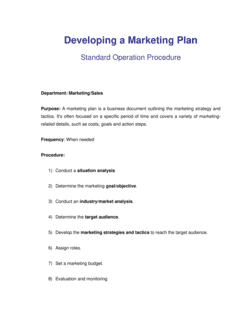
How to Create a Marketing Plan Guidebook

Free to read β€’ Save or share with one click

FreeHow to Create a Marketing Plan Guidebook Template

At a glance

What it is
A Marketing Plan Guidebook is a structured reference document that walks a business owner, marketer, or team through every step required to build a complete, actionable marketing plan β€” from defining goals and target personas to selecting channels, setting budgets, and measuring results. This free Word download gives you a ready-to-edit framework you can adapt for any business size or industry and export as PDF to share with leadership, clients, or agency partners.
When you need it
Use it when launching a new product or service, entering a new market, onboarding a marketing hire, briefing an agency, or building your first formal marketing strategy from scratch. It is also useful for annual planning cycles when you need to align leadership on priorities and budget.
What's inside
The guidebook covers situation analysis, target audience definition, SMART goal setting, positioning and messaging, channel strategy, content and campaign planning, budget allocation, KPI tracking, and a review-and- optimization process β€” giving teams a repeatable process for every planning cycle.

What is a How To Create A Marketing Plan Guidebook?

A How To Create A Marketing Plan Guidebook is a step-by-step operational document that walks a business owner or marketing professional through the complete process of building a formal marketing plan β€” from running a situation analysis and defining target personas to selecting channels, allocating budget, setting KPIs, and establishing a review cadence. Unlike a blank marketing plan template, which records decisions already made, this guidebook explains the reasoning behind each section and provides frameworks, prompts, and sample language that help users make those decisions for the first time. It functions as both a learning tool and a structured working document, resulting in a finished, actionable marketing plan by the time the final section is complete.

Why You Need This Document

Without a structured planning process, marketing spending defaults to habit β€” repeating last year's channel mix regardless of whether it performed, chasing trends without checking whether the target audience is there, and setting goals that feel ambitious without any math to support them. The cost is concrete: campaigns that miss their revenue contribution targets, budgets reallocated mid-year because no one defined success criteria upfront, and leadership decisions made without a shared understanding of who the business is trying to reach or why. This guidebook closes those gaps by forcing the key decisions β€” positioning, audience, channel fit, budget, and measurement β€” into a single documented process before any spending begins, giving every team member and stakeholder a single source of truth to execute against and evaluate.

Which variant fits your situation?

If your situation is…Use this template
Full annual marketing plan for a single brand or business unitMarketing Plan
Plan focused on a specific product or service launchProduct Launch Plan
Digital-only strategy covering SEO, paid, email, and socialDigital Marketing Plan
90-day or quarterly action plan tied to campaign sprintsMarketing Action Plan
Plan built around content creation and editorial calendarContent Marketing Plan
One-page summary of strategy for executive or investor audiencesOne-Page Marketing Plan
Plan specifically for a new business entering its first marketGo-to-Market Strategy

Common mistakes to avoid

❌ Skipping the situation analysis and jumping to tactics

Why it matters: Without understanding the competitive landscape and internal constraints, channel and budget decisions are based on preference rather than evidence β€” wasting spend on activities that don't fit the business context.

Fix: Complete the SWOT and competitive review before opening the goals or channel sections. The strategy emerges from the situation; the situation does not emerge from the strategy.

❌ Setting goals with no baseline measurement

Why it matters: A target of '50% more leads' means nothing without knowing the current lead volume. You cannot calculate whether the target is realistic, and you cannot report progress against it accurately.

Fix: Pull 90 days of historical data from your CRM and analytics tools before finalizing any numeric goal. If no historical data exists, set a 30-day measurement sprint as the first milestone.

❌ Selecting too many channels for the available budget

Why it matters: Spreading a $5,000 monthly marketing budget across six channels produces statistically meaningless sample sizes on each β€” making optimization impossible and results unreliable.

Fix: Calculate the minimum budget required to reach your target audience on each channel, then cut until every remaining channel is funded adequately. Two focused channels beat six underfunded ones.

❌ Building a plan with no assigned owners

Why it matters: A marketing plan where tasks are assigned to 'the team' or 'marketing' rather than a named individual consistently fails to execute on schedule β€” no one acts because everyone assumes someone else will.

Fix: Assign a single named owner to every campaign, deliverable, and KPI review. Shared ownership produces the same result as no ownership.

❌ Treating the plan as a static annual document

Why it matters: A marketing plan written in January and not reviewed until December will be funding channels that stopped performing in March β€” wasting months of budget on a strategy the market has already rejected.

Fix: Build a formal monthly review cadence into the plan itself, with defined triggers β€” such as a 20% drop in conversion rate β€” that prompt immediate strategy adjustments.

❌ Confusing activity metrics with outcome metrics

Why it matters: Reporting 'we published 48 blog posts and sent 24 email campaigns' measures output, not impact. Activity metrics can look strong while pipeline and revenue targets are missed.

Fix: Define at least one revenue-linked KPI β€” pipeline generated, CAC, or ROMI β€” for every major channel. Use activity metrics only as diagnostic inputs when an outcome metric underperforms.

The 9 key sections, explained

Situation Analysis

Target Audience and Personas

Marketing Goals and SMART Objectives

Positioning and Messaging Framework

Channel Strategy and Mix

Content and Campaign Plan

Budget Allocation

KPIs and Measurement Framework

Review and Optimization Process

How to fill it out

  1. 1

    Complete the situation analysis before anything else

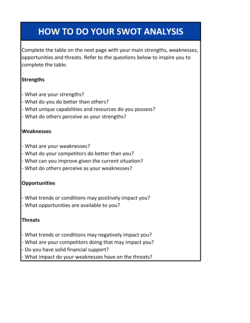
    Run a SWOT using real data β€” pull from CRM reports, web analytics, customer interviews, and competitive research. Document specific facts, not opinions.

    πŸ’‘ Limit each SWOT quadrant to five items maximum. More than five signals you haven't prioritized β€” and an unfocused situation analysis produces an unfocused strategy.

  2. 2

    Define one to three target personas with behavioral data

    Build each persona from actual customer data β€” job title, company size, primary buying trigger, and objection. Include the two or three channels where this person researches purchases.

    πŸ’‘ Interview three to five real customers before writing personas. A single 30-minute conversation surfaces more useful detail than a day of desk research.

  3. 3

    Set SMART goals tied to revenue or pipeline targets

    Work backward from your revenue goal to set a lead volume target, then set channel-level goals that add up to it. Every goal needs a current baseline, a target, and a due date.

    πŸ’‘ If you don't have baseline data, spend 30 days measuring before committing to targets β€” a fabricated baseline produces a meaningless goal.

  4. 4

    Write the positioning statement and core messages

    Draft a positioning statement for each primary persona. Then write three to five supporting messages with one proof point each β€” a customer quote, a data point, or a case study.

    πŸ’‘ Test positioning statements with three people outside your team. If they can't repeat the core idea back in their own words, rewrite it.

  5. 5

    Select channels based on persona behavior and goal type

    Map each channel to the funnel stage it serves β€” awareness, consideration, or conversion β€” and confirm the target persona is actually reachable there. Drop any channel you cannot staff or fund adequately.

    πŸ’‘ Two channels executed well outperform six channels executed poorly. Narrow the mix until you have enough budget to reach statistical significance on each.

  6. 6

    Build the campaign calendar and assign owners

    Map campaigns to the planning period month by month. Assign a single owner to each campaign β€” not a team β€” and define the launch date, key assets, and budget per campaign.

    πŸ’‘ Build in a two-week buffer before each major launch date. Campaigns that miss their window because assets weren't ready waste the setup work already done.

  7. 7

    Allocate budget from goals down, not from last year up

    Determine the spend required to hit each goal at your known acquisition costs, then sum to the total. Compare that to your available budget and cut the lowest-ROI activities first.

    πŸ’‘ Reserve 10–15% of the total budget as unallocated. High-performing opportunities appear mid-year and having no budget to act on them is a strategic disadvantage.

  8. 8

    Define KPIs and set up reporting before launch

    Configure your analytics tools, dashboards, and reporting cadence before any campaign goes live. Establish the three to five metrics that will determine success for the full plan period.

    πŸ’‘ Document the exact data source and calculation method for each KPI. Inconsistent definitions between team members make monthly reviews argumentative rather than productive.

Frequently asked questions

What is a marketing plan guidebook?

A marketing plan guidebook is a structured reference document that walks a business or marketing team through each step of building a complete marketing plan β€” from situation analysis and persona definition to channel selection, budget allocation, and KPI tracking. Unlike a blank marketing plan template, a guidebook explains what goes in each section and why, making it useful for first-time planners and teams onboarding new marketers.

What should a marketing plan include?

A complete marketing plan covers nine core areas: a situation analysis (SWOT), target audience personas, SMART goals, a positioning and messaging framework, a channel strategy, a content and campaign calendar, a budget allocation by channel, a KPI and measurement framework, and a review and optimization cadence. Plans that skip the situation analysis or KPI sections typically fail to connect spending to measurable business outcomes.

How long should a marketing plan be?

For most small to mid-sized businesses, a complete marketing plan runs 10–20 pages plus a budget spreadsheet and campaign calendar. A one-page plan works for early-stage ideation or internal alignment but is insufficient when presenting to leadership for budget approval or briefing an external agency. The right length is determined by the audience and the complexity of the channel mix, not a target page count.

How do I set realistic marketing goals?

Start from your revenue target and work backward. If you need $500,000 in new revenue and your average deal size is $5,000, you need 100 new customers. If your close rate is 25%, you need 400 qualified leads. That lead volume target becomes your primary marketing goal. Every channel goal should roll up to this number so that hitting all channel targets mathematically produces the revenue target.

How much budget should a marketing plan include?

B2B companies typically allocate 5–10% of target revenue to marketing; B2C companies commonly allocate 10–20%. Early-stage businesses often need to spend above these ranges to build initial awareness. The more useful starting point is to calculate the spend required to hit your lead volume goal at your known CAC, then compare that number to available budget β€” closing the gap by either increasing budget or adjusting goals.

What is the difference between a marketing plan and a marketing strategy?

A marketing strategy defines the positioning, target audience, and competitive differentiation β€” the why and what of your approach. A marketing plan translates that strategy into a time-bound schedule of channels, campaigns, budgets, and KPIs β€” the how, when, and how much. Strategy without a plan stays theoretical; a plan without a strategy produces well-executed activity in the wrong direction.

How often should a marketing plan be updated?

A full plan review should happen annually, aligned to the fiscal or calendar year. Monthly check-ins should compare actual KPIs to targets and flag channels that are underperforming by more than 20%. Quarterly reviews should update assumptions, reallocate budget away from underperforming channels, and adjust goals if the business context has changed materially. A plan untouched for six months is a historical document, not an operating tool.

Can a small business use this guidebook without a dedicated marketing team?

Yes. The guidebook is designed to be usable by a solo business owner or a generalist who handles marketing as part of a broader role. The key is to scope the plan to match available capacity β€” two well-executed channels and a realistic campaign calendar are more valuable than a comprehensive plan no one has time to implement. The guidebook's step-by-step structure makes it accessible without prior marketing planning experience.

What tools do I need to execute a marketing plan?

At minimum: an analytics platform to track web traffic and conversions (Google Analytics 4 is free), a CRM to track leads and pipeline, an email marketing tool, and a simple project management tool for the campaign calendar. Channel-specific tools β€” a social scheduling platform, a paid search account, a content management system β€” are added based on the channel mix you select. The plan should list every required tool, its monthly cost, and who owns the account.

How this compares to alternatives

vs Marketing Plan

A marketing plan template is the completed deliverable β€” a document that records your specific goals, channels, campaigns, and budget for a defined period. The marketing plan guidebook explains how to build that document step by step. Use the guidebook to learn the process and populate each section, then output the completed marketing plan as the final artifact.

vs Marketing Action Plan

A marketing action plan is a short-term, campaign-level execution document β€” typically covering 30 to 90 days β€” that lists specific tasks, owners, and deadlines. A marketing plan guidebook operates at a higher strategic level, covering annual goals, positioning, and budget allocation. The action plan implements what the guidebook helps you design.

vs Content Marketing Plan

A content marketing plan focuses specifically on the editorial strategy β€” topics, formats, publishing cadence, and distribution channels for content assets. The marketing plan guidebook is broader, treating content as one channel within a full marketing mix that also covers paid media, events, email, and partnerships.

vs Business Plan

A business plan addresses the full operating picture β€” market analysis, team, operations, and financial projections β€” with a marketing section as one component. The marketing plan guidebook goes substantially deeper on positioning, channel strategy, campaign planning, and KPI frameworks than any business plan marketing section typically does. Use the business plan for investors and lenders; use the marketing plan guidebook when the marketing strategy itself is the work product.

Industry-specific considerations

SaaS / Technology

Product-led growth loops, free trial conversion funnels, and MRR-based KPIs require channel strategies built around in-product engagement as well as traditional demand generation.

Retail / E-commerce

Seasonal campaign calendars, return on ad spend targets by channel, customer lifetime value segmentation, and loyalty program integration shape the planning cadence.

Professional Services

Referral programs, thought leadership content, and long B2B sales cycles mean most channel goals are measured in pipeline value and proposal volume rather than direct conversion.

Food & Beverage / Restaurant

Local SEO, Google Business Profile optimization, seasonal promotions, and event-based campaigns form the core channel mix, with foot traffic and reservation volume as primary KPIs.

Healthcare / Wellness

Compliance constraints on claims and testimonials, patient privacy requirements, and trust-building content strategies make positioning and messaging the most critical sections of the plan.

Creative and Marketing Agencies

Agencies use the guidebook both internally β€” for their own business development β€” and as a client deliverable, adapting it as a structured onboarding tool for new accounts.

Template vs pro β€” what fits your needs?

PathBest forCostTime
Use the templateSmall business owners, solopreneurs, and early-stage teams building their first formal marketing planFree1–2 weeks (10–20 hours)
Template + professional reviewGrowing businesses presenting to leadership for significant budget approval or briefing an agency$500–$1,500 for a marketing consultant review session2–3 weeks
Custom draftedEnterprise marketing teams, Series A+ companies, or businesses entering highly competitive new markets$3,000–$15,000 for a full marketing strategy engagement4–8 weeks

Glossary

Situation Analysis
An assessment of internal strengths and weaknesses alongside external opportunities and threats β€” typically structured as a SWOT β€” that establishes the strategic baseline for the plan.
Target Persona
A semi-fictional profile of an ideal customer built from demographic, behavioral, and psychographic data, used to focus messaging and channel decisions.
SMART Goals
Marketing objectives that are Specific, Measurable, Achievable, Relevant, and Time-bound β€” replacing vague intentions like 'grow awareness' with quantified targets.
Positioning Statement
A one- to two-sentence internal declaration of how a brand wants to be perceived by its target audience relative to competitors.
Channel Mix
The combination of marketing channels β€” paid search, organic social, email, events, PR, and others β€” selected to reach target personas at each stage of the buying journey.
Customer Acquisition Cost (CAC)
Total marketing and sales spend divided by the number of new customers acquired in the same period.
Key Performance Indicator (KPI)
A quantified metric used to evaluate whether a marketing activity is achieving its intended objective β€” for example, cost per lead, conversion rate, or return on ad spend.
Marketing Budget Allocation
The process of distributing total available marketing spend across channels, campaigns, and time periods based on expected return and strategic priority.
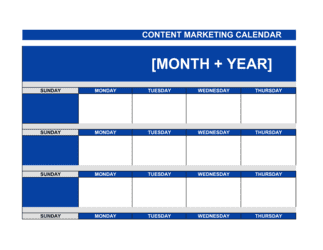
Content Calendar
A scheduled plan mapping which content assets β€” blog posts, emails, social posts, videos β€” will be published on which dates and through which channels.
Return on Marketing Investment (ROMI)
Revenue attributable to marketing activities minus marketing spend, divided by marketing spend β€” expressed as a percentage to evaluate overall program efficiency.

Part of your Business Operating System

This document is one of 3,000+ business & legal templates included in Business in a Box.

  • Fill-in-the-blanks β€” ready in minutes
  • Compatible with all office suites
  • Export to PDF and share electronically

Create your document in 3 simple steps.

From template to signed document β€” all inside one Business Operating System.
1
Download or open template

Access over 3,000+ business and legal templates for any business task, project or initiative.

2
Edit and fill in the blanks with AI

Customize your ready-made business document template and save it in the cloud.

3
Save, Share, Send, Sign

Share your files and folders with your team. Create a space of seamless collaboration.

Save time, save money, and create top-quality documents.

β˜…β˜…β˜…β˜…β˜…

"Fantastic value! I'm not sure how I'd do without it. It's worth its weight in gold and paid back for itself many times."

Managing Director Β· Mall Farm
Robert Whalley
Managing Director, Mall Farm Proprietary Limited
β˜…β˜…β˜…β˜…β˜…

"I have been using Business in a Box for years. It has been the most useful source of templates I have encountered. I recommend it to anyone."

Business Owner Β· 4+ years
Dr Michael John Freestone
Business Owner
β˜…β˜…β˜…β˜…β˜…

"It has been a life saver so many times I have lost count. Business in a Box has saved me so much time and as you know, time is money."

Owner Β· Upstate Web
David G. Moore Jr.
Owner, Upstate Web

Run your business with a system β€” not scattered tools

Stop downloading documents. Start operating with clarity. Business in a Box gives you the Business Operating System used by over 250,000 companies worldwide to structure, run, and grow their business.

Start freeΒ Β·Β No credit card required