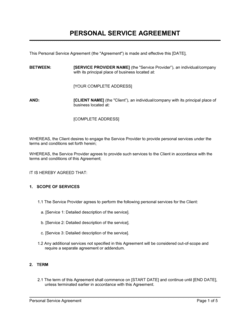
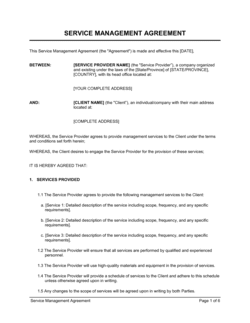
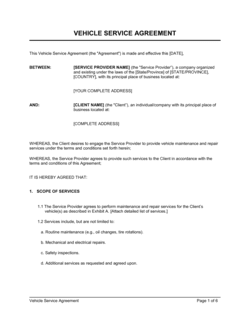
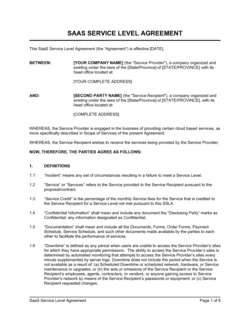
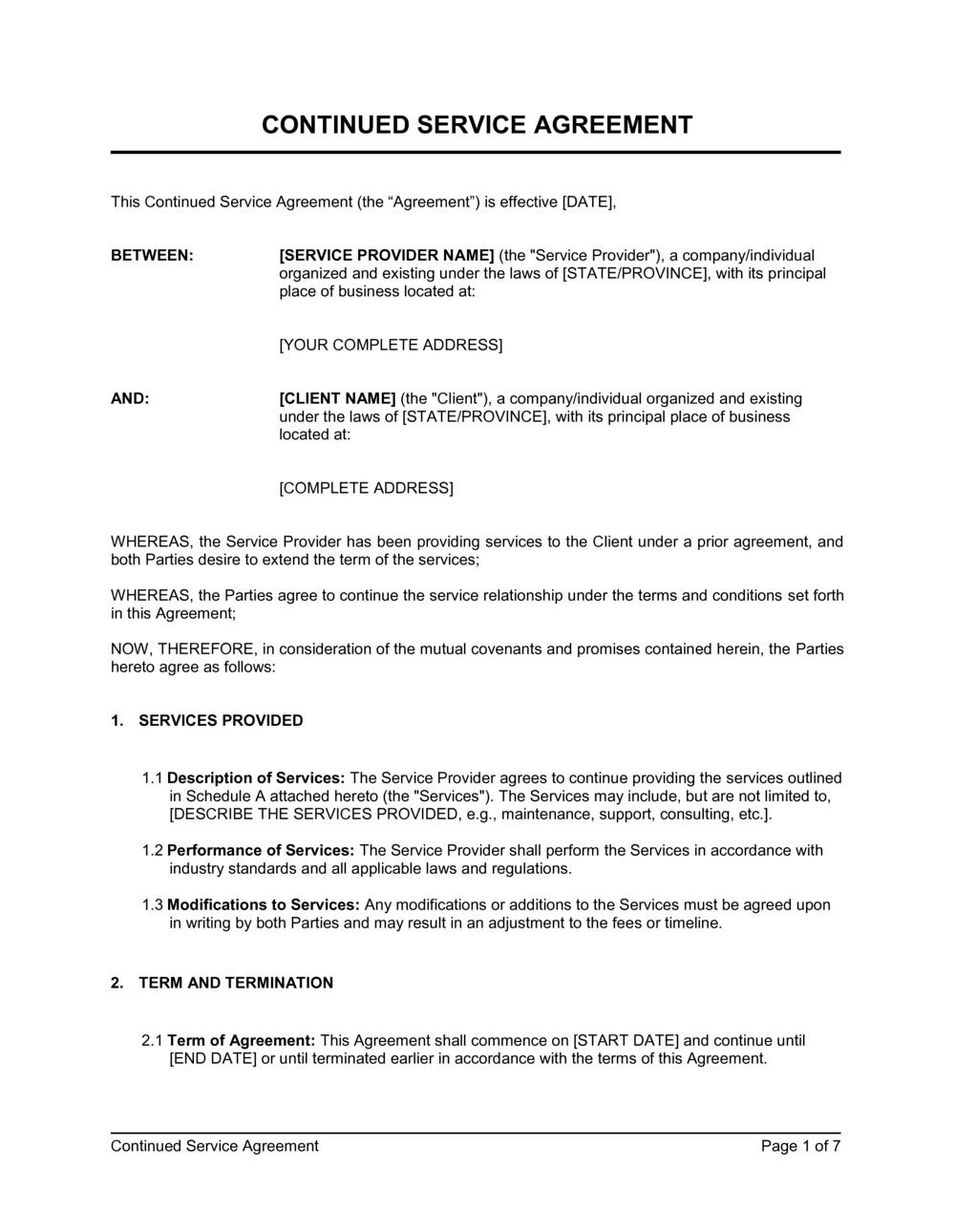
Continued Service Agreement Template

Free Word download • Edit online • Save & share with Drive • Export to PDF

7 pages25–35 min to fillDifficulty: ComplexSignature requiredLegal review recommended
Learn more ↓
FreeContinued Service Agreement Template

At a glance

What it is
A Continued Service Agreement is a legally binding contract between an employer and a key employee that obligates the employee to remain with the organization for a defined period in exchange for a specified retention benefit — typically a cash bonus, accelerated equity vesting, or enhanced severance. This free Word download gives you a structured, attorney-reviewed starting point you can edit online and export as PDF for execution before or during a business transition.
When you need it
Use it when a merger, acquisition, restructuring, or leadership transition creates risk that essential personnel will leave before the business is stabilized. It is also appropriate when a company needs to retain a critical employee through a fixed project milestone or fiscal year-end period.
What's inside
Parties and effective date, retention period and service obligations, retention bonus amount and payment schedule, conditions for earning and forfeiting the benefit, termination and clawback provisions, confidentiality obligations, non-solicitation restrictions, and governing law with dispute resolution.

What is a Continued Service Agreement?

A Continued Service Agreement is a legally binding contract between an employer and a key employee that obligates the employee to remain with the organization through a defined retention period in exchange for a specified financial benefit — typically a cash retention bonus, accelerated equity vesting, or enhanced severance. Unlike a standard employment contract, which governs the entire working relationship, a continued service agreement is a purpose-built instrument designed for a specific business transition: a merger or acquisition, a corporate restructuring, a CEO succession, or a critical project milestone. It creates enforceable obligations on both sides, specifying exactly what the employee must do to earn the benefit and exactly what the employer must pay if it terminates the arrangement early.

Why You Need This Document

Without a continued service agreement, key employees facing organizational uncertainty have every incentive to explore other opportunities before a transition closes — and no contractual reason to stay. The cost of that departure is rarely limited to a single person: when an engineering lead leaves mid-acquisition, integration timelines slip; when a client-facing manager exits, customer relationships follow. A signed, well-structured continued service agreement removes that ambiguity by putting real money on the table and attaching it to a specific date. It also protects the employer: clawback provisions recover paid bonuses from employees who leave shortly after receipt, confidentiality clauses keep transaction terms off the market, and non-solicitation restrictions prevent a single departure from triggering a talent cascade. This template gives you a legally sound framework that addresses all of those risks in a single document, with the flexibility to calibrate the bonus amount, retention period, and restrictive covenants to each employee's role and the stakes of the transition at hand.

Which variant fits your situation?

If your situation is…Use this template
Retaining a key employee through an M&A transaction closeContinued Service Agreement (M&A Retention)
Providing a one-time cash payment tied to a stay periodRetention Bonus Agreement
Retaining an executive with equity and enhanced severanceExecutive Employment Agreement
Engaging a departing employee to assist with knowledge transferConsulting Agreement
Binding a founder to the business post-acquisitionFounder Retention and Vesting Agreement
Covering an employee during a defined project with a fixed end dateFixed-Term Employment Contract
Documenting post-close employment terms after an asset purchaseEmployment Contract (At-Will)

Common mistakes to avoid

❌ Omitting a 'Good Reason' definition

Why it matters: Without it, the employer can materially demote or cut the employee's compensation and face no obligation to pay the retention benefit — the agreement retains the employee in name only.

Fix: Define Good Reason to include at least: a reduction in base compensation exceeding 10%, a material reduction in title or responsibilities, and a forced relocation exceeding 50 miles from the current work location.

❌ Anchoring the retention period to the transaction close date

Why it matters: M&A deals routinely slip by weeks or months. A retention period that starts on 'closing' can leave key employees unprotected for the pre-close period when departure risk is highest.

Fix: Set the retention period start date as the agreement's effective date — execution date — so the retention clock begins immediately regardless of when the deal closes.

❌ Including a release requirement without adequate review time

Why it matters: Employees over 40 are entitled to 21 days to consider a release under the Age Discrimination in Employment Act, plus a 7-day revocation window. A release executed in haste is voidable and can void the condition entirely.

Fix: Attach a form of release as an exhibit at the time of signing and confirm ADEA-compliant timing. Do not present the release for the first time at separation.

❌ Setting clawback terms without checking state wage law

Why it matters: Several states — including California, Illinois, and Massachusetts — restrict or prohibit employers from deducting clawback amounts from final wages without explicit prior written consent.

Fix: Include a standalone written consent to offset in the agreement body, and confirm it is permissible under the law of the employee's work state before including it.

❌ Using identical non-solicitation terms for all employees

Why it matters: Courts assess non-solicitation clauses against the employee's actual access to customers and colleagues. Applying executive-level restrictions to mid-level employees invites a reasonableness challenge that can void the clause.

Fix: Calibrate the scope and duration of non-solicitation to the employee's role — shorter periods and narrower customer definitions for mid-level employees, broader terms only for senior executives with direct customer relationships.

❌ Failing to coordinate the agreement with existing equity documents

Why it matters: A continued service agreement that promises accelerated vesting may conflict with the terms of the company's equity incentive plan or individual option agreements, creating an unenforceable or contradictory promise.

Fix: Review all outstanding equity award agreements before drafting the retention benefit. Where acceleration is intended, include a cross-reference to the relevant plan and confirm the plan administrator's authority to grant it.

The 9 key clauses, explained

Parties, Recitals, and Effective Date

In plain language: Identifies the employer entity and the employee by legal name, describes the business context requiring retention (e.g., a pending merger), and sets the date the agreement becomes binding.

Sample language
This Continued Service Agreement ('Agreement') is entered into as of [DATE] between [EMPLOYER LEGAL NAME], a [STATE] [ENTITY TYPE] ('Company'), and [EMPLOYEE FULL NAME] ('Employee'). WHEREAS, the Company is engaged in [DESCRIPTION OF TRANSACTION OR TRANSITION], and wishes to retain Employee's services during the [RETENTION PERIOD]...

Common mistake: Using the employer's trade name instead of its registered legal entity. Mismatched names create enforcement gaps if the employer entity is restructured or renamed during the retention period.

Retention Period and Service Obligations

In plain language: Defines the exact start and end date of the retention period, states what the employee is required to do — continue in their current role, perform assigned transition duties, and cooperate fully — and confirms that employment status is not otherwise changed.

Sample language
Employee agrees to remain continuously employed by the Company in the role of [JOB TITLE] from [START DATE] through [END DATE] ('Retention Period') and to perform all duties reasonably assigned during that period, including transition assistance as directed by [SUPERVISOR TITLE].

Common mistake: Defining service obligations so vaguely that the employer cannot demonstrate a breach. Specify that the employee must remain in their current role — not just 'remain employed' — to prevent arguments that a lateral transfer satisfies the condition.

Retention Benefit and Payment Schedule

In plain language: States the exact dollar amount of the retention bonus, when it is paid (lump sum at period end, or in tranches at defined milestones), the form of payment, and whether it is subject to standard payroll withholding.

Sample language
In consideration of Employee's compliance with this Agreement, Company shall pay Employee a retention bonus of $[AMOUNT] ('Retention Bonus'), less applicable tax withholdings, payable as follows: (a) 50% on [DATE 1]; (b) 50% on [DATE 2], provided Employee remains continuously employed through each payment date.

Common mistake: Failing to state that the bonus is subject to standard payroll withholding. Employees who expect a gross payment and receive a net amount often dispute the shortfall, creating unnecessary friction at the worst possible time.

Conditions to Earning the Benefit

In plain language: Lists the affirmative conditions the employee must meet to earn each tranche — continuous employment, satisfactory performance, compliance with company policies, and execution of any required release.

Sample language
Payment of each Retention Bonus tranche is conditioned on: (a) Employee's continuous employment through the applicable payment date; (b) Employee's performance of assigned duties to the Company's reasonable satisfaction; and (c) Employee's execution and non-revocation of a general release of claims in a form provided by the Company.

Common mistake: Including a general release requirement without giving the employee adequate time to review it. In the US, employees over 40 must receive 21 days to consider a release under the ADEA, plus a 7-day revocation period — a release executed under pressure is voidable.

Forfeiture and Clawback

In plain language: Specifies the circumstances under which the employee forfeits unpaid tranches (voluntary resignation, termination for cause) and whether previously paid amounts must be repaid, including the repayment timeline.

Sample language
If Employee voluntarily resigns or is terminated for Cause prior to any payment date, Employee shall forfeit the unpaid portion of the Retention Bonus. If Employee voluntarily resigns within [90] days following receipt of any tranche, Employee shall repay that tranche to the Company within [30] days of resignation.

Common mistake: Setting an unlimited clawback window with no defined repayment deadline. Courts in some jurisdictions will not enforce open-ended repayment obligations — specify both the triggering events and a concrete repayment deadline.

Termination Without Cause and Good Reason

In plain language: Addresses what happens if the employer terminates the employee without cause, or the employee resigns for good reason, before the retention period ends — typically triggering accelerated payment of the full bonus or remaining tranches.

Sample language
If Company terminates Employee's employment without Cause, or if Employee resigns for Good Reason (as defined in Schedule A), prior to the end of the Retention Period, Company shall pay Employee the full unpaid Retention Bonus within [30] days of separation, subject to Employee's execution of a general release.

Common mistake: Omitting a definition of 'Good Reason' entirely. Without it, any material change to the employee's role or compensation during the retention period goes unremedied, and the employee may resign without the employer being obligated to pay — undermining the entire purpose of the agreement.

Confidentiality

In plain language: Prohibits the employee from disclosing the company's confidential information — transaction terms, integration plans, financials, and customer data — during and after the retention period.

Sample language
Employee shall not, during or after the Retention Period, disclose or use any Confidential Information of the Company or its affiliates without prior written consent. 'Confidential Information' includes, without limitation, the terms of this Agreement, any Transaction, integration plans, financial data, and customer information.

Common mistake: Failing to include the terms of the agreement itself within the definition of confidential information. Employees who share their retention bonus amounts with colleagues create expectation problems and internal equity disputes at a sensitive time.

Non-Solicitation

In plain language: Restricts the employee from recruiting the company's employees or soliciting its customers for a defined period after the retention period ends or employment terminates.

Sample language
For [12] months following separation, Employee shall not (a) directly or indirectly solicit, recruit, or induce any employee of the Company to terminate employment; or (b) solicit any customer or client of the Company with whom Employee had material contact during the [24] months prior to separation.

Common mistake: Using a non-solicitation period that begins on the agreement's effective date rather than on the date of separation. This can make the restriction expire before the employee has even left, rendering it meaningless.

Governing Law, Dispute Resolution, and Entire Agreement

In plain language: Specifies which jurisdiction's law governs, how disputes are resolved (arbitration or court), and confirms the agreement supersedes all prior understandings about retention benefits.

Sample language
This Agreement is governed by the laws of [STATE/PROVINCE/COUNTRY]. Any dispute shall be resolved by binding arbitration administered by [AAA/JAMS] in [CITY], except claims for injunctive relief. This Agreement constitutes the entire agreement between the parties with respect to the subject matter hereof and supersedes all prior representations.

Common mistake: Choosing governing law based on the employer's headquarters without considering where the employee actually works. Several jurisdictions — notably California, New York, and Ontario — apply local employment law regardless of a contractual choice-of-law clause.

How to fill it out

  1. 1

    Identify the parties and describe the triggering context

    Enter the employer's full registered legal entity name, the employee's legal name and job title, and a brief recital describing the business event — merger, acquisition, restructuring, or critical project — that makes retention necessary.

    💡 Confirm the acquiring or surviving entity name before execution — deals often close under a different entity than the one that signs the agreement.

  2. 2

    Set the retention period with specific calendar dates

    Define the start and end dates of the retention period precisely. Avoid language like 'six months from closing' — closing dates slip, and ambiguity about when the period begins invites disputes about when it ends.

    💡 For M&A deals, anchor the start date to the agreement's effective date, not the transaction close, so the retention clock runs regardless of deal timing.

  3. 3

    State the retention bonus amount and payment schedule

    Enter the gross dollar amount, whether it is paid as a lump sum or in tranches, and the specific payment dates for each tranche. Confirm the payment is subject to standard payroll withholding.

    💡 Two-tranche structures — 50% at the midpoint and 50% at period end — outperform single lump-sum payments at retaining employees through the full period.

  4. 4

    Define 'Cause' and 'Good Reason' with specificity

    List the specific acts that constitute Cause for termination (e.g., fraud, gross negligence, material policy violation) and the specific employer actions that constitute Good Reason for resignation (e.g., salary reduction exceeding 10%, forced relocation over 50 miles).

    💡 The more precisely you define both terms, the less likely either party is to dispute whether a triggering event occurred — vague definitions get litigated.

  5. 5

    Draft the clawback terms with a concrete repayment timeline

    Specify which events trigger clawback (voluntary resignation, termination for cause), which tranches are subject to it, and the number of days the employee has to repay. Clarify whether the employer may offset the amount against final wages where permitted by law.

    💡 Check state wage deduction laws before including an offset clause — California and several other states prohibit employers from deducting clawback amounts from final paychecks without written consent.

  6. 6

    Attach a Schedule A defining key terms

    Move detailed definitions — Cause, Good Reason, Change of Control, Confidential Information — to a Schedule A rather than embedding them in the body. This keeps the main agreement readable and makes term updates easier.

    💡 Have the employee initial Schedule A separately at signing to confirm they reviewed the definitions, not just the bonus amount.

  7. 7

    Select governing law that matches the employee's work location

    Choose the jurisdiction where the employee primarily performs services, not the employer's home state. Confirm the choice-of-law selection is permissible under that jurisdiction's employment statutes.

    💡 For employees in California, remove or substantially limit the non-solicitation clause — California Business & Professions Code §16600 voids most post-employment restrictions regardless of governing law.

  8. 8

    Execute before the triggering event where possible

    Sign the agreement before the merger closes, restructuring is announced, or the critical project begins. Post-announcement execution weakens the consideration argument and may reduce the employee's willingness to negotiate.

    💡 Provide at least five business days for the employee to review the agreement before signing. Agreements signed under time pressure with no review period are more frequently challenged.

Frequently asked questions

What is a continued service agreement?

A continued service agreement is a binding contract between an employer and a key employee that obligates the employee to remain employed for a defined retention period in exchange for a specified financial benefit — typically a cash retention bonus, accelerated equity vesting, or enhanced severance. It is most commonly used during mergers, acquisitions, restructurings, or other transitions where the departure of key personnel would materially harm the business. The agreement creates enforceable obligations on both sides and defines the exact conditions under which the benefit is earned, forfeited, or clawed back.

When should a company use a continued service agreement?

A continued service agreement is appropriate whenever a business event creates a meaningful risk that a critical employee will leave before the organization is stabilized. The most common triggers are a signed letter of intent for an acquisition, announcement of a restructuring or layoff, a CEO transition, or a critical system implementation or product launch. The agreement should be executed as early as possible — ideally before the triggering event is announced publicly — to capture the employee's full cooperation before uncertainty sets in.

What is the difference between a continued service agreement and a retention bonus agreement?

The terms are often used interchangeably, but a continued service agreement is typically more comprehensive. A retention bonus agreement focuses narrowly on the cash payment and its conditions. A continued service agreement also covers confidentiality, non-solicitation, good reason resignation rights, clawback terms, and governing law — making it a more complete legal document suitable for senior employees with broader obligations. For junior roles where only a cash incentive is needed, a standalone retention bonus letter may suffice.

Is a continued service agreement legally enforceable?

A continued service agreement is generally enforceable when it is properly executed, contains clear consideration (the retention benefit in exchange for continued service), and is signed by both parties before the retention period begins. Provisions such as non-solicitation clauses and clawback obligations may face scrutiny depending on jurisdiction — particularly in California, where post-employment restrictions face significant limitations. Legal review is recommended before execution, especially for senior employees or cross-border arrangements.

What happens if the employee is terminated without cause before the retention period ends?

In a well-drafted continued service agreement, termination without cause before the retention period ends typically triggers accelerated payment of the full unpaid retention bonus, subject to the employee executing a general release of claims. This provision protects the employee from an employer that signs an agreement and then terminates to avoid payment. Without an explicit termination-without-cause clause, the employee's entitlement depends on applicable employment law, which may or may not provide equivalent protection.

Can the employer clawback the retention bonus after it is paid?

Yes, if the agreement includes a clawback clause, the employer may require repayment of previously paid tranches if the employee voluntarily resigns within a defined window after receipt. The clawback window is typically 60 to 90 days after each payment. The enforceability of clawback provisions varies by jurisdiction — some states restrict wage deductions and require separate written authorization for offsets against final pay. A clearly drafted clawback clause with a specific repayment deadline is more consistently enforced than an open-ended obligation.

How is a continued service agreement different from an employment contract?

An employment contract governs the entire working relationship — duties, compensation, benefits, IP assignment, non-compete, and termination. A continued service agreement is a narrower, purpose-built instrument that supplements an existing employment arrangement for a defined transition period. It does not replace the underlying employment contract; both documents operate in parallel, with the continued service agreement controlling on the specific subject of retention benefits and related conditions during the defined period.

Do continued service agreements need to be reviewed by a lawyer?

For straightforward domestic retention packages, a high-quality template is a solid foundation. Legal review is strongly recommended when the employee is an executive with equity and complex severance, when the agreement involves jurisdictions with significant employment law complexity (California, Ontario, the UK, France), when clawback provisions interact with state wage laws, or when the retention benefit includes accelerated equity vesting that must be coordinated with an existing incentive plan. A 1–2 hour attorney review typically costs $300–$800 and is well justified for senior hires.

What consideration is required for a continued service agreement to be enforceable?

The retention benefit itself — cash bonus, accelerated equity, or enhanced severance — constitutes the consideration from the employer. The employee's consideration is the promise to continue employment and perform assigned duties through the retention period. In common-law jurisdictions, the agreement must be signed before the retention period begins; agreements signed after the employee has already been performing the required service may be challenged for lack of fresh consideration, particularly if restrictive covenants are included.

How this compares to alternatives

vs Employment Contract

An employment contract governs the full working relationship — duties, compensation, benefits, IP assignment, and termination terms. A continued service agreement is a narrower instrument that supplements an existing employment arrangement for a defined transition period only. Both documents operate in parallel; the continued service agreement controls specifically on retention benefits and related obligations during the stated period.

vs Executive Employment Agreement

An executive employment agreement covers equity, change-of-control protections, and golden parachute severance as permanent employment terms. A continued service agreement is purpose-built for a specific retention window and expires when the period ends or the benefit is paid. For C-suite hires where retention is one element of a broader compensation restructuring, an executive agreement may be more appropriate.

vs Consulting Agreement

A consulting agreement engages an independent contractor for defined deliverables after the employment relationship has ended. A continued service agreement keeps the individual as an employee during the retention period, preserving employment protections, payroll tax treatment, and benefits eligibility. Converting a key employee to a contractor to save costs while expecting continued engagement is a misclassification risk.

vs Non-Disclosure Agreement

An NDA protects confidential information in isolation, without creating any service obligation or compensation structure. A continued service agreement includes confidentiality provisions as one component of a comprehensive retention framework that also covers payment, forfeiture, and service conditions. If retention is the goal, an NDA alone does not accomplish it.

Industry-specific considerations

Technology / SaaS

Engineering leads, product managers, and key architects are frequently retained post-acquisition to prevent knowledge loss and maintain roadmap continuity during integration.

Financial Services

Client-facing relationship managers and licensed advisors require retention agreements with non-solicitation provisions specifically covering client books that carry significant revenue value.

Healthcare

Physician practice acquisitions and hospital mergers rely on continued service agreements to retain credentialed clinical staff whose departure would trigger patient care disruption and regulatory compliance gaps.

Manufacturing

Plant managers, quality control leads, and skilled tradespeople with specialized equipment knowledge are critical to operational continuity during facility consolidations and ownership transfers.

Professional Services

Client relationship partners and billing-line managers carry portable business that must be explicitly addressed in non-solicitation provisions calibrated to actual client contact.

Retail / E-commerce

Merchandising directors, supply chain leads, and regional managers are retained during banner acquisitions to preserve vendor relationships and operational throughput during rebranding.

Jurisdictional notes

United States

Non-solicitation enforceability varies sharply by state — California Business & Professions Code §16600 voids most post-employment restrictions regardless of governing law. Employees over 40 must receive 21 days to review a release of claims under the ADEA plus a 7-day revocation period. State wage deduction laws in California, Illinois, and Massachusetts restrict clawback offsets against final pay without prior written consent. Federal income tax withholding applies to retention bonuses at the 22% supplemental wage rate.

Canada

Employment standards legislation in each province sets statutory minimums for notice and severance that cannot be contracted away. Clawback provisions that effectively reduce an employee below statutory termination entitlements may be void. Quebec-based employees require French-language agreements for provincially regulated employers under the Charter of the French Language. Non-solicitation clauses must be reasonable in scope and duration to be enforceable under common law.

United Kingdom

Retention bonuses paid upon completion of a defined period are treated as earnings subject to PAYE and National Insurance contributions. Post-termination restrictions — including non-solicitation — are enforceable only if they protect a legitimate business interest and are reasonable in scope, with courts applying a strict blue-pencil test. Garden leave arrangements are commonly used alongside continued service agreements in M&A contexts to preserve confidentiality obligations during the notice period.

European Union

The EU Transparent and Predictable Working Conditions Directive requires that any material change to employment terms be communicated in writing, meaning a continued service agreement that modifies compensation must comply with notification timelines. Several member states — France, Germany, and the Netherlands — require post-employment non-solicitation clauses to carry financial compensation to the employee. GDPR applies to any personal data processed in connection with the agreement, including retention benefit records.

Template vs lawyer — what fits your deal?

PathBest forCostTime
Use the templateMid-level employees being retained through a straightforward domestic acquisition or restructuringFree30–45 minutes
Template + legal reviewSenior employees, equity components, California or Ontario employees, or clawback provisions touching final wages$300–$8002–4 days
Custom draftedC-suite executives, cross-border retention packages, complex equity acceleration, or regulated industries such as financial services or healthcare$1,500–$5,000+1–3 weeks

Glossary

Retention Period
The defined length of time the employee must remain employed to earn the full retention benefit — typically 6 to 24 months.
Retention Bonus
A one-time or staged cash payment made to the employee contingent on completing the retention period and satisfying service conditions.
Clawback
A contractual right requiring the employee to repay all or a portion of the retention benefit if they resign or are terminated for cause before the retention period ends.
Good Reason
A defined set of employer actions — such as a material reduction in salary, a forced relocation, or a significant reduction in responsibilities — that allow the employee to resign and still receive the retention benefit.
Cause
Specific documented grounds — misconduct, fraud, gross negligence, or material breach of the agreement — that allow the employer to terminate without paying the retention benefit.
Double Trigger
A benefit structure requiring two events to occur before vesting accelerates — typically a change of control plus termination without cause or resignation for good reason.
Change of Control
A transaction — such as a merger, acquisition, or sale of substantially all assets — that transfers majority ownership or operational control of the company to a new party.
Accelerated Vesting
A provision that causes unvested equity awards to vest immediately upon the occurrence of a specified event, such as a change of control or termination without cause.
Non-Solicitation
A post-employment restriction preventing the departing employee from recruiting the company's employees or soliciting its customers for a defined period.
Integration Period
The time following a merger or acquisition during which operational systems, teams, and processes from two organizations are combined — a common trigger period for continued service agreements.

Part of your Business Operating System

This document is one of 3,000+ business & legal templates included in Business in a Box.

  • Fill-in-the-blanks — ready in minutes
  • 100% customizable Word document
  • Compatible with all office suites
  • Export to PDF and share electronically

Create your document in 3 simple steps.

From template to signed document — all inside one Business Operating System.
1
Download or open template

Access over 3,000+ business and legal templates for any business task, project or initiative.

2
Edit and fill in the blanks with AI

Customize your ready-made business document template and save it in the cloud.

3
Save, Share, Send, Sign

Share your files and folders with your team. Create a space of seamless collaboration.

Save time, save money, and create top-quality documents.

★★★★★

"Fantastic value! I'm not sure how I'd do without it. It's worth its weight in gold and paid back for itself many times."

Managing Director · Mall Farm
Robert Whalley
Managing Director, Mall Farm Proprietary Limited
★★★★★

"I have been using Business in a Box for years. It has been the most useful source of templates I have encountered. I recommend it to anyone."

Business Owner · 4+ years
Dr Michael John Freestone
Business Owner
★★★★★

"It has been a life saver so many times I have lost count. Business in a Box has saved me so much time and as you know, time is money."

Owner · Upstate Web
David G. Moore Jr.
Owner, Upstate Web

Run your business with a system — not scattered tools

Stop downloading documents. Start operating with clarity. Business in a Box gives you the Business Operating System used by over 250,000 companies worldwide to structure, run, and grow their business.

Free Forever Plan · No credit card required