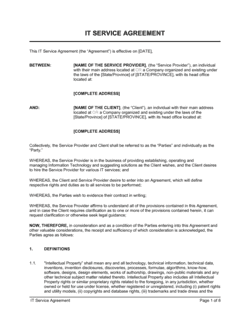
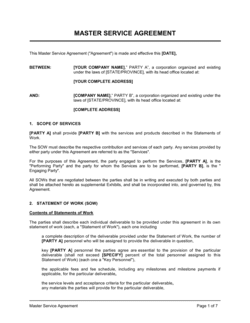
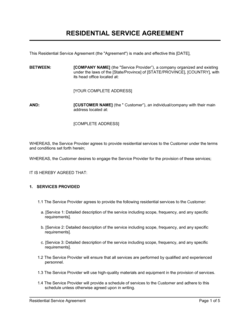
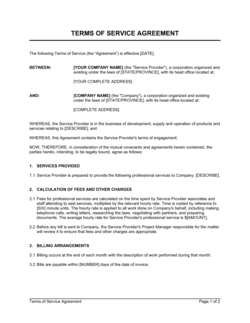
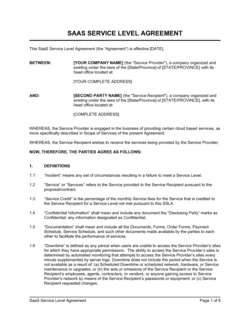
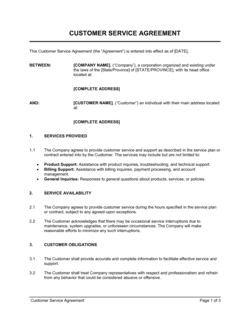
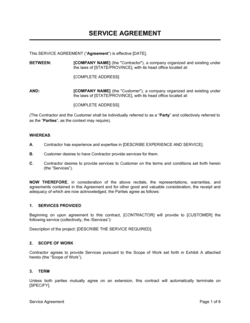
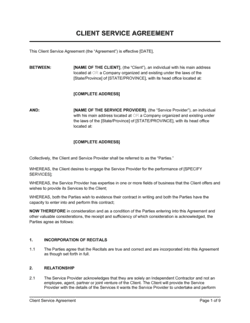
Legal Service Agreement Template

Free Word download • Edit online • Save & share with Drive • Export to PDF

5 pages25–30 min to fillDifficulty: ComplexSignature requiredLegal review recommended
Learn more ↓
FreeLegal Service Agreement Template

At a glance

What it is
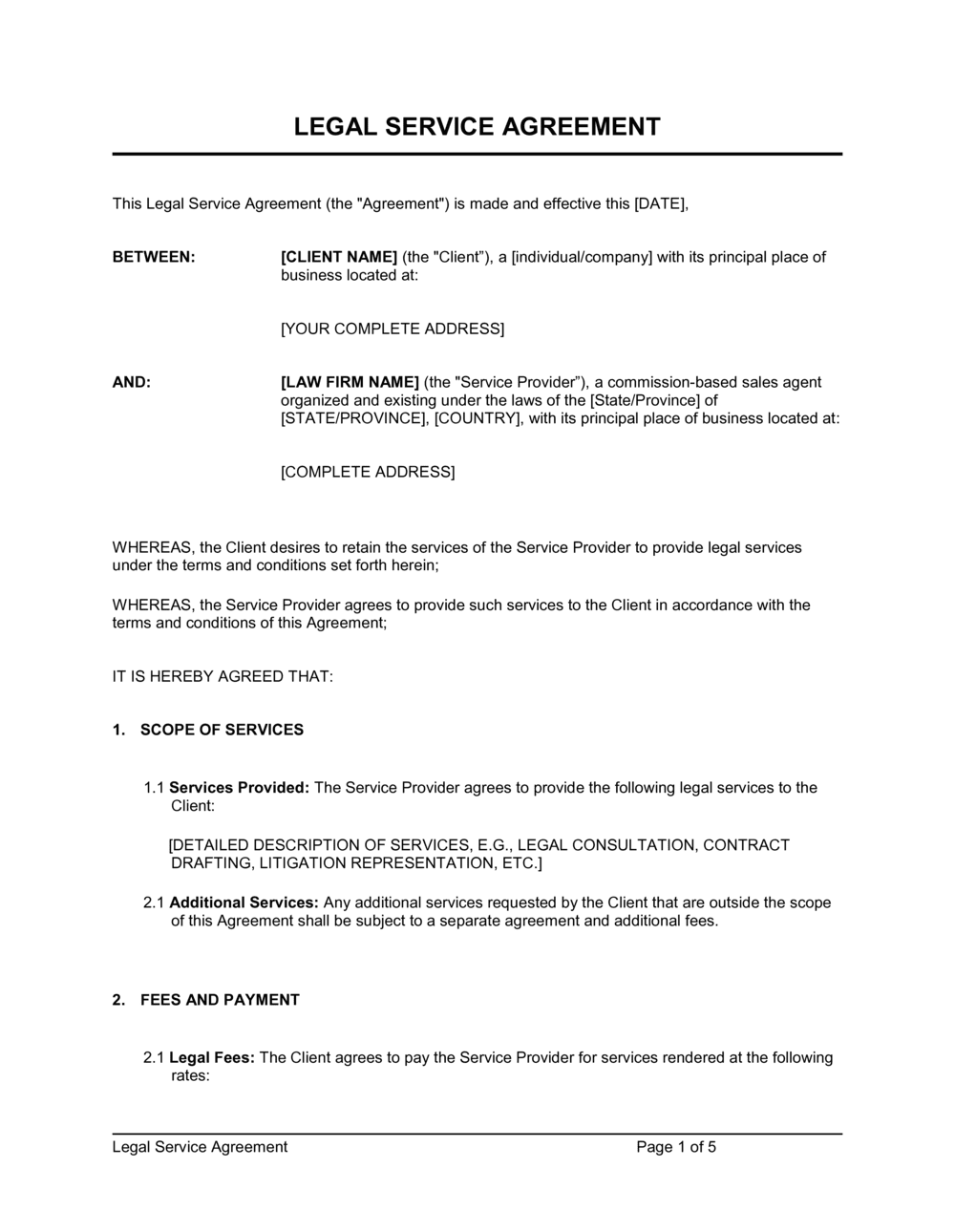
A Legal Service Agreement is a binding contract between a law firm or independent attorney and a client that defines the scope of legal representation, fee structure, retainer terms, billing practices, confidentiality obligations, and termination conditions. This free Word download gives you a professionally structured starting point you can edit online and export as PDF before any legal engagement begins.
When you need it
Use it before any attorney-client relationship formally begins — whether for a one-time transaction, ongoing counsel, litigation, or regulatory compliance work. It is also required in most jurisdictions before a lawyer may collect a retainer or deposit from a client.
What's inside
Parties and scope of representation, fee arrangement and billing cycle, retainer and trust account terms, client obligations, confidentiality and privilege, conflict-of-interest acknowledgment, limitation of liability, termination rights, and governing law.

What is a Legal Service Agreement?

A Legal Service Agreement is a binding contract between a licensed attorney or law firm and a client that governs every material dimension of the legal engagement: the precise scope of representation, fee structure and billing practices, retainer and trust account mechanics, client cooperation obligations, confidentiality and privilege protections, conflict-of-interest disclosures, limitation of liability, termination rights, and governing law. Unlike an informal engagement letter, a properly drafted legal service agreement creates enforceable obligations on both sides, satisfies bar-mandated written-fee-agreement requirements in most jurisdictions, and eliminates the ambiguity that courts and disciplinary bodies otherwise resolve using default professional conduct rules — which do not always favor the attorney.

Why You Need This Document

Operating a legal practice without a signed service agreement exposes the attorney to fee disputes with no documentary basis, malpractice claims on matters outside the intended scope, bar complaints over commingled funds, and an inability to withdraw from a non-cooperative client without risking disciplinary action. For clients, the absence of a written agreement leaves fee expectations undefined and provides no contractual assurance about how their confidential information will be handled. A clear, signed legal service agreement executed before any billable work begins protects both parties: it gives the attorney a documented basis to enforce payment, manage scope creep, and withdraw with proper notice, while giving the client transparent cost expectations, an explicit confidentiality commitment, and a defined process for resolving billing disputes. This template delivers that foundation in a format you can adapt to any matter type in under 30 minutes.

Which variant fits your situation?

If your situation is…Use this template
Engaging a lawyer for a single defined transaction or matterLegal Service Agreement (Fixed-Fee)
Retaining ongoing general counsel services billed monthlyLegal Retainer Agreement
Engaging a consultant or advisor who is not a licensed attorneyConsulting Agreement
Hiring outside counsel for active civil or commercial litigationLitigation Engagement Letter
Engaging legal services on a contingency fee basisContingency Fee Agreement
Commissioning legal work from a freelance or contract attorneyIndependent Contractor Agreement
Providing in-house legal services to an affiliated entityIntercompany Services Agreement

Common mistakes to avoid

❌ Unlimited or vague scope of representation

Why it matters: A scope that reads 'all legal matters' creates open-ended liability and makes it impossible to determine when the engagement ends. Clients may assert ongoing obligations years after the original matter closed.

Fix: Define the matter by name, transaction, or proceeding. Add a sentence expressly excluding categories of work not covered — litigation, tax, or IP — if relevant.

❌ Commingling retainer funds with the firm's operating account

Why it matters: Depositing client retainers into the firm's operating account rather than a dedicated trust account violates bar rules in virtually every common-law jurisdiction and is grounds for suspension or disbarment.

Fix: Confirm your trust account details are correct in the agreement and that your intake process routes all retainer payments there — not to the general account.

❌ Using a liability cap clause without checking local bar rules

Why it matters: Several US states, Canadian provinces, and UK regulatory bodies restrict or require specific disclosures for prospective liability limitations in legal service agreements. An unauthorized cap clause may be void and expose the firm to greater liability.

Fix: Review the applicable rules of professional conduct for your jurisdiction before including any limitation of liability language. Obtain client acknowledgment if a waiver is required.

❌ No client cooperation or communication obligations

Why it matters: Without a cooperation clause, an attorney has no contractual basis to withdraw when a client becomes unresponsive, withholds critical information, or stops paying invoices mid-matter.

Fix: Include a clause stating that failure to cooperate, pay invoices within the agreed period, or respond within a defined window constitutes grounds for withdrawal with adequate notice.

❌ Omitting a disengagement and file-return protocol

Why it matters: If the agreement is silent on file ownership and return, a departing client may claim the firm is holding documents hostage — triggering a bar complaint even if the attorney was owed unpaid fees.

Fix: Specify that the client owns their file, set a timeline for return or destruction after the matter closes, and address any lien the firm may assert for unpaid fees under applicable law.

❌ Signing the agreement after the first billable task is performed

Why it matters: Fee provisions and liability limitations in an agreement signed after work begins may be unenforceable as lacking fresh consideration. Courts have disallowed retroactive retainer clauses on this basis.

Fix: Make the signed agreement a condition of performing any compensable work. If urgency required acting before signing, document the interim arrangement and have the agreement executed at the first opportunity.

The 9 key clauses, explained

Parties and scope of representation

In plain language: Identifies the law firm or attorney and the client as legal entities, and defines precisely which legal matters the attorney is — and is not — engaged to handle.

Sample language
This Legal Service Agreement is entered into on [DATE] between [LAW FIRM NAME], a [STATE] [ENTITY TYPE] ('Firm'), and [CLIENT LEGAL NAME] ('Client'). The Firm agrees to provide legal services limited to [SPECIFIC MATTER / DESCRIPTION] ('Matter'). Services not expressly described herein are outside the scope of this engagement.

Common mistake: Describing the scope too broadly — e.g., 'all legal matters.' An unlimited scope exposes the attorney to liability for issues they never reviewed and prevents clean disengagement when the matter concludes.

Fee arrangement and billing rate

In plain language: States how the attorney charges — hourly, flat fee, or contingency — the rate or amount, how time is measured, and which expenses are billed separately.

Sample language
Client shall pay the Firm at the rate of $[RATE] per hour, billed in [6]-minute increments. The following expenses will be billed at cost: filing fees, courier charges, and third-party research services. A detailed billing statement will be issued [monthly / at matter close].

Common mistake: Omitting expense billing terms. Clients who receive surprise invoices for court filing fees or expert-witness costs dispute them as unauthorized — leading to unpaid bills and damaged relationships.

Retainer and trust account

In plain language: Establishes the initial retainer amount the client pays upfront, confirms it is held in trust, and specifies replenishment obligations when the balance falls below a threshold.

Sample language
Client shall pay an initial retainer of $[AMOUNT] to be deposited into the Firm's client trust account. The Firm will draw against the retainer as fees and expenses are earned. Client shall replenish the retainer to $[AMOUNT] within [10] days of receiving notice that the balance has fallen below $[THRESHOLD].

Common mistake: Treating the retainer as income before it is earned. Bar rules in most jurisdictions require retainer funds to remain in trust until fees are actually billed — commingling funds with operating accounts is an ethics violation.

Client obligations and cooperation

In plain language: Requires the client to provide accurate and complete information, respond to attorney requests promptly, and pay invoices on time — and warns that failure to cooperate may allow the attorney to withdraw.

Sample language
Client shall provide the Firm with all information and documents reasonably requested, respond to communications within [5] business days, and pay all invoices within [30] days of issuance. Client acknowledges that the Firm's ability to provide effective representation depends on Client's timely cooperation.

Common mistake: Omitting a cooperation clause entirely. Without it, the attorney has no contractual basis to withdraw when a client goes unresponsive, and bar rules may still require them to continue work.

Confidentiality and attorney-client privilege

In plain language: Confirms that all communications between the parties are subject to attorney-client privilege and that the attorney will not disclose client information except as required by law or the client's informed consent.

Sample language
All communications between the Firm and Client in connection with this engagement are subject to attorney-client privilege and shall be kept strictly confidential. The Firm shall not disclose any Confidential Information except (a) as required by applicable law, court order, or bar rules, or (b) with Client's prior written consent.

Common mistake: Failing to address privilege in the context of co-clients or shared representatives. When the client is a corporation and multiple officers are copied on communications, privilege can be inadvertently waived without a clear protocol.

Conflict of interest disclosure

In plain language: Requires the attorney to disclose any known conflicts before the engagement begins and sets out the consent procedure if a waivable conflict exists.

Sample language
The Firm has conducted a conflict check and, to the best of its knowledge, has no conflict of interest that would preclude this representation. Should a conflict arise during the engagement, the Firm will notify Client promptly and take steps required by applicable rules of professional conduct.

Common mistake: Running a conflict check only at intake and never again during a long-running matter. New clients, laterals, or related transactions can create mid-engagement conflicts that go undetected without periodic rechecks.

Limitation of liability

In plain language: Caps the attorney's maximum liability to the client for professional errors or omissions, typically at the amount of fees paid under the agreement, subject to applicable rules of professional conduct.

Sample language
To the fullest extent permitted by applicable law and rules of professional conduct, the Firm's total liability to Client arising out of or related to this Agreement shall not exceed the total fees paid by Client under this Agreement in the twelve (12) months preceding the claim.

Common mistake: Including a limitation of liability clause without checking whether the applicable state or provincial bar rules permit it. Several jurisdictions restrict or prohibit prospective liability caps in attorney-client agreements without specific disclosure and client consent.

Termination and disengagement

In plain language: Permits either party to terminate the engagement with written notice, states the attorney's obligation to protect the client's interests on withdrawal, and addresses the disposition of client files and unused retainer funds.

Sample language
Either party may terminate this Agreement upon [10] days' written notice. Upon termination, the Firm will promptly return all client documents and refund any unearned retainer balance. The Firm shall take reasonable steps to avoid prejudice to Client's interests, including cooperating with successor counsel.

Common mistake: No provision for file retention or return of client documents. Without clear language, disputes over document ownership and retrieval can delay successor counsel and expose the firm to bar complaints.

Governing law and dispute resolution

In plain language: Specifies which jurisdiction's law governs the agreement and how billing or malpractice disputes are resolved — typically through the applicable bar's fee arbitration program, mediation, or court.

Sample language
This Agreement is governed by the laws of [STATE / PROVINCE]. Any dispute regarding fees shall first be submitted to the fee arbitration program of the [STATE / PROVINCIAL] bar association before any court action is commenced. Claims for injunctive relief may be brought in any court of competent jurisdiction.

Common mistake: Choosing a governing law that differs from the jurisdiction where the attorney is licensed to practice. Cross-border governing law selections create ethics complications when the foreign jurisdiction's professional conduct rules conflict with the attorney's home bar obligations.

How to fill it out

  1. 1

    Identify both parties with their legal entity names

    Enter the law firm's full registered name and the client's full legal name — for a business client, use the entity name as it appears on incorporation documents, not a trade name or abbreviation.

    💡 Confirm the client's legal entity type and jurisdiction of incorporation at intake — this determines which bar rules and privacy laws apply to the engagement.

  2. 2

    Define the scope of representation precisely

    Describe the specific matter, transaction, or proceeding the attorney is engaged to handle. List any expressly excluded matters — for example, if engaged for contract drafting only, explicitly exclude litigation arising from that contract.

    💡 Narrow scope language protects the attorney from liability on matters they never reviewed. One sentence of exclusion language can prevent a malpractice claim.

  3. 3

    Set the fee arrangement and billing cadence

    Choose hourly, flat fee, or contingency. For hourly engagements, enter the rate for each billing timekeeper (partner, associate, paralegal), specify the billing increment (six minutes is standard), and state the invoice frequency.

    💡 List blended rates or tiered billing by timekeeper upfront — surprise rate differentials on invoices are the leading cause of client billing disputes.

  4. 4

    Establish the retainer amount and replenishment threshold

    Set an initial retainer sufficient to cover at least one to two months of anticipated fees. Define the replenishment threshold — typically 25–33% of the initial retainer — and the number of days the client has to top it up.

    💡 State explicitly that retainer funds are held in a client trust account and are not earned until billed. This is required by bar rules in most jurisdictions and builds client confidence.

  5. 5

    Include the conflict-of-interest disclosure

    Confirm that a conflict check was conducted and document any waivers signed if a waivable conflict was identified. If no conflicts exist, include the standard no-conflict representation.

    💡 Keep a dated record of every conflict check in the client file. If a dispute arises later, the documentation of your diligence is your first line of defense.

  6. 6

    Tailor the limitation of liability clause to your jurisdiction

    Review your state or provincial bar's rules on prospective liability limitations before including or customizing this clause. Some jurisdictions require specific disclosure language or prohibit caps below a minimum threshold.

    💡 If your jurisdiction permits it, set the liability cap at total fees paid in the preceding 12 months — this is the most commonly enforced formulation.

  7. 7

    Set notice periods and file-return obligations on termination

    Enter the number of days' written notice required to terminate (10 business days is typical), describe how client documents will be returned, and confirm the timeline for refunding any unearned retainer balance.

    💡 Specify a digital document return option — email or secure portal — alongside physical delivery. Clients increasingly expect electronic file access.

  8. 8

    Execute before any billable work begins

    Both parties must sign the agreement before the attorney performs any compensable work or accepts a retainer. Post-execution fee arrangements are harder to enforce and raise ethics questions in several jurisdictions.

    💡 Use a timestamped eSignature to document execution date and sequence — critical if the client later disputes when the engagement formally commenced.

Frequently asked questions

How this compares to alternatives

vs Consulting Agreement

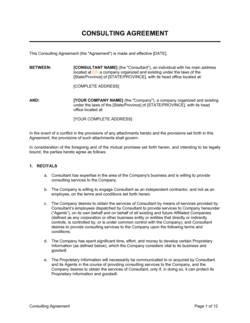
A consulting agreement governs the engagement of a non-attorney advisor for business, technical, or strategic services. It does not create attorney-client privilege, cannot include trust-account retainer provisions, and is not subject to bar rules on conflicts, fees, or client protection. Use a legal service agreement whenever the service provider is a licensed attorney providing legal advice.

vs Retainer Agreement

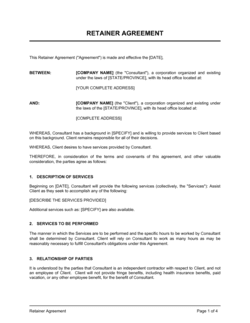
A retainer agreement is typically a shorter document focused specifically on establishing an ongoing monthly fee for general counsel availability. A legal service agreement is a more comprehensive contract covering a specific matter's full lifecycle — scope, billing, IP, confidentiality, liability, and termination. For ongoing general counsel retainers, the retainer agreement may be sufficient; for project or litigation work, the full service agreement is preferable.

vs Independent Contractor Agreement

An independent contractor agreement engages a self-employed individual for defined deliverables without an employment relationship. When used with a contract attorney or freelance lawyer, it governs the working relationship between the firm and the attorney — not between the attorney and the end client. The legal service agreement, by contrast, governs the attorney-client relationship directly and must comply with bar rules regardless of the underlying employment structure.

vs Non-Disclosure Agreement

An NDA protects confidential information exchanged between two commercial parties in a business context. It does not establish attorney-client privilege, does not address fee or billing terms, and is not a substitute for the confidentiality clause within a legal service agreement. For legal engagements, the service agreement's confidentiality and privilege provisions supersede a standalone NDA — using both creates conflicting obligations that courts may interpret against the drafter.

Industry-specific considerations

Legal services

The core use case — solo attorneys and law firms use this agreement at every client intake to establish enforceable fee, scope, and termination terms compliant with bar rules.

Financial services

In-house and outside counsel handling securities, M&A, or regulatory matters require agreements that address information barriers, confidentiality of deal data, and multi-party representation disclosures.

Technology / SaaS

Tech companies engaging outside counsel for IP prosecution, data privacy compliance, or employment disputes need scope definitions that separately cover each practice area to avoid ambiguity on fees and liability.

Healthcare

HIPAA-regulated clients require confidentiality provisions that coordinate attorney-client privilege with HIPAA's permitted disclosure framework and address business associate obligations where legal staff access protected health information.

Real estate

Transaction-specific scope definitions are critical — an agreement for a purchase transaction does not automatically cover title disputes, zoning appeals, or landlord-tenant matters arising from the same property.

Professional services

Consulting firms and accounting practices engaging legal counsel for regulatory defense or contract disputes often require agreements that address third-party work-product sharing without waiving privilege.

Jurisdictional notes

United States

Bar rules on written fee agreements vary by state. California Business & Professions Code §6148 requires a written contract for any matter expected to exceed $1,000 in fees. New York Rules of Professional Conduct Rule 1.5(b) requires a writing for new clients. Prospective limitation of liability clauses are permitted in most states under ABA Model Rule 1.8(h) only with informed client consent and, in some states, only when the client is independently represented. Trust account rules differ by state but universally prohibit commingling.

Canada

Each provincial law society sets its own retainer and client-agreement requirements. The Law Society of Ontario requires a written retainer for most non-exempt matters and mandates specific disclosure of fees, billing practices, and complaints procedures. Quebec civil-law practice adds French-language requirements for client-facing documents under the Charter of the French Language. Alberta and BC impose similar written-retainer obligations with society-specific content requirements. Prospective liability limitations are permitted in most provinces with appropriate client disclosure.

United Kingdom

Solicitors in England and Wales are required by the SRA Code of Conduct to provide clients with a client care letter or written terms of engagement before commencing work, covering costs, complaints handling, and regulatory status. Scottish solicitors are governed by the Law Society of Scotland's Practice Rules with similar written-terms obligations. Limitation of liability clauses in solicitor-client agreements are enforceable if reasonable under the Unfair Contract Terms Act 1977 and subject to the SRA's financial-protection requirements. Client money is governed by the SRA Accounts Rules and must be held in a designated client account.

European Union

Attorney-client agreements in the EU are regulated at the member-state level through national bar associations rather than a single EU-wide standard. However, the EU Services Directive requires attorneys to disclose fees and terms of engagement to clients in advance. GDPR applies to all personal data processed in connection with the engagement — the agreement should address data controller and processor roles, retention periods, and cross-border transfer restrictions where relevant. France, Germany, and Spain each impose specific formalities for written engagement terms that differ from common-law requirements.

Template vs lawyer — what fits your deal?

PathBest forCostTime
Use the templateSolo attorneys and small firms drafting standard domestic client agreements for routine mattersFree20–30 minutes per engagement
Template + legal reviewFirms adding contingency-fee clauses, prospective liability limitations, or multi-jurisdictional scope provisions$300–$700 (ethics counsel or practice management consultant review)2–5 business days
Custom draftedLarge firms, class-action practices, cross-border engagements, or agreements requiring binding arbitration of malpractice claims$1,500–$5,000+1–3 weeks

Glossary

Retainer
An upfront payment deposited by the client into a trust account that the attorney draws down against as billable time or fees are earned.
Scope of Representation
The specific legal matters, transactions, or proceedings the attorney is engaged to handle — work outside this scope is not covered by the agreement.
Billable Hour
A unit of attorney time, typically measured in six-minute increments, charged to the client at the agreed hourly rate.
Trust Account
A segregated bank account, required by bar rules in most jurisdictions, where client funds — including retainers — are held separately from the firm's operating funds.
Attorney-Client Privilege
A legal protection that keeps confidential communications between an attorney and client from being disclosed without the client's consent.
Conflict of Interest
A situation where an attorney's duty to one client conflicts with the interests of another current or former client, or with the attorney's own interests.
Engagement Letter
A shorter written agreement, functionally similar to a service agreement, that confirms the attorney-client relationship and its key terms.
Fee Arrangement
The agreed method by which the attorney is compensated — hourly, flat fee, contingency, blended rate, or a combination.
Limitation of Liability
A clause capping the attorney's maximum financial exposure to the client for errors or omissions, typically set at the fees paid under the agreement.
Work Product Doctrine
A legal protection shielding documents and materials prepared by an attorney in anticipation of litigation from disclosure to opposing parties.
Disengagement
The formal termination of the attorney-client relationship, requiring written notice and, in most jurisdictions, reasonable transition assistance to the client.
Flat Fee
A fixed, predetermined amount charged for a defined legal matter, regardless of the actual time spent by the attorney.

Part of your Business Operating System

This document is one of 3,000+ business & legal templates included in Business in a Box.

  • Fill-in-the-blanks — ready in minutes
  • 100% customizable Word document
  • Compatible with all office suites
  • Export to PDF and share electronically

Create your document in 3 simple steps.

From template to signed document — all inside one Business Operating System.
1
Download or open template

Access over 3,000+ business and legal templates for any business task, project or initiative.

2
Edit and fill in the blanks with AI

Customize your ready-made business document template and save it in the cloud.

3
Save, Share, Send, Sign

Share your files and folders with your team. Create a space of seamless collaboration.

Save time, save money, and create top-quality documents.

★★★★★

"Fantastic value! I'm not sure how I'd do without it. It's worth its weight in gold and paid back for itself many times."

Managing Director · Mall Farm
Robert Whalley
Managing Director, Mall Farm Proprietary Limited
★★★★★

"I have been using Business in a Box for years. It has been the most useful source of templates I have encountered. I recommend it to anyone."

Business Owner · 4+ years
Dr Michael John Freestone
Business Owner
★★★★★

"It has been a life saver so many times I have lost count. Business in a Box has saved me so much time and as you know, time is money."

Owner · Upstate Web
David G. Moore Jr.
Owner, Upstate Web

Run your business with a system — not scattered tools

Stop downloading documents. Start operating with clarity. Business in a Box gives you the Business Operating System used by over 250,000 companies worldwide to structure, run, and grow their business.

Start free · No credit card required