- At-Will Employment
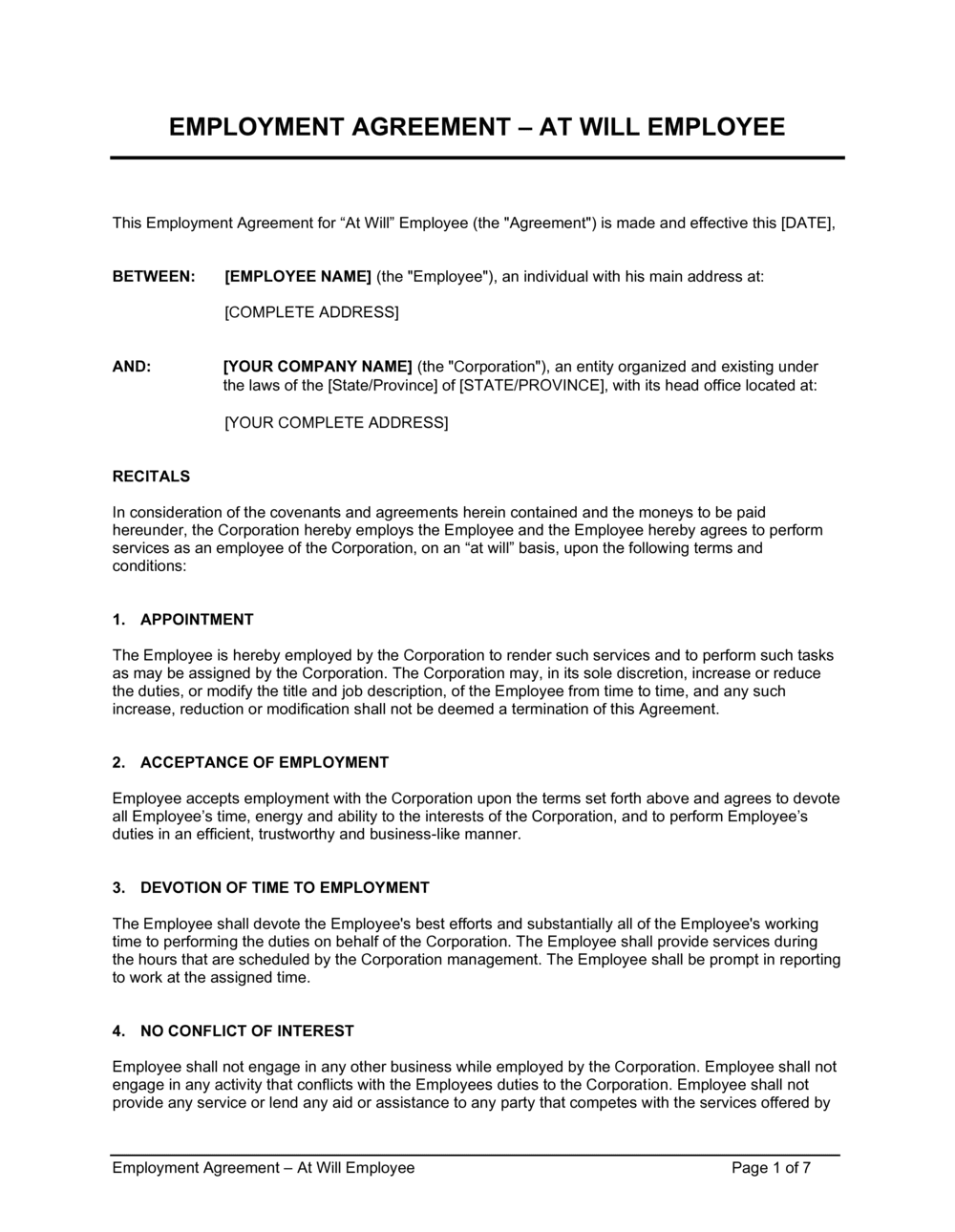
- An employment relationship that either party may terminate at any time, for any lawful reason, without advance notice — recognized as the default in 49 US states.
- Integration Clause
- A contract provision stating that the written agreement is the complete and final record of the parties' deal, superseding all prior emails, offer letters, and verbal promises.
- IP Assignment
- A clause transferring ownership of all work product, inventions, and developments created by the employee in the course of employment to the employer.
- Confidential Information
- Non-public business data — trade secrets, customer lists, financial records, and product roadmaps — that the employee is contractually prohibited from disclosing or misusing.
- Non-Compete Clause
- A post-employment restriction preventing the employee from working for direct competitors or launching a competing business within a defined time period and geographic area.
- Non-Solicitation Clause
- A restriction preventing a departing employee from recruiting the employer's staff or soliciting its customers for a defined period after separation.
- Cause (for Termination)
- Specific documented grounds — misconduct, fraud, gross negligence, or material policy violation — that justify immediate termination without notice or severance.
- Exempt vs. Non-Exempt
- US classification under the Fair Labor Standards Act: exempt employees are not entitled to overtime pay; non-exempt employees must receive 1.5× their regular rate for hours over 40 per week.
- Consideration
- Something of value exchanged between parties to make a contract legally binding — for employment agreements, the job and compensation constitute consideration when signed before the start date.
- Severance
- Compensation paid to an employee upon termination, negotiated contractually in at-will arrangements since US federal law does not require it.
- Constructive Dismissal
- When an employer unilaterally changes employment conditions so significantly — cutting pay, demoting the role, or forcing relocation — that the employee is effectively compelled to resign, which courts treat as termination.