Personal Service Agreement Template

Free Word download • Edit online • Save & share with Drive • Export to PDF

5 pages25–35 min to fillDifficulty: ComplexSignature requiredLegal review recommended
Learn more ↓
FreePersonal Service Agreement Template

At a glance

What it is
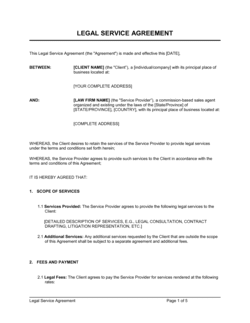
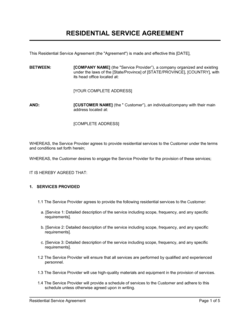
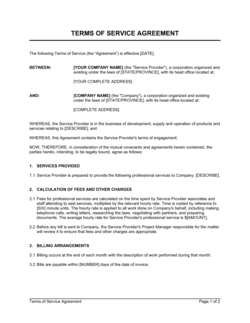
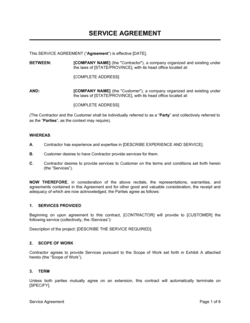
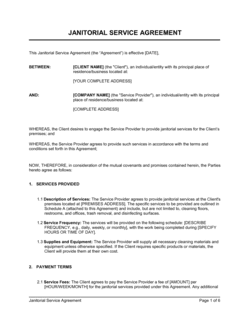
A Personal Service Agreement is a legally binding contract between a client and a named individual engaged to perform specific services that rely on that person's unique skills, expertise, or persona. This template is a free Word download you can edit online and export as PDF — covering scope of work, compensation, IP ownership, confidentiality, and termination in a single ready-to-sign document.
When you need it
Use it when hiring a specific individual — a consultant, coach, performer, artist, or specialized professional — where the identity of the service provider is material to the agreement and cannot simply be substituted with another person.
What's inside
Parties and service description, compensation and payment schedule, term and termination provisions, intellectual property assignment, confidentiality obligations, exclusivity or non-compete terms, representations and warranties, indemnification, and governing law.

What is a Personal Service Agreement?

A Personal Service Agreement is a legally binding contract between a client and a named individual that governs an engagement where the identity of the service provider is a material term — meaning the work cannot be delegated, subcontracted, or performed by a substitute without the client's explicit consent. It defines the specific services or deliverables expected, the compensation structure, IP ownership, confidentiality obligations, and the conditions under which either party can end the relationship. Unlike a general services contract, this agreement exists precisely because the client is paying for that particular person's expertise, creative output, or persona — not simply for a category of work any qualified individual could perform.

Why You Need This Document

Without a written personal service agreement, three critical risks go unaddressed from the moment work begins. First, IP ownership defaults to the service provider in most common-law jurisdictions — meaning deliverables, code, creative work, or strategic frameworks the individual produces may legally belong to them, not to you. Second, there is no enforceable basis to prevent a departing provider from immediately working for your direct competitor or soliciting your clients. Third, payment disputes over scope, milestones, and deliverable acceptance become a matter of competing recollections rather than contract interpretation. A properly executed personal service agreement closes all three gaps, ensures both parties understand exactly what is expected, and gives you a concrete evidentiary record if performance falls short or the relationship ends badly. This template gives you a professionally drafted starting point in minutes, covering every clause that matters for domestic and cross-border personal service engagements.

Which variant fits your situation?

If your situation is…Use this template
Engaging a freelance consultant for an ongoing retainerConsulting Agreement
Hiring an independent contractor for a defined projectIndependent Contractor Agreement
Booking a performer or entertainer for a specific eventPerformer Agreement
Engaging a named individual as a paid board or company advisorAdvisory Board Agreement
Hiring a person full-time as an employee rather than a contractorEmployment Contract
Contracting a professional for a one-time coaching engagementCoaching Services Agreement
Engaging a named individual for creative work with IP transferCreative Services Agreement

Common mistakes to avoid

❌ Vague scope of services

Why it matters: Without a defined deliverable list and completion standard, the client has no contractual basis to withhold final payment for unsatisfactory work, and the provider has no protection against unlimited scope creep.

Fix: Attach a Schedule A that names each deliverable, its format, acceptance criteria, and due date. Require a signed change order for any work outside the schedule.

❌ Relying solely on work-for-hire language for IP assignment

Why it matters: In most jurisdictions, the work-for-hire doctrine does not automatically apply to independent contractors — only to employees and a narrow list of commissioned works. Without a backup assignment clause, the provider may legally own the deliverables.

Fix: Include both the work-for-hire designation and a broad irrevocable assignment clause covering any work product not qualifying as work for hire under applicable law.

❌ No confidentiality survival clause

Why it matters: If confidentiality obligations are not explicitly stated to survive termination, a court may interpret them as ending when the contract ends — leaving sensitive information unprotected the moment the engagement concludes.

Fix: Add a survival clause stating that the confidentiality obligations remain in effect for a defined period — typically 2–3 years — after the termination or expiration of the agreement.

❌ Overbroad post-termination non-compete

Why it matters: Courts routinely void non-compete clauses that are unlimited in geography, cover entire industries, or impose long restriction periods on short-term personal service engagements — often striking out the provision entirely.

Fix: Limit the restriction to the specific client list or competitive segment the provider actually worked with, and cap the duration at 6 months or less for engagements shorter than one year.

❌ Starting work before the agreement is signed

Why it matters: Services performed before execution may be governed by implied contract terms rather than the written agreement, potentially leaving IP assignment, confidentiality, and non-compete clauses unenforceable.

Fix: Make execution a prerequisite for beginning work. If circumstances require immediate start, issue a signed letter of intent covering IP and confidentiality as a bridge until the full agreement is executed.

❌ No cure period before termination for cause

Why it matters: Terminating immediately for a first breach — without giving the other party an opportunity to remedy it — is itself treated as a breach in many jurisdictions, exposing the terminating party to damages claims.

Fix: Include a cure period of 10 business days from written notice of breach before termination for cause takes effect, except for fraud, gross negligence, or confidentiality violations where immediate termination is warranted.

The 10 key clauses, explained

Parties and engagement description

In plain language: Identifies the client and the specific named individual providing services, confirming that the engagement is personal and non-delegable.

Sample language
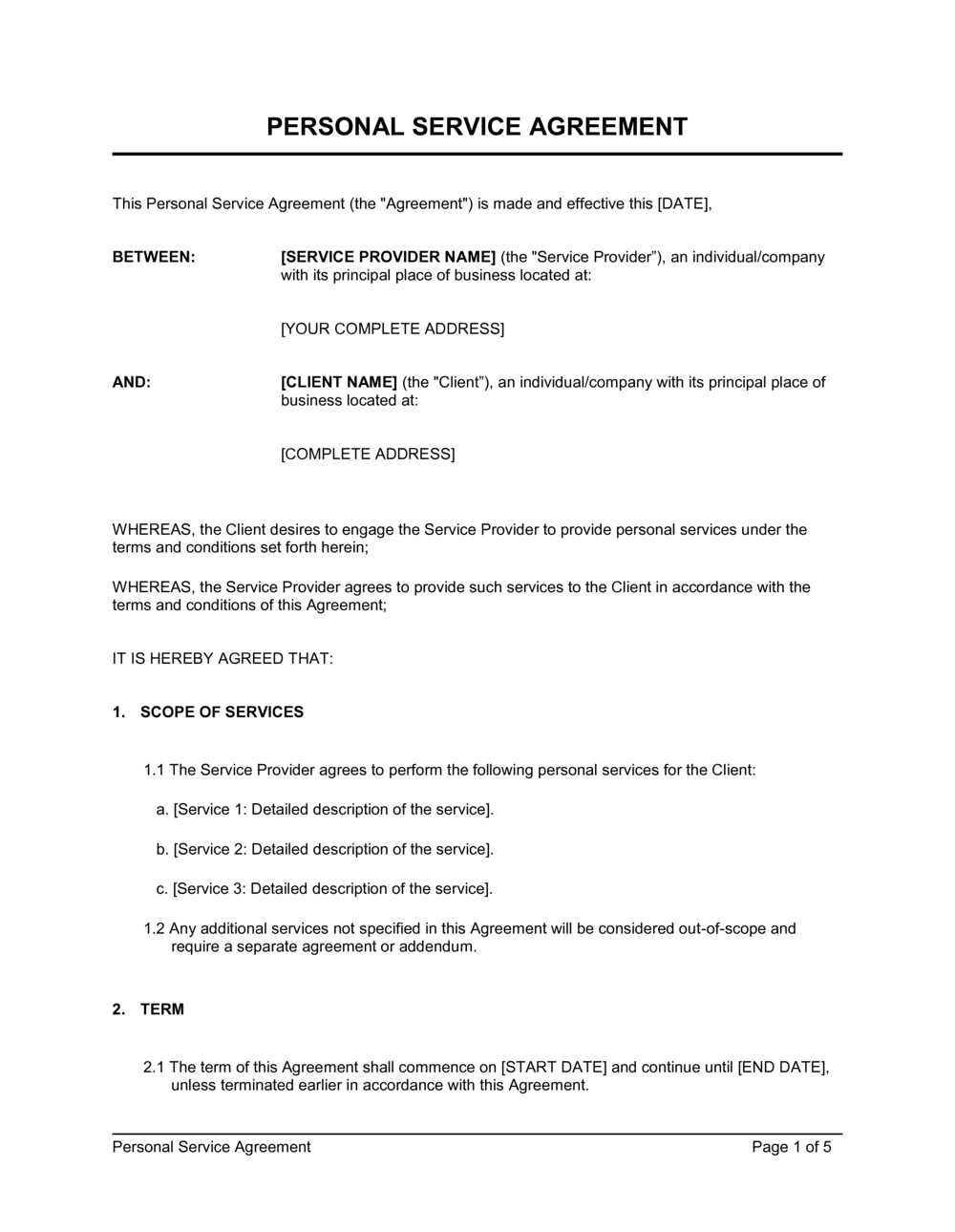
This Personal Service Agreement is entered into on [DATE] between [CLIENT LEGAL NAME] ('Client') and [SERVICE PROVIDER FULL NAME] ('Provider'). The parties agree that the services described herein are personal in nature and may not be assigned or subcontracted by Provider without the prior written consent of Client.

Common mistake: Using a company name for the provider instead of the individual's legal name. This defeats the personal-service nature of the contract and may affect IP ownership and tax classification.

Scope of services and deliverables

In plain language: Defines exactly what the service provider will do, what they will deliver, and the standard to which performance will be measured.

Sample language
Provider shall perform the following services: [DESCRIPTION OF SERVICES] as further detailed in Schedule A ('Services'). Provider shall deliver [SPECIFIC DELIVERABLES] by [DEADLINE(S)] and to a professional standard consistent with [INDUSTRY/FIELD] practice.

Common mistake: Writing a vague scope like 'consulting services as needed.' Without a defined deliverable, scope creep is unchecked and disputes over completion are inevitable.

Compensation and payment schedule

In plain language: States the fee, payment method, timing, and any conditions — such as milestone completion — that trigger each payment.

Sample language
Client shall pay Provider a fee of $[AMOUNT] per [HOUR / PROJECT / MONTH], payable within [NET 30] days of receipt of a compliant invoice. Milestone payments, if applicable, are set out in Schedule B.

Common mistake: Failing to specify what constitutes a 'compliant invoice' or when the payment clock starts. This leads to payment-timing disputes on every billing cycle.

Term and renewal

In plain language: Sets the start and end date of the engagement and specifies whether it renews automatically or requires a new agreement.

Sample language
This Agreement commences on [START DATE] and terminates on [END DATE] unless earlier terminated in accordance with Section [X]. This Agreement shall not renew automatically unless both parties execute a written extension.

Common mistake: Allowing automatic renewal without a notice period to opt out. The client may be committed to another term before they realize the agreement has renewed.

Intellectual property ownership

In plain language: Assigns ownership of all work product, deliverables, and creative output to the client, or alternatively confirms the provider retains ownership and grants a license.

Sample language
All work product, deliverables, and materials created by Provider in the performance of the Services shall be the sole property of Client and are hereby assigned to Client as a work made for hire. To the extent any such work is not legally a work made for hire, Provider irrevocably assigns all right, title, and interest thereto to Client.

Common mistake: Using only 'work for hire' language without a backup assignment clause. In many jurisdictions, the work-for-hire doctrine does not apply to independent contractors — the assignment clause is the real protection.

Confidentiality

In plain language: Prohibits the service provider from disclosing or misusing the client's confidential business information during and after the engagement.

Sample language
Provider agrees to keep confidential all non-public information of Client disclosed in connection with this Agreement ('Confidential Information') and to use it solely for the purpose of performing the Services. This obligation survives termination for a period of [3] years.

Common mistake: No survival clause for confidentiality after termination. Without it, the obligation may be read as ending when the contract ends, leaving sensitive information unprotected.

Exclusivity and non-compete

In plain language: States whether the provider is restricted from performing similar services for competing clients during the term, and any post-engagement restrictions.

Sample language
During the Term, Provider shall not provide services substantially similar to the Services to any direct competitor of Client as identified in Schedule C. For [6] months following termination, Provider shall not solicit Client's customers with whom Provider had material contact during the engagement.

Common mistake: Applying a broad industry-wide non-compete to a short-term personal service engagement. Courts will likely void an overbroad restriction, eliminating any post-engagement protection.

Termination provisions

In plain language: Sets out how either party can end the agreement early — for cause, for convenience, or due to incapacity — and what happens to fees and deliverables upon termination.

Sample language
Either party may terminate this Agreement for convenience on [30] days' written notice. Client may terminate immediately for Cause, defined as material breach unremedied within [10] business days of notice, fraud, or gross negligence. Upon termination, Client shall pay for all Services satisfactorily completed to the date of termination.

Common mistake: No cure period before termination for cause. Courts frequently find that termination without an opportunity to remedy a breach was itself a breach of contract.

Representations, warranties, and indemnification

In plain language: Each party confirms they have the legal right and capacity to enter the agreement; the provider warrants their qualifications; and each party agrees to indemnify the other for losses caused by their own breach or negligence.

Sample language
Provider represents and warrants that: (a) Provider has full authority to enter this Agreement; (b) the Services will not infringe any third-party intellectual property rights; and (c) Provider holds all licenses and qualifications required to perform the Services. Each party shall indemnify and hold harmless the other from claims arising from that party's breach, negligence, or willful misconduct.

Common mistake: Omitting a warranty that the provider's work will not infringe third-party IP. If the provider reuses prior work or licensed assets without disclosure, the client bears the infringement risk without this clause.

Governing law and dispute resolution

In plain language: Specifies which jurisdiction's law governs the agreement and the mechanism for resolving disputes — arbitration, mediation, or litigation.

Sample language
This Agreement is governed by the laws of [STATE / PROVINCE / COUNTRY]. Any dispute that cannot be resolved by good-faith negotiation within [30] days shall be submitted to binding arbitration administered by [AAA / JAMS / ADR INSTITUTE] in [CITY], except that either party may seek injunctive relief from a court of competent jurisdiction.

Common mistake: Selecting a governing law with no connection to where either party is located or where the services are performed. Some jurisdictions will override the chosen law regardless of what the contract states.

How to fill it out

  1. 1

    Identify both parties with full legal names

    Enter the client's registered legal entity name and the individual service provider's full legal name as it appears on government-issued ID. Confirm that the provider is named as an individual, not their business entity.

    💡 If the provider operates through a personal corporation or LLC, decide upfront whether the contract is with the individual or the entity — this affects IP ownership, tax treatment, and enforceability of personal-service restrictions.

  2. 2

    Draft a precise scope of services in Schedule A

    Move all deliverable details, performance standards, and deadlines to Schedule A rather than the body of the agreement. Define what 'completion' means for each deliverable so there is no ambiguity at payment time.

    💡 Include a change-order process in Schedule A — any work outside the defined scope requires a signed addendum before the provider begins.

  3. 3

    Set the fee structure and payment triggers

    Enter the total fee or rate, specify whether it is hourly, project-based, or milestone-based, and define exactly what triggers each payment — invoice receipt, deliverable acceptance, or a calendar date.

    💡 Add a late-payment fee of 1.5% per month on outstanding balances to incentivize timely payment without requiring legal action.

  4. 4

    Choose the IP ownership model

    Decide whether the client owns all deliverables outright (full assignment), the provider retains ownership and grants a license, or ownership is shared. Enter the appropriate clause and ensure the backup assignment language is present if you choose full assignment.

    💡 If the provider is incorporating pre-existing work or licensed third-party materials, require disclosure in Schedule A and confirm the license terms permit the intended use.

  5. 5

    Tailor the exclusivity and non-compete terms

    If exclusivity is needed, list the specific competing clients or industries in Schedule C rather than using a broad description. Set a duration proportionate to the length of the engagement — typically 3–6 months post-termination for a short project.

    💡 Check the governing jurisdiction before including any post-termination non-compete. California and several EU countries impose strict limits on post-engagement restrictions for non-employees.

  6. 6

    Set notice periods and termination triggers

    Enter a notice period for convenience termination (typically 14–30 days), a cure period for cause termination (10 business days is standard), and confirm that payment for completed work survives termination regardless of cause.

    💡 Include a provision addressing what happens to partially completed deliverables at termination — who owns them, and whether the client pays a pro-rata fee.

  7. 7

    Confirm governing law matches the provider's work location

    Select the state, province, or country whose employment and contract law will govern disputes. This should align with where the services are physically performed, not just where the client is incorporated.

    💡 For cross-border arrangements, add a brief clause confirming that each party is responsible for their own tax obligations in their respective jurisdictions.

  8. 8

    Execute before the services begin

    Both parties must sign and date the agreement before the provider starts work. Confirm that all schedules are attached and initialed. Distribute fully executed copies to both parties.

    💡 Use an e-signature tool to timestamp execution and create a tamper-evident record — especially important for post-termination enforcement of IP and confidentiality clauses.

Frequently asked questions

What is a personal service agreement?

A personal service agreement is a legally binding contract that engages a specific named individual to perform services that depend on their unique skills, expertise, or identity. Unlike a general services contract, the identity of the provider is a material term — meaning the client is paying for that specific person's capabilities and the work cannot be subcontracted to someone else without the client's consent. It is commonly used for consultants, performers, coaches, advisors, and creative professionals.

What is the difference between a personal service agreement and an independent contractor agreement?

An independent contractor agreement focuses on engaging a business or individual to complete a defined project without creating an employment relationship. A personal service agreement adds an additional layer by making the identity of the individual provider a contractual term — meaning substitution is not permitted. Personal service agreements also more frequently address exclusivity, moral rights, and the provider's personal representations about qualifications. In practice, many personal service agreements contain contractor classification language as well.

Who should use a personal service agreement?

Any client who is hiring a specific individual for their unique skills or persona should use this agreement — including businesses engaging named consultants, coaches, or advisors; event organizers booking performers or speakers; and companies retaining creative professionals such as photographers, designers, or writers. It is also appropriate when an individual advisor is providing services that must remain confidential or where IP ownership needs to be clearly established.

Does a personal service agreement make someone an employee?

Not automatically — but the contract's actual terms and the working relationship's practical reality both matter. In most jurisdictions, courts and tax authorities look at factors such as control over how work is performed, exclusivity, integration into the client's business, and economic dependence — not just the label on the contract. A personal service agreement that imposes full-time exclusivity, dictates working hours, and provides tools and equipment may be reclassified as employment regardless of what it is called. Consider consulting an employment lawyer if exclusivity or control provisions are significant.

Who owns the intellectual property created under a personal service agreement?

Ownership depends on the IP clause in the agreement. If the contract contains a valid IP assignment clause, the client typically owns all deliverables from the moment of creation. If the agreement is silent or only contains work-for-hire language without a backup assignment, the provider may retain ownership under applicable copyright law — particularly for independent contractors in the US and most common-law jurisdictions. Always include both work-for-hire and irrevocable assignment language to close this gap.

Can a personal service agreement be terminated early?

Yes — most personal service agreements allow termination for convenience with a notice period (typically 14–30 days) and termination for cause immediately or after a short cure period. Upon termination, the client typically owes payment for all services satisfactorily completed to the termination date. Specific termination rights depend on what the contract says; a well-drafted agreement will address partial deliverables, return of materials, and survival of key provisions like confidentiality and IP assignment.

Is a personal service agreement enforceable if it is not notarized?

In most jurisdictions, a personal service agreement does not need to be notarized to be enforceable — signatures from both parties and valid consideration (the exchange of services for payment) are generally sufficient. Notarization may add evidentiary weight in a dispute but is not typically a legal requirement for this type of contract. Some jurisdictions may require notarization for agreements above a certain value or duration, so check local requirements if the engagement is high-value or long-term.

Do non-compete clauses in personal service agreements hold up in court?

Enforceability varies significantly by jurisdiction and depends on whether the restriction is reasonable in scope, duration, and geographic area. Courts in California, Minnesota, and the UK impose strict limits on post-engagement non-competes for non-employees. In most other US states and Canadian provinces, a narrowly tailored restriction tied to specific clients or markets and lasting 6 months or less is more likely to be upheld. Overbroad clauses risk being voided entirely, so calibrate the restriction to the provider's actual competitive exposure.

What happens if the named service provider becomes unable to perform?

Because the provider's identity is a material term, a personal service agreement typically does not obligate a substitute to step in. The contract may include a force majeure clause excusing performance due to illness, injury, or other unforeseeable incapacity. In that event, the client's obligation to pay is usually suspended, and either party may have the right to terminate if the incapacity extends beyond a defined period. Well-drafted agreements address this scenario explicitly to avoid disputes about fee obligations when performance becomes impossible.

How this compares to alternatives

vs Independent Contractor Agreement

An independent contractor agreement engages a person or business entity for project work without making their specific identity a material contractual term — the contractor could, in principle, subcontract. A personal service agreement makes the named individual's participation non-delegable. Use a personal service agreement when you are paying for a specific person's unique skills, reputation, or persona, not just the output of any competent contractor.

vs Consulting Agreement

A consulting agreement governs an ongoing advisory relationship, often with a retainer structure and a broad mandate to provide strategic guidance. A personal service agreement is typically tied to defined deliverables or a specific performance, with the provider's identity as a core term. The two overlap significantly, but a consulting agreement suits a long-term advisory role while a personal service agreement suits a defined engagement or one-time performance.

vs Employment Contract

An employment contract creates an employer-employee relationship with statutory entitlements — benefits, notice periods, overtime, and termination protections. A personal service agreement creates a contractor relationship with no statutory employment entitlements. The distinction matters enormously for tax withholding, benefit obligations, and termination liability. Misclassifying an employee under a personal service agreement exposes the client to back taxes, penalties, and wrongful dismissal claims.

vs Advisory Board Agreement

An advisory board agreement structures an ongoing, typically equity-compensated relationship with a named individual who provides periodic strategic guidance without operational responsibilities. A personal service agreement covers active, compensated service delivery — work product, performances, or deliverables. Use an advisory agreement for a board seat or informal mentorship role; use a personal service agreement when the individual is being paid to produce something specific.

Industry-specific considerations

Creative and marketing agencies

Engagements with named photographers, illustrators, copywriters, or art directors where the individual's creative style is the reason for the hire, requiring clear IP assignment and usage rights.

Sports and entertainment

Talent agreements for athletes, performers, speakers, and influencers often include appearance obligations, social media requirements, exclusivity windows, and liquidated damages for cancellation.

Professional services

Named expert consultants, coaches, and advisors whose personal reputation and network are the value delivered — confidentiality, non-solicitation, and non-compete provisions are especially material.

Technology and SaaS

Fractional CTOs, named technical advisors, and specialist engineers engaged for IP-sensitive projects where work-for-hire and assignment clauses must cover code, algorithms, and architecture documentation.

Jurisdictional notes

United States

Worker classification is governed by IRS common-law rules and the ABC test in states such as California — misclassifying an employee as a personal service contractor carries payroll tax, benefits, and penalty exposure. California also prohibits most post-engagement non-competes for non-employees under Business and Professions Code §16600. IP work-for-hire applies only to employees and nine narrow categories of commissioned works; a backup assignment clause is essential for contractor engagements.

Canada

Canada Revenue Agency applies a multi-factor control test to distinguish employees from contractors; agreements labeled as personal service contracts can still be reclassified as employment if the individual lacks genuine business independence. Ontario and British Columbia have specific tests for dependent contractors, who receive some statutory protections. Quebec requires contracts in French for provincially regulated parties and recognizes moral rights that cannot be fully waived without explicit language.

United Kingdom

The UK recognizes a 'worker' category between employee and independent contractor — individuals who provide personal service and are economically dependent may qualify for minimum wage, holiday pay, and whistleblower protections regardless of the contract label. IR35 rules apply when a personal service company intermediary is involved, potentially requiring the client to treat fees as employment income. Post-engagement non-competes are enforceable only if reasonable and must typically be supported by a payment obligation to be upheld.

European Union

The EU Platform Work Directive and national rebuttable-presumption rules in France, Spain, and Germany mean that a personal service relationship characterized by control, exclusivity, or economic dependence may be legally reclassified as employment regardless of the contract's terms. GDPR applies to any personal data processed in connection with the engagement, requiring a data processing clause or separate data processing agreement. Post-engagement non-competes in most member states require financial compensation to the individual to be enforceable, typically 25–100% of remuneration depending on the country.

Template vs lawyer — what fits your deal?

PathBest forCostTime
Use the templateStandard personal service engagements with a domestic individual for defined deliverables under $50,000Free30 minutes
Template + legal reviewHigh-value engagements, cross-border arrangements, or roles involving sensitive IP or meaningful exclusivity restrictions$300–$8002–5 days
Custom draftedEntertainment talent agreements, executive advisory arrangements with equity, or engagements in regulated industries where misclassification risk is high$1,500–$5,000+1–3 weeks

Glossary

Personal Service Agreement
A contract in which the identity of the individual performing the service is a material term — meaning the work cannot be delegated or substituted without the client's consent.
Scope of Work
A precise description of the deliverables, tasks, or performances the service provider is engaged to complete, including any deadlines or quality standards.
Moral Rights
The rights of a creator to be identified as the author of a work and to object to modifications that harm their reputation — recognized in most jurisdictions outside the United States.
Work for Hire
A legal doctrine under which work created by a contractor within the defined scope is owned outright by the hiring party from the moment of creation.
Exclusivity Clause
A provision restricting the service provider from performing similar services for competing clients during the term of the agreement.
Indemnification
A contractual obligation by one party to compensate the other for specified losses, damages, or legal costs arising from defined events or breaches.
Force Majeure
A clause that excuses a party from performing their obligations when an unforeseeable event outside their control — such as a natural disaster or government order — makes performance impossible.
Termination for Convenience
A right allowing one or both parties to end the agreement before the completion date without cause, typically subject to a notice period and payment for work completed to date.
Non-Solicitation Clause
A restriction preventing the service provider from directly approaching the client's employees, customers, or clients for their own benefit during or after the engagement.
Liquidated Damages
A pre-agreed monetary amount specified in the contract as the remedy for a particular breach — used when actual damages would be difficult to calculate after the fact.
Representations and Warranties
Statements of fact made by each party at the time of signing that the other party relies on — typically covering legal capacity, absence of conflicting obligations, and professional qualifications.

Part of your Business Operating System

This document is one of 3,000+ business & legal templates included in Business in a Box.

  • Fill-in-the-blanks — ready in minutes
  • 100% customizable Word document
  • Compatible with all office suites
  • Export to PDF and share electronically

Create your document in 3 simple steps.

From template to signed document — all inside one Business Operating System.
1
Download or open template

Access over 3,000+ business and legal templates for any business task, project or initiative.

2
Edit and fill in the blanks with AI

Customize your ready-made business document template and save it in the cloud.

3
Save, Share, Send, Sign

Share your files and folders with your team. Create a space of seamless collaboration.

Save time, save money, and create top-quality documents.

★★★★★

"Fantastic value! I'm not sure how I'd do without it. It's worth its weight in gold and paid back for itself many times."

Managing Director · Mall Farm
Robert Whalley
Managing Director, Mall Farm Proprietary Limited
★★★★★

"I have been using Business in a Box for years. It has been the most useful source of templates I have encountered. I recommend it to anyone."

Business Owner · 4+ years
Dr Michael John Freestone
Business Owner
★★★★★

"It has been a life saver so many times I have lost count. Business in a Box has saved me so much time and as you know, time is money."

Owner · Upstate Web
David G. Moore Jr.
Owner, Upstate Web

Run your business with a system — not scattered tools

Stop downloading documents. Start operating with clarity. Business in a Box gives you the Business Operating System used by over 250,000 companies worldwide to structure, run, and grow their business.

Start free · No credit card required