Product Management Templates

4.7from 280+ reviews Trusted by 20M+ businesses

Plan, launch, and manage products faster with ready-to-use templates for every stage of the product lifecycle.

WordEditable onlinePDF36+ product management templates

Browse 10 categories

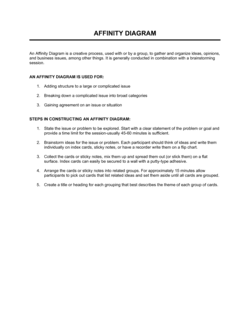
Affinity Diagram Template (Free Word)
Business Idea Validation Template (Free Word)
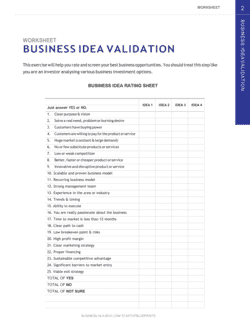
Business Idea Validation Worksheet Template (Free Word)
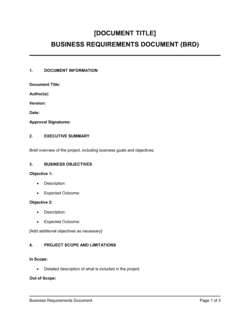
Business Requirements Document Template (Free Word)
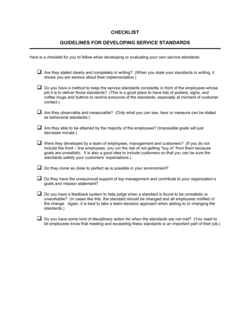
Checklist Developing Services Template (Free Word)
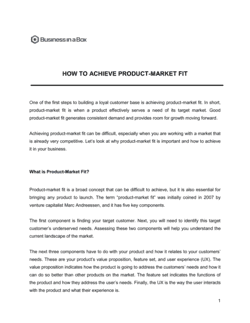
How To Achieve Product Market Fit Template
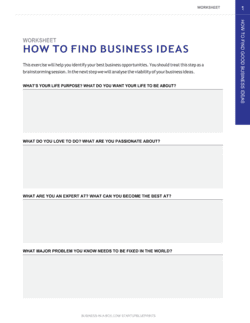
How To Find Good Business Ideas Worksheet Template (Free Word)
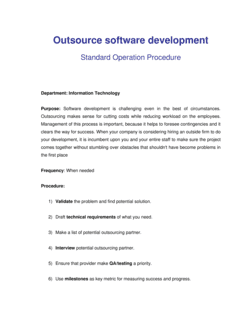
How To Outsource Software Development Template
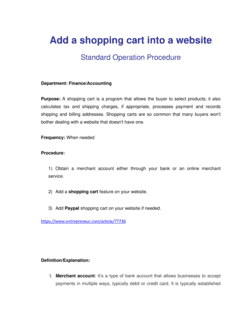
How To Setup A Shopping Cart Template
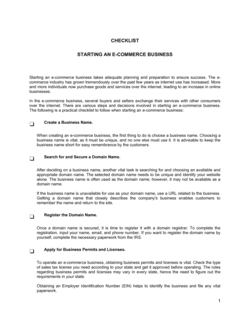
How To Start An Ecommerce Business Template
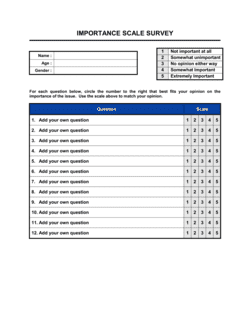
Importance Scale Survey Template (Free Word)
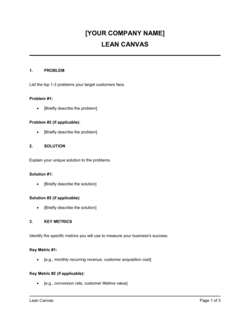
Lean Canvas Template (Free Word)
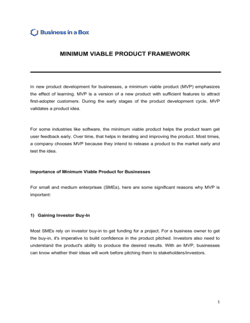
Minimum Viable Product Framework Template (Free Word)
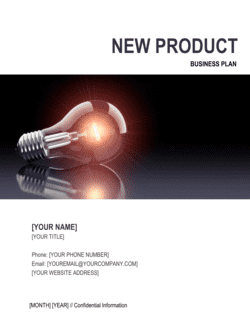
New Product Business Plan Template (Free Word)
New Product Development Plan Template (Free Word)
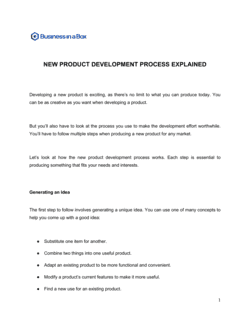
New Product Development Process Template (Free Word)
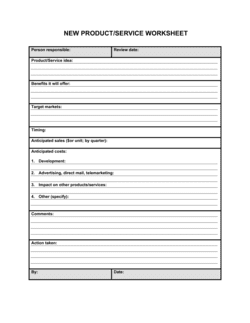
New Product or Service Worksheet Template (Free Word)
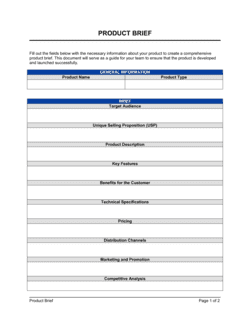
Product Brief Template (Free Word)
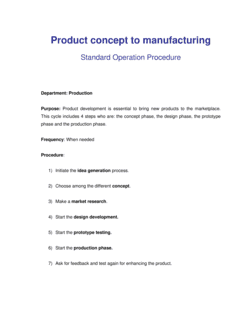
Product Concept to Manufacturing Template
Product Development And Management Strategies Template (Free Word)
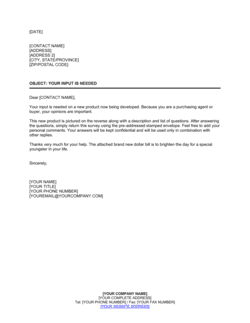
Product Development Feedback Request Letter Template (Free Word)
Product Innovation Strategies Template (Free Word)
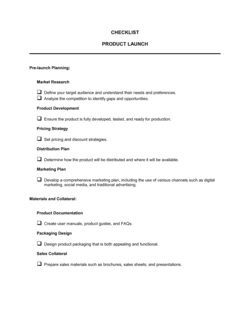
Product Launch Checklist Template (Free Word)
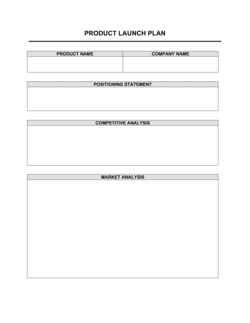
Product Launch Plan Template (Free Word)
Product Life Cycle Analysis Template (Free Word)
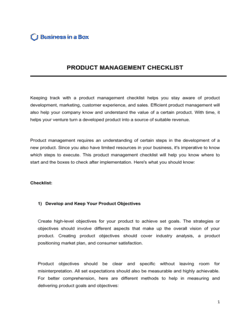
Product Management Checklist Template (Free Word)
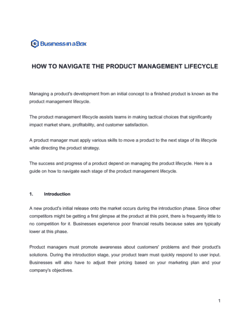
Product Management Lifecycle Template
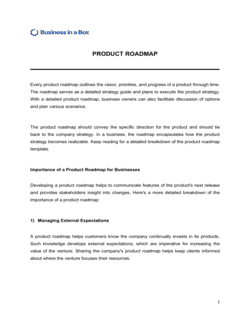
Product Roadmap Template (Free Word)
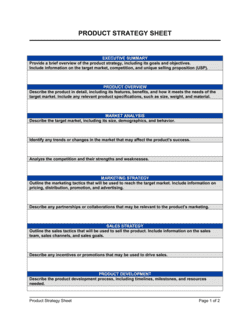
Product Strategy Sheet Template (Free Word)
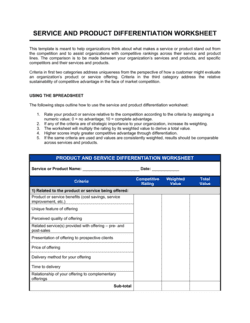
Products & Services Differentiation Worksheet Template (Free Word)
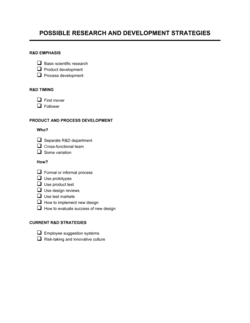
Research and Development Strategies Template (Free Word)
SaaS Business Model Guide Template
Software Company Business Plan Template (Free Word)
Starting Ecommerce Business Checklist Template (Free Word)
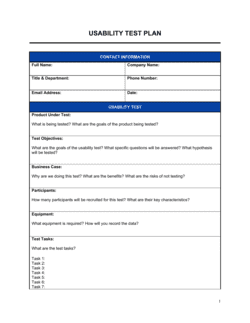
Usability Test Plan Template (Free Word)
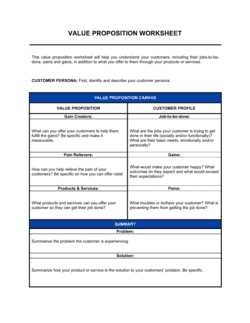
Value Proposition Worksheet Template (Free Word)
250K+Clients
20M+Free users
20+Years
190+Countries
10,000+Law firms
50M+Downloads

Trusted across review platforms

  • Capterra★★★★☆4.649 reviews
  • G2★★★★☆4.713 reviews
  • GetApp★★★★☆4.649 reviews
  • Google Play★★★★☆4.6179 ratings
  • Google Reviews★★★★☆4.567 reviews

Related categories

Frequently asked questions

What does a product management template include?
Most product management templates include a problem statement, target user definition, success metrics, feature scope, timeline or roadmap, and a roles-and-responsibilities section. Specific templates add launch checklists, lifecycle analysis, competitive comparison, or financial projections depending on the stage they address.
What is the difference between a product roadmap and a product launch plan?
A product roadmap is a long-range strategic view of what will be built and when — typically spanning multiple quarters or releases. A product launch plan is a tactical, time-bound document covering everything that must happen in the weeks before and after a single release goes live. Both are usually needed; the roadmap informs the launch plan.
When should I use a Minimum Viable Product framework?
Use an MVP framework when you need to validate a core assumption before committing full development resources. It's most useful in early-stage product development, new market entry, or when pivoting an existing product. The framework defines the smallest feature set that produces usable feedback from real users.
What is a proof of concept, and how does it differ from an MVP?
A proof of concept (POC) tests whether something is technically feasible, usually before any product development begins. An MVP tests whether a working product solves a real problem and finds market traction. A POC is internal; an MVP is typically released to real users. Many products run a POC first, then build an MVP based on the findings.
Do I need a product brief and a product roadmap, or just one?
They serve different audiences and purposes. A product brief is a concise document — usually one to two pages — that defines the problem, user, and constraints before development starts. A roadmap is an ongoing planning tool that shows how the product evolves over time. Most product teams create a brief per initiative and maintain a shared roadmap across all initiatives.
How do I manage a product lifecycle from launch to discontinuation?
Start with a lifecycle analysis to identify which stage the product is in: introduction, growth, maturity, or decline. In introduction and growth, prioritize feature development and market expansion. In maturity, focus on retention and margin optimization. In decline, evaluate whether to refresh, reposition, or retire the product. The Product Life Cycle Analysis template in this folder structures that assessment.
What templates do I need to hire a product manager?
This folder includes a Product Manager Job Description, Product Management Associate Job Description, Product Design Manager Job Description, Product Design Director Job Description, and Product Marketing Manager Job Description, plus interview guides and a skills assessment template. Use the job description to attract candidates and the interview guide to evaluate them consistently.
Can these templates be used for physical products as well as software?
Yes. The strategy, lifecycle, roadmap, and launch templates apply to any product category. Templates like the Production Schedule and How to Steps from Product Concept to Manufacturing are specifically designed for physical goods. Software-focused teams will lean on the MVP Framework, Proof of Concept, and Product Roadmap more heavily.

Product Management vs. related documents

Product Management vs. Project management templates

Product management focuses on what to build and why — strategy, lifecycle, market fit, and long-term roadmap. Project management focuses on how and when to deliver a defined scope. A product manager owns the vision across multiple releases; a project manager owns the execution of a single initiative. Many organizations use both sets of templates in parallel.

Product Management vs. Business plan templates

A business plan covers the entire company — market, team, financials, and operations. A product management template zooms in on a single product or product line. The New Product Business Plan in this folder bridges the two, but most product management documents are narrower and more operational than a full business plan.

Key clauses every Product Management contains

Effective product management documents share a common set of sections regardless of the specific stage or function they address.

  • Problem or opportunity statement. Defines the customer pain point or market gap the product addresses, anchoring every downstream decision.
  • Target user or customer. Identifies who the product is built for — persona, segment, or job-to-be-done — so scope decisions stay grounded.
  • Success metrics. Specifies the quantifiable outcomes that define whether the product is working: adoption rate, revenue, NPS, defect rate.
  • Scope and constraints. Draws a clear line between what is and isn't included, preventing scope creep during development.
  • Milestones and timeline. Lists key dates — concept freeze, MVP release, full launch, review — that keep cross-functional teams synchronized.
  • Roles and responsibilities. Assigns ownership of each workstream so there's no ambiguity about who makes which decision.
  • Risk and dependency log. Surfaces known blockers, external dependencies, and contingency plans before they become launch-day problems.
  • Review and sign-off protocol. Documents who must approve the document before work proceeds, creating accountability and a decision audit trail.

How to write a product management plan

A product management plan connects market insight to execution — here's how to build one that holds up across the full product lifecycle.

  1. 1

    Define the problem you're solving

    Write a single, specific problem statement tied to a named customer segment — vague problem definitions produce unfocused products.

  2. 2

    Set measurable objectives

    Translate the business goal into 2–4 quantifiable outcomes the product must achieve within a defined time horizon.

  3. 3

    Map the product lifecycle stage

    Determine whether the product is in introduction, growth, maturity, or decline — each stage requires different resource allocation and strategy.

  4. 4

    Outline scope and prioritize features

    List capabilities in priority order using a framework like MoSCoW (Must, Should, Could, Won't) so trade-offs are explicit.

  5. 5

    Build the roadmap and production schedule

    Assign milestones to quarters or sprints, identify dependencies, and align with manufacturing or engineering capacity.

  6. 6

    Define launch readiness criteria

    Specify the conditions — quality gates, support readiness, regulatory clearance — that must be met before go-live.

  7. 7

    Assign owners and set review cadence

    Name the individual responsible for each workstream and schedule regular check-ins to catch drift early.

At a glance

What it is
Product management templates are structured documents that guide teams through the process of planning, building, launching, and discontinuing products. They capture strategy, schedules, roles, and decisions in a consistent format so nothing critical is missed.
When you need one
Any time a product moves from idea to market — or from market to retirement — a template keeps stakeholders aligned, reduces rework, and creates a paper trail for every key decision.

Which Product Management do I need?

The right template depends on where you are in the product lifecycle and what decision you need to document. Match your current situation to the template that fits.

Your situation
Recommended template

Visualizing the timeline and priorities for a product over multiple quarters

Gives stakeholders a single view of features, milestones, and release targets.

Turning a raw product concept into a structured idea before development begins

Captures the problem statement, target user, success criteria, and constraints.

Testing whether a new concept is technically and commercially feasible

Documents assumptions, tests, and findings before committing development resources.

Building the smallest possible version of a product to validate market fit

Defines MVP scope, success metrics, and feedback loops in one structured document.

Coordinating every workstream needed to launch a product to market

Aligns marketing, sales, support, and ops around a shared launch timeline.

Running a pre-launch quality check before going to market

Step-by-step checklist that surfaces gaps before launch day, not after.

Analyzing where a product stands in its commercial lifecycle

Maps growth, maturity, and decline signals to guide investment and exit decisions.

Writing a business case for an entirely new product category

Combines market analysis, financial projections, and go-to-market strategy in one plan.

Glossary

Product lifecycle
The progression of a product through four stages — introduction, growth, maturity, and decline — each requiring different management strategies.
Product roadmap
A prioritized, time-based plan showing which product features or capabilities will be built and when.
Minimum viable product (MVP)
The smallest version of a product that delivers enough value to attract early users and generate actionable feedback.
Proof of concept (POC)
A test or prototype that determines whether a proposed idea is technically feasible before resources are committed.
Product brief
A short document defining the problem, target user, goals, and constraints for a specific product initiative.
Go-to-market strategy
The plan for how a product will be positioned, priced, distributed, and promoted when it launches.
Feature prioritization
The process of ranking product capabilities by business value, user impact, and development effort to decide what gets built first.
Production schedule
A document that maps manufacturing or development tasks to dates, resources, and quantities to ensure on-time delivery.
Launch readiness
The set of conditions — quality gates, training completion, support staffing, marketing materials — that must be met before a product ships.
Product-market fit
The degree to which a product satisfies a strong market demand, typically evidenced by retention, referral, and revenue metrics.
Scope creep
The uncontrolled expansion of a product's features or requirements beyond what was originally agreed, often causing delays and budget overruns.

What is product management?

Product management is the discipline of planning, developing, launching, and optimizing products throughout their entire commercial life. A product management document captures the decisions, timelines, and accountabilities that move a product from an initial idea through development, market launch, and eventual retirement. Without structured documentation, cross-functional teams — engineering, marketing, sales, operations — operate from different assumptions, and misalignment compounds with every release.

Product management spans a wide range of activities: defining what to build and why, scheduling production, coordinating go-to-market execution, tracking lifecycle performance, and managing the team structure required to do all of it. The templates in this folder address each of those activities with purpose-built formats, from a one-page product brief to a full new-product business plan.

When you need a product management template

Any time a product decision needs to be documented, aligned across stakeholders, or handed off to another team, a template ensures consistency and reduces the risk of critical details being lost in email threads or verbal agreements.

Common triggers:

  • A product idea has been approved and needs a formal brief before development begins
  • An engineering team needs a roadmap to sequence features across the next two quarters
  • A leadership team needs a lifecycle analysis to decide whether to invest in or retire a product
  • A cross-functional team is preparing a coordinated launch across marketing, sales, and support
  • A hiring manager needs to define the role and evaluate candidates for a product manager position
  • A manufacturer needs a production schedule to align output with demand forecasts
  • A new product requires a business case with market data and financial projections
  • A team is validating a concept with a proof of concept or MVP before committing full resources

Skipping structured documentation doesn't eliminate the decisions — it just means they're made informally and inconsistently, with no record of who decided what or why. The templates in this folder give product teams a shared language and a reusable structure that scales from a solo founder launching a first product to an enterprise team managing a multi-line portfolio.

Award-winning platform

  • Great Place to Work 2025
  • BIG Award — Product of the Year 2025
  • Smartest Companies 2025
  • Global 100 Excellence 2026
  • Best of the Best 2025

Create your document in 3 simple steps.

From template to signed document — all inside one Business Operating System.
1
Download or open template

Access over 3,000+ business and legal templates for any business task, project or initiative.

2
Edit and fill in the blanks with AI

Customize your ready-made business document template and save it in the cloud.

3
Save, Share, Send, Sign

Share your files and folders with your team. Create a space of seamless collaboration.

Save time, save money, and create top-quality documents.

★★★★★

"Fantastic value! I'm not sure how I'd do without it. It's worth its weight in gold and paid back for itself many times."

Managing Director · Mall Farm
Robert Whalley
Managing Director, Mall Farm Proprietary Limited
★★★★★

"I have been using Business in a Box for years. It has been the most useful source of templates I have encountered. I recommend it to anyone."

Business Owner · 4+ years
Dr Michael John Freestone
Business Owner
★★★★★

"It has been a life saver so many times I have lost count. Business in a Box has saved me so much time and as you know, time is money."

Owner · Upstate Web
David G. Moore Jr.
Owner, Upstate Web

Run your business with a system — not scattered tools

Stop downloading documents. Start operating with clarity. Business in a Box gives you the Business Operating System used by over 250,000 companies worldwide to structure, run, and grow their business.

Start free · No credit card required