Worksheet_New Product or Service

Free download • Use as a template • Print or share

1 page20–30 min to useDifficulty: StandardSignature requiredLegal review recommended
Learn more ↓
FreeWorksheet_New Product or Service Template

At a glance

What it is
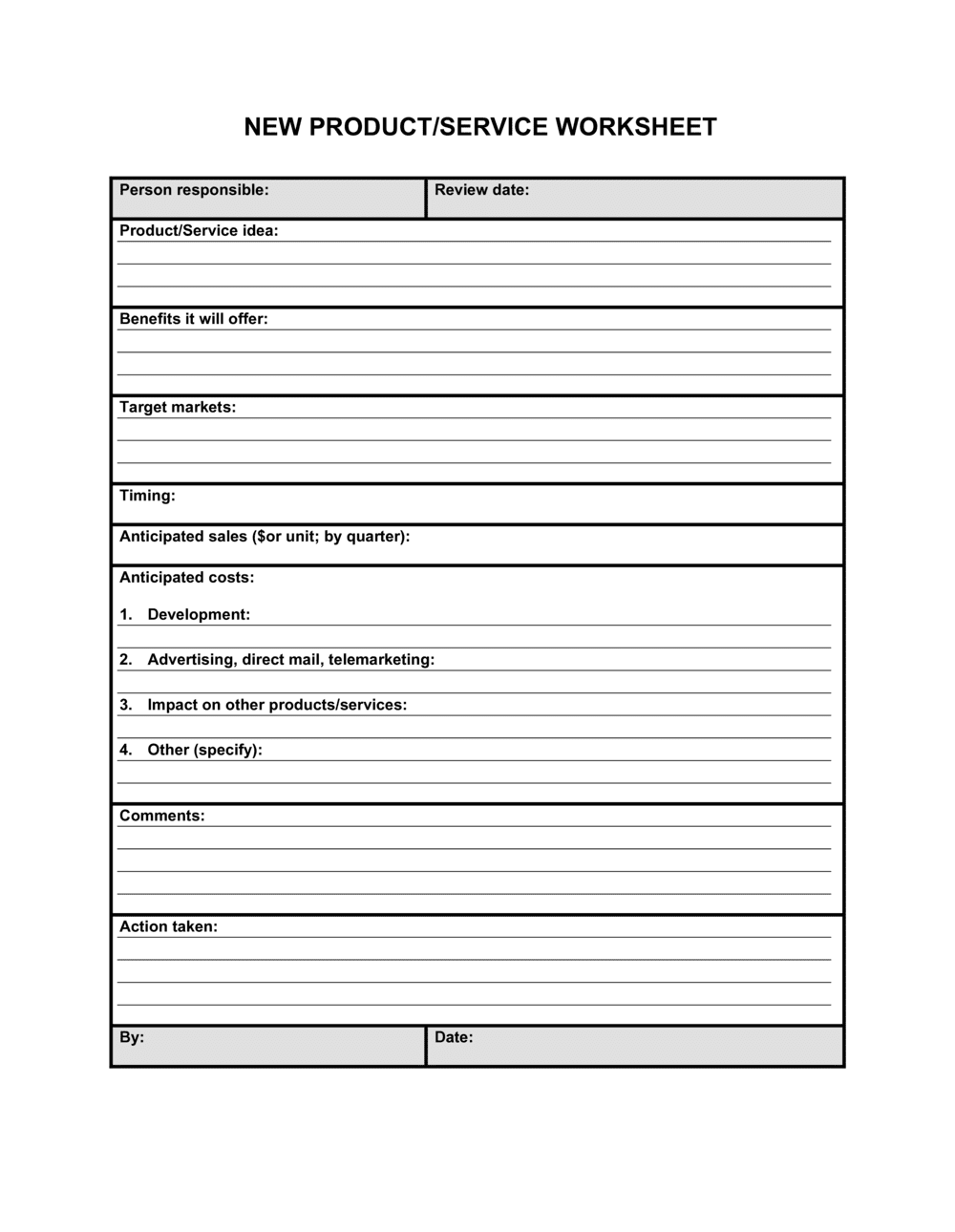
A New Product or Service Worksheet is a structured planning and authorization document that guides a business through every decision required before bringing a new offering to market — from market validation and pricing through IP ownership, compliance obligations, and internal sign-off. This free Word download gives you a step-by-step framework you can edit online and export as PDF to align stakeholders, satisfy compliance reviewers, and create a defensible paper trail for the launch decision.
When you need it
Use it whenever your business is developing a new product, adding a service line, or materially expanding an existing offering — especially where regulatory approval, IP assignment, or formal internal authorization is required before resources are committed.
What's inside
Product or service description and scope, market and customer validation findings, pricing and revenue model, IP ownership and licensing terms, regulatory and compliance checklist, resource and cost commitments, risk assessment, and internal authorization with signature blocks.

What is a New Product or Service Worksheet?

A New Product or Service Worksheet is a structured planning and authorization document that guides a business through every material decision required before committing resources to a new offering — from market validation and pricing through intellectual property ownership, regulatory compliance, and formal internal sign-off. Unlike a go-to-market plan focused on external messaging, this worksheet functions as an internal due-diligence record: it forces every significant question to be answered in writing, assigns accountability for each element, and creates a defensible paper trail that the launch was properly reviewed and authorized. The completed, signed worksheet serves as the organization's primary evidence that the product or service met all required legal, financial, and operational standards before any customer commitment or marketing spend occurred.

Why You Need This Document

Launching a product or service without a completed authorization worksheet exposes the business on multiple fronts simultaneously. Intellectual property created by contractors remains legally owned by those contractors without an explicit written assignment — and verbal understandings are unenforceable in every major jurisdiction. Regulatory non-compliance discovered after launch triggers recalls, enforcement actions, and fines that consistently exceed the cost of pre-launch review by a wide margin. Investors and acquirers conducting diligence routinely request evidence that new product launches were formally authorized; an absence of documentation is treated as a governance failure and often reduces valuation or kills the deal entirely. Beyond external risk, a signed worksheet eliminates the internal ambiguity that derails launches — unclear scope, undocumented pricing rationale, and unowned risks all become problems that could have been closed at the worksheet stage. This template gives you a complete, attorney-reviewable framework to document every launch decision correctly the first time.

Which variant fits your situation?

If your situation is…Use this template
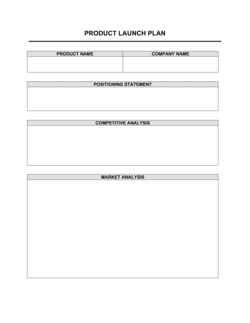
Launching a physical consumer product requiring safety certificationNew Product Launch Plan
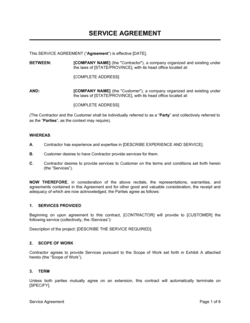
Adding a professional service line to an existing consulting firmService Agreement
Developing a software product with IP assignment considerationsSoftware Development Agreement
Licensing a product concept to a third-party manufacturerLicensing Agreement
Documenting market research before product decisions are madeMarket Analysis Report
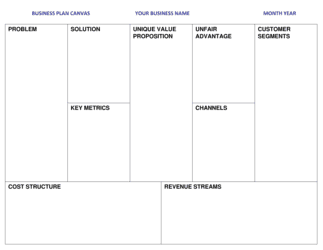
Planning a product line expansion with budget authorizationBusiness Plan
Formalizing internal team roles and responsibilities for launchProject Plan

Common mistakes to avoid

❌ Skipping the regulatory compliance section

Why it matters: Launching a product or service without confirming all required certifications and permits can result in regulatory enforcement, product recalls, or injunctions — all of which cost more to resolve than pre-launch compliance review.

Fix: Treat the compliance checklist as a hard gate, not a formality. No item in the checklist should be left blank or marked 'to be determined' when the authorization signatures are obtained.

❌ No IP assignment for contractor contributors

Why it matters: Without a written assignment, the freelancer or contractor who built a core feature may legally own it — even if they were paid for the work. Courts in the US, UK, and Canada have ruled in favor of contractor IP ownership in the absence of explicit assignment language.

Fix: Require signed IP assignment agreements from every external contributor before any development work begins, and reference the executed agreements in this worksheet.

❌ Launching before the worksheet is fully signed

Why it matters: An unsigned worksheet means no formal authorization exists. If the launch fails, is challenged by investors, or triggers a dispute with a partner, there is no documented evidence that due diligence was conducted.

Fix: Treat the signature block as a hard launch gate. If circumstances require an accelerated timeline, escalate to obtain emergency authorization signatures — do not bypass the process.

❌ Setting price without calculating cost of goods sold

Why it matters: Pricing based solely on competitor benchmarks or perceived value, without modeling direct costs, routinely results in products that are profitable on paper but cash-flow negative at the unit level.

Fix: Complete the COGS calculation for a single unit or service delivery before finalizing the pricing model. If margin is below target, adjust pricing or scope before seeking authorization.

❌ Assigning risks with no named owner or mitigation action

Why it matters: A risk register populated with risks but no owners or actions creates a false sense of preparedness. When a risk materializes, there is no accountability chain and no agreed response — decisions get made under pressure with no prior analysis.

Fix: Every risk entry must include a named owner (by name and title, not just department) and a specific mitigation or contingency action before the worksheet is submitted for authorization.

❌ Treating the worksheet as a one-time document rather than a living record

Why it matters: Product scopes, pricing models, and compliance requirements change during development. A worksheet that is never updated after initial signing creates a gap between what was authorized and what was actually launched.

Fix: Establish a formal amendment process: any material change to scope, budget, pricing, or compliance status requires a dated amendment signed by the same signatories who approved the original worksheet.

The 10 key clauses, explained

Product or service description and scope

In plain language: Defines exactly what the new offering is, what it does, who it is for, and what is explicitly excluded from the initial version.

Sample language
[COMPANY NAME] proposes to launch [PRODUCT/SERVICE NAME], described as [DESCRIPTION]. The initial scope includes [INCLUSIONS] and expressly excludes [EXCLUSIONS]. Any material expansion of scope requires a separate written amendment signed by [AUTHORIZED SIGNATORY TITLE].

Common mistake: Leaving scope undefined or overly broad — without explicit exclusions, scope creep during development leads to missed deadlines, cost overruns, and a launch that no one has formally approved.

Market validation and customer evidence

In plain language: Records the research and evidence supporting the conclusion that sufficient customer demand exists to justify the launch investment.

Sample language
Market validation was conducted between [DATE] and [DATE] using [METHOD — e.g., 20 customer interviews, 150-response survey]. Key findings: [FINDING 1]; [FINDING 2]. Estimated addressable customer base: [NUMBER] at an average contract value of $[AMOUNT].

Common mistake: Substituting founder conviction for documented evidence. A worksheet with blank validation fields provides no protection if the launch is challenged internally or by investors after a failed rollout.

Intellectual property ownership and assignment

In plain language: Establishes who owns any IP created during development — inventions, designs, software, branding — and assigns that ownership to the company.

Sample language
All inventions, designs, software code, trade secrets, and works of authorship created by employees, contractors, or advisors in connection with [PRODUCT/SERVICE NAME] are the sole property of [COMPANY NAME] and are hereby irrevocably assigned to the Company. Contributors must execute a separate IP Assignment Agreement no later than [DATE].

Common mistake: Assuming employment automatically transfers IP without an explicit assignment clause — in many jurisdictions, contractor-created IP remains with the contractor unless assigned in writing.

Regulatory and compliance checklist

In plain language: Lists every applicable law, industry standard, certification, license, or permit the product or service must satisfy before it can be legally offered for sale.

Sample language
Prior to commercial launch, [PRODUCT/SERVICE NAME] must satisfy the following: (a) [REGULATION/CERTIFICATION — e.g., FDA 510(k) clearance]; (b) [INDUSTRY STANDARD — e.g., ISO 9001 conformance]; (c) [LOCAL PERMIT — e.g., state business license in applicable jurisdictions]. Compliance status as of [DATE]: [STATUS].

Common mistake: Treating compliance as a post-launch task. Launching before required certifications are obtained exposes the business to injunctions, fines, and product recalls that are far more costly than pre-launch review.

Pricing model and revenue projections

In plain language: Documents the chosen pricing structure, the rationale, and first-year revenue and margin projections tied to the pricing assumptions.

Sample language
[PRODUCT/SERVICE NAME] will be priced at $[AMOUNT] per [unit/month/engagement]. Pricing rationale: [COST-PLUS / VALUE-BASED / COMPETITIVE]. Year 1 revenue projection: $[AMOUNT] based on [NUMBER] units/customers at [CONVERSION ASSUMPTION]. Gross margin target: [X]%.

Common mistake: Setting price based solely on competitor benchmarking without a COGS calculation — if direct costs are not modeled, the business may launch a product that is unprofitable at the stated price.

Resource requirements and budget authorization

In plain language: Specifies the headcount, capital expenditure, technology, and operational resources required to develop and launch the offering, with a named approver for each budget line.

Sample language
Estimated launch budget: $[AMOUNT], allocated as follows: Development — $[AMOUNT]; Marketing — $[AMOUNT]; Operations — $[AMOUNT]; Legal/Compliance — $[AMOUNT]. Budget approved by [NAME, TITLE] on [DATE]. Headcount required: [NUMBER] FTEs / contractors.

Common mistake: Understating the compliance and legal budget line. Regulatory fees, attorney review, and certification costs routinely exceed initial estimates by 30–50% and are the first items cut when the worksheet is rushed.

Risk assessment and mitigation

In plain language: Identifies the top risks associated with the launch — market, technical, legal, and operational — with each risk scored by likelihood and impact and assigned to a named owner.

Sample language
Risk 1: [RISK DESCRIPTION] — Likelihood: [HIGH/MEDIUM/LOW]; Impact: [HIGH/MEDIUM/LOW]; Owner: [NAME]; Mitigation: [ACTION]. Risk 2: [RISK DESCRIPTION] — Likelihood: [HIGH/MEDIUM/LOW]; Impact: [HIGH/MEDIUM/LOW]; Owner: [NAME]; Mitigation: [ACTION].

Common mistake: Listing risks without assigning owners or mitigation actions — a risk register with no named owner is a decorative document that provides no operational protection.

Non-disclosure and confidentiality obligations

In plain language: Requires all personnel and contractors with access to product development details to maintain confidentiality until the company authorizes public disclosure.

Sample language
All employees, contractors, and advisors with access to [PRODUCT/SERVICE NAME] development information must maintain strict confidentiality and may not disclose any details to third parties without prior written consent from [AUTHORIZED SIGNATORY TITLE]. This obligation survives termination of employment or engagement.

Common mistake: Not specifying that confidentiality obligations apply to contractors and advisors as well as employees — third-party NDAs are frequently omitted, leaving the most commercially sensitive pre-launch details unprotected.

Launch timeline and milestone sign-off

In plain language: Sets out the key development and launch milestones with target dates and identifies who must sign off before each milestone is considered complete.

Sample language
Milestone 1: [DESCRIPTION] — Target Date: [DATE] — Sign-off Required From: [NAME/TITLE]. Milestone 2: [DESCRIPTION] — Target Date: [DATE] — Sign-off Required From: [NAME/TITLE]. Commercial launch may not proceed until all milestones are marked complete and signed.

Common mistake: Treating the launch date as fixed while leaving milestones undated — without dated checkpoints, there is no mechanism to catch slippage before it collapses the launch timeline.

Internal authorization and signature block

In plain language: Provides the formal sign-off by the authorized decision-makers, confirming the organization has reviewed the worksheet and approved the product or service for development and launch.

Sample language
By signing below, the undersigned confirm they have reviewed this Worksheet, that all required sections are complete and accurate, and that [COMPANY NAME] is authorized to proceed with the development and commercial launch of [PRODUCT/SERVICE NAME]. [AUTHORIZED SIGNATORY 1 NAME, TITLE, DATE] / [AUTHORIZED SIGNATORY 2 NAME, TITLE, DATE].

Common mistake: Obtaining only one signature when company policy or investor agreements require dual authorization — a single-signatory launch on a material new product can trigger board approval violations or investor consent rights.

How to fill it out

  1. 1

    Complete the product or service description and define scope

    Write a clear one-paragraph description of the offering, then explicitly list what the initial version includes and what it excludes. Attach any supporting product specifications, mockups, or service design documents as appendices.

    💡 Lock the exclusions list before any development work begins — it is far easier to add scope later than to reverse commitments already made to customers or investors.

  2. 2

    Document market validation evidence

    Summarize the research methods used, the number of prospective customers consulted, and the specific findings that support the launch decision. Reference any survey data, interview notes, or pilot results as appendix documents.

    💡 Quantify the validation: '18 of 20 interviewed customers said they would pay $X/month' is defensible; 'customers seem interested' is not.

  3. 3

    Complete the IP ownership and assignment section

    List every person — employees, contractors, advisors — who will contribute to the product's development. Confirm each has signed or will sign an IP assignment agreement before contributing. Enter the assignment agreement reference numbers.

    💡 Collect IP assignment signatures before development begins, not after — retroactive assignment is harder to enforce and may require additional consideration in some jurisdictions.

  4. 4

    Work through the regulatory and compliance checklist

    Research every applicable law, standard, certification, and permit for each jurisdiction where the product or service will be sold. Mark the current status of each item and assign a responsible owner and target completion date.

    💡 Use jurisdiction-specific regulatory databases (FDA, FCA, Health Canada) rather than general web searches — requirements change frequently and errors have legal consequences.

  5. 5

    Set the pricing model and run the margin calculation

    Document the chosen pricing structure and calculate gross margin at the proposed price point using your actual COGS estimate. Include best-case, base-case, and downside revenue projections.

    💡 If gross margin at the launch price is below 40% for a product or 50% for a service, flag it explicitly in the risk section before seeking authorization.

  6. 6

    Enter resource requirements and obtain budget approval

    List every budget line with a dollar amount, the approving authority, and the approval date. Include the compliance and legal budget line even if it is an estimate — omitting it creates a gap that auditors and investors will notice.

    💡 Add a 15–20% contingency line to the total budget and get it approved at the worksheet stage — it is much easier to absorb surprises from an approved contingency than to seek emergency authorization mid-development.

  7. 7

    Complete the risk register with named owners

    Identify at least five risks across market, technical, legal, and operational categories. Score each for likelihood and impact, name an owner, and write a specific mitigation action for each.

    💡 A risk with no mitigation action is just a worry list — every risk on the register needs a named owner and a concrete response before the worksheet is signed.

  8. 8

    Obtain all required authorization signatures before launch

    Route the completed worksheet to all required signatories — confirm dual authorization if your company policy or investor agreements require it. No development spend or customer commitment should occur before all signatures are obtained.

    💡 Date-stamp the fully executed worksheet and store it in a version-controlled document repository — the signed worksheet is your primary evidence in any future dispute about what was approved and when.

Frequently asked questions

What is a new product or service worksheet?

A new product or service worksheet is a structured planning and authorization document that guides a business through every decision required before bringing a new offering to market. It covers market validation, IP ownership, regulatory compliance, pricing, resource requirements, risk assessment, and formal internal sign-off. It serves as both a due-diligence framework and a legally defensible record of the launch decision.

Why does a product planning worksheet need signatures?

Signatures transform the worksheet from an informal checklist into a binding internal authorization. They establish accountability — the named signatories confirm they have reviewed all sections and approved the launch. In disputes with investors, partners, or regulators, a signed, dated worksheet is the primary evidence that due diligence was conducted and the launch was formally authorized.

Who should sign the new product or service worksheet?

The required signatories depend on the organization's authorization policy. For most small and mid-size businesses, the CEO or managing director plus the CFO or finance lead is the minimum. For companies with investor agreements or board approval requirements, any new product launch above a defined budget threshold may require board sign-off. Check your shareholder agreement and any investor side letters before routing for signatures.

What is the difference between a product launch plan and a new product worksheet?

A product launch plan is an outward-facing go-to-market document covering marketing channels, messaging, launch sequence, and sales enablement. A new product or service worksheet is an inward-facing due-diligence and authorization record covering IP, compliance, pricing rationale, risk, and internal approval. Both are typically needed for a complete launch process — the worksheet provides the legal and operational foundation; the launch plan executes against it.

Does this worksheet need to be reviewed by a lawyer?

For straightforward service additions or minor product extensions in a single domestic jurisdiction, a well-completed template is generally sufficient. Legal review is recommended when the product involves patentable inventions, regulated industries (healthcare, financial services, food), cross-border sales with differing compliance obligations, or third-party IP licensing. The IP assignment and regulatory compliance sections in particular benefit from attorney review before execution.

What happens if a product is launched without completing this worksheet?

Without a completed and signed worksheet, there is no documented record that market validation, IP ownership, regulatory compliance, or budget authorization were addressed. In a later dispute — whether with an investor, a partner, a regulator, or a departing employee claiming IP ownership — the absence of this documentation substantially weakens the company's position. Regulators in many jurisdictions treat undocumented launches as evidence of willful non-compliance.

How should intellectual property created during product development be handled?

All IP created by employees, contractors, and advisors during the development process should be formally assigned to the company in writing before development begins. The worksheet's IP section should reference the specific assignment agreements for each contributor. In jurisdictions including the US, Canada, and the UK, contractor IP does not automatically vest in the commissioning company without an explicit written assignment — verbal understandings are not enforceable.

Can this worksheet be used for a service business as well as a product business?

Yes. The worksheet template is designed to cover both physical products and professional or digital services. For a service launch, the product scope section describes the service delivery model and deliverables; the COGS section captures the direct labor and material cost per service engagement; and the compliance section addresses any licensing or professional certification requirements for the service category.

How often should the worksheet be updated during the development process?

Any material change to scope, pricing, budget, compliance status, or risk profile requires a formal amendment to the worksheet — signed by the same signatories who approved the original. For active development projects, a monthly review checkpoint is standard practice. The worksheet should be updated to reflect actual launch parameters before the final commercial launch authorization signature is obtained.

How this compares to alternatives

vs New Product Launch Plan

A product launch plan is an outward-facing go-to-market document covering marketing channels, messaging, and launch sequence. A new product or service worksheet is an inward-facing due-diligence and authorization record covering IP, compliance, pricing rationale, and internal approval. The worksheet provides the legal and operational foundation; the launch plan executes against it. Most businesses need both.

vs Business Plan

A business plan presents the company's full strategy, market opportunity, and financial projections to external audiences — investors, lenders, and boards. A new product worksheet is narrower in scope, focused on a single offering's compliance, IP, and internal authorization. A worksheet can feed data into a business plan's product section, but it does not replace the broader strategic document.

vs Service Agreement

A service agreement is a client-facing contract governing the terms under which a service will be delivered to a customer. A new product or service worksheet is an internal document completed before any client engagement — it authorizes the service's existence. The worksheet should be completed and signed before any service agreements are executed with clients.

vs Market Analysis Report

A market analysis report is a research document presenting evidence about a target market's size, trends, and customer segments. A new product worksheet incorporates market validation findings but goes further — adding IP, compliance, pricing, risk, and formal internal authorization. The market analysis typically feeds into the worksheet's validation section rather than replacing it.

Industry-specific considerations

Technology / SaaS

IP assignment for software code and algorithms, data privacy compliance (GDPR, CCPA), and pricing model documentation for subscription or usage-based products.

Healthcare / MedTech

Regulatory pathway documentation (FDA 510(k), CE mark, Health Canada MDL), clinical validation requirements, and HIPAA or provincial privacy compliance checklists.

Retail / Consumer Goods

Product safety certifications (UL, CE, FCC), labeling and packaging compliance by jurisdiction, and COGS modeling with supplier cost inputs.

Professional Services

Professional licensing and credential requirements for new service categories, liability and indemnification scope, and service delivery cost modeling by engagement type.

Financial Services

Regulatory approval requirements (SEC, FCA, OSFI), product disclosure obligations, and compliance sign-off from a registered compliance officer before any client-facing launch.

Manufacturing

Materials compliance (RoHS, REACH), tooling and capital expenditure authorization, and supplier qualification documentation tied to the resource requirements section.

Jurisdictional notes

United States

IP created by employees is generally owned by the employer under the work-made-for-hire doctrine, but contractor IP requires an explicit written assignment. Federal and state regulatory requirements vary significantly by industry — FDA oversight for food, drugs, and medical devices; FTC rules for consumer products; SEC registration for financial products. California's Labor Code §2870 limits IP assignment for inventions developed entirely on employee's own time with no company resources.

Canada

IP ownership for contractor work requires explicit written assignment under Canadian copyright and patent law — no automatic vesting equivalent to the US work-for-hire doctrine applies to independent contractors. Provincial consumer protection legislation (e.g., Ontario's Consumer Protection Act) may impose additional disclosure and compliance obligations. Health Canada regulates food, natural health products, and medical devices through distinct approval pathways. Quebec launches require French-language product labeling and documentation under the Charter of the French Language.

United Kingdom

Employee inventions are generally owned by the employer under the Patents Act 1977, but contractors retain IP unless assigned by written agreement. The FCA regulates financial product launches and requires prior authorization. The UK GDPR and Data Protection Act 2018 apply to any product or service handling personal data. Post-Brexit, CE marking is no longer sufficient for the UK market — products must carry UKCA marking for Great Britain. Northern Ireland continues to accept CE marking under the Windsor Framework.

European Union

GDPR applies to any new product or service processing personal data of EU residents — a data protection impact assessment (DPIA) may be required under Article 35 before launch. CE marking is mandatory for a wide range of physical products. The EU AI Act introduces new compliance obligations for AI-enabled products, with requirements varying by risk classification. Contractor IP ownership rules vary by member state — French and German law treat IP assignment differently from common-law jurisdictions, and local counsel review is recommended for cross-border product launches.

Template vs lawyer — what fits your deal?

PathBest forCostTime
Use the templateSmall businesses and startups adding a new service or product line in a single domestic jurisdiction with no patentable IP or regulated-industry compliance requirementsFree2–4 hours to complete
Template + legal reviewBusinesses launching in regulated industries, involving contractor IP assignment, or operating across multiple jurisdictions$300–$800 for attorney review of IP and compliance sections2–5 business days
Custom draftedEnterprise product launches involving patentable technology, multi-jurisdiction regulatory approval, or material investor consent rights$1,500–$5,000+1–3 weeks

Glossary

Product Scope
A defined description of what the new product or service includes and excludes, used to prevent unauthorized expansion of features or deliverables during development.
Market Validation
Evidence collected from prospective customers — surveys, interviews, or pilot sales — confirming there is sufficient demand to justify launching the offering.
IP Assignment
A clause transferring ownership of inventions, designs, software, or other intellectual property created during product development to the business entity.
Regulatory Compliance Checklist
A section of the worksheet identifying every applicable law, certification, or permit the product or service must satisfy before it can be lawfully sold.
Pricing Model
The documented structure for how the product or service will be priced — flat fee, subscription, cost-plus, value-based, or tiered — including the rationale.
Risk Register
A structured list of identified risks associated with the launch, each scored by likelihood and impact, with a named owner and mitigation plan.
Internal Authorization
Formal sign-off by designated decision-makers within the organization, confirming the product or service has cleared all required review stages before launch.
Cost of Goods Sold (COGS)
The direct costs attributable to producing one unit of the product or delivering one instance of the service, used to calculate gross margin.
Go-to-Market (GTM) Strategy
The specific plan for how a business will reach its target customers and generate the first sales — including channels, messaging, and launch timeline.
Non-Disclosure Obligation
A clause requiring everyone involved in the product development process to keep confidential information about the new offering until authorized for public release.
Pilot or Beta Launch
A limited initial release of the product or service to a controlled group of users or customers to gather feedback before full commercial launch.

Part of your Business Operating System

This document is one of 3,000+ business & legal templates included in Business in a Box.

  • Fill-in-the-blanks — ready in minutes
  • 100% customizable Word document
  • Compatible with all office suites
  • Export to PDF and share electronically

Create your document in 3 simple steps.

From template to signed document — all inside one Business Operating System.
1
Download or open template

Access over 3,000+ business and legal templates for any business task, project or initiative.

2
Edit and fill in the blanks with AI

Customize your ready-made business document template and save it in the cloud.

3
Save, Share, Send, Sign

Share your files and folders with your team. Create a space of seamless collaboration.

Save time, save money, and create top-quality documents.

★★★★★

"Fantastic value! I'm not sure how I'd do without it. It's worth its weight in gold and paid back for itself many times."

Managing Director · Mall Farm
Robert Whalley
Managing Director, Mall Farm Proprietary Limited
★★★★★

"I have been using Business in a Box for years. It has been the most useful source of templates I have encountered. I recommend it to anyone."

Business Owner · 4+ years
Dr Michael John Freestone
Business Owner
★★★★★

"It has been a life saver so many times I have lost count. Business in a Box has saved me so much time and as you know, time is money."

Owner · Upstate Web
David G. Moore Jr.
Owner, Upstate Web

Run your business with a system — not scattered tools

Stop downloading documents. Start operating with clarity. Business in a Box gives you the Business Operating System used by over 250,000 companies worldwide to structure, run, and grow their business.

Free Forever Plan · No credit card required