New Product Development Plan Template

Free Word download β€’ Edit online β€’ Save & share with Drive β€’ Export to PDF

13 pagesβ€’25–35 min to fillβ€’Difficulty: Complex
Learn more ↓
FreeNew Product Development Plan Template

At a glance

What it is
A New Product Development Plan is a structured operational document that guides a product from initial concept through market launch, covering ideation, market research, design, prototyping, testing, and go-to-market execution. This free Word download gives you a ready-to-edit framework you can tailor to your product category and team, then export as PDF to share with stakeholders, investors, or cross-functional teams.
When you need it
Use it when your organization is launching a new product, entering a new market segment, or formalizing an existing ad hoc development process into a repeatable, documented framework. It is equally useful for a startup building its first product and an established company managing a pipeline of concurrent development projects.
What's inside
Executive summary, product concept and objectives, market and customer research, competitive analysis, product requirements, development roadmap and milestones, testing and validation plan, go-to-market strategy, budget and resource plan, and risk assessment with mitigation actions.

What is a New Product Development Plan?

A New Product Development Plan is a structured operational document that guides a product from initial concept through market launch, covering every phase of the development lifecycle: market and customer research, product requirements, prototyping and testing, go-to-market strategy, budget, and risk management. Unlike a product roadmap β€” which tracks features and timelines for an existing product β€” an NPD plan is a comprehensive blueprint built before development begins, designed to align every contributing team around a validated concept, shared milestones, and clear success criteria. It functions as both a decision-making tool for management and a coordination document for the cross-functional teams responsible for delivering the product.

Why You Need This Document

Without a written new product development plan, product launches default to the highest-paid person's opinion on market fit, and budget overruns surface only after development is already underway. The cost of skipping formal planning is measurable: studies consistently show that products launched without structured validation are significantly more likely to miss revenue targets or be pulled from market within 18 months. A completed NPD plan forces the critical questions β€” does a validated customer problem exist, can the product be built to the required COGS, and is the channel ready to sell it β€” before capital is committed rather than after it is spent. This template gives you a battle-tested structure that covers every development phase in the right sequence, so your team builds the right product, for the right buyer, at a price that generates margin.

Which variant fits your situation?

If your situation is…Use this template
Launching a physical consumer product requiring manufacturing and supply chain planningProduct Launch Plan
Developing a SaaS or software product with sprint-based deliverySoftware Development Plan
Planning a line extension of an existing product familyNew Product Development Plan
Mapping the phased rollout of a product to new geographic marketsBusiness Expansion Plan
Presenting a product concept to investors for early-stage fundingInvestor Business Plan
Defining marketing strategy and channels for an upcoming product launchMarketing Plan
Tracking R&D project milestones and resource allocation across a portfolioProject Plan

Common mistakes to avoid

❌ Skipping primary customer research

Why it matters: A plan built entirely on secondary market reports describes the industry, not your specific buyer. Products that skip primary validation routinely miss the actual purchase drivers and price sensitivity of the target segment.

Fix: Conduct a minimum of 10 structured customer interviews and a quantitative survey of at least 50 target buyers before finalizing the market research section.

❌ Setting activity-based instead of outcome-based objectives

Why it matters: Objectives like 'conduct a usability study' can be completed without the product improving. They give the team a false sense of progress and make it impossible to measure whether the plan is working.

Fix: Rewrite every objective in the format '[metric] of [value] by [date]' β€” for example, '18% trial-to-purchase conversion rate within 90 days of launch.'

❌ Excluding the go-to-market plan from the development roadmap

Why it matters: When marketing and sales readiness is tracked separately from the product development timeline, launch date slips because channel setup, sales training, and content production are not started until the product is already done.

Fix: Add go-to-market milestones (channel onboarding, asset production, sales enablement) as parallel tracks in the development roadmap with explicit owners and dates.

❌ Presenting a risk list with no owners or mitigation actions

Why it matters: An unowned risk is an unmanaged risk. When the identified event materializes, the team scrambles for a response rather than executing a pre-planned action β€” which costs time and budget at the worst possible moment.

Fix: Assign a named owner and a specific mitigation action to every risk in the register before the plan is reviewed. If no owner can be identified, escalate to leadership before the plan is approved.

The 10 key sections, explained

Executive Summary

Product Concept and Strategic Objectives

Market and Customer Research

Competitive Analysis

Product Requirements and Specifications

Development Roadmap and Milestones

Testing and Validation Plan

Go-to-Market Strategy

Budget and Resource Plan

Risk Assessment and Mitigation

How to fill it out

  1. 1

    Complete the market and customer research section first

    Before writing any other section, document your primary research findings β€” customer interviews, survey data, and willingness-to-pay estimates. All subsequent sections depend on these inputs being grounded in real customer evidence.

    πŸ’‘ Conduct at least 10 one-on-one customer interviews before filling in any market size figures β€” secondary reports describe industries; interviews describe buyers.

  2. 2

    Define measurable strategic objectives

    State what success looks like in quantified terms β€” revenue target, unit volume, gross margin, and the date by which each must be achieved. Avoid activity-based objectives.

    πŸ’‘ Use the format '[metric] of [value] by [date]' for every objective β€” this makes progress reviews unambiguous.

  3. 3

    Document product requirements before any design work

    Write out the functional requirements and performance targets before engineering or design begins. Lock requirements at the phase gate before prototyping so the team builds to a confirmed specification.

    πŸ’‘ Separate must-have requirements from nice-to-haves using a MoSCoW prioritization (Must have, Should have, Could have, Won't have) β€” this prevents scope creep during prototyping.

  4. 4

    Build the development roadmap with explicit phase gates

    Break development into discrete phases β€” concept, prototype, pilot, launch β€” and define the specific deliverable and pass/fail criteria at each gate. Assign a named owner to each milestone.

    πŸ’‘ Add a 20% time buffer to each phase for iteration cycles β€” every product development project encounters at least one prototype revision that was not anticipated.

  5. 5

    Define testing criteria before running tests

    Set the minimum acceptable result for each test (purchase intent threshold, defect rate, task completion rate) before you collect any data. Document these thresholds in the testing plan so they cannot be revised after results come in.

    πŸ’‘ If a test fails to meet its threshold, document the failure and the resulting decision β€” 'iterate and retest' or 'pivot' β€” rather than adjusting the threshold to match the result.

  6. 6

    Build the budget from the bottom up by phase

    Estimate costs for each development phase separately, then sum them for the total investment. Break each phase into at least four cost categories: R&D/engineering, tooling or infrastructure, marketing, and operations.

    πŸ’‘ Add a 15% contingency line to the total budget β€” experienced product teams treat this as a planning standard, not a sign of poor estimation.

  7. 7

    Write the executive summary last

    After every other section is complete, distill the product concept, market opportunity, key milestones, and total investment into 1–2 pages. The summary should make a reader who skips the body fully informed on the plan's fundamentals.

    πŸ’‘ If the executive summary runs longer than two pages, cut the least critical detail β€” decision-makers read it first and use it to decide whether to read further.

Frequently asked questions

What is a new product development plan?

A new product development plan is a structured operational document that guides a product from initial concept through market launch. It covers market and customer research, product requirements, development phases and milestones, testing and validation criteria, go-to-market strategy, budget, and risk management. It serves as the single coordinating document for every team involved in bringing the product to market.

What should a new product development plan include?

A complete plan includes an executive summary, product concept and strategic objectives, market and customer research findings, competitive analysis, product requirements and specifications, a phased development roadmap with milestones and owners, a testing and validation plan with pass/fail criteria, a go-to-market strategy, a budget and resource plan, and a risk register with mitigation actions. Each section builds on the previous one, so the order matters.

What is the difference between a product development plan and a product roadmap?

A product roadmap is a high-level visual tool that shows the planned sequence of features or releases over time β€” typically used for ongoing product management. A new product development plan is a comprehensive document that covers the full lifecycle from concept to launch, including market research, budget, risk, and go-to-market strategy. The roadmap is one component of the broader plan, not a substitute for it.

How long should a new product development plan be?

For most product launches, a complete plan runs 15–30 pages plus a financial budget appendix. Simpler line extensions may require only 10–15 pages. Complex hardware or regulated products (medical devices, food products) often require 30–50 pages when validation documentation and regulatory pathways are included. Length should be driven by the complexity of the launch, not a desire for comprehensiveness.

What is a stage-gate process in product development?

A stage-gate process divides product development into defined phases (stages) separated by formal management review points (gates). At each gate, the team presents results against pre-defined criteria and receives a go, no-go, or conditional-go decision before proceeding. It prevents resources from being committed to poorly validated ideas and creates natural checkpoints for adjusting scope, budget, or direction.

Who should be involved in creating a new product development plan?

At minimum, the product manager or owner, a representative from engineering or R&D, a marketing or go-to-market lead, and a finance representative should contribute. For physical products, supply chain and manufacturing input is essential from the requirements phase. A cross-functional review ensures that launch readiness, COGS targets, and channel requirements are built into the plan rather than discovered after development is complete.

How do I estimate the budget for a new product development plan?

Build the budget from the bottom up by phase β€” concept, prototype, pilot, and launch β€” rather than starting with a total number and allocating down. For each phase, estimate costs across four categories: R&D or engineering, tooling or infrastructure, marketing and sales enablement, and operations. Add a 15% contingency to the total. If you are developing a physical product, get at least two vendor quotes for tooling and manufacturing before finalizing the plan.

What is the most common reason new product launches fail?

The most documented cause is building before validating β€” committing development resources to a product concept before confirming that target customers have the problem, want the solution, and will pay the required price. Skipping or compressing the market research and concept testing phases is the single highest-risk shortcut in the NPD process. Plans that include mandatory primary research and concept test pass/fail criteria before the development phase gate significantly reduce this risk.

Can a small business use this template without a dedicated product team?

Yes. The template is designed to be completed by a single product owner or founder working with functional contributors in a series of focused sessions. Not every section requires deep specialist expertise β€” market research can be conducted with 10 customer interviews and a survey tool, and the competitive analysis can be built from direct product trials and public pricing pages. The structure guides the thinking even when the team is small.

How this compares to alternatives

vs Product Launch Plan

A product launch plan focuses on the go-to-market execution activities β€” channel setup, messaging, sales enablement, and launch events β€” that occur in the weeks before and after release. A new product development plan covers the full lifecycle from concept through launch, with the launch plan as one component. Use a product launch plan when the product is already built and you need to coordinate the market entry; use the NPD plan when you are starting from concept.

vs Business Plan

A business plan addresses the full company β€” market opportunity, team, financials, and funding β€” for an external audience of investors or lenders. A new product development plan is an internal operational document focused on a single product's journey from concept to launch. A startup launching its first product may need both; an established company adding a product line typically needs only the NPD plan.

vs Project Plan

A project plan is a general operational document for managing any time-bounded initiative β€” tasks, resources, dependencies, and deadlines. A new product development plan is specific to the NPD lifecycle and includes sections for market research, product requirements, testing validation, and go-to-market strategy that a generic project plan does not cover. The development roadmap section of an NPD plan can be managed using a project plan as a companion tool.

vs Marketing Plan

A marketing plan defines the full annual or campaign-level marketing strategy β€” target segments, channels, budget, and KPIs β€” for an existing or new product. A new product development plan includes a go-to-market section that covers launch-specific marketing, but its scope extends across the full development lifecycle. For a product already in market, a standalone marketing plan is the right tool; for a product still in development, the NPD plan integrates marketing planning into the broader development context.

Industry-specific considerations

Consumer Packaged Goods

Formulation development, shelf placement requirements, retailer sell-in timeline, and regulatory labeling compliance are integrated into the development roadmap and testing plan.

SaaS / Technology

Sprint-based development phases, feature flag rollout strategy, beta program design, and product-led growth metrics (activation rate, time-to-value) replace physical testing and manufacturing sections.

Manufacturing

Bill of materials, tooling lead times, supplier qualification, target COGS by volume tier, and production line capacity constraints drive the roadmap and budget sections.

Healthcare / MedTech

Regulatory pathway (FDA 510(k), CE mark, Health Canada license), clinical validation protocol, and quality management system requirements add mandatory gate criteria at each development phase.

Template vs pro β€” what fits your needs?

PathBest forCostTime
Use the templateProduct managers, founders, and small business owners launching a new product with an internal cross-functional teamFree1–3 weeks to complete, depending on research depth
Template + professional reviewTeams launching a product in a regulated industry or seeking external investment to fund development$500–$2,000 for a consultant or advisor review session2–4 weeks
Custom draftedEnterprise product launches with multi-million dollar budgets, complex supply chains, or regulatory approval requirements$5,000–$20,000+ for a specialist product development consultancy4–8 weeks

Glossary

Stage-Gate Process
A structured product development framework that divides the project into phases (stages) separated by management review points (gates) where go/no-go decisions are made.
Minimum Viable Product (MVP)
The simplest version of a product that delivers enough value to early users to validate core assumptions and gather feedback before full development investment.
Product Requirements Document (PRD)
A specification that defines what a product must do β€” features, performance criteria, constraints, and user needs β€” without prescribing how it should be built.
Concept Testing
A research method that exposes target customers to a product idea (description, prototype, or rendering) to measure appeal, purchase intent, and willingness to pay before development begins.
User Acceptance Testing (UAT)
A validation phase in which real end users test the product against defined requirements to confirm it meets their needs before launch.
Go-to-Market (GTM) Strategy
The plan defining which customer segments to target, through which channels, at what price, and with what messaging at the time of product launch.
Bill of Materials (BOM)
A structured list of all components, materials, and sub-assemblies required to manufacture or assemble a physical product, with quantities and unit costs.
Product-Market Fit
The point at which a product satisfies a strong market demand β€” typically evidenced by retention rates, referral behavior, and willingness to pay without heavy discounting.
Voice of the Customer (VoC)
A research process that captures customers' stated and unstated needs, preferences, and pain points to directly inform product design decisions.
Risk Register
A log that records identified project risks, their likelihood and potential impact, the owner responsible for each, and the planned mitigation or contingency action.

Part of your Business Operating System

This document is one of 3,000+ business & legal templates included in Business in a Box.

  • Fill-in-the-blanks β€” ready in minutes
  • 100% customizable Word document
  • Compatible with all office suites
  • Export to PDF and share electronically

Create your document in 3 simple steps.

From template to signed document β€” all inside one Business Operating System.
1
Download or open template

Access over 3,000+ business and legal templates for any business task, project or initiative.

2
Edit and fill in the blanks with AI

Customize your ready-made business document template and save it in the cloud.

3
Save, Share, Send, Sign

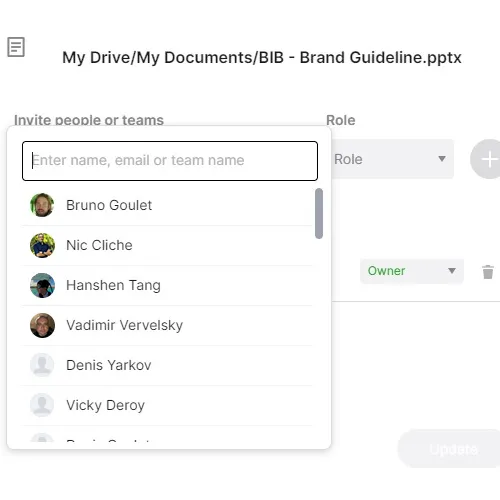
Share your files and folders with your team. Create a space of seamless collaboration.

Save time, save money, and create top-quality documents.

β˜…β˜…β˜…β˜…β˜…

"Fantastic value! I'm not sure how I'd do without it. It's worth its weight in gold and paid back for itself many times."

Managing Director Β· Mall Farm
Robert Whalley
Managing Director, Mall Farm Proprietary Limited
β˜…β˜…β˜…β˜…β˜…

"I have been using Business in a Box for years. It has been the most useful source of templates I have encountered. I recommend it to anyone."

Business Owner Β· 4+ years
Dr Michael John Freestone
Business Owner
β˜…β˜…β˜…β˜…β˜…

"It has been a life saver so many times I have lost count. Business in a Box has saved me so much time and as you know, time is money."

Owner Β· Upstate Web
David G. Moore Jr.
Owner, Upstate Web

Run your business with a system β€” not scattered tools

Stop downloading documents. Start operating with clarity. Business in a Box gives you the Business Operating System used by over 250,000 companies worldwide to structure, run, and grow their business.

Free Forever PlanΒ Β·Β No credit card required