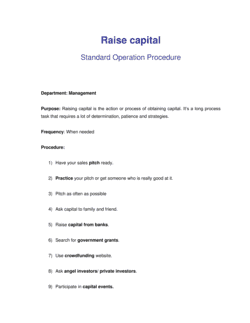
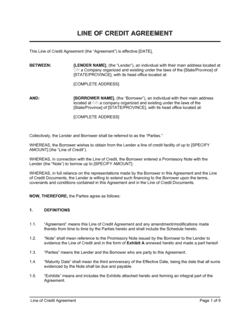
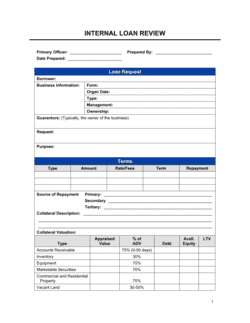
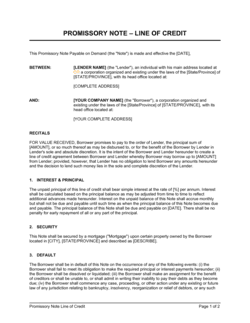
Business Financing and Loans Templates
★★★★★4.7from 280+ reviews· Trusted by 20M+ businesses
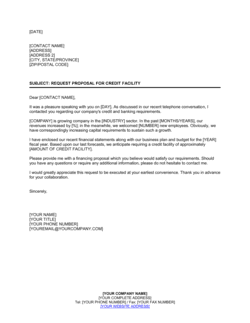
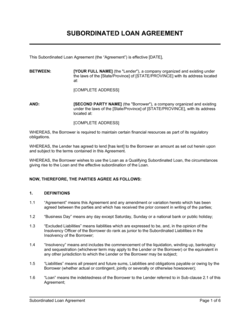
Go from funding application to signed agreement with the right template for every stage of the lending process.
WordEditable onlinePDF21+ business financing and loans templates
Other Finance & Accounting categories
Core financing and loan documents
Guides and educational resources
Business plans to support financing applications
Industry-specific business plans
Operational policies for funded businesses
250K+Clients
20M+Free users
20+Years
190+Countries
10,000+Law firms
50M+Downloads
Trusted across review platforms
- Capterra★★★★☆4.649 reviews
- G2★★★★☆4.713 reviews
- GetApp★★★★☆4.649 reviews
- Google Play★★★★☆4.6179 ratings
- Google Reviews★★★★☆4.567 reviews
Frequently asked questions
What documents do I need to apply for a small business loan?
Most lenders require a completed loan or credit application, recent financial statements (balance sheet, income statement, cash flow), a business plan, personal and business tax returns, and details of any existing debt. Some lenders also require a personal guarantee from the owner. The specific list varies by lender type and loan size, so confirm requirements early in the process.
Is a financing agreement the same as a promissory note?
No. A promissory note is the borrower's written promise to repay a specific amount under specific terms — it is a standalone instrument and is often negotiable. A financing agreement is a fuller contract that covers the entire lending relationship: disbursement conditions, covenants, representations, default, and remedies. Promissory notes are often attached as exhibits to a financing agreement.
What is a term sheet and is it legally binding?
A term sheet is a document summarizing the proposed key terms of an investment or financing deal before full legal documents are prepared. Most sections are non-binding — they record commercial intent, not enforceable obligations. However, some clauses (exclusivity, confidentiality, expense reimbursement) are typically made binding. Always review a term sheet with a lawyer before signing.
What does 'assignment of loans' mean?
Assignment of loans is the transfer of a lender's rights under an existing loan to a new creditor, without replacing the underlying loan agreement. The borrower continues making payments — often to the new assignee. Lenders assign loans to manage their balance sheets, sell portfolios, or raise liquidity. The borrower typically receives written notice of the assignment.
Do I need a business plan to get financing?
For most institutional lenders and virtually all equity investors, yes. A business plan demonstrates that you understand your market, have a credible path to profitability, and can service the debt or generate a return. Even for smaller loans, a one-page summary of your business model and financial projections strengthens your application considerably.
What is the difference between debt financing and equity financing?
Debt financing means borrowing money that must be repaid with interest, leaving ownership unchanged — bank loans, lines of credit, and bonds are examples. Equity financing means selling a share of ownership in exchange for capital — angel investment and venture capital are examples. Debt preserves control but creates repayment obligations; equity removes repayment pressure but dilutes ownership. Many businesses use both.
Can a small business get financing without collateral?
Yes, though it is typically harder and more expensive. Unsecured loans rely entirely on the borrower's creditworthiness and cash flow, so lenders charge higher rates to compensate for the additional risk. Some government-backed loan programs provide guarantees that reduce or eliminate collateral requirements for qualifying small businesses. Consult a financial adviser to identify programs available in your jurisdiction.
When should I use a short financing agreement instead of the full version?
A short financing agreement works well for simple, lower-value arrangements between parties who know each other and where the transaction has few contingencies — for example, an owner lending funds to their own company. For third-party institutional lending, larger amounts, or deals with multiple covenants and conditions, use the full-length financing agreement.
Business Financing And Loan vs. related documents
A financing agreement and a loan agreement cover much of the same ground — repayment terms, interest, default, and remedies. "Financing agreement" is the broader term and may include equity components, deferred payments, or asset-based arrangements. "Loan agreement" typically refers specifically to a cash advance that must be repaid with interest. Use a financing agreement when the deal involves more than a straightforward cash loan.
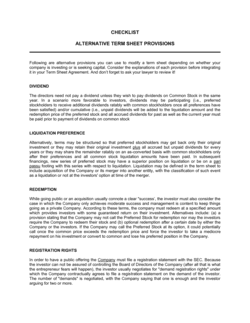
A term sheet is a non-binding (or lightly binding) summary of the key commercial terms of a deal — valuation, ownership percentage, governance rights — used to align parties before full legal documentation begins. A financing agreement is the binding, enforceable contract that follows. Always start with a term sheet for equity rounds; move to the full agreement once terms are agreed.
A business credit application is used to apply for a revolving line of credit or trade credit with a supplier, and is evaluated against the company's creditworthiness and payment history. A loan application is used for a fixed-term debt instrument and typically requires more detailed financial documentation. Use the credit application for ongoing credit relationships; use a loan application for one-time capital needs.
An assignment transfers a lender's rights under an existing loan to a new party without creating a new contract; the original agreement remains in place. A novation replaces the original contract entirely, substituting a new party and extinguishing the old obligations. Use an assignment when the borrower's obligations don't change; use novation when the underlying deal is restructured.
Key clauses every Business Financing And Loan contains
Regardless of the specific type, most business financing and loan documents share these core clauses — understanding each one helps you negotiate and complete them accurately.
- Loan amount and disbursement. States the exact capital being provided and how and when it will be released to the borrower.
- Interest rate and calculation method. Specifies the rate charged — fixed or variable — and how interest accrues over time.
- Repayment schedule. Sets out when payments are due, how much each payment is, and the order in which principal and interest are applied.
- Security and collateral. Identifies any assets pledged by the borrower as security against default.
- Representations and warranties. Statements of fact made by the borrower — about financial condition, legal standing, and authority — that the lender relies on.
- Covenants. Ongoing obligations the borrower must meet during the loan term, such as maintaining certain financial ratios or providing regular statements.
- Events of default. Defines the conditions under which the lender can demand immediate repayment or enforce security.
- Governing law. Names the jurisdiction whose laws apply to interpret and enforce the agreement.
How to write a business financing agreement
A financing agreement that holds up starts with clear commercial terms and works outward to legal protections — here is the standard sequence.
1
Identify and describe the parties
Use full registered legal names for both the lender (or investor) and the borrower, including jurisdiction of incorporation.
2
State the financing amount and purpose
Specify the exact amount being provided and the permitted use of funds — general working capital, equipment purchase, expansion, etc.
3
Set the interest rate and fee structure
State whether the rate is fixed or variable, how it is calculated, and any origination or arrangement fees.
4
Define the repayment terms
Set the payment frequency, amounts, start date, and whether early repayment is permitted or penalized.
5
Specify collateral or security
List any assets pledged as security, and note whether a separate security agreement or UCC filing is required.
6
Include representations, warranties, and covenants
Document what the borrower is certifying about their business and what ongoing obligations they must maintain during the loan term.
7
Define default events and remedies
List what constitutes a default — missed payment, material misrepresentation, insolvency — and what the lender may do in response.
8
Sign and retain executed copies
Have authorized signatories from both parties execute the agreement and store copies with your core legal and financial records.
At a glance
- What it is
- Business financing and loan documents are the contracts, guides, and forms that govern how a company borrows money, assigns debt, or structures external funding. They define repayment terms, obligations, and rights for both lender and borrower.
- When you need one
- Any time your business seeks capital — from a bank loan to a Series A round — you need the right document in place before money changes hands.
Which Business Financing And Loan do I need?
The right document depends on where you are in the funding process and who you're dealing with — a bank, an investor, or an existing lender. Match your situation below.
Your situation
Recommended template
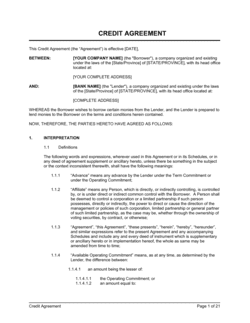
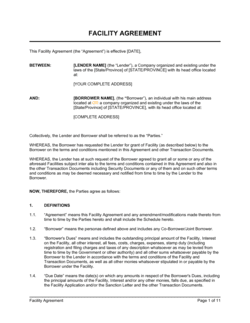
Formalizing a loan or funding arrangement with detailed terms
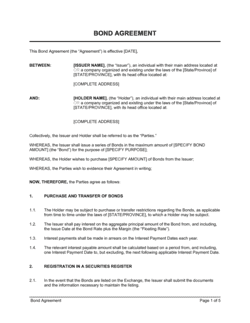
Full-length agreement covering all obligations, repayment, and default provisions.Documenting a simpler or shorter-term financing arrangement
Streamlined version for straightforward or short-duration funding deals.Outlining the key terms of a Series A equity round with investors
Covers valuation, ownership, and deal mechanics before full legal docs are drafted.Applying for a business line of credit or trade credit from a supplier
Collects financial and business information lenders and suppliers need to evaluate creditworthiness.Transferring an existing loan to a new lender or assignee
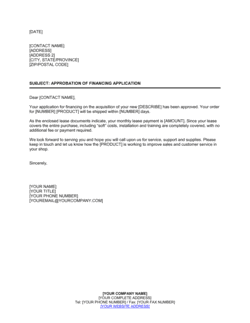
Legally transfers all rights and obligations of an existing loan to a third party.Confirming formal approval of a financing application
Documents the lender's official approval decision and accepted conditions.A founder or CFO needing a plain-English overview of small business loan options
Explains loan types, qualification criteria, and what lenders evaluate.Announcing to the market that your company has secured new financing
Ready-to-send press release template for communicating a funding milestone.Glossary
- Principal
- The original amount borrowed, excluding interest or fees.
- Amortization
- The process of paying off a loan through regular scheduled payments that cover both principal and interest over time.
- Collateral
- An asset pledged by a borrower to secure a loan; the lender may seize it if the borrower defaults.
- Covenant
- A promise in a loan agreement to do something (positive covenant) or refrain from something (negative covenant) during the loan term.
- Default
- A borrower's failure to meet the terms of a financing agreement, typically triggering the lender's right to demand repayment or enforce security.
- Term sheet
- A non-binding (or partially binding) summary of the proposed commercial terms of a financing deal, used to reach agreement before full legal documents are drafted.
- Assignment
- The transfer of a lender's rights under a loan to a new creditor, without changing the underlying loan agreement.
- Personal guarantee
- A commitment by an individual — usually a business owner — to repay a business loan from personal assets if the business cannot.
- Drawdown
- The act of accessing some or all of a committed loan facility; a lender commits a facility and the borrower draws it down as needed.
- Series A
- The first significant round of institutional venture capital financing a startup raises after seed funding, typically involving preferred equity.
- Promissory note
- A written, signed promise by a borrower to repay a specific sum under defined terms; often attached to a financing agreement as a separate instrument.
- Security interest
- A lender's legal claim over collateral pledged by a borrower, giving the lender priority rights to that asset in a default scenario.
What is a business financing and loans document?
A business financing and loans document is any contract, application, guide, or formal notice that governs how a business obtains, structures, or transfers capital. These documents define the rights and obligations of lenders, borrowers, and investors — covering everything from the amount disbursed and the repayment schedule to the collateral pledged and the consequences of default. Without them, capital transactions lack legal structure and are difficult or impossible to enforce.
Business financing documents span a wide range of instruments. Debt-focused documents — financing agreements, credit applications, and loan assignments — govern borrowed capital that must be repaid. Equity-focused documents — term sheets and investor agreements — govern the sale of ownership in exchange for capital. Supplementary documents like guides, business plans, and approval letters support the application and due-diligence process. Together, they form the paper trail that every funded business depends on.
When you need a business financing and loans document
Whenever capital moves between your business and an outside party — or is being planned to — a document should be in place before the transaction closes. Most financing disputes arise not from bad faith but from undocumented assumptions about repayment, ownership, or default rights.
Common triggers:
- Applying for a bank loan or line of credit
- Negotiating the terms of a Series A or early-stage investment round
- Formalizing a financing arrangement with a private lender or family investor
- Transferring an existing loan to a new lender or debt purchaser
- Issuing approval or rejection of a financing application
- Preparing a business plan to support a loan application or investor pitch
- Announcing a completed financing round to customers, partners, or the press
- Reviewing loan options and qualification criteria before approaching lenders
The cost of undocumented financing is not just legal — it is operational. Disputes over repayment terms, ownership dilution, or collateral priority can paralyze a business at exactly the moment it needs to focus on growth. A signed, well-drafted financing document eliminates most of that ambiguity before it becomes a problem.
Award-winning platform
- Great Place to Work 2025
- BIG Award — Product of the Year 2025
- Smartest Companies 2025
- Global 100 Excellence 2026
- Best of the Best 2025