Bond Agreement Template

Free Word download • Edit online • Save & share with Drive • Export to PDF

5 pages25–35 min to fillDifficulty: ComplexSignature requiredLegal review recommended
Learn more ↓
FreeBond Agreement Template

At a glance

What it is
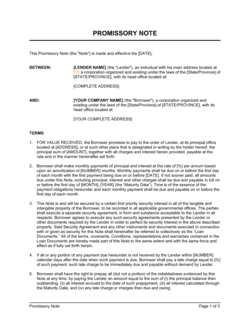
A Bond Agreement is a legally binding contract under which an issuer — a company, municipality, or government entity — commits to repay a bondholder a defined principal amount plus periodic interest at a specified coupon rate over a fixed term. This free Word download gives you a structured starting point covering face value, coupon schedule, maturity date, security arrangements, financial covenants, and default remedies, which you can edit online and export as PDF for execution.
When you need it
Use it when a business or organization raises debt capital by issuing bonds to investors, whether for a single private placement or a series of notes, and needs a written instrument that defines repayment obligations, bondholder protections, and remedies on default.
What's inside
Issuer and bondholder identification, principal face value, coupon rate and payment schedule, maturity date and redemption terms, security and collateral provisions, affirmative and negative covenants, events of default, acceleration rights, and governing law.

What is a Bond Agreement?

A Bond Agreement is a legally binding contract under which an issuer — a company, municipality, or government entity — formally commits to repay a bondholder a defined principal amount plus periodic interest payments at a specified coupon rate over a fixed term. Unlike a simple loan, a bond agreement structures the debt as a discrete financial instrument with defined coupon payment dates, a precise maturity date, security arrangements over specified collateral, ongoing financial covenants, and clearly enumerated events of default with associated acceleration rights. This free Word download covers all of these elements and gives issuers and bondholders a structured starting point they can edit online and export as PDF for execution.

Why You Need This Document

Without a written bond agreement, both issuer and bondholder are exposed simultaneously on every dimension of the transaction. An issuer with no documented covenant package faces unilateral demands from bondholders at the first sign of financial stress, with no agreed framework limiting what remedies the bondholder can exercise. A bondholder with no written instrument — or one that lacks a perfected security interest — becomes an unsecured creditor, ranking behind every bank and trade creditor in a restructuring or insolvency. Missed coupon payments without a defined cure period trigger immediate legal disputes over whether default has occurred. And bonds executed without board authorization resolutions or proper registration filings can be voided entirely by a liquidator. A properly drafted bond agreement eliminates all four risks, defines the rights and obligations of both parties for the life of the instrument, and provides the documentary foundation required to enforce repayment when it matters most.

Which variant fits your situation?

If your situation is…Use this template
Issuing a fixed-rate bond with scheduled semi-annual coupon paymentsFixed-Rate Bond Agreement
Issuing a bond convertible into equity at a future date or eventConvertible Note Agreement
Lending a lump sum with a simple repayment promise and interestPromissory Note
Raising debt secured against specific real propertyMortgage Agreement
Short-term bridge financing between equity roundsBridge Loan Agreement
Documenting a private loan between two parties with an amortization scheduleLoan Agreement
Issuing bonds to a group of investors under a single trust deedIndenture Agreement

Common mistakes to avoid

❌ Omitting the day-count convention for interest calculation

Why it matters: The difference between Actual/365 and Actual/360 accrual can result in hundreds or thousands of dollars of discrepancy per payment period on large principal amounts, creating disputes at every coupon date.

Fix: State the day-count convention explicitly in the coupon clause and attach a Schedule A with pre-calculated payment amounts for each scheduled coupon date.

❌ Describing collateral in vague or generic terms

Why it matters: A description like 'all assets of the Issuer' may fail to satisfy the identification requirements under the UCC, PPSA, or equivalent statutes, leaving the bondholder's security interest unperfected and subordinate to later creditors.

Fix: Identify collateral by specific asset type, account number, serial number, or property address. File the required financing statement (UCC-1 or equivalent) within 5 business days of execution.

❌ No cure period on payment default triggers

Why it matters: Acceleration triggered on the first day a payment is late — with no grace period — exposes the bondholder to a challenge that the remedy was commercially unreasonable, potentially delaying enforcement through litigation.

Fix: Include a 5-business-day cure period for payment defaults and a 30-calendar-day cure period for covenant breaches, consistent with market standard practice.

❌ Missing representations and a survival clause

Why it matters: Without representations confirming the issuer's authority, good standing, and financial accuracy — and a clause making them survive closing — the bondholder has no contractual basis to unwind the transaction if a material misrepresentation is discovered after the bond is issued.

Fix: Include a full representations block and a survival clause stating that all representations survive execution and remain in force for the life of the bond.

❌ No cross-default provision

Why it matters: Without a cross-default clause, an issuer can default on other debt instruments while continuing to service this bond selectively, leaving the bondholder unknowingly exposed to a deteriorating credit that other creditors are already accelerating.

Fix: Add a cross-default event of default triggered whenever the issuer defaults under any other indebtedness exceeding a specified threshold — typically $[AMOUNT] or [X]% of total assets.

❌ Selecting a governing law with no connection to the transaction

Why it matters: Choosing an unfamiliar jurisdiction to appear neutral can introduce unexpected mandatory rules — interest rate caps, usury statutes, or mandatory arbitration requirements — that override the negotiated terms and invalidate above-market coupon rates.

Fix: Choose the governing law of the issuer's principal place of business or the bondholder's home jurisdiction, and confirm with counsel that the selected jurisdiction does not impose statutory caps that conflict with the agreed coupon rate.

The 10 key clauses, explained

Parties and recitals

In plain language: Identifies the issuer and bondholder as legal entities, states the date of the agreement, and summarizes the purpose of the bond issuance.

Sample language
This Bond Agreement is entered into as of [DATE] between [ISSUER LEGAL NAME], a [STATE/PROVINCE] [ENTITY TYPE] ('Issuer'), and [BONDHOLDER LEGAL NAME] ('Bondholder'). The Issuer wishes to raise [AMOUNT] by issuing a bond on the terms set out below.

Common mistake: Using a trade name instead of the issuer's registered legal entity name. If the entity name does not match public registry records, enforcing security interests or pursuing default remedies against the correct debtor becomes significantly more complex.

Principal amount and face value

In plain language: States the exact amount of money the bondholder is lending and that the issuer promises to repay at maturity.

Sample language
The Issuer hereby issues to the Bondholder a bond with a face value of [CURRENCY] [AMOUNT] ('Principal'), receipt of which the Issuer hereby acknowledges.

Common mistake: Omitting the currency denomination on cross-border bonds. USD and CAD are easily confused in North American transactions, and the ambiguity becomes a dispute point when exchange rates move.

Coupon rate and interest payment schedule

In plain language: Sets the annual interest rate and defines precisely when and how interest payments will be made throughout the bond's life.

Sample language
The Issuer shall pay interest on the Principal at the rate of [X]% per annum, calculated on a [365/360]-day basis, payable [semi-annually / quarterly] on [PAYMENT DATES] in each year, commencing [FIRST PAYMENT DATE].

Common mistake: Failing to specify the day-count convention (365-day vs. 360-day). The difference in accrued interest over a multi-year term can be material, and omitting it creates calculation disputes at each payment date.

Maturity and repayment

In plain language: Sets the date the bond terminates and the issuer must return the full principal, and describes how repayment is to be made.

Sample language
Unless previously redeemed or repurchased, the Issuer shall repay the Principal in full on [MATURITY DATE] ('Maturity Date') by wire transfer to the Bondholder's account at [BANK / DETAILS] by no later than [TIME] on the Maturity Date.

Common mistake: No payment mechanics — specifying the maturity date but not how or where funds are transferred. This leaves the issuer technically in default if the bondholder's banking details are not confirmed in advance of the repayment date.

Security and collateral

In plain language: Describes what assets, if any, the issuer pledges as security for repayment obligations, and the bondholder's priority rights over those assets.

Sample language
As security for the performance of its obligations under this Agreement, the Issuer hereby grants to the Bondholder a first-priority security interest in [COLLATERAL DESCRIPTION] (the 'Collateral'). The Issuer shall execute all documents necessary to perfect such security interest under applicable law.

Common mistake: Describing collateral in vague terms such as 'all company assets.' Courts require adequate identification of collateral to perfect a security interest under the UCC (US), PPSA (Canada), or equivalent legislation — a generic description may leave the bondholder unsecured.

Affirmative and negative covenants

In plain language: Requires the issuer to take certain protective actions and prohibits it from taking actions that could impair its ability to repay the bond.

Sample language
During the term of this Agreement, the Issuer shall: (a) maintain adequate insurance on all material assets; (b) deliver audited financial statements within [90] days of each fiscal year end; and (c) notify the Bondholder promptly of any Event of Default. The Issuer shall not, without prior written consent of the Bondholder: (i) incur additional indebtedness exceeding $[THRESHOLD]; (ii) declare or pay dividends; or (iii) dispose of assets outside the ordinary course of business.

Common mistake: Setting financial covenant thresholds — such as minimum EBITDA or maximum debt-to-equity ratios — without defining exactly how the relevant financial metrics are calculated. Undefined calculations make covenant compliance impossible to verify objectively.

Events of default

In plain language: Lists the specific triggers that constitute a default by the issuer, giving the bondholder the right to demand immediate repayment.

Sample language
Each of the following constitutes an 'Event of Default': (a) failure to pay any amount of Principal or interest within [5] business days of its due date; (b) material breach of any covenant not remedied within [30] days of notice; (c) the Issuer becomes insolvent, makes an assignment for the benefit of creditors, or a receiver is appointed; (d) any representation proves materially false as of the date made.

Common mistake: No cure period for non-payment events. Triggering acceleration the moment a payment is one day late, without a short cure window, can expose the bondholder to legal challenge and makes the agreement commercially unreasonable.

Acceleration and remedies

In plain language: Sets out what the bondholder can do once a default occurs — including declaring the full principal immediately due and enforcing security.

Sample language
Upon the occurrence of an Event of Default, the Bondholder may, by written notice to the Issuer, declare the entire outstanding Principal and all accrued and unpaid interest immediately due and payable. The Bondholder may thereupon enforce any security interest granted hereunder and pursue all remedies available at law or in equity.

Common mistake: Omitting a written notice requirement before acceleration. Without it, the issuer may successfully argue the acceleration was procedurally invalid, delaying enforcement and increasing the bondholder's recovery costs.

Representations and warranties

In plain language: The issuer confirms key facts about its legal existence, authority to issue the bond, and the accuracy of any financial information provided to the bondholder.

Sample language
The Issuer represents and warrants that: (a) it is duly incorporated and in good standing under the laws of [JURISDICTION]; (b) the execution of this Agreement has been duly authorized by all necessary corporate action; (c) the financial statements provided to the Bondholder fairly present the Issuer's financial position as of [DATE].

Common mistake: No survival clause on representations. Without specifying that representations survive closing, a bondholder who discovers a material misrepresentation post-execution may have difficulty pursuing a misrepresentation claim once the bond is outstanding.

Governing law and dispute resolution

In plain language: Specifies which jurisdiction's law governs the agreement and how disputes between issuer and bondholder will be resolved.

Sample language
This Agreement is governed by the laws of [STATE / PROVINCE / COUNTRY], without regard to conflict-of-laws principles. Any dispute arising under this Agreement shall be submitted to binding arbitration in [CITY] under the rules of [AAA / JAMS / LCIA / ICAC], except that either party may seek injunctive relief in a court of competent jurisdiction.

Common mistake: Selecting a governing law with no real connection to either party or the transaction. Choosing an unfamiliar jurisdiction to appear neutral can create unexpected substantive law issues — for example, certain jurisdictions impose mandatory interest rate caps that void above-market coupon rates.

How to fill it out

  1. 1

    Identify the parties with their full legal entity names

    Enter the issuer's registered corporate or municipal name and the bondholder's legal name exactly as each appears in official registry documents. Include entity type (corporation, LLC, municipality) and jurisdiction of formation.

    💡 Cross-reference the issuer's certificate of incorporation or articles of organization before completing this field — a mismatch between the contract name and registry record complicates security interest registration.

  2. 2

    Set the principal amount and currency

    Enter the exact face value of the bond in figures and words, and state the currency with its ISO code (e.g., USD, CAD, GBP). Confirm the bondholder's wire transfer details and the date funds will be received by the issuer.

    💡 For cross-border transactions, add a currency clause specifying which party bears exchange-rate risk if payments are made in a currency other than the bond's stated denomination.

  3. 3

    Define the coupon rate and payment schedule

    Enter the annual interest rate, select the day-count convention (Actual/365 or Actual/360), and list each coupon payment date for the life of the bond. Specify whether interest accrues from the settlement date or the agreement date.

    💡 Attach a payment schedule as Schedule A listing every coupon date and amount — this removes ambiguity and gives both parties a single reference point for tracking payments.

  4. 4

    Set the maturity date and repayment mechanics

    Enter the exact maturity date and describe precisely how principal will be returned — wire transfer, certified check, or ACH — and to which account. Include a fallback if the maturity date falls on a non-business day.

    💡 Add a 'next business day' convention clause so that if the maturity date falls on a weekend or public holiday, the payment obligation automatically moves to the following business day without constituting a default.

  5. 5

    Describe the security and perfect the collateral interest

    If the bond is secured, identify the collateral precisely — specific assets, account numbers, or property descriptions — and note the filing or registration steps required to perfect the security interest in the applicable jurisdiction.

    💡 For US transactions, file a UCC-1 financing statement with the relevant Secretary of State within 5 business days of execution to establish priority over subsequent creditors.

  6. 6

    Negotiate and document the covenants

    Agree on which affirmative covenants the issuer must comply with (financial statements, insurance, corporate existence) and which negative covenants restrict issuer actions (additional debt ceiling, dividend restrictions, asset disposals). Set measurable thresholds and define all financial terms used.

    💡 Cap the additional-debt negative covenant at a specific dollar figure rather than a ratio — ratios require a financial model to test and create disputes at every compliance date.

  7. 7

    Specify events of default with cure periods

    List each event of default clearly and attach a cure period — typically 5 business days for payment defaults and 30 calendar days for covenant defaults. Ensure insolvency and cross-default triggers are explicitly included.

    💡 Include a cross-default clause that triggers an event of default here if the issuer defaults under any other material debt instrument — this prevents selective repayment of other creditors ahead of the bondholder.

  8. 8

    Execute and register before funds are transferred

    Both parties must sign the agreement before or simultaneously with the transfer of funds. Register any required security interests immediately after execution. Retain fully executed originals and store copies in a secure document system.

    💡 Use a conditions-precedent clause requiring the issuer to provide evidence of board authorization and security registration before the bondholder's wire transfer obligation is triggered.

Frequently asked questions

What is a bond agreement?

A bond agreement is a legally binding contract under which an issuer — typically a company, municipality, or government body — commits to repay a bondholder a specified principal amount plus periodic interest at a defined coupon rate over a fixed term. It functions as the governing instrument for the debt relationship, setting out repayment obligations, bondholder protections, financial covenants, and the remedies available if the issuer fails to perform.

What is the difference between a bond agreement and a promissory note?

A promissory note is a simpler, shorter instrument in which one party unconditionally promises to repay a sum to another. A bond agreement is a more detailed contract — typically used for larger or more complex debt financings — that adds financial covenants, affirmative and negative restrictions on the issuer, security arrangements, events of default with cure periods, and acceleration rights. Use a promissory note for straightforward bilateral loans; use a bond agreement when the debt involves investor protections, collateral, or ongoing compliance obligations.

Does a bond agreement need to be signed by both parties?

Yes. A bond agreement is a bilateral contract requiring execution by both the issuer and the bondholder to be legally binding. In addition, any security interest granted under the agreement typically requires separate registration — such as a UCC-1 filing in the US or a PPSA registration in Canada — to be enforceable against third-party creditors. Execution should occur before or simultaneously with the transfer of bond proceeds.

What covenants are typically included in a bond agreement?

Bond agreements typically include affirmative covenants — obligations the issuer must fulfill, such as delivering annual financial statements, maintaining adequate insurance, and preserving corporate existence — and negative covenants, which restrict the issuer from incurring additional debt above a set threshold, paying dividends, or disposing of material assets without bondholder consent. Financial maintenance covenants, such as minimum interest coverage or maximum leverage ratios, are common in institutional transactions.

What happens when an issuer defaults on a bond agreement?

When an event of default occurs — such as a missed coupon payment, a covenant breach, or the issuer becoming insolvent — the bondholder typically has the right to deliver a written acceleration notice declaring the full outstanding principal and all accrued interest immediately due and payable. The bondholder may then enforce any security interest over the issuer's collateral and pursue all available legal remedies. The specific process and cure periods are governed by the agreement's default and acceleration clauses.

Is a bond agreement the same as an indenture?

Not exactly. An indenture is a specific form of bond agreement used when bonds are issued to multiple investors — it appoints a trustee to act on behalf of all bondholders collectively and governs the relationship between the issuer and the trustee. A bilateral bond agreement, by contrast, documents a direct relationship between one issuer and one bondholder without a trustee. Private placements and smaller financing transactions typically use a bilateral bond agreement; public bond issuances and large multi-investor placements use an indenture.

Can a bond agreement include a conversion option?

Yes. A convertible bond agreement includes a conversion clause allowing the bondholder to exchange some or all of the principal for equity in the issuer — typically at a pre-agreed conversion price or at a discount to a future financing round valuation. Conversion mechanics, anti-dilution protections, and the circumstances that trigger or preclude conversion must be defined precisely. A separate convertible note agreement template is better suited to transactions where conversion is the primary exit mechanism.

Do I need a lawyer to draft a bond agreement?

For private placements involving sophisticated parties and straightforward terms, a well-structured template is a sound starting point. Legal review is strongly recommended whenever the bond involves complex security arrangements, conversion features, publicly-offered notes, cross-border parties, or material covenant packages. In the US, bonds sold to non- accredited investors or marketed broadly may also trigger SEC registration requirements, making counsel essential before issuance.

What security can a bond agreement include?

A secured bond agreement can grant the bondholder a security interest over specific tangible assets (equipment, inventory, real property), financial accounts, intellectual property, or the issuer's shares in subsidiaries. The security interest must be adequately described and registered under the applicable personal property or land registry legislation — UCC Article 9 in the US, the PPSA in Canadian provinces, or the Bills of Sale Act equivalent in the UK — to be enforceable against other creditors. An unsecured bond relies solely on the issuer's covenant to pay and general creditworthiness.

What is a call provision in a bond agreement?

A call provision is an optional right allowing the issuer to redeem the bond before the maturity date, typically by paying the bondholder the outstanding principal plus a call premium — often expressed as a percentage of face value that steps down over time. Call provisions benefit issuers who want flexibility to refinance at lower rates but reduce the bondholder's yield certainty. Some agreements include a non-call period during which the issuer cannot exercise the call right regardless of market conditions.

How this compares to alternatives

vs Promissory Note

A promissory note is a short, unconditional promise to repay a sum with interest — suitable for straightforward bilateral loans without ongoing compliance obligations. A bond agreement adds financial covenants, security provisions, defined events of default with cure periods, and acceleration rights. Use a promissory note for simple intra-company or personal loans; use a bond agreement when the financing involves investor protections, collateral, or a multi-year covenant package.

vs Loan Agreement

A loan agreement is structured as a credit facility — the lender makes advances and the borrower draws down and repays on agreed terms, often with a revolving or term-loan mechanic. A bond agreement issues a fixed-denomination debt instrument that the bondholder holds as a security, typically tradeable or assignable. Loan agreements suit bank credit facilities; bond agreements suit capital market or private placement financings where the debt instrument itself has investment characteristics.

vs Convertible Note Agreement

A convertible note is a bond that includes a mechanism allowing the holder to convert principal into equity — typically at a discount to a future financing round or at a pre-set valuation cap. A standard bond agreement is pure debt with no equity conversion feature. Use a convertible note for early-stage startups raising a seed bridge; use a bond agreement for companies issuing fixed-income instruments to investors seeking defined cash coupon returns.

vs Debenture Agreement

A debenture is an unsecured or floating-charge debt instrument — it ranks behind secured creditors in a wind-up but ahead of equity. A secured bond agreement grants a fixed charge over specific collateral, giving the bondholder priority recovery rights over those named assets. Choose a debenture for general corporate financing where no specific asset is pledged; choose a secured bond agreement when the bondholder requires a perfected charge over identifiable assets as a condition of investment.

Industry-specific considerations

Real estate and property development

Bonds are frequently secured by a first or second mortgage over the development property, with LTV covenant thresholds and construction milestone reporting obligations tied to interest payment dates.

Corporate finance and private equity

Private placement bonds used for leveraged buyouts or growth capital typically include tight negative covenants capping total debt and restricting distributions until a defined coverage ratio is met.

Municipal and government finance

Municipal bond agreements are governed by public finance statutes that restrict permissible uses of proceeds, mandate disclosure to holders, and require official authorization by resolution of the issuing body before execution.

Infrastructure and energy

Project finance bonds are secured against specific project assets and revenues, with cash-flow waterfall clauses requiring debt service coverage before any equity distributions are permitted.

Jurisdictional notes

United States

Bonds offered to US investors may require registration under the Securities Act of 1933 unless an exemption applies — most private placements rely on Regulation D (Rule 506(b) or 506(c)) and are limited to accredited investors. Security interests in personal property must be perfected by filing a UCC-1 financing statement with the Secretary of State in the issuer's jurisdiction of formation. Usury laws vary by state and can cap permissible interest rates, particularly for non-corporate borrowers.

Canada

Bond issuances to Canadian investors are subject to provincial securities legislation; most private placements use the accredited investor or minimum amount exemptions under National Instrument 45-106. Security interests in personal property are governed by each province's Personal Property Security Act (PPSA) and must be registered in the province where the issuer is located or the collateral is situated. Quebec follows the Civil Code rather than common-law security regimes, requiring a hypothec rather than a PPSA security agreement.

United Kingdom

Bond issuances in the UK are regulated by the Financial Services and Markets Act 2000; private placements to qualified investors benefit from a prospectus exemption. Fixed and floating charges granted to bondholders must be registered at Companies House within 21 days of creation under the Companies Act 2006 — failure to register renders the security void against a liquidator and other creditors. Post-Brexit, UK and EU prospectus regimes are no longer mutually recognized.

European Union

EU bond offerings are governed by the EU Prospectus Regulation (2017/1129); private placements to fewer than 150 non-qualified investors per member state are exempt. GDPR considerations apply when bondholder personal data is processed. Security interest regimes vary significantly by member state — France uses a nantissement, Germany a Sicherungsübereignung or Grundschuld, and the Netherlands a right of pledge — each with distinct registration and perfection requirements that must be confirmed with local counsel.

Template vs lawyer — what fits your deal?

PathBest forCostTime
Use the templatePrivate placements between sophisticated parties with straightforward fixed-rate terms and no conversion featuresFree1–2 hours
Template + legal reviewSecured bonds, multi-investor placements, cross-border issuances, or transactions with complex covenant packages$800–$2,5003–7 days
Custom draftedPublic bond offerings, convertible notes with anti-dilution mechanics, regulated industries, or bonds exceeding $5M$5,000–$25,000+2–6 weeks

Glossary

Face Value (Par Value)
The principal amount printed on the bond that the issuer agrees to repay to the bondholder at maturity.
Coupon Rate
The annual interest rate applied to the face value to calculate periodic interest payments due to the bondholder.
Maturity Date
The specific date on which the issuer must repay the full principal to the bondholder, ending the bond's term.
Coupon Payment Date
The scheduled date on which each interest payment is made — typically monthly, quarterly, or semi-annually.
Indenture
A formal bond agreement between an issuer and a trustee acting on behalf of multiple bondholders, setting out all terms and covenants.
Affirmative Covenant
A contractual obligation requiring the issuer to take specific actions — such as maintaining insurance, delivering financial statements, or preserving corporate existence.
Negative Covenant
A contractual restriction prohibiting the issuer from taking certain actions — such as incurring additional debt, paying dividends, or disposing of material assets — without bondholder consent.
Event of Default
A defined trigger — such as missed interest payment, covenant breach, or insolvency — that entitles the bondholder to demand immediate repayment of principal and accrued interest.
Acceleration
The bondholder's right to declare the entire outstanding principal immediately due and payable upon the occurrence of an event of default.
Security Interest
A legal claim over specific assets of the issuer granted to the bondholder as collateral, giving the bondholder priority recovery rights if the issuer defaults.
Call Provision
An optional right allowing the issuer to redeem the bond before maturity at a specified call price, typically at a premium to face value.
Yield to Maturity (YTM)
The total annualized return an investor earns if the bond is held to maturity, accounting for coupon payments, face value repayment, and the purchase price paid.

Part of your Business Operating System

This document is one of 3,000+ business & legal templates included in Business in a Box.

  • Fill-in-the-blanks — ready in minutes
  • 100% customizable Word document
  • Compatible with all office suites
  • Export to PDF and share electronically

Create your document in 3 simple steps.

From template to signed document — all inside one Business Operating System.
1
Download or open template

Access over 3,000+ business and legal templates for any business task, project or initiative.

2
Edit and fill in the blanks with AI

Customize your ready-made business document template and save it in the cloud.

3
Save, Share, Send, Sign

Share your files and folders with your team. Create a space of seamless collaboration.

Save time, save money, and create top-quality documents.

★★★★★

"Fantastic value! I'm not sure how I'd do without it. It's worth its weight in gold and paid back for itself many times."

Managing Director · Mall Farm
Robert Whalley
Managing Director, Mall Farm Proprietary Limited
★★★★★

"I have been using Business in a Box for years. It has been the most useful source of templates I have encountered. I recommend it to anyone."

Business Owner · 4+ years
Dr Michael John Freestone
Business Owner
★★★★★

"It has been a life saver so many times I have lost count. Business in a Box has saved me so much time and as you know, time is money."

Owner · Upstate Web
David G. Moore Jr.
Owner, Upstate Web

Run your business with a system — not scattered tools

Stop downloading documents. Start operating with clarity. Business in a Box gives you the Business Operating System used by over 250,000 companies worldwide to structure, run, and grow their business.

Start free · No credit card required