Secured Lumpsum Promissory Note Agreement Template

Free Word download • Edit online • Save & share with Drive • Export to PDF

4 pages25–35 min to fillDifficulty: ComplexSignature requiredLegal review recommended
Learn more ↓
FreeSecured Lumpsum Promissory Note Agreement Template

At a glance

What it is
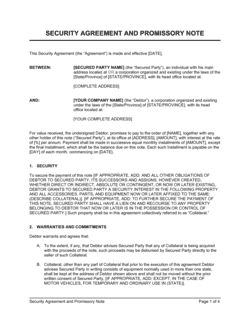
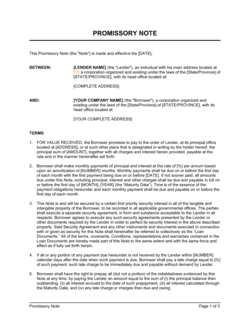
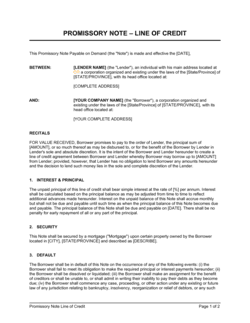
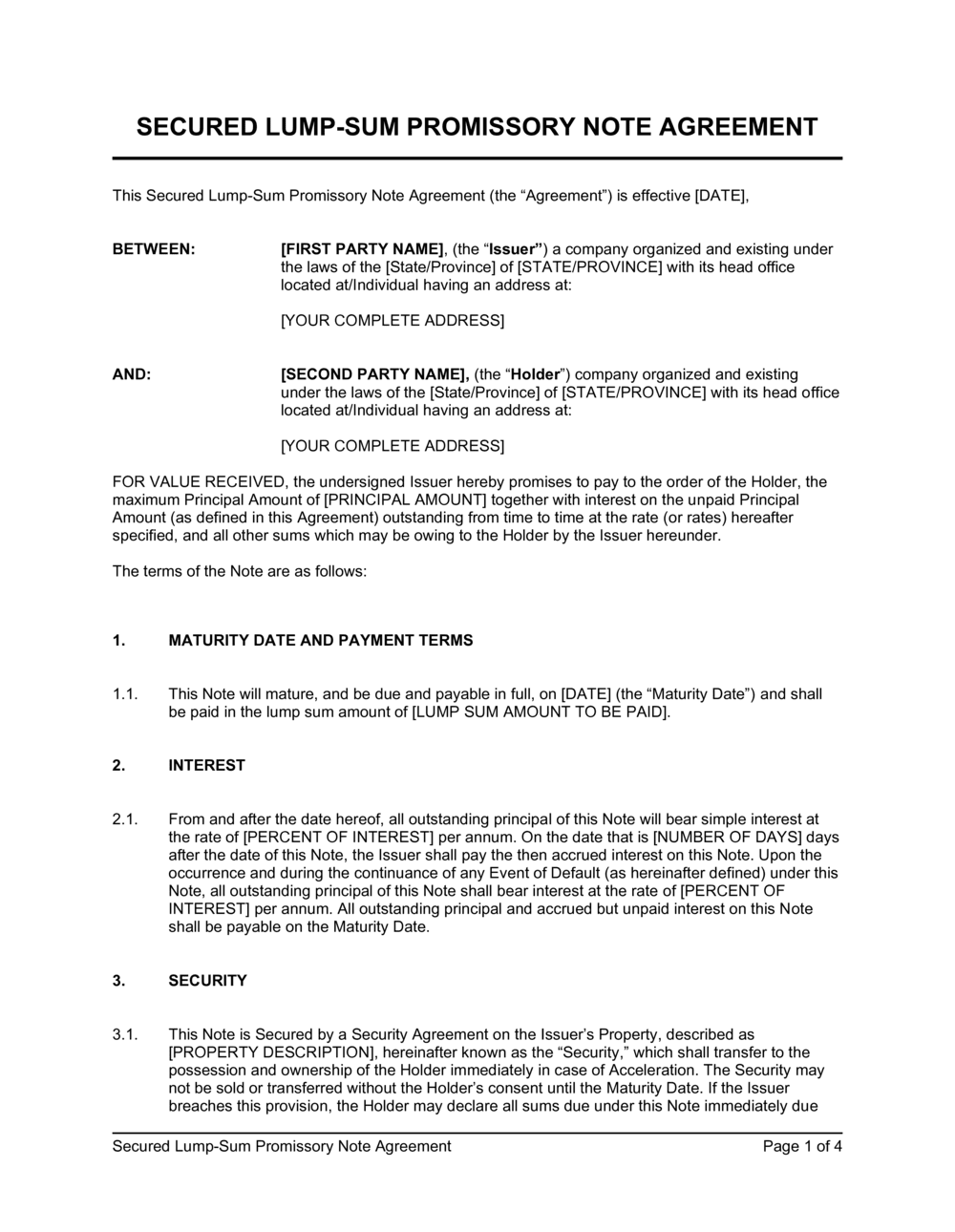
A Secured Lumpsum Promissory Note Agreement is a legally binding instrument in which a borrower unconditionally promises to repay a single lump-sum loan amount — plus agreed interest — to a lender by a specific due date, and pledges specific collateral to secure the obligation. This free Word download covers the principal amount, interest rate, maturity date, collateral description, default triggers, and lender remedies in one compact document you can edit online and export as PDF.
When you need it
Use it when one party lends a defined sum to another in a single disbursement and both parties want the debt and the collateral securing it documented in a formally enforceable written instrument. It is appropriate for business loans between companies, shareholder or related-party loans, and private lending arrangements where a bank is not involved.
What's inside
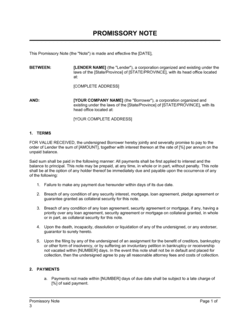
Parties and principal amount, interest rate and calculation method, maturity date, collateral description and security interest, representations and warranties, events of default, lender remedies upon default, governing law, and signature blocks for borrower and lender.

What is a Secured Lumpsum Promissory Note Agreement?

A Secured Lumpsum Promissory Note Agreement is a legally binding written instrument in which a borrower makes an unconditional promise to repay a single, fixed sum — disbursed in one advance — plus agreed interest to a lender by a specified maturity date, and pledges identifiable collateral to secure that obligation. Unlike an installment note, the entire outstanding balance falls due in one lump-sum payment on the maturity date rather than across periodic payments. Unlike an unsecured note, the lender holds a security interest in specific property that can be seized and sold if the borrower fails to pay. Together, the lump-sum structure and the collateral pledge make this instrument one of the most straightforward yet legally significant tools in private and commercial lending.

Why You Need This Document

A handshake loan — or even an email confirming the amount and interest rate — leaves both parties exposed in ways that become apparent only when something goes wrong. Without a signed, collateral-backed note, the lender has no perfected priority claim against the borrower's assets in bankruptcy, no documented default rate to apply to overdue balances, and no unambiguous maturity date to anchor an enforcement action. For the borrower, a properly drafted note prevents the lender from claiming a higher rate or earlier due date than was agreed. Filing the corresponding UCC-1 or property security instrument the week after signing converts a contractual promise into a publicly recorded priority claim — one that survives the borrower's insolvency and defeats later creditors. This template gives both lender and borrower a complete, enforceable instrument covering every material term, so that a straightforward private loan transaction does not become a costly dispute when the repayment date arrives.

Which variant fits your situation?

If your situation is…Use this template
Loan repaid in fixed monthly installments rather than a single lump sumSecured Installment Promissory Note
Unsecured loan with no collateral pledgedUnsecured Promissory Note
Short-term bridge loan with a balloon payment at maturityBalloon Payment Promissory Note
Loan between business and its shareholder or directorShareholder Loan Agreement
Real estate mortgage loan requiring a deed of trustMortgage Promissory Note
Demand loan repayable whenever the lender calls itDemand Promissory Note
Loan between two businesses governed by a full credit facilityBusiness Loan Agreement

Common mistakes to avoid

❌ Failing to file the UCC-1 financing statement

Why it matters: Without filing, the security interest is unperfected — meaning a bankruptcy trustee or a subsequent creditor with a filed lien can take priority over the lender's claim against the collateral.

Fix: File a UCC-1 in the borrower's state of organization within five business days of signing. Keep the acknowledgment copy as proof of perfection date.

❌ Setting an interest rate above the applicable usury ceiling

Why it matters: A usurious interest rate can make the note unenforceable in whole or in part, and in some jurisdictions the lender forfeits all interest — not just the excess — as a penalty.

Fix: Confirm the commercial usury limit for the governing jurisdiction before finalizing the rate. For interstate transactions, choose a governing law with a permissive rate ceiling and ensure that choice is legally supportable.

❌ Using a vague or overinclusive collateral description

Why it matters: A collateral description like 'all assets' or 'equipment' without further specifics may be rejected during UCC filing or challenged in bankruptcy as insufficiently identified.

Fix: Describe each collateral item by category, manufacturer, serial number, or legal description — specific enough that an independent third party could identify it without asking the parties.

❌ Executing the note after funds are already disbursed

Why it matters: In several jurisdictions, a promissory note signed after the loan is made may lack consideration, making it unenforceable or reducing its standing in a deficiency proceeding.

Fix: Always sign the note at the time of or before fund disbursement. If circumstances require a post-advance note, recite the prior advance explicitly as consideration in the note's opening recitals.

❌ Omitting insolvency and bankruptcy as events of default

Why it matters: If default is limited to non-payment at maturity, the lender cannot accelerate even when the borrower files for bankruptcy — losing the ability to act before the automatic stay freezes all enforcement.

Fix: Include insolvency, voluntary or involuntary bankruptcy, receivership, and general assignment for the benefit of creditors as automatic events of default triggering immediate acceleration.

❌ No written cure period for payment default

Why it matters: Immediate acceleration on a single day of non-payment invites litigation over wire delays or minor administrative errors, and courts may view the remedy as disproportionate.

Fix: Include a 5–10 business day cure period for payment defaults before the acceleration right activates — this is market-standard and reduces unnecessary dispute.

The 10 key clauses, explained

Parties, Principal Amount, and Loan Date

In plain language: Identifies the lender and borrower as legal entities or individuals, states the exact principal amount disbursed, and records the date funds are advanced.

Sample language
FOR VALUE RECEIVED, [BORROWER FULL LEGAL NAME] ('Borrower'), promises to pay to the order of [LENDER FULL LEGAL NAME] ('Lender'), the principal sum of $[AMOUNT] USD, advanced on [LOAN DATE].

Common mistake: Using trade names or nicknames instead of registered legal entity names. If the named borrower does not match the collateral owner of record, perfecting the security interest becomes legally complicated.

Interest Rate and Calculation

In plain language: States the annual interest rate, whether it is fixed or variable, and how interest accrues — typically on a 365-day actual-day basis — from the loan date to the maturity date.

Sample language
The outstanding principal shall bear interest at the rate of [X]% per annum, calculated on a 365-day year, accruing daily from the Loan Date until paid in full.

Common mistake: Omitting the calculation basis (360-day vs. 365-day year). The difference can amount to meaningful extra interest over a multi-year term and create disputes at payoff.

Maturity Date and Lump-Sum Payment Obligation

In plain language: Sets the single due date on which the borrower must repay the full principal balance plus all accrued and unpaid interest in one payment.

Sample language
The entire outstanding principal balance, together with all accrued and unpaid interest, shall be due and payable in full on [MATURITY DATE] ('Maturity Date').

Common mistake: Failing to state whether the maturity date can be extended by agreement. Without a written extension clause, any verbal rollover arrangement lacks enforceability.

Collateral Description and Grant of Security Interest

In plain language: Identifies the specific asset or assets pledged as collateral and formally grants the lender a security interest in that collateral to secure repayment of the note.

Sample language
To secure payment of this Note, Borrower hereby grants to Lender a security interest in the following collateral: [DESCRIPTION OF COLLATERAL] ('Collateral'), together with all proceeds and replacements thereof.

Common mistake: Using a vague collateral description such as 'all business assets.' A description that is too broad may be rejected in a UCC filing or challenged in bankruptcy as unperfected.

Perfection and Priority of Security Interest

In plain language: Obligates the borrower to cooperate in filing the documents needed to make the lender's security interest effective against third parties — such as UCC-1 financing statements or property registrations.

Sample language
Borrower shall execute and deliver all instruments and documents, including UCC financing statements, as Lender may reasonably request to perfect and maintain the priority of Lender's security interest in the Collateral.

Common mistake: Signing the note but never filing the UCC-1. An unfiled security interest is unperfected — meaning the lender has no priority over a subsequent creditor or bankruptcy trustee.

Representations and Warranties

In plain language: The borrower confirms that it owns the collateral free of prior liens, has authority to enter the agreement, and is not in violation of any other obligation that would impair repayment.

Sample language
Borrower represents and warrants that: (a) Borrower has good and marketable title to the Collateral, free of all liens and encumbrances except as disclosed; (b) Borrower has full authority to execute this Note; and (c) execution of this Note does not violate any agreement to which Borrower is a party.

Common mistake: Omitting a representation that no prior liens exist on the collateral. If a prior creditor has a perfected security interest, the new lender may be subordinated and recover little or nothing on default.

Events of Default

In plain language: Lists the specific conditions that trigger default — typically non-payment at maturity, insolvency, voluntary bankruptcy, breach of representations, or material adverse change — entitling the lender to exercise remedies.

Sample language
Each of the following shall constitute an Event of Default: (a) failure to pay any amount due under this Note within [X] days of the due date; (b) Borrower becomes insolvent or makes an assignment for the benefit of creditors; (c) commencement of bankruptcy or receivership proceedings against Borrower; (d) any representation in this Note proves materially false.

Common mistake: Defining default as non-payment only. Omitting insolvency and bankruptcy triggers means the lender cannot accelerate until the maturity date passes — even if the borrower is financially collapsing.

Acceleration and Lender Remedies

In plain language: Upon an event of default, gives the lender the right to declare the full outstanding balance immediately due and to enforce the security interest — including seizure and sale of collateral — plus seek a deficiency judgment for any shortfall.

Sample language
Upon any Event of Default, Lender may, at its option: (a) declare the entire unpaid principal balance and all accrued interest immediately due and payable; (b) exercise all rights of a secured party under applicable law, including selling the Collateral; and (c) pursue any other remedy available at law or in equity.

Common mistake: No deficiency remedy clause. If the collateral sells for less than the outstanding balance, the lender needs explicit authority to pursue the borrower for the remaining amount.

Default Interest Rate

In plain language: Specifies the higher interest rate that applies automatically to the unpaid balance from and after an event of default — intended to compensate the lender and incentivize prompt cure.

Sample language
From and after an Event of Default, the outstanding principal balance shall bear interest at the Default Rate of [X + 5]% per annum until paid in full, regardless of any judgment obtained.

Common mistake: Setting the default rate above the jurisdiction's usury ceiling. A default rate that violates usury law may cause the court to reduce all interest on the note, including the contract rate.

Governing Law, Waiver of Jury Trial, and Entire Agreement

In plain language: Specifies the jurisdiction whose law governs the note, optionally waives jury trial in favor of bench proceedings, confirms the note is the entire agreement between the parties, and provides that modifications require a signed writing.

Sample language
This Note is governed by the laws of [STATE / PROVINCE]. Borrower waives the right to a jury trial for any dispute arising hereunder. This Note constitutes the entire agreement of the parties and may not be modified except by a written instrument signed by both parties.

Common mistake: Choosing a governing law with no connection to either party's location or the collateral's situs. Courts may decline to apply a chosen law that has no reasonable relationship to the transaction.

How to fill it out

  1. 1

    Enter legal names and contact details for both parties

    Use each party's full registered legal name — corporation, LLC, or individual's legal name as on government ID. Include the state or country of formation for entities and the principal address for both parties.

    💡 Cross-check the borrower's name against the collateral's title records before completing the document — any mismatch will complicate perfection.

  2. 2

    State the principal amount and loan disbursement date

    Enter the exact dollar amount being advanced and the date funds will be or were transferred to the borrower. If the advance is conditional on signing, note that funds are advanced simultaneously with execution.

    💡 Confirm the loan amount in both numerals and written words — e.g., '$50,000 (Fifty Thousand Dollars)' — to prevent alteration disputes.

  3. 3

    Set the interest rate and confirm it is below the usury ceiling

    Enter the annual interest rate as a fixed percentage. Before finalizing, verify the rate does not exceed the maximum rate permitted in the governing jurisdiction for commercial loans between the relevant parties.

    💡 Commercial usury ceilings vary widely — from 10% in some US states to 25%+ in others. Look up the rate for the borrower's state before drafting.

  4. 4

    Set the maturity date

    Enter the specific calendar date on which the entire principal and accrued interest become due. For lump-sum notes, this single date drives the entire repayment structure — choose it carefully in light of the borrower's expected cash flow.

    💡 Build in a 5–10 day grace period for payment before default triggers activate — this reduces administrative disputes over wire transfer timing.

  5. 5

    Describe the collateral precisely

    Identify the collateral by type, serial number, location, or legal description — whatever is specific enough for a third party to identify the asset unambiguously. For real property, use the full legal description from the deed.

    💡 For personal property, match the collateral description exactly to what will appear on the UCC-1 financing statement to ensure the filing covers the same assets.

  6. 6

    Complete the default and acceleration provisions

    Review and confirm the list of default triggers — non-payment, insolvency, misrepresentation — and the remedies available to the lender. Set the default interest rate at a level that compensates the lender without exceeding usury limits.

    💡 Include a written cure period (e.g., 10 business days) for payment defaults before acceleration kicks in — this is standard in commercial lending and reduces litigation risk.

  7. 7

    Execute the note and file the UCC-1

    Both parties sign the note before or at the time of fund disbursement. Within a few business days of signing, file a UCC-1 financing statement in the borrower's state of formation to perfect the security interest.

    💡 File the UCC-1 in the borrower's state of organization (not the collateral's location) for most personal property under Article 9 of the UCC.

  8. 8

    Retain executed originals and set a calendar reminder for maturity

    Each party retains a signed original. Set a calendar reminder at least 30 days before the maturity date to contact the borrower and confirm repayment is on track or negotiate an extension in writing.

    💡 Any agreed extension of the maturity date must be documented in a signed written amendment — verbal extensions are unenforceable in most jurisdictions.

Frequently asked questions

What is a secured lumpsum promissory note?

A secured lumpsum promissory note is a written, unconditional promise by a borrower to repay a specific amount — disbursed in a single advance — plus interest, to a lender by a defined maturity date. Unlike an unsecured note, it is backed by collateral the lender can seize and liquidate if the borrower defaults. It is one of the most common instruments used in private lending, business financing, and intercompany loan arrangements.

What is the difference between a secured and an unsecured promissory note?

A secured promissory note is backed by specific collateral — equipment, real property, receivables, or other assets — giving the lender a legal right to take and sell that collateral if the borrower does not repay. An unsecured note carries no such pledge; if the borrower defaults, the lender must obtain a judgment and pursue collection through general creditor remedies. Secured notes command lower interest rates because the lender bears less recovery risk.

What collateral can be used to secure a promissory note?

Almost any tangible or intangible asset with identifiable value can serve as collateral: real estate, vehicles, machinery, inventory, accounts receivable, intellectual property, securities, or ownership interests in a business entity. The key requirement is that the collateral is clearly described in the note and that any required public filing — UCC-1 for personal property, deed of trust for real estate — is made to perfect the lender's security interest.

Do I need to file a UCC-1 for a secured promissory note?

For personal property collateral in the United States, yes — filing a UCC-1 financing statement in the borrower's state of organization is required to perfect the security interest against third parties. Without it, the lender's claim is unperfected and loses priority to a bankruptcy trustee or any creditor who does file. Real property collateral requires a separate instrument such as a mortgage or deed of trust recorded in the county where the property is located.

Is a promissory note legally binding without notarization?

In most jurisdictions, a promissory note is generally enforceable as a binding contract when signed by the borrower without requiring notarization. However, notarization or witness signatures may be required in certain states or provinces, for real-property-secured notes, or when the note must be recorded in a public registry. Consider having the note notarized as a best practice for higher-value transactions or when the borrower's signature may later be disputed.

What happens when a borrower defaults on a secured promissory note?

When a defined event of default occurs — typically non-payment by the maturity date or at the end of any cure period — the lender may accelerate the full outstanding balance, making it immediately due. The lender can then exercise rights as a secured party, including repossessing and selling the collateral under applicable law (UCC Article 9 in the US) and pursuing the borrower for any deficiency if the collateral proceeds do not cover the full debt.

What interest rate should I use in a promissory note?

The appropriate rate depends on the transaction risk, market conditions, and the usury ceiling in the governing jurisdiction. For commercial loans between business entities, rates typically range from 6% to 18% per annum. Confirm that the rate — including any default rate — does not exceed the applicable usury limit before finalizing the document, as a usurious rate can invalidate the note's interest provisions and, in some states, the entire note.

Can a promissory note be modified after it is signed?

Yes, but any modification — including an extension of the maturity date, a reduction in the interest rate, or a change in collateral — must be documented in a signed written amendment to be enforceable. Verbal agreements to modify a promissory note are generally unenforceable under the statute of frauds, and an integration clause in the original note typically bars evidence of prior oral agreements.

Do I need a lawyer to prepare a secured promissory note?

For straightforward private loans between businesses in a single jurisdiction, a well-drafted template is typically sufficient. A lawyer should review or draft the note when the loan amount exceeds $100,000, when the collateral is real property, when the borrower is in a heavily regulated industry, when multiple jurisdictions are involved, or when the transaction involves complex security structures such as a priority intercreditor arrangement.

How this compares to alternatives

vs Unsecured Promissory Note

An unsecured promissory note contains the same payment promise but is not backed by any pledged asset. If the borrower defaults, the lender must sue for a money judgment and collect through general creditor remedies with no priority claim on specific property. Secured notes provide significantly stronger recovery protection and typically carry a lower interest rate as a result.

vs Business Loan Agreement

A business loan agreement is a comprehensive multi-page credit contract covering conditions precedent, financial covenants, representations, and detailed event-of-default provisions typically used in formal bank lending. A secured promissory note is a simpler instrument — it documents the payment promise and collateral pledge in a single document without the extensive covenant package. Use a full loan agreement when the lender is an institution or the facility involves ongoing borrowing; use the note for a single discrete lump-sum advance.

vs Shareholder Loan Agreement

A shareholder loan agreement governs loans from a shareholder to their own company, addressing subordination to senior debt, interest on related-party loans, and tax implications of imputed interest. A secured lumpsum promissory note is appropriate when the parties are at arm's length or when the shareholder lender requires collateral protection. Related-party loans often require additional tax documentation that a standalone note does not provide.

vs Installment Promissory Note

An installment promissory note structures repayment in periodic payments — monthly, quarterly, or annually — rather than in a single balloon at maturity. Lump-sum notes are simpler to administer but require the borrower to accumulate the full payoff amount by maturity, creating refinancing risk. Installment notes match repayment to ongoing cash flow and are better suited for longer loan terms or borrowers with predictable periodic revenue.

Industry-specific considerations

Real Estate

Bridge loans secured by property equity, with a deed of trust or mortgage filed alongside the note to perfect the lender's interest against the title record.

Manufacturing and Equipment

Equipment purchase loans secured by the machinery itself, with a UCC-1 filed against the serial numbers and a cross-default clause tied to any senior credit facility.

Professional Services

Short-term working capital loans secured by accounts receivable, with a blanket lien on AR and a covenant requiring the borrower to maintain minimum receivables balance.

Technology / SaaS

Intercompany or founder loans secured by IP assets or equity pledges, requiring specific UCC collateral descriptions for software, patents, and trademarks.

Retail and E-commerce

Inventory-secured short-term notes with field audit rights for the lender to verify collateral value and an automatic borrowing-base reduction if inventory levels fall below threshold.

Construction

Project-specific draw loans secured by a lien on the project property, with loan proceeds held in a controlled disbursement account and released against completed milestones.

Jurisdictional notes

United States

UCC Article 9 governs security interests in personal property; perfection requires filing a UCC-1 in the borrower's state of organization. Real property collateral requires a mortgage or deed of trust recorded in the county of the property's location. Usury ceilings vary significantly by state — California's commercial rate ceiling differs from New York's, and some states exempt loans above a threshold amount from usury limits entirely. Federal law governs notes involving federally chartered banks.

Canada

Security interests in personal property are governed by provincial Personal Property Security Acts (PPSAs), with registration required in the province of the debtor's location. Real property security requires a mortgage or hypothec registered in the applicable land registry. Interest rates exceeding 60% per annum are criminally usurious under the Criminal Code of Canada, applicable nationwide. Quebec transactions are governed by the Civil Code of Quebec, which uses a 'hypothec' rather than a UCC-style security interest.

United Kingdom

Security over company assets in England and Wales typically requires registration at Companies House within 21 days of creation or it becomes void against a liquidator and other creditors. Individual borrowers benefit from Consumer Credit Act protections if the loan is below £25,000; above that threshold, commercial terms generally apply. Scotland uses a distinct legal system — security over moveable property follows Scots law rules on pledge and assignation in security rather than English charge law.

European Union

Security interest regimes differ significantly across EU member states — France uses the 'nantissement,' Germany the 'Sicherungsübereignung,' and Spain the 'prenda.' There is no EU-wide equivalent of the UCC. The Late Payment Directive sets a default statutory interest rate of 8 percentage points above the ECB reference rate for B2B transactions. Consumer loans across the EU are subject to the Consumer Credit Directive, which imposes mandatory disclosure and cooling-off rights that may apply to smaller loans regardless of the note's commercial framing.

Template vs lawyer — what fits your deal?

PathBest forCostTime
Use the templatePrivate lump-sum loans between businesses or individuals under $100,000 secured by personal property in a single US state or Canadian provinceFree20–30 minutes
Template + legal reviewLoans of $100,000–$500,000, real-property collateral, cross-border transactions, or any note where the lender relies heavily on the collateral for recovery$400–$9002–5 days
Custom draftedLoans above $500,000, complex multi-collateral structures, intercreditor arrangements, or borrowers in regulated industries such as banking or healthcare$2,000–$8,000+1–3 weeks

Glossary

Principal Amount
The original sum of money lent, before any interest accrues — the base amount the borrower must repay.
Lump-Sum Repayment
A repayment structure in which the entire outstanding principal and accrued interest are paid in a single payment on the maturity date, rather than in periodic installments.
Collateral
An asset pledged by the borrower to the lender as security for the loan; the lender may seize or sell it if the borrower defaults.
Security Interest
The lender's legal right to take possession of or liquidate the collateral if the borrower fails to repay the note as agreed.
Maturity Date
The specific calendar date on which the full outstanding balance — principal plus accrued interest — becomes due and payable.
Event of Default
A defined trigger — such as non-payment, insolvency, or breach of a covenant — that entitles the lender to accelerate repayment and enforce remedies against the collateral.
Acceleration Clause
A provision allowing the lender to declare the entire unpaid balance immediately due upon an event of default, rather than waiting for the original maturity date.
UCC Financing Statement
A public filing (Form UCC-1) made with a US state authority to give notice of a lender's security interest in personal property collateral.
Default Interest Rate
A higher interest rate — typically 2–5 percentage points above the contract rate — that applies automatically to the unpaid balance after an event of default.
Usury
The charging of interest at a rate exceeding the maximum permitted by law in the applicable jurisdiction; a note with a usurious rate is partly or wholly unenforceable.
Recourse
The lender's right to pursue the borrower's personal or other assets beyond the pledged collateral if the collateral value is insufficient to satisfy the debt.

Part of your Business Operating System

This document is one of 3,000+ business & legal templates included in Business in a Box.

  • Fill-in-the-blanks — ready in minutes
  • 100% customizable Word document
  • Compatible with all office suites
  • Export to PDF and share electronically

Create your document in 3 simple steps.

From template to signed document — all inside one Business Operating System.
1
Download or open template

Access over 3,000+ business and legal templates for any business task, project or initiative.

2
Edit and fill in the blanks with AI

Customize your ready-made business document template and save it in the cloud.

3
Save, Share, Send, Sign

Share your files and folders with your team. Create a space of seamless collaboration.

Save time, save money, and create top-quality documents.

★★★★★

"Fantastic value! I'm not sure how I'd do without it. It's worth its weight in gold and paid back for itself many times."

Managing Director · Mall Farm
Robert Whalley
Managing Director, Mall Farm Proprietary Limited
★★★★★

"I have been using Business in a Box for years. It has been the most useful source of templates I have encountered. I recommend it to anyone."

Business Owner · 4+ years
Dr Michael John Freestone
Business Owner
★★★★★

"It has been a life saver so many times I have lost count. Business in a Box has saved me so much time and as you know, time is money."

Owner · Upstate Web
David G. Moore Jr.
Owner, Upstate Web

Run your business with a system — not scattered tools

Stop downloading documents. Start operating with clarity. Business in a Box gives you the Business Operating System used by over 250,000 companies worldwide to structure, run, and grow their business.

Start free · No credit card required