Notice of Promotion Template

Free Word download β€’ Edit online β€’ Save & share with Drive β€’ Export to PDF

1 pageβ€’15–25 min to fillβ€’Difficulty: Standard
Learn more ↓
FreeNotice of Promotion Template

At a glance

What it is
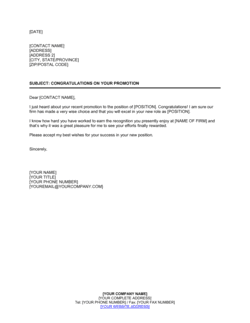
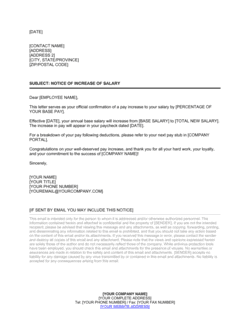
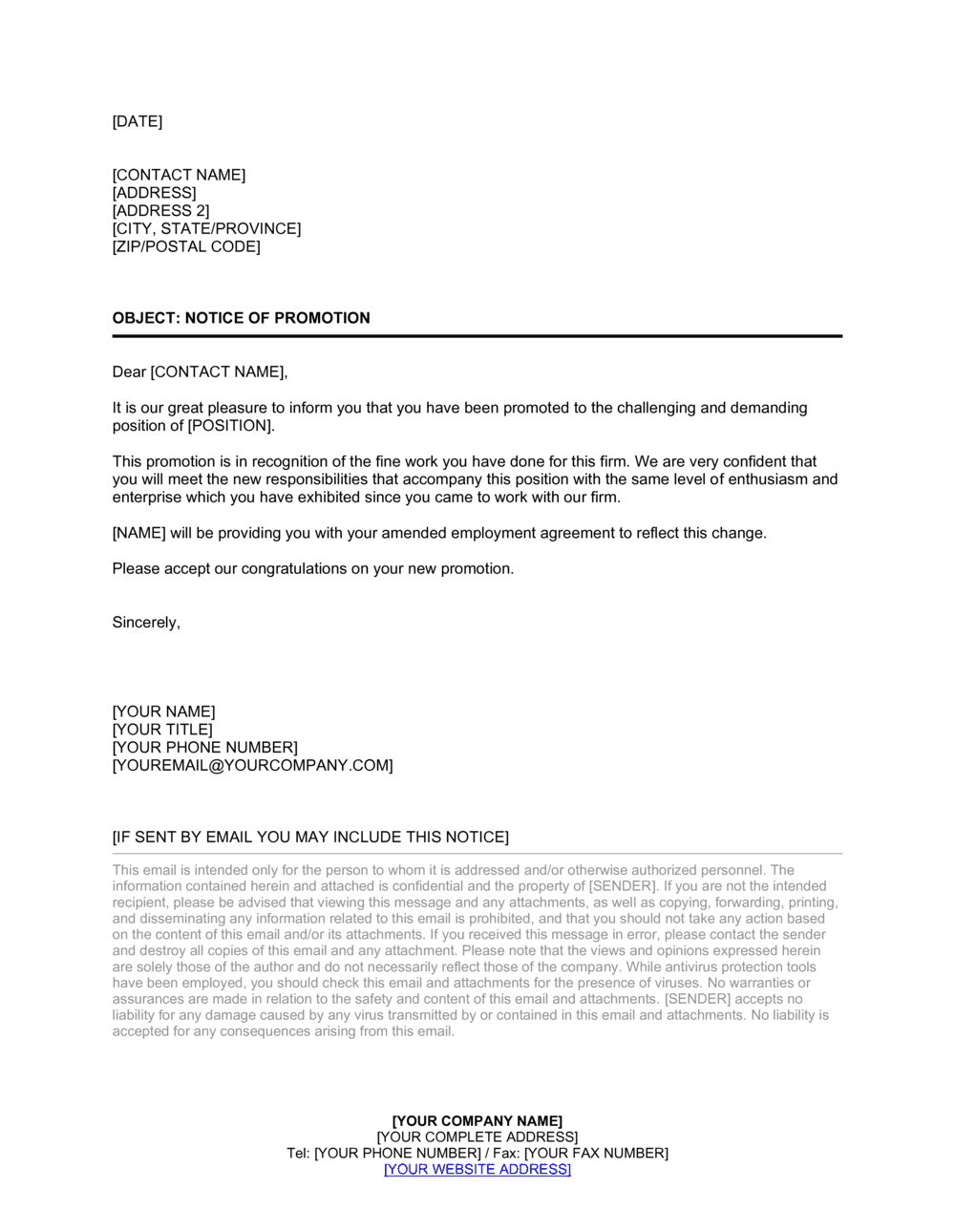
A Notice of Promotion is a formal business letter an employer issues to an employee to officially confirm a change in title, reporting level, compensation, and responsibilities resulting from a promotion. This free Word download gives you a ready-to-edit letter you can customize and deliver in minutes β€” by print, email attachment, or HR file.
When you need it
Issue it whenever an employee moves to a higher-level role, whether through a scheduled performance review, a reorganization, or a merit-based advancement outside the normal review cycle. It creates a clear written record of the new terms before the effective date.
What's inside
The letter covers the employee's new job title, effective date, updated compensation, revised reporting structure, and any change in benefits or responsibilities β€” all formatted as a professional letter with a congratulatory tone and clear next steps for the employee.

What is a Notice of Promotion?

A Notice of Promotion is a formal business letter issued by an employer to an existing employee to officially confirm an advancement to a higher-level role within the organization. It documents the new job title, effective date, updated salary, revised responsibilities, and any changes to the reporting structure β€” creating a clear written record of the new terms before they take effect. Unlike a verbal announcement or an internal email, a properly drafted promotion notice carries the weight of an official HR document and becomes part of the employee's permanent personnel file.

Why You Need This Document

Without a written notice of promotion, the new terms exist only in conversation β€” and conversations are misremembered, disputed, or simply lost when managers move on. Employees promoted without documentation frequently encounter payroll discrepancies, confusion about their authority over direct reports, and uncertainty about which benefits tier applies to their new level. A written notice resolves all of these before they become HR issues. It also protects the employer: if a compensation dispute or wrongful demotion claim arises later, the signed promotion notice is the first document reviewed. This template gives you a professional, complete letter you can issue in under 15 minutes β€” covering every term that needs to be on record before the employee's first day in the new role.

Which variant fits your situation?

If your situation is…Use this template
Promoting an employee to a managerial or supervisory roleNotice of Promotion (Manager)
Announcing the promotion company-wide as a staff communicationEmployee Promotion Announcement
Changing title and salary simultaneously with no change in dutiesSalary Increase Letter
Documenting a lateral transfer rather than an upward moveEmployee Transfer Letter
Confirming a new role as part of a broader employment agreement updateEmployment Contract Amendment
Informing an employee of a temporary acting or interim roleActing Role Assignment Letter
Announcing a promotion alongside a formal performance review outcomeEmployee Performance Review

Common mistakes to avoid

❌ Using the effective date as the letter date

Why it matters: If the letter is backdated to the effective date, there is no audit trail showing the employee was informed in advance. This can create disputes about when notice was given.

Fix: Date the letter the day it is issued. Reference the effective date separately and explicitly in the body of the letter.

❌ Omitting the acknowledgment request

Why it matters: Without a signed copy or email confirmation, the employer has no documented evidence the employee received the new terms β€” which matters if compensation or duties are later disputed.

Fix: Add a signature line or a written reply instruction at the close of every promotion letter, and file the returned acknowledgment with the employee's HR record.

❌ Leaving the reporting structure blank when direct reports are involved

Why it matters: New direct reports receive no official confirmation of who they report to, creating authority ambiguity that undermines the promoted employee's credibility from day one.

Fix: Name the employee's new manager and list any inherited direct reports explicitly. Follow up with a separate communication to those direct reports.

❌ Not specifying which pay cycle the new salary applies to

Why it matters: Employees track their pay closely. A vague effective date that does not map to a specific pay period leads to payroll queries and erodes trust in the process.

Fix: State the effective date and the first payroll cycle in which the new salary will appear β€” for example, 'reflected in the June 1 pay cycle.'

The 9 key clauses, explained

Header and date

In plain language: Identifies the company, the date the letter is issued, and the employee's name and current title as the recipient.

Sample language
[COMPANY NAME] | [DATE] | To: [EMPLOYEE FULL NAME], [CURRENT JOB TITLE] | [DEPARTMENT]

Common mistake: Using the promotion's effective date as the letter date. The letter date should be the day it is issued β€” which may be days or weeks before the effective date.

Opening congratulations

In plain language: Opens the letter with a direct congratulation and a brief statement of what is being confirmed β€” the promotion itself.

Sample language
We are pleased to inform you that, effective [DATE], you have been promoted to the position of [NEW JOB TITLE] within the [DEPARTMENT] department.

Common mistake: Burying the promotion in the second or third paragraph. Leading with the news makes the letter clearer and more motivating for the employee.

New job title and level

In plain language: States the employee's new official title and organizational level so the record is unambiguous for payroll, HR files, and future reference.

Sample language
Your new title will be [NEW JOB TITLE], [GRADE / LEVEL if applicable], reporting to [MANAGER NAME], [MANAGER TITLE].

Common mistake: Omitting the grade or level designation. Without it, future compensation benchmarking and title-based access controls (e.g., system permissions) rely on informal memory.

Effective date

In plain language: Clearly states when the new title, salary, and responsibilities become official so there is no ambiguity about payroll timing.

Sample language
This promotion takes effect on [EFFECTIVE DATE]. Your updated compensation and title will be reflected in the payroll cycle beginning [PAY PERIOD START DATE].

Common mistake: Stating the effective date without specifying which pay cycle it applies to. Employees routinely notice a one-cycle delay and assume an error; precision here prevents confusion.

Updated compensation

In plain language: Confirms the new base salary or hourly rate, any change in bonus eligibility, and whether other compensation elements are affected.

Sample language
Your base salary will increase to $[AMOUNT] per year ([FREQUENCY] payments of $[AMOUNT]), effective [DATE]. Your target annual bonus remains / changes to [X]% of base salary.

Common mistake: Referencing only the new salary without noting the increase amount or percentage. Documenting the delta prevents later disputes about whether the raise was applied correctly.

Revised responsibilities

In plain language: Summarizes the key duties and authorities added by the promotion, and references a full job description if one exists.

Sample language
In your new role, you will be responsible for [KEY RESPONSIBILITY 1], [KEY RESPONSIBILITY 2], and oversight of [TEAM / FUNCTION]. A detailed job description is attached as Schedule A.

Common mistake: Repeating the entire job description inside the letter body. A summary of two to four bullet points with a reference to Schedule A keeps the letter readable and the duties formally documented.

Reporting structure update

In plain language: Identifies who the employee will report to in the new role and, if applicable, who will now report to them.

Sample language
You will report directly to [MANAGER NAME], [MANAGER TITLE]. The following team members will now report to you: [NAME(S) / ROLES].

Common mistake: Leaving the reporting line blank when the promoted employee gains direct reports. Without written confirmation, team members receive conflicting signals about authority on day one.

Benefits and other terms

In plain language: Notes any changes to benefits eligibility, vacation accrual, or other employment terms triggered by the promotion, or confirms that existing terms remain unchanged.

Sample language
All other terms of your employment remain as previously agreed. / Your vacation entitlement increases to [X] days per year effective [DATE], in line with [GRADE LEVEL] policy.

Common mistake: Omitting this clause entirely. If benefits change with the new grade and the letter is silent, the employee may not act on enrollment deadlines in time.

Closing and next steps

In plain language: Expresses confidence in the employee, invites questions, and identifies the HR or manager contact for follow-up.

Sample language
We look forward to your continued contributions in this new capacity. Please direct any questions to [HR CONTACT / MANAGER NAME] at [EMAIL / PHONE]. Kindly sign and return the attached acknowledgment by [DATE].

Common mistake: Closing without asking for an acknowledgment. Without a signed copy or email reply on file, the company has no documented evidence the employee received and accepted the new terms.

How to fill it out

  1. 1

    Enter the company and employee details

    Fill in the company name, the date the letter is being issued, and the employee's full legal name, current title, and department in the header.

    πŸ’‘ Use the employee's name exactly as it appears in payroll records to keep the letter consistent with HR and tax documentation.

  2. 2

    State the new title and effective date

    Enter the official new job title, the grade or level if your organization uses them, and the exact calendar date the promotion takes effect.

    πŸ’‘ Confirm the effective date with payroll before finalizing the letter β€” mid-cycle effective dates can cause proration issues.

  3. 3

    Enter the updated compensation

    Record the new annual salary or hourly rate, the pay frequency, and any change in bonus eligibility or commission structure.

    πŸ’‘ State both the new amount and the increase (e.g., 'from $62,000 to $72,000') β€” this prevents the employee from wondering whether the change was applied correctly.

  4. 4

    Summarize the revised responsibilities

    List two to four key duties or authorities the employee is taking on in the new role. Attach a full job description as Schedule A rather than embedding it in the letter.

    πŸ’‘ Keep the in-letter summary to the additions or changes β€” not a full restatement of the old role.

  5. 5

    Confirm the reporting structure

    Name the manager the employee will report to and list any direct reports the employee will now oversee.

    πŸ’‘ If new direct reports are inherited, notify those employees separately before the letter reaches them from third-party sources.

  6. 6

    Note any benefits or policy changes

    If the new grade triggers a change in vacation days, benefit tier, or allowances, state it explicitly. If nothing changes, include a single sentence confirming all other terms remain the same.

    πŸ’‘ Cross-reference your benefits policy by grade level before issuing β€” errors in this clause are among the most common HR disputes.

  7. 7

    Add the closing and acknowledgment request

    Close with a brief congratulatory statement, name the contact for questions, and include a signature line or reply instruction for acknowledgment.

    πŸ’‘ A simple 'please sign and return by [DATE]' or 'reply to confirm receipt' is sufficient β€” you just need documented acceptance on file.

Frequently asked questions

What is a notice of promotion?

A notice of promotion is a formal letter an employer issues to an employee to confirm a change in job title, salary, reporting structure, and responsibilities resulting from a promotion. It creates a written record of the new employment terms and serves as the official communication replacing or supplementing any verbal announcement made by a manager.

Is a notice of promotion legally required?

In most jurisdictions, no law specifically requires a written promotion notice. However, a written notice protects both parties by creating a clear record of the agreed new terms β€” title, compensation, and responsibilities. Without it, disputes about whether a pay increase was applied correctly or what duties the new role includes become difficult to resolve. Many employment contracts also require written confirmation of any material change to terms of employment.

What is the difference between a notice of promotion and an offer letter?

An offer letter is issued to a candidate β€” external or internal β€” before they formally accept a new role. A notice of promotion is issued after the decision has been made and accepted, confirming the new terms to an existing employee. The promotion notice is typically shorter and assumes an ongoing employment relationship, while an offer letter establishes the initial terms of engagement.

Should the employee sign the notice of promotion?

Asking for a signature or written acknowledgment is good practice, though not legally required in most cases. A signed copy on file confirms the employee received and accepted the new terms, which is useful if a compensation or duties dispute arises later. A simple signature line or an email reply confirming receipt is sufficient for most organizations.

When should a notice of promotion be issued?

Issue the letter before the effective date β€” ideally at least one to two weeks in advance β€” so the employee has time to review the new terms, ask questions, and prepare for the transition. Issuing the letter after the effective date creates a gap where the employee is already operating under new terms that have not been formally confirmed in writing.

Can a notice of promotion change an employee's existing employment contract?

A promotion notice can update specific terms β€” title, salary, duties β€” but typically does not replace the underlying employment contract. If the promotion involves material changes beyond what the original contract anticipated, consider issuing a contract amendment or addendum alongside the promotion letter. For significant changes, such as a move to an executive role with equity or enhanced severance, consult an employment lawyer before issuing the letter.

What happens if the promotion is conditional on a probationary period?

If the new role includes a probationary period, state it explicitly in the letter β€” including the duration, evaluation criteria, and what happens if performance does not meet expectations. Leaving probationary conditions unstated creates ambiguity about whether the promotion is permanent, which can complicate a later demotion or reversal.

How is a notice of promotion different from a promotion announcement?

A notice of promotion is a private letter addressed to the promoted employee confirming their new terms. A promotion announcement is a separate communication sent to the broader team or company to introduce the employee's new role. The private notice should always be issued first β€” before any public or team-wide announcement is made.

How this compares to alternatives

vs Salary Increase Letter

A salary increase letter adjusts compensation only, with no change in title, duties, or level. A notice of promotion changes the employee's title, responsibilities, and reporting structure β€” and typically includes a salary increase as part of the package. Use a salary increase letter for merit raises or cost-of-living adjustments within the same role.

vs Employee Transfer Letter

A transfer letter moves an employee laterally β€” to a different department, location, or team β€” without a change in level or compensation. A notice of promotion moves an employee upward in the hierarchy with a new title and pay. If a transfer also involves a promotion, both documents may be needed or a combined letter drafted.

vs Job Offer Letter

An offer letter is sent to a candidate β€” internal or external β€” to formally extend a position before acceptance. A promotion notice is issued after acceptance to confirm the new terms to an existing employee. Offer letters are broader documents covering initial employment conditions; promotion notices are shorter confirmations of changed terms within an ongoing relationship.

vs Employment Contract Amendment

A contract amendment formally modifies the binding terms of an existing employment agreement β€” it is a legal document requiring mutual execution. A promotion notice is a confirmatory letter, not a contract amendment. For promotions involving material changes to restrictive covenants, equity, or severance, a contract amendment is the appropriate document; the promotion letter can be issued alongside it as a plain-language summary.

Industry-specific considerations

Professional Services

Promotions often tied to billable-hour thresholds or client-responsibility milestones; the letter typically references a new billing rate or client portfolio.

Technology / SaaS

Title changes frequently accompany equity refreshes or option grants that require separate documentation alongside the promotion letter.

Retail / Hospitality

High promotion volume and shift-based scheduling mean the letter must clearly state the first pay period and any change in overtime eligibility.

Healthcare

Promotions may require updated credentialing, licensing, or scope-of-practice confirmation β€” the letter should reference these conditions precedent.

Template vs pro β€” what fits your needs?

PathBest forCostTime
Use the templateAny employer issuing a standard promotion to a non-executive employee in a single jurisdictionFree10–15 minutes
Template + professional reviewPromotions that change bonus structure, add direct reports, or occur in jurisdictions with written-notice requirements$0–$150 (HR advisor or employment lawyer quick review)1–2 hours
Custom draftedExecutive promotions with equity grants, enhanced severance, or material changes to non-compete terms$500–$2,0002–5 days

Glossary

Effective Date
The specific calendar date on which the new title, compensation, and responsibilities take effect.
Job Title
The official designation of an employee's position within the organizational hierarchy, used in payroll, org charts, and external communications.
Reporting Structure
The chain of authority defining who the promoted employee reports to and, if applicable, who reports to them.
Base Salary
The fixed annual or hourly compensation paid to an employee, separate from bonuses, commissions, or benefits.
Scope of Responsibilities
The defined set of duties, authorities, and accountabilities associated with a given role.
Probationary Period
A defined initial period β€” sometimes applied to a new role after promotion β€” during which performance is evaluated before full confirmation.
Compensation Package
The total value of pay and benefits provided to an employee, including salary, bonus eligibility, equity, and non-cash benefits.
Internal Promotion
The advancement of an existing employee to a higher-level role, as distinct from filling the position through external hiring.
Org Chart
A visual diagram showing the reporting relationships and hierarchy within a company or department.

Part of your Business Operating System

This document is one of 3,000+ business & legal templates included in Business in a Box.

  • Fill-in-the-blanks β€” ready in minutes
  • 100% customizable Word document
  • Compatible with all office suites
  • Export to PDF and share electronically

Create your document in 3 simple steps.

From template to signed document β€” all inside one Business Operating System.
1
Download or open template

Access over 3,000+ business and legal templates for any business task, project or initiative.

2
Edit and fill in the blanks with AI

Customize your ready-made business document template and save it in the cloud.

3
Save, Share, Send, Sign

Share your files and folders with your team. Create a space of seamless collaboration.

Save time, save money, and create top-quality documents.

β˜…β˜…β˜…β˜…β˜…

"Fantastic value! I'm not sure how I'd do without it. It's worth its weight in gold and paid back for itself many times."

Managing Director Β· Mall Farm
Robert Whalley
Managing Director, Mall Farm Proprietary Limited
β˜…β˜…β˜…β˜…β˜…

"I have been using Business in a Box for years. It has been the most useful source of templates I have encountered. I recommend it to anyone."

Business Owner Β· 4+ years
Dr Michael John Freestone
Business Owner
β˜…β˜…β˜…β˜…β˜…

"It has been a life saver so many times I have lost count. Business in a Box has saved me so much time and as you know, time is money."

Owner Β· Upstate Web
David G. Moore Jr.
Owner, Upstate Web

Run your business with a system β€” not scattered tools

Stop downloading documents. Start operating with clarity. Business in a Box gives you the Business Operating System used by over 250,000 companies worldwide to structure, run, and grow their business.

Start freeΒ Β·Β No credit card required