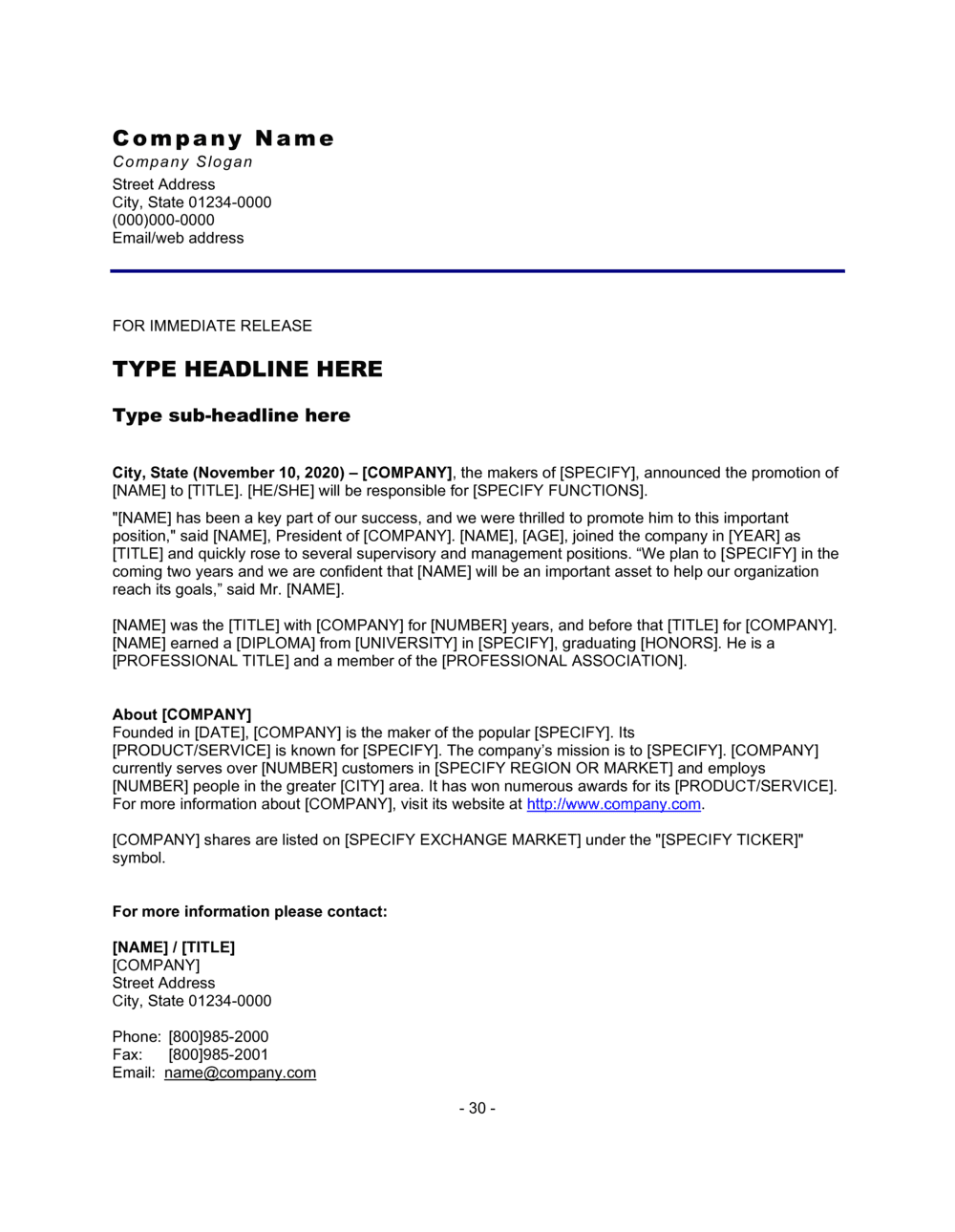
Press Release Promotion of Employee Template

Free Word download β€’ Edit online β€’ Save & share with Drive β€’ Export to PDF

1 pageβ€’20–25 min to fillβ€’Difficulty: Standard
Learn more ↓
FreePress Release Promotion of Employee Template

At a glance

What it is
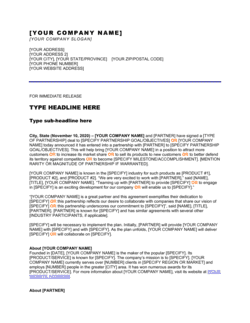
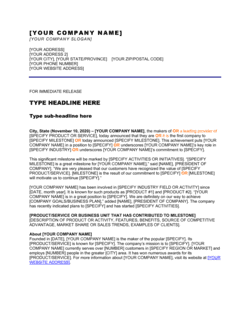
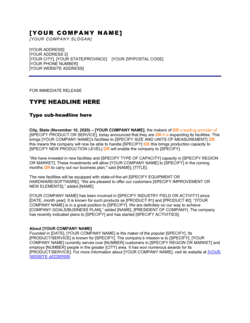
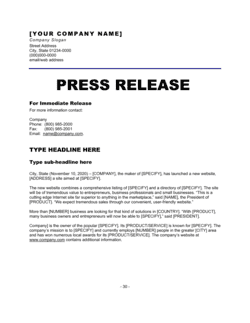
A Press Release β€” Promotion of Employee is a one-page formal announcement that notifies media outlets, industry publications, and the public that an employee has been elevated to a new role within the organization. This free Word download provides a ready-to-edit structure covering the new title, effective date, the employee's background, and a leadership quote β€” ready to export as PDF and distribute the same day.
When you need it
Use it whenever a promotion carries enough significance to warrant external or company-wide coverage β€” such as appointing a new department head, elevating a key contributor to a leadership role, or signaling organizational growth to the market.
What's inside
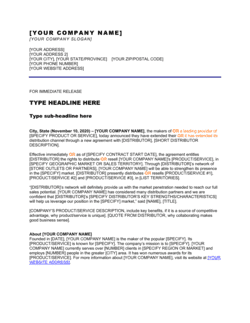
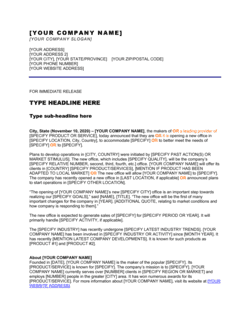
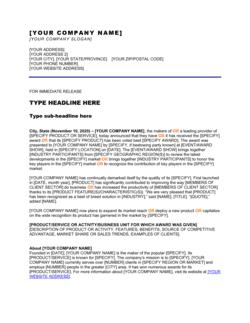
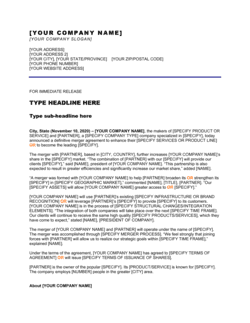
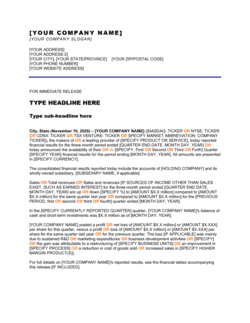
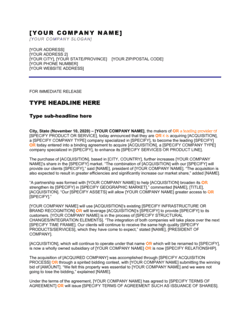
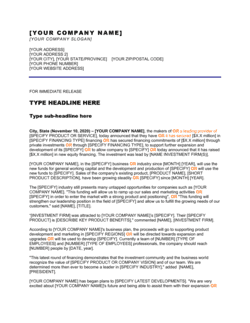
A standard header with release date and contact details, a compelling headline, a dateline and lead paragraph, employee background and achievements, a leadership quote, a closing boilerplate about the company, and media contact information.

What is a Press Release β€” Promotion of Employee?

A Press Release β€” Promotion of Employee is a formal one-page announcement that notifies media outlets, industry contacts, and the public that a member of staff has been elevated to a new role within the organization. It follows standard press release conventions β€” a dateline lead, employee background, leadership quote, and company boilerplate β€” and is distributed to local newspapers, trade publications, and the company's own newsroom page. This free Word download gives you a complete, ready-to-edit structure you can fill in, export as PDF, and send out on the same day the promotion is confirmed.

Why You Need This Document

Announcing a promotion without a formal press release means the news reaches different audiences in different ways β€” an email to some, a LinkedIn post to others, nothing at all to the press β€” and the company loses control of the narrative. A consistent, well-structured release ensures that the promoted employee's achievements are presented accurately and professionally everywhere the announcement lands. It also signals organizational health to clients, partners, and prospective hires: companies that promote from within and communicate it publicly are seen as employers that invest in their people. This template removes the blank-page problem, giving your HR or communications team a proven structure so the announcement goes out on time, on message, and ready for any journalist or editor who picks it up.

Which variant fits your situation?

If your situation is…Use this template
Announcing a promotion internally to staff rather than the pressEmployee Promotion Announcement Letter
Welcoming a senior external hire rather than an internal promotionPress Release β€” New Employee
Announcing a newly appointed CEO or presidentPress Release β€” New President or CEO
Notifying the promoted employee in writing of their new termsPromotion Letter to Employee
Issuing a broader organizational restructuring announcementPress Release β€” Restructure or Reorganization
Announcing a new partnership or business milestone alongside leadership newsPress Release β€” General

Common mistakes to avoid

❌ Burying the promotion below the fold

Why it matters: Journalists scan the first paragraph to decide whether a release is worth reading. A lead that takes three sentences to name the promoted employee will be abandoned.

Fix: State the employee's full name, new title, company, and effective date in the first two sentences of the body β€” no exceptions.

❌ Using a vague or generic headline

Why it matters: Headlines like 'Leadership Update at [Company]' are skipped by editors indexing dozens of releases per day. The promotion goes uncovered.

Fix: Name the employee and title explicitly: '[Company] Promotes [Name] to [Title].' Specific headlines index better in search and get opened more often.

❌ Quoting executives with platitudes

Why it matters: A quote like 'We are thrilled to see John grow' tells the reader nothing and is rarely picked up by journalists. It also signals that leadership wasn't engaged in the announcement.

Fix: Tie the quote to a specific achievement or strategic goal: 'Under [Name]'s leadership, our [team/product/region] delivered [X] β€” that's exactly the track record we need for [new role].'

❌ Forgetting to get quote approvals before distribution

Why it matters: Distributing a release with an unapproved executive quote can require a retraction, damage the executive's credibility, or create internal conflict.

Fix: Circulate a draft with all quotes highlighted to the relevant approvers at least 48 hours before the intended release date and get written sign-off.

The 10 key clauses, explained

Release timing header

In plain language: States whether the release is for immediate publication or embargoed until a specific date and time.

Sample language
FOR IMMEDIATE RELEASE β€” or β€” EMBARGOED UNTIL [DATE] AT [TIME] [TIMEZONE]

Common mistake: Omitting the release timing line entirely. Journalists who receive a release without it may hold it indefinitely or publish at the wrong time.

Media contact block

In plain language: Provides the name, title, phone number, and email of the person journalists should contact for follow-up.

Sample language
Contact: [CONTACT FULL NAME] | [TITLE] | [COMPANY NAME] | [PHONE NUMBER] | [EMAIL ADDRESS]

Common mistake: Listing a generic inbox like pr@company.com without a named contact. Journalists are more likely to follow up when a specific person is identified.

Headline

In plain language: A single, specific line that states the promoted employee's name, new title, and the company β€” the only line many editors read before deciding to open the release.

Sample language
[COMPANY NAME] Promotes [EMPLOYEE FULL NAME] to [NEW TITLE]

Common mistake: Writing a headline like 'Exciting News at [Company]' instead of naming the promotion directly. Vague headlines are skipped by editors scanning dozens of releases.

Dateline and lead paragraph

In plain language: Opens with the city and date, then immediately answers who was promoted, to what role, at which company, and when it takes effect.

Sample language
[CITY], [STATE], [DATE] β€” [COMPANY NAME] today announced the promotion of [EMPLOYEE FULL NAME] to [NEW TITLE], effective [EFFECTIVE DATE].

Common mistake: Burying the promotion in the second or third paragraph. The lead must deliver the core news in the first two sentences or editors will stop reading.

Employee background and achievements

In plain language: Summarizes the employee's tenure, key contributions, and the experience that makes them qualified for the new role.

Sample language
[EMPLOYEE FIRST NAME] joined [COMPANY NAME] in [YEAR] as [ORIGINAL TITLE]. During [his/her/their] [X] years with the company, [he/she/they] [SPECIFIC ACHIEVEMENT], [SPECIFIC ACHIEVEMENT], and [SPECIFIC ACHIEVEMENT].

Common mistake: Listing job titles without tying them to measurable outcomes. Specific achievements β€” revenue grown, teams built, projects delivered β€” make the promotion newsworthy.

New role description

In plain language: Explains the responsibilities and scope of the promoted employee's new position and how it fits into the organization.

Sample language
In [his/her/their] new role as [NEW TITLE], [EMPLOYEE FIRST NAME] will oversee [DEPARTMENT/FUNCTION], leading a team of [X] and reporting directly to [SUPERVISOR TITLE].

Common mistake: Describing the new role in internal jargon. Use plain language that a reader outside the company β€” including journalists β€” can understand.

Leadership quote

In plain language: A direct quotation from a senior executive β€” typically the CEO or hiring manager β€” expressing confidence in the promoted employee and the rationale for the promotion.

Sample language
'[EMPLOYEE FIRST NAME]'s promotion reflects the exceptional results [he/she/they] have delivered and our confidence in [his/her/their] leadership as we [COMPANY GOAL],' said [EXECUTIVE FULL NAME], [EXECUTIVE TITLE] of [COMPANY NAME].

Common mistake: Writing a quote that says nothing specific, such as 'We are excited about the future.' Quotes should reference a concrete quality, achievement, or strategic direction.

Promoted employee quote (optional)

In plain language: A short statement from the promoted employee expressing enthusiasm for the new role and commitment to the team or company mission.

Sample language
'I am honored to step into this role and look forward to [SPECIFIC GOAL OR INITIATIVE],' said [EMPLOYEE FULL NAME]. 'I am grateful to [COMPANY NAME] for [SPECIFIC REASON].'

Common mistake: Including a second quote that simply echoes the executive quote. If the employee quote doesn't add new information or perspective, omit it.

Company boilerplate

In plain language: A standard two-to-four sentence company description that appears at the end of every press release, providing context for media unfamiliar with the organization.

Sample language
About [COMPANY NAME]: [COMPANY NAME] is a [DESCRIPTION] headquartered in [CITY, STATE]. Founded in [YEAR], the company [BRIEF DESCRIPTION OF WHAT IT DOES AND WHO IT SERVES]. For more information, visit [WEBSITE URL].

Common mistake: Updating the boilerplate ad hoc per release and letting version inconsistencies accumulate. Keep one master boilerplate approved by leadership and use it verbatim every time.

End notation

In plain language: A standard three-pound-sign or '###' mark centered at the bottom of the release, signaling to editors that no further content follows.

Sample language
###

Common mistake: Omitting the end mark and attaching additional pages of background material to the release itself. Supporting materials should be separate attachments, not appended to the release body.

How to fill it out

  1. 1

    Set the release timing and contact block

    Decide whether the release goes out immediately or under embargo. Fill in the media contact's full name, direct phone number, and email address β€” not a shared inbox.

    πŸ’‘ If the promotion is tied to a public event or earnings call, use an embargo to coordinate timing across all channels simultaneously.

  2. 2

    Write the headline with the employee's name and new title

    State the company name, the employee's full name, and the exact new title in a single line. Keep it under 10 words where possible.

    πŸ’‘ Test the headline by reading it cold β€” if someone unfamiliar with the company can understand the news in one pass, it works.

  3. 3

    Draft the dateline and lead paragraph

    Open with the city, state, and date, then deliver the full announcement in two sentences: who was promoted, to what role, and when it is effective.

    πŸ’‘ Write the lead paragraph as if it is the only thing a journalist will quote β€” because it often is.

  4. 4

    Summarize the employee's background with specific achievements

    List the employee's start date, original role, and two to three quantified accomplishments from their tenure β€” revenue figures, team sizes, or project outcomes.

    πŸ’‘ Ask the employee directly for their preferred highlights; they will often surface achievements HR records don't capture.

  5. 5

    Describe the new role's responsibilities

    Explain what the employee will now oversee, who they report to, and how the role fits into the company's current strategy or growth plans.

    πŸ’‘ One sentence connecting the promotion to a broader company direction β€” expansion, new product line, market entry β€” gives journalists a news hook.

  6. 6

    Insert the leadership quote and optional employee quote

    Get a written and approved quote from the relevant executive before finalizing. If including an employee quote, confirm the exact wording with them in writing.

    πŸ’‘ Draft the quote for the executive to approve rather than asking them to write it β€” this speeds the process by days and produces tighter copy.

  7. 7

    Paste the approved company boilerplate and add the end mark

    Use the standard, leadership-approved company description verbatim. Center '###' below the boilerplate to close the release.

    πŸ’‘ Store the approved boilerplate in a shared document so every team member pulls from the same source.

Frequently asked questions

What is an employee promotion press release?

An employee promotion press release is a formal one-page announcement that notifies media, industry contacts, and the public that an employee has been elevated to a new role. It covers the employee's new title, effective date, background, and a leadership quote, and is distributed to local press, trade publications, and posted on the company website.

When should a company issue a press release for an employee promotion?

Issue one when the promotion is likely to be of interest outside the organization β€” such as appointing a new VP, director, or department head; promoting a recognized industry figure; or signaling organizational growth to customers and partners. Routine promotions below the management level are typically handled with an internal announcement rather than a formal press release.

What is the difference between a press release and an internal announcement?

A press release is written for external audiences β€” journalists, industry contacts, and the public β€” and follows journalistic conventions like the inverted-pyramid structure, a media contact block, and a company boilerplate. An internal announcement is written for employees and does not need to follow press release format. For significant promotions, both documents are typically issued on the same day.

How long should a promotion press release be?

One page, or approximately 400–500 words. Journalists do not read long press releases; everything essential should appear in the headline and first two paragraphs. Supporting detail β€” background, quotes β€” follows in the body, but the release should never exceed a single printed page.

Does a press release for an employee promotion need to be distributed by a wire service?

Not necessarily. Wire services like PR Newswire or Business Wire increase reach and SEO visibility, but smaller businesses can effectively distribute directly to a curated media list, post the release on their website's newsroom page, and share it via LinkedIn. Wire distribution makes sense when the promotion has broad industry significance or the company wants guaranteed indexing in Google News.

Should the promoted employee review the press release before it is sent?

Yes. The employee should confirm factual details β€” start date, title history, and the accuracy of any attributed quote β€” before distribution. This avoids corrections and ensures the employee feels respected in how their milestone is represented publicly.

What is the AP Style rule for job titles in a press release?

In AP Style, formal titles are capitalized only when they appear immediately before a person's name: 'Chief Marketing Officer Jane Smith' is capitalized, but 'Jane Smith, chief marketing officer' is lowercase. Use this rule consistently throughout the release to maintain credibility with editors who follow AP standards.

Can I use this template for a promotion announced at a company event?

Yes, but coordinate the release timing with the event. If the promotion is announced publicly at a conference or all-hands meeting, distribute the press release simultaneously or immediately after β€” not days later β€” so media coverage aligns with the live moment and you control the narrative from the outset.

How this compares to alternatives

vs Press Release β€” New Employee

A new-employee press release announces an external hire and often emphasizes the candidate's outside experience and what they bring from the market. A promotion release focuses on tenure, internal achievements, and continuity of leadership. The two documents share the same format but differ in the angle of the background section and the emphasis of the leadership quote.

vs Promotion Letter to Employee

A promotion letter is a private document sent directly to the employee confirming their new title, salary, and effective date β€” it is not for external distribution. A press release is a public-facing announcement with no salary details. Both documents are typically issued together: the letter first, followed by the press release after the employee has accepted.

vs Press Release β€” New President or CEO

A CEO or president press release carries higher-stakes messaging, often includes a strategic vision statement, and is frequently distributed via wire service. A standard employee promotion release is shorter, more factual, and suited to mid-level to senior management roles. Use the CEO template when the appointment will attract significant media or investor attention.

vs Employee Announcement Email

An internal announcement email is written for employees, uses a conversational tone, and does not follow press release conventions. A press release follows journalistic format, is written for external audiences, and is distributed to media. For significant promotions, issue the internal email first so staff hear the news before it goes public.

Industry-specific considerations

Professional Services

Promotions to partner, principal, or practice lead are routinely announced to clients and referral networks via press release to signal depth of expertise and firm stability.

Technology / SaaS

VP and C-suite promotions are distributed to tech press and LinkedIn to signal organizational maturity and leadership bench strength to investors and recruits.

Healthcare

Clinical and administrative leadership promotions reference licensure, credentials, and patient-care scope to satisfy regulatory and community-trust expectations.

Retail / Hospitality

Regional manager and general manager promotions are sent to local press and trade publications to reinforce community ties and brand presence in specific markets.

Template vs pro β€” what fits your needs?

PathBest forCostTime
Use the templateHR teams, marketing coordinators, and small business owners announcing promotions to local media or the company websiteFree30–60 minutes
Template + professional reviewCompanies distributing via wire service or pitching to national trade publications where editorial quality matters$100–$300 for a PR copywriter review1–2 days
Custom draftedC-suite or executive-level promotions at publicly traded or high-profile companies where media relations are managed by an agency$500–$1,500 per release (agency fee)3–5 days

Glossary

Press Release
An official written statement distributed to media outlets to announce newsworthy information from an organization.
Dateline
The city and date that appear at the start of a press release body, indicating where and when the news originates.
Lead Paragraph
The opening paragraph of a press release that answers who, what, when, where, and why in two to three sentences.
Boilerplate
A standardized paragraph at the end of every press release that provides a consistent description of the company for media use.
For Immediate Release
A header notation indicating the press release may be published as soon as it is received, with no embargo period.
Embargo
An instruction that prohibits a media outlet from publishing the announcement before a specified date and time.
Quote Attribution
The identification of the specific person whose words appear in quotation marks, including their name and title.
Media Contact
The named individual at the company whom journalists should contact for additional information or interview requests.
AP Style
The Associated Press Stylebook guidelines β€” the editorial standard most newsrooms use for punctuation, titles, and dates in press releases.

Part of your Business Operating System

This document is one of 3,000+ business & legal templates included in Business in a Box.

  • Fill-in-the-blanks β€” ready in minutes
  • 100% customizable Word document
  • Compatible with all office suites
  • Export to PDF and share electronically

Create your document in 3 simple steps.

From template to signed document β€” all inside one Business Operating System.
1
Download or open template

Access over 3,000+ business and legal templates for any business task, project or initiative.

2
Edit and fill in the blanks with AI

Customize your ready-made business document template and save it in the cloud.

3
Save, Share, Send, Sign

Share your files and folders with your team. Create a space of seamless collaboration.

Save time, save money, and create top-quality documents.

β˜…β˜…β˜…β˜…β˜…

"Fantastic value! I'm not sure how I'd do without it. It's worth its weight in gold and paid back for itself many times."

Managing Director Β· Mall Farm
Robert Whalley
Managing Director, Mall Farm Proprietary Limited
β˜…β˜…β˜…β˜…β˜…

"I have been using Business in a Box for years. It has been the most useful source of templates I have encountered. I recommend it to anyone."

Business Owner Β· 4+ years
Dr Michael John Freestone
Business Owner
β˜…β˜…β˜…β˜…β˜…

"It has been a life saver so many times I have lost count. Business in a Box has saved me so much time and as you know, time is money."

Owner Β· Upstate Web
David G. Moore Jr.
Owner, Upstate Web

Run your business with a system β€” not scattered tools

Stop downloading documents. Start operating with clarity. Business in a Box gives you the Business Operating System used by over 250,000 companies worldwide to structure, run, and grow their business.

Start freeΒ Β·Β No credit card required