Checklist Drafting Joint Promotion Agreements

Free download β€’ Use as a template β€’ Print or share

3 pagesβ€’20–25 min to useβ€’Difficulty: Standard
Learn more ↓
FreeChecklist Drafting Joint Promotion Agreements Template

At a glance

What it is
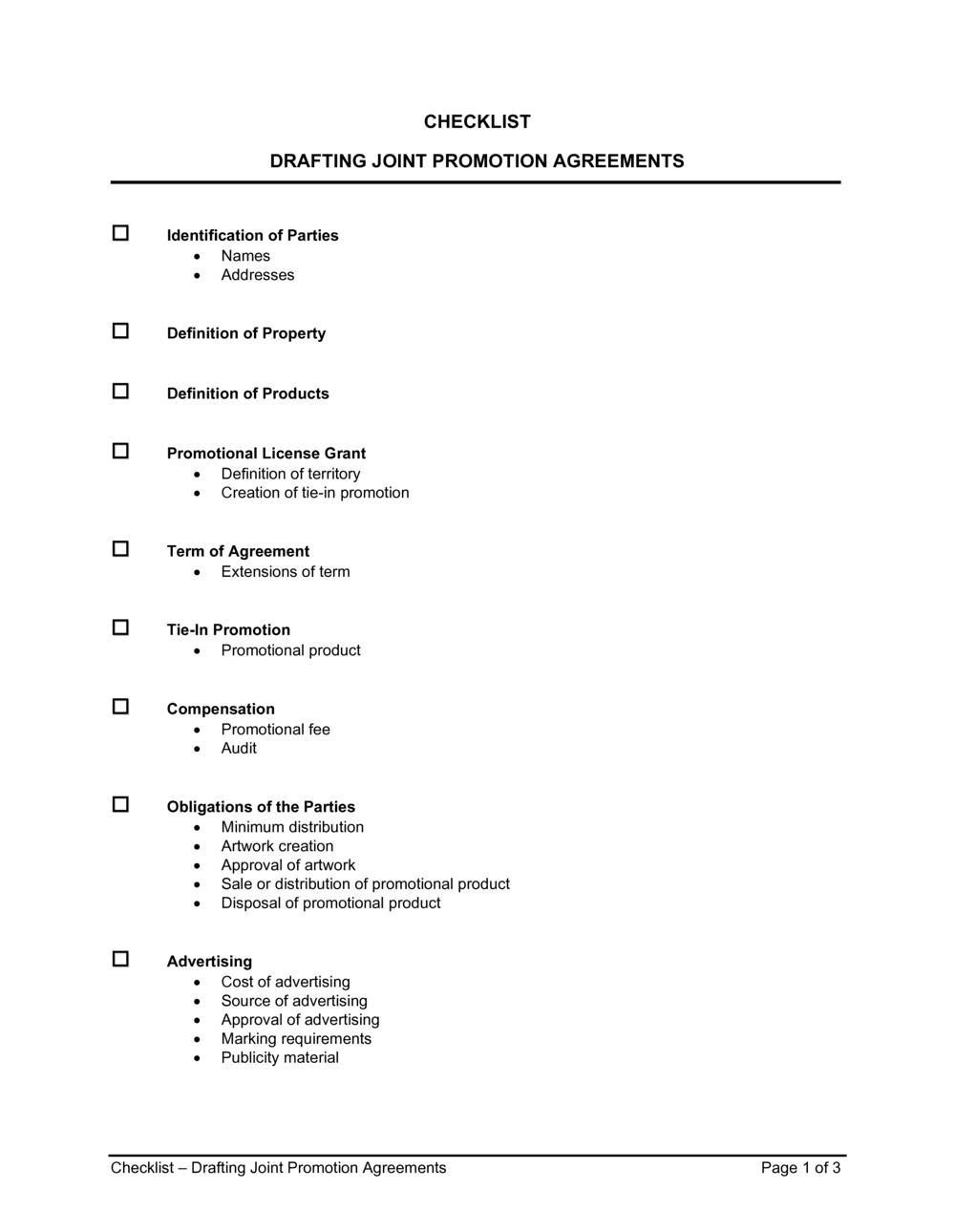
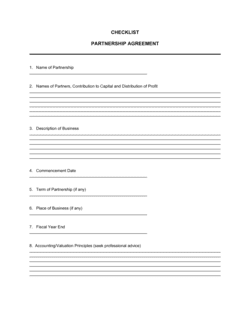
A Checklist Drafting Joint Promotion Agreements is a structured form that guides marketing managers, business development leads, and legal teams through every item to address before executing a co-marketing or co-promotional partnership. This free Word download lets you work through each critical topic β€” parties, goals, cost splits, IP rights, exclusivity, and exit terms β€” so nothing is overlooked before the formal agreement is signed.
When you need it
Use it when your organization is entering a co-branded campaign, joint product launch, cross-promotional offer, or co-sponsored event with another company and needs to confirm every key term has been captured before drafting or reviewing the final agreement.
What's inside
Party identification fields, campaign scope and objectives, budget and cost-sharing terms, intellectual property ownership, exclusivity and non-compete provisions, performance metrics, dispute resolution references, and termination conditions β€” organized as a sequential checklist with checkboxes, notes fields, and owner assignments.

What is a Checklist Drafting Joint Promotion Agreements?

A Checklist Drafting Joint Promotion Agreements is a structured form that guides marketing managers, business development professionals, and legal teams through every material item that must be addressed before executing a co-marketing or co-promotional partnership agreement. It covers party identification, campaign scope, budget and cost-sharing, intellectual property licensing, exclusivity terms, performance metrics, approval workflows, and termination conditions β€” organized as a sequential, checkable list with space for notes and owner assignments. Rather than a binding contract itself, it functions as a pre-signature alignment tool that ensures both organizations have resolved every open term before the formal agreement is drafted.

Why You Need This Document

Entering a joint promotion without a structured pre-agreement checklist is one of the most common reasons co-marketing campaigns stall mid-execution. Disputes over who owns jointly produced creative assets, how to attribute revenue, or which party must cover unexpected media spend typically surface after launch β€” not before β€” and they surface because no one confirmed those terms in writing early enough. A completed checklist eliminates that risk by forcing both parties to agree on cost splits, IP usage boundaries, and performance metrics before any attorney time is spent drafting the formal agreement. It also cuts legal drafting time significantly, because a pre-aligned checklist gives the drafting attorney resolved terms rather than open negotiation points. For small businesses and marketing teams operating without in-house counsel, this template provides the structure to run a professional, enforceable co-promotion from the first conversation.

Which variant fits your situation?

If your situation is…Use this template
Two brands running a short-term co-branded digital campaignChecklist Drafting Joint Promotion Agreements
Full binding agreement governing a long-term co-marketing partnershipJoint Marketing Agreement
Co-sponsored event between two companies splitting costs and visibilityEvent Sponsorship Agreement
Affiliate or referral arrangement with a revenue-share componentAffiliate Agreement
Distributor carrying and promoting a partner's product lineDistribution Agreement
Two companies jointly developing and licensing a new productJoint Venture Agreement

Common mistakes to avoid

❌ Vague campaign objectives with no numeric targets

Why it matters: Without measurable targets, neither party can determine whether the promotion succeeded, and performance-triggered payments or renewals become disputed.

Fix: Require at least two numeric KPIs β€” impressions, leads, revenue, or conversions β€” with agreed measurement methods before the checklist is considered complete.

❌ No expense approval threshold

Why it matters: One partner can commit unilateral spending above the expected budget, then present the other with an unexpected reimbursement demand mid-campaign.

Fix: Set a specific dollar threshold above which both parties must approve expenses in writing before they are incurred.

❌ Missing IP take-down obligation on termination

Why it matters: Without a defined deadline to remove co-branded materials, a partner's logo or trademark can remain on the other's website, ads, or social channels long after the relationship ends.

Fix: Specify the number of days after termination by which all licensed IP must be removed from all channels and confirm the take-down in writing.

❌ Assigning the same reporting task to both parties

Why it matters: Dual reporting creates two incompatible data sets, no agreed source of truth, and disagreements about whether targets were met.

Fix: Designate a single reporting owner for each KPI and specify the platform or dashboard where the agreed metric is tracked.

The 10 key fields, explained

Party identification

Campaign scope and objectives

Term and key dates

Budget and cost-sharing terms

Intellectual property rights and usage

Exclusivity and non-compete provisions

Performance metrics and reporting

Approval and sign-off process

Termination conditions

Dispute resolution reference

How to fill it out

  1. 1

    Identify both parties with their legal entity names

    Enter the full registered legal name and address for each partner organization and designate a primary point of contact with title and email.

    πŸ’‘ Confirm the legal name against a company registry or incorporation document β€” trading names and legal names frequently differ.

  2. 2

    Define the campaign scope and measurable objectives

    Describe exactly which products or services are being co-promoted, the target audience, and at least two to three specific, numeric performance targets.

    πŸ’‘ Tie objectives to the performance metrics field later in the checklist so both sections use identical KPI definitions.

  3. 3

    Set the term with specific dates for each milestone

    Enter the start and end dates, then work backward to set creative submission, launch, and review dates. Confirm all dates with both parties before locking.

    πŸ’‘ Add a two-business-day buffer before each milestone β€” co-branding reviews routinely take longer than anticipated when legal teams are involved.

  4. 4

    Agree and document the budget split

    Enter the total campaign budget, each party's dollar contribution and percentage, the expense approval threshold, and the invoicing timeline.

    πŸ’‘ Get the budget split confirmed in writing from a financial signatory at each organization β€” verbal agreement from a marketing contact is not sufficient.

  5. 5

    List every IP asset being licensed and attach brand guidelines

    Name each logo, trademark, tagline, and creative asset being shared, specify permitted uses only, and attach current brand guidelines as a named exhibit.

    πŸ’‘ Ask the other party to confirm their brand guidelines version number and date β€” guidelines update frequently and an outdated version creates compliance problems.

  6. 6

    Confirm exclusivity scope in precise terms

    If exclusivity applies, name the restricted product category and list or define the competitor set. If no exclusivity is intended, state that explicitly to avoid ambiguity.

    πŸ’‘ A written 'no exclusivity' statement is as important as a written exclusivity clause β€” silence on the topic is routinely disputed.

  7. 7

    Assign KPIs, reporting owner, and review cadence

    List each KPI with its measurement method, assign one party as the reporting owner for each metric, and set a reporting frequency and final report deadline.

    πŸ’‘ Use tracking codes or dedicated landing pages for each party's contribution so attribution data is unambiguous at reporting time.

  8. 8

    Complete termination and dispute resolution fields before sharing

    Fill in the notice period for termination for convenience, the IP take-down deadline, cost settlement process, and the escalation path and jurisdiction for disputes.

    πŸ’‘ Send the completed checklist to legal or a senior decision-maker at both organizations for review before it is used to brief the drafting attorney.

Frequently asked questions

What is a joint promotion agreement checklist?

A joint promotion agreement checklist is a structured form that ensures every material term β€” parties, campaign scope, budget split, IP rights, exclusivity, performance metrics, and termination conditions β€” has been identified and agreed before a formal co-marketing contract is drafted or signed. It acts as a pre-contract alignment tool between marketing, business development, and legal teams.

When should I use this checklist?

Use it before drafting or reviewing any co-branded campaign, cross-promotional offer, co-sponsored event, or joint product launch agreement. It is most effective when completed collaboratively by both parties early in the negotiation process, so gaps and disagreements surface before attorneys begin drafting.

Is this checklist a legally binding document?

No. A completed checklist is a planning and alignment tool, not a binding agreement. The terms it captures must be incorporated into a formally drafted and signed Joint Promotion Agreement or similar contract to create legal obligations. The checklist reduces the time and cost of drafting that agreement by resolving open items in advance.

What is the difference between a joint promotion agreement and a joint venture?

A joint promotion agreement covers a specific, time-limited co-marketing or co-sales campaign between two independent businesses β€” each retains its own legal identity and operations. A joint venture creates a new shared entity or ongoing operational structure with shared governance, liability, and often shared IP development. A joint promotion is narrower, shorter in term, and requires less legal complexity.

How should IP rights be handled in a joint promotion?

Each party should grant the other a non-exclusive, time-limited license to use only the specific assets needed for the campaign β€” named logos, approved copy, and designated creative files. Permitted uses should be defined precisely (e.g., digital ads only, no print), and current brand guidelines should be attached as a named exhibit. Neither party should acquire ownership of the other's IP through the promotion arrangement.

Does a joint promotion agreement need to include exclusivity?

Not necessarily β€” exclusivity is negotiated based on the competitive sensitivity of the partnership. When included, the restriction should be scoped precisely to the relevant product category, defined competitor set, and campaign term. If no exclusivity is intended, stating that explicitly in the checklist prevents future disputes over whether an implied restriction exists.

What happens to costs if the joint promotion is terminated early?

The checklist should specify how costs incurred up to the termination date are settled β€” typically split per the agreed cost-sharing ratio β€” and within what timeframe final invoices must be submitted. Without this, disputes over sunk costs are common when a campaign ends before its planned conclusion.

How detailed should performance metrics be in the checklist?

Each KPI should name the metric, the measurement method (e.g., UTM tracking, dedicated promo code, or CRM attribution), the target value, the reporting owner, and the reporting frequency. Vague metrics like "increased brand awareness" without a measurement method are unenforceable and create disagreements at campaign close.

How this compares to alternatives

vs Joint Promotion Agreement

A Joint Promotion Agreement is the binding legal contract that governs the co-marketing relationship. This checklist is the pre-contract alignment tool used to capture and confirm all terms before drafting begins. Complete the checklist first, then use its output to brief the attorney or populate the agreement template.

vs Joint Venture Agreement

A Joint Venture Agreement creates a shared operational or legal entity with ongoing governance, liability, and IP co-ownership. A joint promotion is narrower β€” a time-limited campaign between independent businesses with no shared entity. If your co-marketing partnership involves shared product development or pooled revenue, a joint venture structure may be more appropriate.

vs Co-Marketing Checklist

A co-marketing checklist typically covers inbound and content marketing collaborations β€” guest posts, joint webinars, shared lead magnets. A joint promotion checklist specifically addresses promotional campaigns, discount offers, co-branding, and shared customer acquisition, with explicit cost-sharing and revenue attribution fields that co-marketing checklists often omit.

vs Sponsorship Agreement

A sponsorship agreement covers one party paying for brand placement at an event or on a platform owned by the other. A joint promotion agreement is a peer arrangement where both parties contribute marketing effort and budget toward a shared campaign goal. Sponsorships have asymmetric obligations; joint promotions are generally mutual.

Industry-specific considerations

Retail and E-commerce

Cross-promotional discount codes, bundled product offers, and co-branded digital ads require precise revenue attribution and SKU-level campaign scoping.

Food and Beverage

Co-branded packaging and in-store promotions demand strict brand guideline compliance, shelf-placement terms, and point-of-sale material approval workflows.

Technology and SaaS

Integration partner co-marketing, joint webinars, and co-authored content require clear IP ownership over jointly produced materials and agreed lead-sharing rules.

Professional Services

Referral-based co-promotion between complementary firms β€” e.g., accounting and legal β€” requires explicit non-solicitation carve-outs and client confidentiality protections.

Template vs pro β€” what fits your needs?

PathBest forCostTime
Use the templateMarketing and business development teams preparing for partner agreement negotiationsFree30–60 minutes to complete
Template + professional reviewPartnerships involving significant budget, exclusivity terms, or sensitive IP licensing$150–$400 for a legal or business affairs review1–2 business days
Custom draftedComplex multi-party co-promotions, regulated industries, or campaigns with cross-border IP and revenue-sharing$800–$3,000 for a custom co-marketing agreement1–3 weeks

Glossary

Joint Promotion Agreement
A contract between two or more parties that defines how they will collaboratively market or promote a product, service, or event and share the associated costs and benefits.
Co-Branding
A promotional strategy where two brands appear together on marketing materials, products, or campaigns to leverage each other's audience and reputation.
Cost-Sharing Ratio
The agreed percentage or fixed-amount split of campaign costs between the co-promotion partners β€” for example, 60/40 or equal halves.
Exclusivity Clause
A provision preventing one or both parties from running a similar promotion with a competing brand during the agreement term.
IP License
Permission granted by one party to another to use its trademarks, logos, copy, or creative assets within the scope of the joint campaign.
Performance Metrics
Agreed quantitative targets β€” impressions, leads, revenue, or conversions β€” used to evaluate whether the joint promotion met its objectives.
Termination for Convenience
A clause allowing either party to end the agreement before its natural conclusion by giving a defined notice period, without requiring cause.
Indemnification
A contractual obligation for one party to cover the other's losses or legal costs arising from a specific event, such as a brand guidelines violation.
Campaign Brief
A document outlining the creative direction, target audience, key messages, channels, and timeline for a joint promotional campaign.
Revenue Attribution
The method agreed upon to assign sales or leads to the joint promotion versus other marketing activity β€” typically by UTM tracking, discount codes, or dedicated landing pages.

Part of your Business Operating System

This document is one of 3,000+ business & legal templates included in Business in a Box.

  • Fill-in-the-blanks β€” ready in minutes
  • 100% customizable Word document
  • Compatible with all office suites
  • Export to PDF and share electronically

Create your document in 3 simple steps.

From template to signed document β€” all inside one Business Operating System.
1
Download or open template

Access over 3,000+ business and legal templates for any business task, project or initiative.

2
Edit and fill in the blanks with AI

Customize your ready-made business document template and save it in the cloud.

3
Save, Share, Send, Sign

Share your files and folders with your team. Create a space of seamless collaboration.

Save time, save money, and create top-quality documents.

β˜…β˜…β˜…β˜…β˜…

"Fantastic value! I'm not sure how I'd do without it. It's worth its weight in gold and paid back for itself many times."

Managing Director Β· Mall Farm
Robert Whalley
Managing Director, Mall Farm Proprietary Limited
β˜…β˜…β˜…β˜…β˜…

"I have been using Business in a Box for years. It has been the most useful source of templates I have encountered. I recommend it to anyone."

Business Owner Β· 4+ years
Dr Michael John Freestone
Business Owner
β˜…β˜…β˜…β˜…β˜…

"It has been a life saver so many times I have lost count. Business in a Box has saved me so much time and as you know, time is money."

Owner Β· Upstate Web
David G. Moore Jr.
Owner, Upstate Web

Run your business with a system β€” not scattered tools

Stop downloading documents. Start operating with clarity. Business in a Box gives you the Business Operating System used by over 250,000 companies worldwide to structure, run, and grow their business.

Start freeΒ Β·Β No credit card required