How to Prepare a Cash Flow Forecast

Free download β€’ Use as a template β€’ Print or share

2 pagesβ€’20–30 min to useβ€’Difficulty: Standard
Learn more ↓
FreeHow to Prepare a Cash Flow Forecast Template

At a glance

What it is
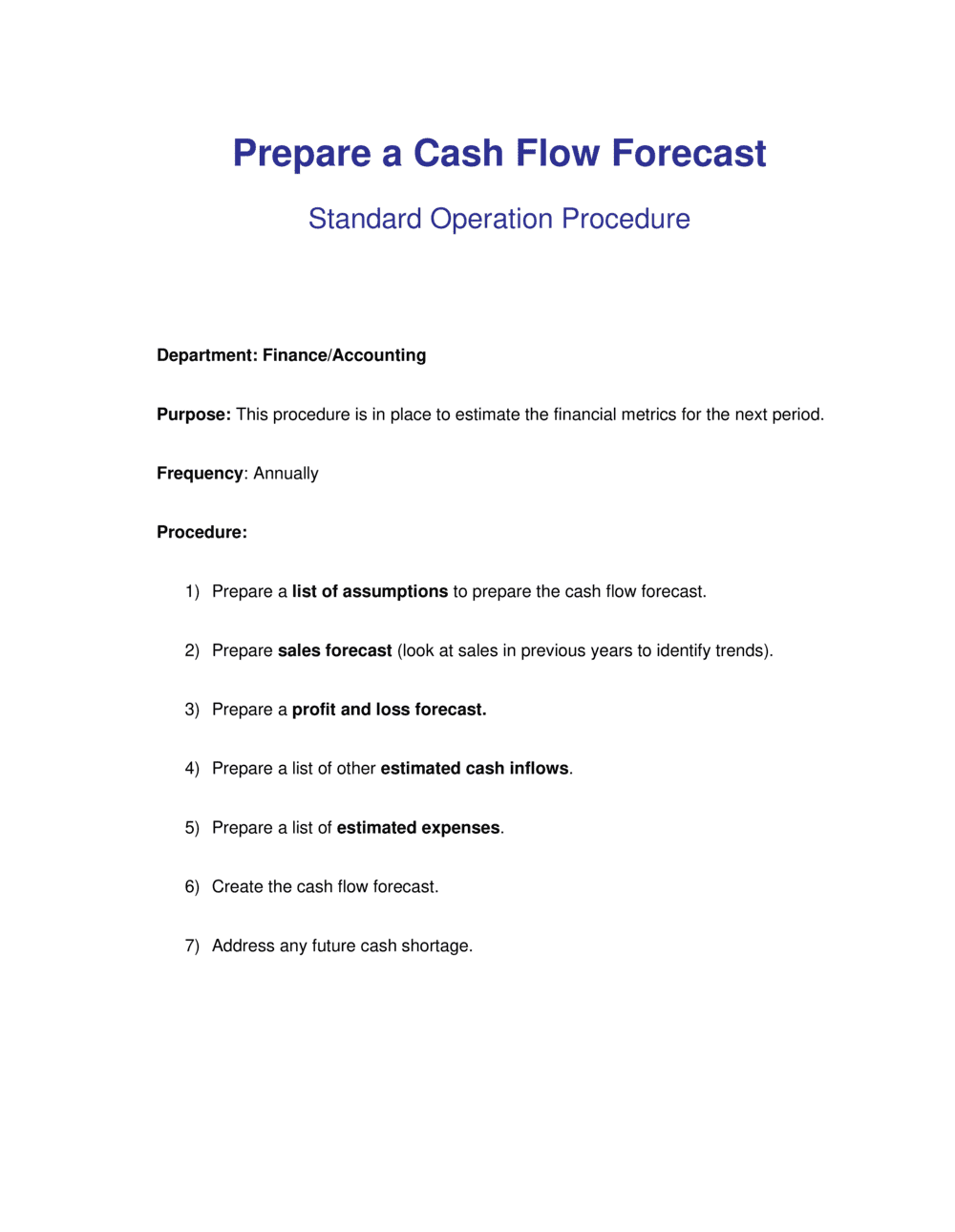
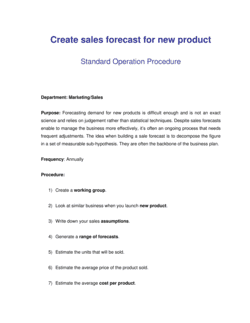
A Cash Flow Forecast is a structured financial document that projects all expected cash inflows and outflows over a defined future period β€” typically weekly, monthly, or quarterly β€” so you can see your net cash position before problems arise. This free Word download walks you through each step, from opening balance to closing balance, in a format you can edit online and export as PDF to share with lenders, investors, or your board.
When you need it
Use it when planning for a growth phase, preparing a bank loan application, managing a seasonal business, monitoring a turnaround, or simply ensuring you never miss payroll or a supplier payment. Any time you need to see 4–13 weeks or 12 months ahead with precision, this document is the tool.
What's inside
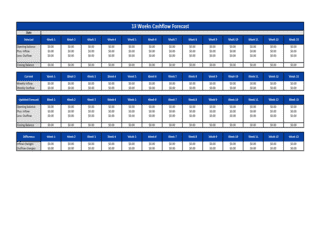
Opening cash balance, itemized cash inflows by source, itemized cash outflows by category, net cash movement per period, closing balance, and a variance-tracking section to compare actuals against forecast. An instructions section explains each line item and the key assumptions that drive the model.

What is a Cash Flow Forecast?

A Cash Flow Forecast is a structured financial document that projects every expected cash inflow and outflow over a defined future period β€” typically 13 weeks or 12 months β€” and calculates the resulting cash balance at the end of each period. Unlike a profit-and-loss statement, which records revenue and expenses on an accrual basis when they are earned or incurred, a cash flow forecast tracks only when cash physically enters or leaves the business. It covers operating receipts from customers, non-operating inflows such as loan drawdowns, and all outflows β€” payroll, rent, supplier payments, capital expenditure, and debt repayments β€” timed to the specific dates they are due.

Why You Need This Document

A profitable business can still run out of cash if customers pay slowly, large outflows cluster in the same week, or a growth phase requires inventory investment before revenue arrives. Without a forward-looking cash forecast, these events only become visible when the bank balance hits zero β€” at which point the options are expensive and reactive. A completed cash flow forecast makes the problem visible 4 to 13 weeks in advance, giving you time to accelerate collections, defer a capital purchase, draw on a credit line, or renegotiate a supplier payment date before a shortfall becomes a crisis. Banks and lenders require one for most loan applications above $150K because it demonstrates you understand your cash cycle. Investors expect it in any data room. This template gives you a step-by-step structure β€” from opening balance to variance tracking β€” so you can produce a credible, maintainable forecast without starting from a blank spreadsheet.

Which variant fits your situation?

If your situation is…Use this template
Weekly operational monitoring during a cash-tight period13-Week Cash Flow Forecast
Annual financial planning alongside a P&L budget12-Month Cash Flow Forecast
Supporting a bank loan or SBA financing applicationCash Flow Projection (Bank Format)
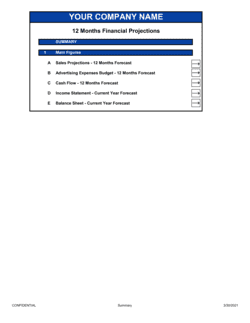
Investor pitch supporting a capital raiseFinancial Projections (12 Months)
Tracking actuals against forecast each periodBudget vs. Actual Report
Scenario planning for a new product launch or expansionBusiness Expansion Plan
High-level internal planning for a startup with limited historyOne-Page Business Plan

Common mistakes to avoid

❌ Forecasting revenue instead of cash receipts

Why it matters: Revenue recognized in Month 1 under Net 45 terms does not become cash until Month 2 or later. Overstating Month 1 cash creates a false sense of liquidity that masks an impending shortfall.

Fix: Always apply your actual collection lag β€” derived from accounts-receivable aging data β€” to convert revenue into expected cash receipt dates before entering any inflow figure.

❌ Using the book balance as the opening balance

Why it matters: The accounting book balance includes uncleared cheques and pending transactions that have not yet settled. Starting from an artificially high balance shifts every closing balance upward and can hide a real-world overdraft.

Fix: Reconcile your bank statement before starting the forecast and use the confirmed cleared balance. Note any large in-flight items as a memo line.

❌ Smoothing payments evenly across the month

Why it matters: Payroll, rent, and tax payments hit on specific dates. Spreading them evenly across 4 weeks hides intra-month cash dips that can trigger overdraft fees or missed payment defaults.

Fix: Map every recurring outflow to its actual payment date. Even a simple calendar of fixed payment dates β€” entered before variable items β€” eliminates this error.

❌ Presenting only the base-case scenario

Why it matters: A single-scenario forecast gives lenders and boards no insight into downside risk. When actuals come in below plan, there is no pre-planned response β€” decisions are made reactively.

Fix: Build at least one downside scenario alongside the base case. Identify the period where the downside scenario first produces a negative or minimum-breach balance, and prepare a contingency action for that event.

❌ Never updating actuals or variance tracking

Why it matters: A forecast that is never compared to actuals provides no feedback loop. Systematic errors in collection rates or payment timing compound over time and make future forecasts increasingly unreliable.

Fix: Schedule a fixed weekly update β€” 30 minutes maximum β€” to enter actuals, calculate variances, and adjust the forward assumptions if a pattern emerges.

❌ Omitting capital expenditure from the outflow schedule

Why it matters: A $50,000 equipment purchase buried in a month of otherwise ordinary outflows can push a healthy-looking closing balance negative with no prior warning in the forecast.

Fix: Maintain a separate capex line in the outflow section. Link it to a planned capex schedule so every approved purchase appears in the forecast before the cash leaves the account.

The 10 key sections, explained

Instructions and assumptions register

Opening cash balance

Cash inflows β€” operating receipts

Cash inflows β€” non-operating receipts

Cash outflows β€” operating payments

Cash outflows β€” capital expenditure

Cash outflows β€” financing payments

Net cash movement and closing balance

Variance tracking (actuals vs. forecast)

Sensitivity analysis and scenario notes

How to fill it out

  1. 1

    Set the forecast period and frequency

    Decide whether you need weekly (13-week), monthly (12-month), or a hybrid. Cash-tight businesses need weekly detail for the first 13 weeks; stable businesses can use monthly periods for a 12-month view.

    πŸ’‘ A 13-week rolling format updated every Monday gives management the highest-fidelity early warning of a cash problem.

  2. 2

    Enter the opening balance from a reconciled bank statement

    Pull the confirmed cash balance from your most recent bank reconciliation β€” not your accounting software book balance. Reconcile any uncleared items before entering the figure.

    πŸ’‘ If you bank with multiple institutions, sum all accounts but track each one separately in a supporting tab to spot concentration or minimum-balance issues.

  3. 3

    Project cash inflows from existing and expected invoices

    Start with outstanding receivables aged by due date, apply a realistic collection rate (not 100%), then add expected new sales receipts timed to your payment terms. Separate operating inflows from loan proceeds or asset sales.

    πŸ’‘ Use the last 3 months of actual collection data to set your collection rate β€” if customers average 38 days to pay on Net 30 terms, model 38 days, not 30.

  4. 4

    List every outflow with its actual payment date

    Map each payment to the specific date cash leaves the account β€” payroll date, rent date, supplier due date. Sort outflows into three buckets: operating, capital expenditure, and financing.

    πŸ’‘ Export your accounts-payable aging report and your payroll calendar side by side β€” this catches 90% of operating outflows in 15 minutes.

  5. 5

    Calculate net cash movement and closing balance for each period

    Subtract total outflows from total inflows for each period to get net movement, then add to the opening balance. The closing balance becomes the next period's opening balance.

    πŸ’‘ Apply conditional formatting (red fill) to any closing balance below your target minimum β€” typically 4–6 weeks of average operating outflows.

  6. 6

    Document your key assumptions

    Record every significant assumption in the assumptions register: collection rate, payment terms, revenue growth rate, seasonality adjustments, and any one-time items. Date-stamp each assumption.

    πŸ’‘ Assumptions that drive more than 10% of a period's cash movement deserve a sensitivity row β€” show what a 10% miss on that assumption does to the closing balance.

  7. 7

    Build a downside scenario

    Copy the base-case forecast and adjust two or three key drivers adversely β€” revenue at 75–80% of plan, collections delayed by 10–15 days, one large outflow accelerated. Identify in which period the downside scenario first creates a negative balance.

    πŸ’‘ The gap between your base-case and downside closing balances is your effective liquidity buffer β€” if it is less than one month of outflows, you need a contingency plan.

  8. 8

    Update actuals and track variances each period

    At the end of each week or month, record actual cash movements against the forecast, calculate the variance, and note the cause for any item more than 5% off. Use this to re-calibrate assumptions for future periods.

    πŸ’‘ A forecast that is never updated against actuals is a budget, not a management tool β€” schedule a fixed weekly 30-minute update as a calendar block.

Frequently asked questions

What is a cash flow forecast?

A cash flow forecast is a financial document that projects all expected cash inflows and outflows over a defined future period β€” typically weekly or monthly β€” to show the projected cash balance at the end of each period. Unlike a profit-and-loss statement, it tracks only actual cash movements, not accrued revenues or expenses. It is the primary tool businesses use to anticipate shortfalls before they become crises.

What is the difference between a cash flow forecast and a cash flow statement?

A cash flow statement is a historical document β€” it records cash movements that have already occurred in a past accounting period. A cash flow forecast is forward-looking β€” it projects future movements based on assumptions about inflows and outflows. Both follow the same structure (operating, investing, and financing activities), but a forecast requires you to model assumptions rather than report actuals.

How far ahead should a cash flow forecast look?

The right horizon depends on your situation. Cash-constrained businesses typically use a 13-week rolling forecast updated weekly for maximum operational visibility. Stable businesses preparing for a loan application or annual planning use a 12-month forecast. Startups raising capital often build an 18–24 month model. The shorter the period, the more granular and accurate the forecast should be.

What is a 13-week cash flow forecast?

A 13-week cash flow forecast covers exactly one quarter of weekly cash movements β€” a format widely used by lenders, turnaround advisors, and private equity firms because it provides enough detail to manage near-term liquidity without the noise of long-range assumptions. At 13 weeks, most outstanding receivables and payables are known with reasonable certainty, making the forecast highly actionable.

What are the most common cash flow forecast errors?

The most damaging errors are: (1) forecasting revenue instead of actual cash receipts β€” which ignores your real collection lag; (2) using an unreconciled book balance as the opening figure; (3) smoothing irregular payments like payroll and rent evenly across periods instead of pinning them to specific dates; and (4) never updating the forecast with actuals, which eliminates any learning about forecast accuracy over time.

Do I need accounting software to prepare a cash flow forecast?

No. A well-structured template in Word or Excel is sufficient for most small businesses and startups. Accounting software integrations (QuickBooks, Xero) can pull opening balances and receivables aging automatically, which saves time β€” but the analytical judgment about collection rates, payment timing, and scenario assumptions cannot be automated and must be applied manually regardless of the tool.

How is a cash flow forecast used by lenders?

Banks and SBA lenders use the cash flow forecast to assess whether a borrower generates enough operating cash to service proposed debt payments without running out of liquidity. They look specifically at the minimum closing balance in any period, the consistency between the forecast assumptions and historical trading patterns, and whether the business has a credible plan for periods where cash dips close to zero. A realistic, variance-tracked forecast signals financial discipline.

What is a rolling cash flow forecast?

A rolling forecast always looks a fixed number of periods ahead β€” for example, 13 weeks β€” regardless of the calendar date. Each week, the oldest period is dropped, actuals are recorded, and a new future week is added at the far end. This contrasts with a static forecast that ends at a fixed year-end date and progressively shortens as the year passes. Rolling forecasts are more useful for ongoing cash management.

How do I handle uncertainty in my cash flow forecast?

Build at least two scenarios alongside your base case: an upside scenario (10–15% better collections, accelerated sales) and a downside scenario (collections slow by 10–15 days, revenue at 75–80% of plan). Document the assumptions that drive each scenario. Identify the earliest period in which the downside scenario produces a negative or minimum-breach balance, and prepare a specific contingency action β€” a credit line draw, a deferred capex item, or an accelerated receivables campaign β€” for that event.

How this compares to alternatives

vs Financial Projections (12 Months)

A financial projections template produces a full three-statement model β€” P&L, balance sheet, and cash flow β€” designed primarily for investor or lender presentations. A cash flow forecast focuses exclusively on cash timing and closing balance, updated regularly against actuals. Use financial projections to raise capital; use a cash flow forecast to manage the business week to week.

vs Budget vs. Actual Report

A budget vs. actual report compares historic period revenues and expenses against a pre-set annual budget. A cash flow forecast is forward-looking and tracks only cash movements, not accrual-basis income. The two documents complement each other: the budget vs. actual report diagnoses past performance; the cash flow forecast directs near-term decisions.

vs Business Plan

A business plan provides the full strategic, operational, and financial narrative for an organization over 3–5 years, including market analysis and competitive positioning. A cash flow forecast is a narrow, operationally focused tool concerned solely with when cash moves in and out. The cash flow forecast is typically one exhibit inside a broader business plan, not a replacement for it.

vs Profit and Loss Statement

A P&L statement reports revenue earned and expenses incurred on an accrual basis for a historical period β€” regardless of when cash changed hands. A cash flow forecast tracks only actual cash receipts and payments as they occur. A business can show a profit on its P&L while simultaneously running out of cash if receivables are slow to collect or large payments cluster in a single period.

Industry-specific considerations

Retail and e-commerce

Seasonal inventory build-ups create predictable cash dips 6–8 weeks before peak trading periods, making a monthly forecast essential for timing supplier payments against expected sales receipts.

Construction and contracting

Progress billing tied to project milestones and subcontractor payment schedules create highly irregular cash flows that require week-by-week forecasting to avoid running out of cash mid-project.

SaaS and technology

Burn rate and runway tracking are the primary outputs, with MRR growth, annual contract prepayments, and infrastructure spend as the key forecast drivers reviewed by investors every board cycle.

Professional services

Billable hour timing and client invoice collection lags β€” often 45–60 days for corporate clients β€” mean revenue recognition and actual cash receipts can differ by a full billing cycle.

Manufacturing and wholesale

Large raw-material purchase orders, extended supplier credit terms, and bulk customer payment schedules create wide intra-month cash swings that require daily or weekly cash position tracking.

Hospitality and food service

High fixed costs, daily cash sales, and weekly payroll create a cash cycle that can shift from positive to negative within a single slow trading week, making a rolling 13-week forecast a survival tool.

Template vs pro β€” what fits your needs?

PathBest forCostTime
Use the templateSmall business owners, startup founders, and finance managers building or maintaining a standard 13-week or 12-month forecastFree2–4 hours to build; 30 minutes per week to maintain
Template + professional reviewBusinesses preparing a forecast for a bank loan application, investor data room, or board presentation$300–$800 for an accountant or CFO-for-hire review session1–3 days
Custom draftedTurnaround situations, complex multi-entity structures, or businesses requiring a lender-covenant compliance model integrated with live accounting data$1,500–$5,000+ for a financial consultant or fractional CFO build1–3 weeks

Glossary

Opening Balance
The actual cash and cash-equivalent balance at the start of each forecast period, carried forward from the prior period's closing balance.
Cash Inflow
Any receipt of cash into the business β€” from customers, loans, asset sales, or investor contributions β€” during a forecast period.
Cash Outflow
Any payment of cash out of the business β€” to suppliers, employees, lenders, or tax authorities β€” during a forecast period.
Net Cash Movement
Total cash inflows minus total cash outflows for a given period; a positive figure increases the balance, a negative figure depletes it.
Closing Balance
The projected cash balance at the end of a period, calculated as opening balance plus net cash movement; becomes the next period's opening balance.
Burn Rate
Monthly net cash outflow for a business spending more than it earns β€” how fast it consumes its available cash reserves.
Runway
The number of months a business can continue operating at its current burn rate before exhausting available cash.
Variance
The difference between a forecasted figure and the actual figure recorded once the period has passed, used to improve future forecast accuracy.
Rolling Forecast
A forecast that is updated each period to always look a fixed number of weeks or months ahead, rather than ending at a fixed year-end date.
Accrual vs. Cash Basis
Accrual accounting records revenue and expenses when earned or incurred; cash-basis accounting β€” used in cash flow forecasts β€” records only when cash actually moves.
Trade Receivables
Amounts owed to the business by customers for goods or services already delivered but not yet paid for.
Working Capital
Current assets minus current liabilities β€” the short-term liquidity buffer a business uses to fund day-to-day operations.

Part of your Business Operating System

This document is one of 3,000+ business & legal templates included in Business in a Box.

  • Fill-in-the-blanks β€” ready in minutes
  • 100% customizable Word document
  • Compatible with all office suites
  • Export to PDF and share electronically

Create your document in 3 simple steps.

From template to signed document β€” all inside one Business Operating System.
1
Download or open template

Access over 3,000+ business and legal templates for any business task, project or initiative.

2
Edit and fill in the blanks with AI

Customize your ready-made business document template and save it in the cloud.

3
Save, Share, Send, Sign

Share your files and folders with your team. Create a space of seamless collaboration.

Save time, save money, and create top-quality documents.

β˜…β˜…β˜…β˜…β˜…

"Fantastic value! I'm not sure how I'd do without it. It's worth its weight in gold and paid back for itself many times."

Managing Director Β· Mall Farm
Robert Whalley
Managing Director, Mall Farm Proprietary Limited
β˜…β˜…β˜…β˜…β˜…

"I have been using Business in a Box for years. It has been the most useful source of templates I have encountered. I recommend it to anyone."

Business Owner Β· 4+ years
Dr Michael John Freestone
Business Owner
β˜…β˜…β˜…β˜…β˜…

"It has been a life saver so many times I have lost count. Business in a Box has saved me so much time and as you know, time is money."

Owner Β· Upstate Web
David G. Moore Jr.
Owner, Upstate Web

Run your business with a system β€” not scattered tools

Stop downloading documents. Start operating with clarity. Business in a Box gives you the Business Operating System used by over 250,000 companies worldwide to structure, run, and grow their business.

Start freeΒ Β·Β No credit card required