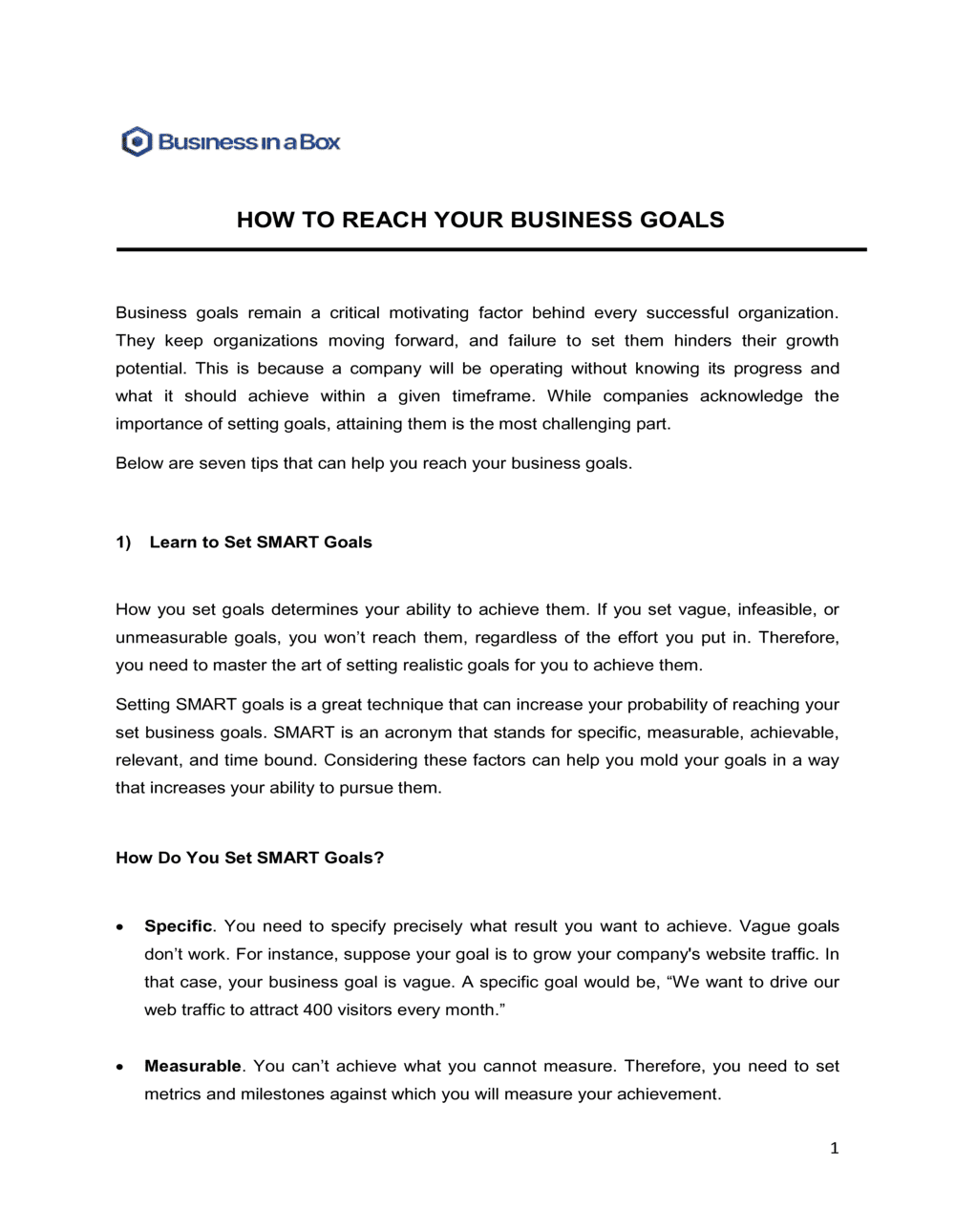
How To Reach Your Business Goals

Free Word download β€’ Edit online β€’ Save & share with Drive β€’ Export to PDF

4 pagesβ€’20–30 min to fillβ€’Difficulty: Standard
Learn more ↓
FreeHow To Reach Your Business Goals Template

At a glance

What it is
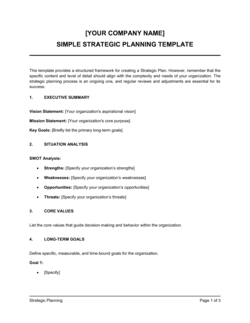
How To Reach Your Business Goals is a structured planning document that guides business owners and leaders through defining clear objectives, identifying the actions needed to achieve them, and tracking progress over time. This free Word download gives you a ready-to-use framework you can edit online and export as PDF to share with your team or advisors.
When you need it
Use it at the start of a new fiscal year, when launching a growth initiative, or whenever your team needs to realign around concrete, measurable priorities. It is equally useful for solo operators setting annual targets and leadership teams coordinating cross-functional work.
What's inside
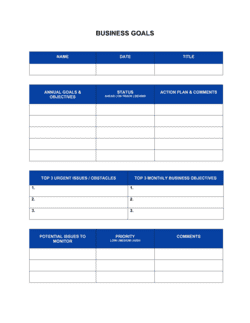
Goal statements with measurable outcomes, prioritization criteria, action steps with owners and deadlines, resource requirements, risk identification, and a progress-tracking mechanism β€” all organized in a single editable document.

What is a How To Reach Your Business Goals Document?

A How To Reach Your Business Goals document is a structured operational planning template that guides business owners and leadership teams through defining clear objectives, mapping the specific actions required to achieve them, and building the accountability and review systems that keep execution on track. It moves goal-setting beyond a list of aspirations and into a working management tool β€” with SMART goal statements, named owners, resource estimates, risk flags, and a progress-review cadence all captured in a single editable document. By anchoring each goal to a measurable outcome and a concrete set of actions, it ensures the entire team understands not just where the business is headed, but exactly what each person needs to do to get it there.

Why You Need This Document

Without a written goals plan, strategic priorities exist only in the founder's or CEO's head β€” invisible to the team and impossible to hold anyone accountable to. Research on small business performance consistently shows that businesses with written goals and regular reviews grow faster than those that plan informally, not because the goals are magic but because writing them down forces the discipline of deciding what actually matters. The cost of skipping this document is concrete: teams default to reactive work, high-effort low-impact projects consume the year, and the annual review becomes a frustrating exercise in explaining why the business is in the same position it was twelve months ago. This template removes the blank-page barrier that stops most owners from planning at all, giving you a proven structure you can complete in an afternoon and use as the backbone of every team meeting, quarterly review, and annual planning session going forward.

Which variant fits your situation?

If your situation is…Use this template
Setting goals for the full organization across multiple departmentsStrategic Plan
Tracking weekly and monthly progress against defined targetsBusiness Performance Report
Defining measurable KPIs tied to each goalKPI Dashboard Template
Planning a specific project with tasks, owners, and deadlinesProject Plan
Conducting a quarterly or annual business reviewQuarterly Business Review Template
Identifying strengths and obstacles before committing to goalsSWOT Analysis
Communicating goals and strategy to investors or a boardBusiness Plan

Common mistakes to avoid

❌ Setting too many goals

Why it matters: Teams with more than seven active goals typically make meaningful progress on fewer than three. Attention and resources are spread too thin to achieve anything well.

Fix: Limit each planning cycle to three to five high-priority goals. Park lower-priority items in a backlog and revisit them each quarter as capacity opens up.

❌ Writing activity-based goals instead of outcome-based goals

Why it matters: Goals stated as activities β€” 'implement a CRM' or 'hire salespeople' β€” can be marked complete even if the underlying business result was never achieved.

Fix: Reframe every goal around a measurable outcome: 'achieve 85% CRM adoption across the sales team by Q2' or 'close $400K in new ARR from the expanded sales team by year-end.'

❌ Assigning action steps to teams instead of individuals

Why it matters: When a task belongs to a group, no one person feels the full weight of accountability. Steps assigned to teams are consistently the last to get done.

Fix: Name a single accountability owner for every action step β€” even when multiple people contribute. That person drives it, reports on it, and escalates if it is at risk.

❌ Skipping the resource estimation step

Why it matters: An ambitious goal list that exceeds available budget or headcount does not produce great results β€” it produces an exhausted team and a half-finished plan.

Fix: Before finalizing the goal list, total the resource requirements and compare them to confirmed capacity. Cut or defer goals until the plan is genuinely executable.

❌ Setting up reviews but never adjusting the plan

Why it matters: Reviews that generate observations but no decisions waste time and teach the team that the plan is theoretical, not operational.

Fix: End every review meeting with at least one documented decision: a goal adjusted, a milestone moved, a resource reallocated, or a risk escalated. No decision means the review was a status update, not a management tool.

❌ Treating the lessons-learned section as optional

Why it matters: Teams that do not capture what worked and what did not repeat the same planning errors every cycle, compounding inefficiency year over year.

Fix: Complete the lessons-learned section at each quarterly review, not just at year-end. Assign a 15-minute slot to it in the standing review agenda.

The 10 key sections, explained

Vision and context statement

Goal statements

Goal prioritization

Action steps and owners

Resource requirements

Risk identification and mitigation

Success metrics and KPIs

Timeline and milestones

Progress review schedule

Lessons learned and next cycle input

How to fill it out

  1. 1

    Write the vision and context statement

    In two to three sentences, connect this planning cycle to the company's mission and explain why these goals are the right focus for this period. Reference the current business stage, competitive landscape, or a key constraint.

    πŸ’‘ Read this statement aloud to someone who works in the business β€” if they cannot immediately explain back what the company is trying to accomplish this year, rewrite it.

  2. 2

    Draft goal statements in SMART format

    Write each goal as a specific, measurable outcome with a deadline. Aim for three to seven goals per planning cycle β€” too few lacks direction, too many dilutes focus.

    πŸ’‘ If you cannot name the data source that will confirm a goal is achieved, the goal is not yet measurable enough to commit to.

  3. 3

    Prioritize goals by impact and feasibility

    Rank goals from highest to lowest priority using a simple impact-versus-effort assessment. Assign a P1, P2, or P3 label to each. Confirm that P1 goals are fully resourced before P2 work begins.

    πŸ’‘ When two goals compete for the same resource, default to the one with the shorter payback period β€” velocity matters more than theoretical impact in most growth-stage businesses.

  4. 4

    Break each goal into action steps with owners and due dates

    For each goal, list every discrete task required to achieve it. Assign a single named person to each task and a specific completion date β€” not a range.

    πŸ’‘ If an action step takes longer than two weeks to complete, break it into smaller sub-tasks. Steps longer than two weeks are rarely tracked closely enough to catch slippage early.

  5. 5

    Estimate and confirm resource requirements

    For each goal, total the budget, staff time, and tools required. Compare the aggregate against what is actually available. Adjust scope, timeline, or goal count until the plan is feasible.

    πŸ’‘ Add a 20% buffer to time estimates for any action step that depends on a third party β€” vendor delays, approvals, and external dependencies routinely blow deadlines.

  6. 6

    Define KPIs and name their data sources

    For each goal, select one to three KPIs that will objectively confirm progress. State exactly where the data comes from β€” CRM, accounting software, survey tool β€” so there is no ambiguity at review time.

    πŸ’‘ Set up the measurement system before the planning period starts, not after. KPIs you cannot yet measure do not drive behavior.

  7. 7

    Build the milestone timeline

    Lay the key milestones for all goals onto a shared calendar β€” one view showing what must be delivered each month across the full plan. Identify months where milestones cluster and adjust pacing if needed.

    πŸ’‘ Avoid scheduling major milestones in the same weeks as seasonal business peaks, major product launches, or known team absences β€” the collision is predictable and preventable.

  8. 8

    Schedule and protect review meetings

    Block monthly and quarterly review meetings on the leadership team's calendar now, name a facilitator for each, and attach a standing agenda: KPI review, blocker escalation, and forward-look adjustment.

    πŸ’‘ Send a one-page KPI summary 48 hours before each review meeting so participants arrive with questions, not just numbers.

Frequently asked questions

What is a business goals plan?

A business goals plan is a structured document that translates a company's strategic priorities into specific, measurable objectives with defined action steps, owners, deadlines, and success metrics. It bridges the gap between a high-level vision and the day-to-day work that moves the business forward, and serves as the reference document for regular progress reviews.

How many business goals should a company set per year?

Three to seven goals per planning cycle is the practical range for most small and mid-size businesses. Fewer than three often signals a lack of strategic ambition; more than seven dilutes focus to the point where teams make meaningful progress on very few of them. Highly focused companies β€” especially early-stage startups β€” often operate with three to four goals and achieve more than competitors with ten.

What is the difference between a goal and a KPI?

A goal is the destination β€” a specific outcome you want to reach by a defined date. A KPI is a recurring metric that tells you how close you are to that destination as you travel toward it. For example, the goal might be to reach $1M in annual revenue by December 31; the KPIs are monthly new bookings, churn rate, and average contract value β€” the gauges that tell you whether you are on track each month.

What is the SMART framework for business goals?

SMART stands for Specific, Measurable, Achievable, Relevant, and Time-bound. A SMART goal states exactly what will be accomplished, how success will be measured, why the target is realistic given current resources, why it matters to the business, and the deadline by which it will be achieved. Goals that fail any one of these criteria are typically difficult to manage and easy to rationalize away when things get hard.

How often should business goals be reviewed?

Monthly KPI check-ins and quarterly deep-dive reviews are the most effective cadence for most businesses. Monthly reviews catch slippage early enough to correct it; quarterly reviews are the right moment to reassess priorities, reallocate resources, and update milestones based on what has actually happened. Annual-only reviews discover problems too late to fix them in the same planning cycle.

What is the difference between a business goals plan and a strategic plan?

A strategic plan covers a 3–5 year horizon and addresses the company's overall direction, competitive positioning, and organizational priorities. A business goals plan translates that long-term strategy into specific, actionable objectives for the current 12-month period. Strategic plans set the destination; business goals plans define the next leg of the journey with concrete steps, owners, and deadlines.

Can a solo operator or freelancer use a business goals template?

Yes β€” a structured goals document is as useful for a one-person business as for a team of 50. Solo operators benefit especially from the action-step and review sections, which provide the external accountability structure that a team environment creates naturally. Many freelancers and independent consultants schedule a monthly self-review using this document as the agenda.

How do I handle goals that are no longer relevant mid-year?

Mark the goal as deferred or cancelled at your next formal review, document the reason in the lessons-learned section, and reallocate the associated resources to higher-priority work. Abandoning a goal is not a failure β€” holding onto a goal that no longer serves the business because it was in the plan is. The review cadence exists precisely to make these calls promptly.

What tools work best alongside a business goals template?

The goals document works well alongside a KPI dashboard in Excel or Google Sheets for tracking, a project management tool such as Asana or Trello for action-step tracking, and a calendar tool for blocking review meetings. The template itself serves as the single source of truth β€” the other tools feed data into it rather than replacing it.

How this compares to alternatives

vs Strategic plan

A strategic plan defines the company's 3–5 year direction, competitive positioning, and organizational priorities. A business goals plan translates that strategy into specific objectives, action steps, and KPIs for the current 12-month period. Most businesses need both: the strategic plan sets the course; the goals plan executes the next leg of the journey.

vs Business plan

A business plan is an external-facing document designed to persuade investors, lenders, or partners β€” it includes market analysis, competitive landscape, and financial projections for 3–5 years. A business goals plan is an internal operating document focused on the current cycle's priorities, owners, and progress tracking. They serve different audiences and different time horizons.

vs SWOT analysis

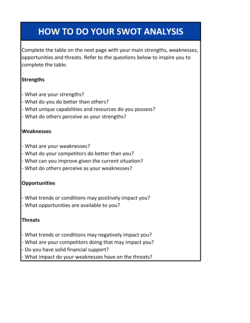
A SWOT analysis is a diagnostic snapshot that identifies strengths, weaknesses, opportunities, and threats. It is a useful input into goal-setting but does not define objectives or create action accountability on its own. The SWOT feeds the goals plan; the goals plan turns the SWOT's insights into decisions and tasks.

vs Project plan

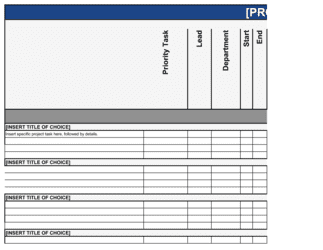
A project plan manages a single, time-bounded initiative with a defined deliverable β€” tasks, dependencies, Gantt charts, and resource schedules. A business goals plan manages multiple strategic objectives across the full business over a 12-month horizon. When a goal requires a major initiative, a project plan is typically created as a sub-document beneath it.

Industry-specific considerations

SaaS / Technology

Goals center on ARR growth, net revenue retention, product adoption metrics, and engineering throughput β€” typically tracked at weekly cadence against a live KPI dashboard.

Professional Services

Revenue per employee, billable utilization rate, and client retention rate are the core goal metrics; goals often include capability-building targets such as certifications or service-line expansions.

Retail / E-commerce

Goals tie to average order value, repeat purchase rate, inventory turnover, and cost-per-acquisition by channel β€” with seasonal planning cycles rather than calendar-year cycles.

Manufacturing

Goals address production throughput, defect rate, on-time delivery, and unit cost reduction β€” often structured around quarterly continuous-improvement sprints rather than annual plans.

Template vs pro β€” what fits your needs?

PathBest forCostTime
Use the templateSmall business owners, founders, and operators setting annual or quarterly goals independentlyFree2–4 hours to complete the first draft
Template + professional reviewLeadership teams aligning on goals before a board presentation or investor update$300–$1,000 for a business advisor or coach facilitation session1–2 days including team workshop
Custom draftedOrganizations undergoing a strategic pivot, merger, or major restructuring where goal alignment is complex$2,000–$8,000 for a strategy consultant engagement2–4 weeks

Glossary

SMART Goal
A goal that is Specific, Measurable, Achievable, Relevant, and Time-bound β€” the standard framework for writing objectives that can be tracked and evaluated.
Key Result
A quantifiable outcome that signals a goal has been achieved, expressed as a number, percentage, or binary yes/no milestone.
OKR (Objectives and Key Results)
A goal-setting framework pairing a qualitative Objective with two to five measurable Key Results that define what success looks like.
KPI (Key Performance Indicator)
A recurring metric used to monitor performance against a goal over time, such as monthly revenue, customer churn rate, or units produced per day.
Action Step
A discrete, assignable task with a named owner and due date that moves a goal forward by a defined increment.
Milestone
A significant checkpoint on the path to a goal β€” often marking completion of a phase, a threshold metric, or a go/no-go decision point.
Priority Matrix
A tool for ranking goals or tasks by two dimensions β€” typically impact and effort β€” to decide which to pursue first.
Accountability Owner
The single person responsible for driving a goal or action step forward and reporting on its status, even when others contribute.
Resource Plan
An estimate of the budget, headcount, tools, and time required to execute a goal, used to confirm feasibility before committing.
Progress Review
A scheduled check-in β€” weekly, monthly, or quarterly β€” at which the team compares actual results to plan and adjusts actions accordingly.

Part of your Business Operating System

This document is one of 3,000+ business & legal templates included in Business in a Box.

  • Fill-in-the-blanks β€” ready in minutes
  • 100% customizable Word document
  • Compatible with all office suites
  • Export to PDF and share electronically

Create your document in 3 simple steps.

From template to signed document β€” all inside one Business Operating System.
1
Download or open template

Access over 3,000+ business and legal templates for any business task, project or initiative.

2
Edit and fill in the blanks with AI

Customize your ready-made business document template and save it in the cloud.

3
Save, Share, Send, Sign

Share your files and folders with your team. Create a space of seamless collaboration.

Save time, save money, and create top-quality documents.

β˜…β˜…β˜…β˜…β˜…

"Fantastic value! I'm not sure how I'd do without it. It's worth its weight in gold and paid back for itself many times."

Managing Director Β· Mall Farm
Robert Whalley
Managing Director, Mall Farm Proprietary Limited
β˜…β˜…β˜…β˜…β˜…

"I have been using Business in a Box for years. It has been the most useful source of templates I have encountered. I recommend it to anyone."

Business Owner Β· 4+ years
Dr Michael John Freestone
Business Owner
β˜…β˜…β˜…β˜…β˜…

"It has been a life saver so many times I have lost count. Business in a Box has saved me so much time and as you know, time is money."

Owner Β· Upstate Web
David G. Moore Jr.
Owner, Upstate Web

Run your business with a system β€” not scattered tools

Stop downloading documents. Start operating with clarity. Business in a Box gives you the Business Operating System used by over 250,000 companies worldwide to structure, run, and grow their business.

Start freeΒ Β·Β No credit card required