How To Boost Your Business With Online Content

Free to read β€’ Save or share with one click

FreeHow To Boost Your Business With Online Content Template

At a glance

What it is
How To Boost Your Business With Online Content is a structured operational guide and planning document that helps business owners and marketing teams build, execute, and measure a content marketing strategy. This free Word download walks you through setting goals, defining your audience, choosing content types and channels, building a publishing calendar, and tracking results β€” all in one editable document you can export as PDF and share with your team or advisors.
When you need it
Use it when launching a new business, refreshing a stale digital presence, or building your first formal content plan to drive website traffic, leads, and brand awareness consistently rather than reactively.
What's inside
Business and content goals, audience personas, content type selection, channel strategy, editorial calendar framework, SEO and keyword guidance, content creation workflow, distribution and promotion plan, and a performance metrics tracking section.

What is How To Boost Your Business With Online Content?

How To Boost Your Business With Online Content is a structured operational planning document that guides business owners and marketing teams through building a complete content marketing strategy β€” from defining business goals and audience personas to selecting content formats, mapping distribution channels, and measuring performance. It functions as both a step-by-step playbook for getting started and an ongoing reference document for keeping content production aligned with business objectives. The template is designed to replace ad-hoc posting habits with a repeatable system that generates organic traffic, builds brand authority, and converts readers into leads and customers over time.

Why You Need This Document

Without a written content plan, most small businesses fall into the same trap: publishing inconsistently, targeting no specific audience, and measuring nothing β€” spending hours on content that produces no measurable return. The cost is real: competitors with a documented strategy capture the search rankings, email lists, and social audiences that compound in value over months and years. A structured content guide forces you to answer the questions that determine whether content actually works β€” who you are writing for, what they are searching for, and what action you want them to take. This template gives you a ready-made framework to answer those questions once, then execute against them consistently, so every piece of content you create has a defined audience, a targeted keyword, a distribution plan, and a metric to evaluate its success.

Which variant fits your situation?

If your situation is…Use this template
Building a full multi-channel marketing strategy including paid and offlineMarketing Plan
Planning and scheduling content publication across a calendar yearEditorial Calendar
Focusing specifically on social media channels and posting cadenceSocial Media Marketing Plan
Optimizing content for search engine rankingsSEO Strategy Plan
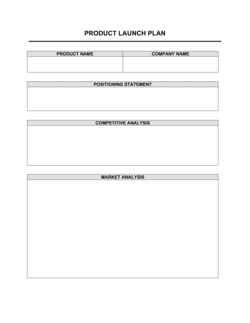
Launching a new product using content as a primary awareness channelNew Product Launch Plan
Tracking ongoing content performance metrics and reporting to stakeholdersMarketing Report
Defining your overall brand voice and messaging guidelinesBrand Identity Guide

Common mistakes to avoid

❌ Creating content without defined audience personas

Why it matters: Generic content that targets no specific reader earns low engagement, high bounce rates, and minimal search rankings because it addresses no real question clearly.

Fix: Write a one-page persona profile before creating any content. Every piece should answer a question that persona is actively Googling.

❌ Targeting high-difficulty keywords with a new or low-authority domain

Why it matters: New websites that try to rank for broad terms like 'digital marketing' compete against domains with thousands of inbound links β€” and stay on page 10 indefinitely.

Fix: Build initial content around long-tail keywords under difficulty 30. Traffic compounds as authority grows, and early wins maintain team momentum.

❌ Publishing without a distribution plan

Why it matters: A published post with no active promotion reaches only your existing audience, meaning a new website or small following generates near-zero traffic from each new piece.

Fix: Write a three-channel distribution checklist before the first post goes live: which social accounts share it, which email list features it, and which communities it gets posted to.

❌ Measuring vanity metrics instead of conversion metrics

Why it matters: High page views that produce no leads, subscribers, or sales mean your content is attracting the wrong audience or failing to convert β€” and you will not know until the budget is gone.

Fix: Set a conversion KPI for every content piece at the brief stage: email opt-in, contact form submission, or product page click. Measure it on a 30-day and 90-day basis.

❌ Building a 12-month content calendar in advance

Why it matters: A rigid annual calendar becomes obsolete within 60 days as industry news, algorithm updates, and business priorities shift β€” and the team spends more energy updating the calendar than creating content.

Fix: Plan in 4-week sprints with a loose topic list for the following quarter. Review and confirm the next sprint's schedule at the end of each current sprint.

❌ Launching on too many channels simultaneously

Why it matters: Spreading production effort across five channels at once produces thin, inconsistent content on every channel, which builds no meaningful authority on any of them.

Fix: Dominate two channels for the first six months before adding a third. Consistent quality on a small number of channels outperforms sporadic presence on many.

The 9 key sections, explained

Business Goals and Content Objectives

Audience and Buyer Persona Profiles

Content Types and Format Selection

Channel Strategy

SEO and Keyword Strategy

Editorial Calendar and Publishing Schedule

Content Creation Workflow

Distribution and Promotion Plan

Performance Metrics and Reporting Cadence

How to fill it out

  1. 1

    Define your business goals and content objectives

    Start with the business outcome you need content to support β€” lead generation, customer retention, brand awareness, or direct sales. Write one measurable content objective for each business goal.

    πŸ’‘ Use the SMART format: 'Publish 2 SEO blog posts per week to generate 500 organic sessions per month by Month 6' is actionable; 'create more content' is not.

  2. 2

    Build two to three audience personas

    Research your existing customers or target audience and write a profile for each key segment. Include their role, daily challenges, the questions they Google before buying, and the content formats they consume.

    πŸ’‘ Interview two or three real customers for 20 minutes each. Their exact phrases become your most effective keywords and headline copy.

  3. 3

    Choose two primary content formats

    Match formats to your audience's consumption habits and your team's realistic production capacity. Select one long-form format (blog, video, podcast) and one short-form format (social posts, email newsletter) to maintain consistency.

    πŸ’‘ Start with the format where you already have the most existing knowledge or assets. Repurposing existing material reduces production time by 40–60%.

  4. 4

    Select and justify your distribution channels

    Pick two to three channels where your audience is documented to be active β€” verified by platform demographics or customer research. Write a one-sentence rationale for each channel selection.

    πŸ’‘ Check your existing website analytics before choosing channels. If 60% of your current traffic already comes from LinkedIn, double down there before building a YouTube presence.

  5. 5

    Research and assign keyword clusters

    Use a free tool such as Google Search Console or Ubersuggest to identify 5–10 keywords with monthly search volume above 100 and keyword difficulty below 40. Assign each cluster to a specific content piece.

    πŸ’‘ Cluster related keywords into one content piece rather than writing separate posts for each β€” one thorough guide outranks ten thin articles targeting the same intent.

  6. 6

    Build a 4-week editorial calendar

    Map specific topics, formats, assigned authors, and publication dates for the next four weeks only. Leave the next quarter as a loose topic list, not fixed dates β€” this prevents calendar paralysis when priorities shift.

    πŸ’‘ Schedule content production to finish 5 business days before the publication date. Buffers absorbed by real deadlines are not wasted β€” they are essential.

  7. 7

    Document your creation and review workflow

    Write out each step from brief to publish with a named owner and a maximum number of business days for each stage. Confirm every team member has reviewed and accepted their role before the first sprint begins.

    πŸ’‘ A two-person team needs a four-step workflow at most. Adding approval gates that your team cannot realistically staff creates a backlog within 3 weeks.

  8. 8

    Set KPIs and schedule your first monthly review

    Enter your baseline metrics β€” current organic sessions, current leads per month, current email subscriber count β€” alongside your 90-day targets. Put the first monthly review meeting in every team member's calendar before you publish the first piece.

    πŸ’‘ Compare month-over-month, not week-over-week, for content metrics. Weekly fluctuations in organic traffic are normal; monthly trends are the signal.

Frequently asked questions

What does it mean to boost your business with online content?

Boosting your business with online content means using blog posts, videos, social media, email newsletters, and other digital formats to attract your target audience, build trust, and convert visitors into leads or customers β€” without relying solely on paid advertising. A structured content plan turns this from an occasional activity into a repeatable system with measurable results tied to specific business goals.

How long does it take for online content to produce results?

SEO-driven content typically takes 3–6 months to rank and generate consistent organic traffic, depending on domain authority and keyword competitiveness. Social and email content can produce engagement within days. Setting a 90-day baseline review β€” comparing organic sessions, leads, and engagement against starting metrics β€” gives you an accurate picture of what is working before making major strategy changes.

What types of content are most effective for small businesses?

For most small businesses, long-form blog posts targeting specific search queries, short-form social content on one or two platforms where their audience is active, and a regular email newsletter to an owned list produce the best return on time invested. Case studies and how-to guides are particularly effective because they directly address buyer questions before a purchase decision.

How much content do I need to publish each week?

Consistency matters more than volume. One well-researched, keyword-optimized blog post per week outperforms three thin posts with no strategic targeting. For social media, 3–5 posts per week per primary channel is a sustainable starting cadence for a small team. Build a schedule you can maintain for 6 months before increasing frequency.

Do I need an SEO expert to make content marketing work?

No, but a basic understanding of keyword research and on-page SEO is necessary for content to earn organic traffic. Free tools like Google Search Console and Ubersuggest cover the fundamentals. For competitive industries or aggressive growth targets, investing in an SEO audit or a monthly consultation with a specialist (typically $500–$1,500/month) will accelerate results materially.

What is the difference between a content plan and a marketing plan?

A marketing plan covers all channels β€” paid advertising, events, PR, partnerships, and content β€” along with budget allocation and overall positioning. A content plan focuses specifically on what content will be created, for which audience, on which channels, and how performance will be measured. A content plan is a component of a broader marketing plan, not a substitute for it.

How do I measure whether my online content is working?

Track four core metrics: organic sessions (search visibility), leads generated from content (business impact), email subscriber growth (owned audience building), and content conversion rate (percentage of visitors who take a desired action). Review these monthly against your stated targets. Page views and social likes are secondary indicators β€” they do not confirm that content is producing revenue.

Can I repurpose the same content across multiple channels?

Yes, and repurposing is one of the highest-leverage tactics in a content strategy. A single long-form blog post can generate a 5-email nurture sequence, 8–10 social posts, a short video script, and an FAQ page. Document your repurposing workflow in your content plan so each piece is systematically extended rather than left to sit after first publication.

What is evergreen content and why does it matter for small businesses?

Evergreen content β€” how-to guides, glossaries, comparison pages, and FAQ articles β€” remains useful and searchable for months or years after publication, generating compounding traffic without additional production cost. For small businesses with limited content budgets, prioritizing evergreen formats over news-driven or trend-based content produces a better long-term return on each hour of creation time.

How this compares to alternatives

vs Marketing Plan

A marketing plan covers all go-to-market channels β€” paid, events, PR, partnerships, and content β€” alongside budget and positioning. A content plan focuses exclusively on content creation, distribution, and measurement. Use the marketing plan to set overall strategy and the content plan to operationalize the content component of that strategy.

vs Social Media Marketing Plan

A social media marketing plan focuses specifically on social platforms β€” posting cadence, channel selection, community engagement, and social-specific KPIs. An online content plan is broader, covering blog, SEO, email, and video alongside social. If social is your primary channel, use the social plan; if you need a multi-format content system, use this guide.

vs Product Launch Plan

A product launch plan coordinates content, PR, paid media, and sales enablement around a single time-bound launch event. An online content plan is an ongoing operational system with no end date. Launch plans borrow content tactics but are not a substitute for a sustained content strategy that builds organic reach between launches.

vs Marketing Report

A marketing report documents what already happened β€” channel performance, spend, leads, and conversions over a past period. An online content plan is forward-looking β€” it sets the strategy, schedule, and targets. The report measures whether the plan is working; the plan determines what to do next.

Industry-specific considerations

Professional Services

Long-form thought leadership, case studies, and LinkedIn content establish expertise and generate inbound inquiries from prospective clients researching service providers.

Retail and E-commerce

Product guides, comparison content, and how-to videos reduce paid acquisition costs by capturing high-intent organic search traffic at the bottom of the funnel.

SaaS and Technology

Tutorial content, integration guides, and comparison posts targeting competitor keywords drive free-trial signups and reduce CAC from paid channels.

Food and Beverage

Recipe content, behind-the-scenes production stories, and local SEO-optimized articles drive foot traffic and online orders for both restaurants and CPG brands.

Template vs pro β€” what fits your needs?

PathBest forCostTime
Use the templateSmall business owners and solo marketers building their first structured content planFree3–6 hours to complete the plan; 4–8 hours per week to execute
Template + professional reviewGrowing teams who want an SEO audit or content strategist review before committing to a 6-month plan$500–$1,500 for a one-time strategy session or SEO audit1–2 weeks
Custom draftedBusinesses investing $5,000+/month in content and needing a full-service agency or in-house content director to build and manage the strategy$2,000–$8,000/month for agency management or a full-time content hire4–6 weeks to onboard and launch

Glossary

Content Marketing
A strategy of creating and distributing useful, relevant content to attract a defined audience and drive profitable customer actions β€” as opposed to interrupting them with ads.
Editorial Calendar
A schedule mapping what content will be published, on which channel, on which date, and by whom β€” used to maintain consistent output.
Buyer Persona
A semi-fictional profile of your ideal customer based on demographics, goals, pain points, and content consumption habits.
Organic Traffic
Website visitors who arrive through unpaid search results, rather than paid ads or direct referrals.
Call to Action (CTA)
A specific instruction in or near a piece of content that tells the reader what to do next β€” subscribe, download, book a call, or buy.
Conversion Rate
The percentage of content visitors who complete a desired action, such as filling in a contact form or making a purchase.
Content Funnel
The three-stage framework β€” awareness, consideration, and decision β€” that maps content types to where a prospect is in their buying journey.
Evergreen Content
Content that remains useful and searchable for months or years after publication, such as how-to guides and FAQ pages, as opposed to time-sensitive news.
Repurposing
Adapting a single piece of content into multiple formats β€” turning a blog post into a video, infographic, or email series β€” to extend reach without creating everything from scratch.
Domain Authority
A third-party metric (0–100) estimating how likely a website is to rank in search results, based on the quality and quantity of inbound links.

Part of your Business Operating System

This document is one of 3,000+ business & legal templates included in Business in a Box.

  • Fill-in-the-blanks β€” ready in minutes
  • Compatible with all office suites
  • Export to PDF and share electronically

Create your document in 3 simple steps.

From template to signed document β€” all inside one Business Operating System.
1
Download or open template

Access over 3,000+ business and legal templates for any business task, project or initiative.

2
Edit and fill in the blanks with AI

Customize your ready-made business document template and save it in the cloud.

3
Save, Share, Send, Sign

Share your files and folders with your team. Create a space of seamless collaboration.

Save time, save money, and create top-quality documents.

β˜…β˜…β˜…β˜…β˜…

"Fantastic value! I'm not sure how I'd do without it. It's worth its weight in gold and paid back for itself many times."

Managing Director Β· Mall Farm
Robert Whalley
Managing Director, Mall Farm Proprietary Limited
β˜…β˜…β˜…β˜…β˜…

"I have been using Business in a Box for years. It has been the most useful source of templates I have encountered. I recommend it to anyone."

Business Owner Β· 4+ years
Dr Michael John Freestone
Business Owner
β˜…β˜…β˜…β˜…β˜…

"It has been a life saver so many times I have lost count. Business in a Box has saved me so much time and as you know, time is money."

Owner Β· Upstate Web
David G. Moore Jr.
Owner, Upstate Web

Run your business with a system β€” not scattered tools

Stop downloading documents. Start operating with clarity. Business in a Box gives you the Business Operating System used by over 250,000 companies worldwide to structure, run, and grow their business.

Free Forever PlanΒ Β·Β No credit card required