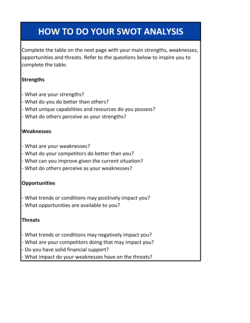
Free Business Needs Analysis Template

Free download β€’ Use as a template β€’ Print or share

1 pageβ€’20–25 min to useβ€’Difficulty: Standard
Learn more ↓
FreeFree Business Needs Analysis Template

At a glance

What it is
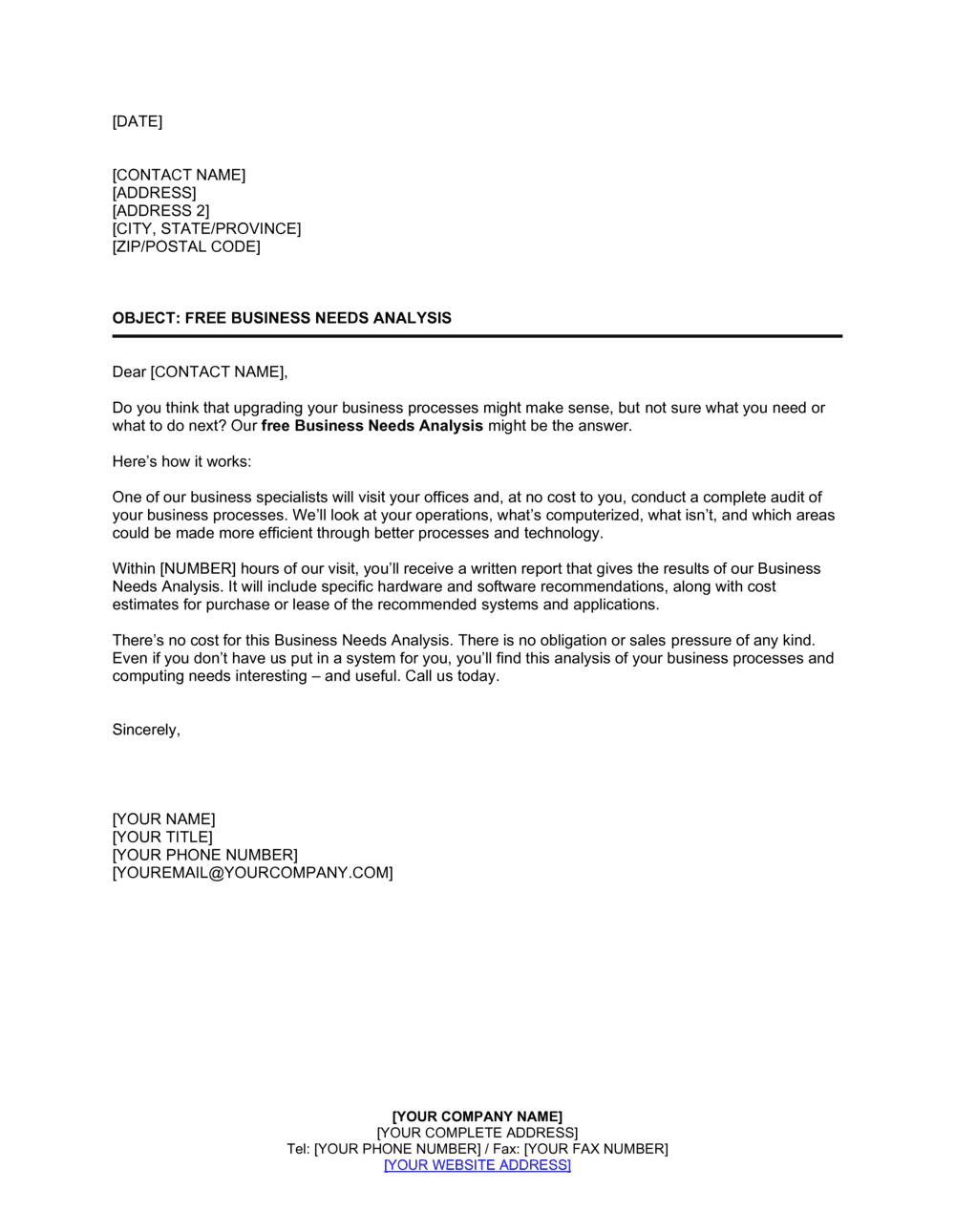
A Business Needs Analysis is a structured operational document that helps organizations identify the gap between their current state and a desired future state, then prioritize the actions required to close it. This free Word download gives you a ready-to-edit framework you can complete online and export as PDF to share with leadership, project sponsors, or external consultants.
When you need it
Use it before launching a new initiative, technology investment, or organizational change β€” any time you need to justify a resource request, align stakeholders on priorities, or build an evidence-based case for action.
What's inside
An executive summary, current-state assessment, desired-state definition, gap analysis, root-cause findings, prioritized recommendations, resource and budget estimates, success metrics, and an implementation roadmap.

What is a Business Needs Analysis?

A Business Needs Analysis is a structured operational document that diagnoses the gap between an organization's current performance and a specific desired outcome, then identifies the root causes of that gap and recommends prioritized actions to close it. It combines qualitative stakeholder input with quantitative performance data to produce an evidence-based case for action β€” covering what is broken, why it is broken, what it will take to fix it, and how success will be measured. Unlike a simple gap analysis or an informal audit, a full needs analysis sequences findings into a decision-ready deliverable that leadership, finance, and project teams can act on directly.

Why You Need This Document

Launching an initiative without a documented needs analysis is one of the most reliable ways to solve the wrong problem at significant cost. Teams that skip this step frequently invest in technology that addresses a symptom while the root cause β€” a broken process or an undertrained team β€” remains untouched. Budget requests without a needs analysis are routinely delayed or rejected because decision-makers have no factual basis to evaluate the trade-offs. Stakeholder misalignment compounds the problem: when each department has a different understanding of what the gap is, projects stall in design before a line of work is completed. A completed Business Needs Analysis creates a single shared record of the problem, its causes, and the agreed path forward β€” eliminating the ambiguity that derails organizational initiatives before they begin. This template gives you the structure to move from scattered observations to a defensible, approval-ready document in a fraction of the time required to build one from scratch.

Which variant fits your situation?

If your situation is…Use this template
Assessing training and skills gaps across a team or departmentTraining Needs Analysis
Evaluating whether a new software system is justifiedIT Needs Assessment
Scoping a consulting or professional services engagementBusiness Requirements Document
Diagnosing why a specific project or process is underperformingRoot Cause Analysis Report
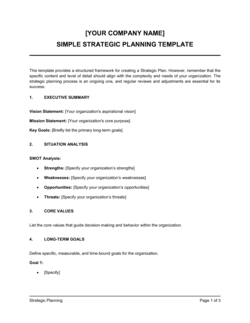
Aligning leadership on strategic priorities for the coming yearStrategic Planning Template
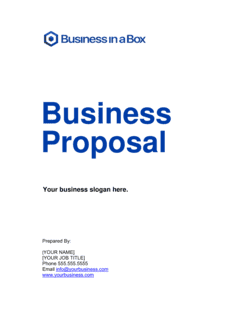
Preparing a formal proposal after the needs analysis is completeBusiness Proposal
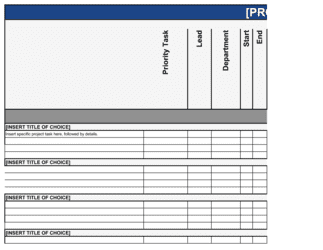
Tracking implementation progress after recommendations are approvedProject Plan

Common mistakes to avoid

❌ Starting with solutions instead of analysis

Why it matters: When a preferred solution drives the analysis, the current-state and gap sections are unconsciously shaped to justify it, producing recommendations that miss the real root cause.

Fix: Complete the current-state assessment and gap analysis before any recommendation is written. Solutions should emerge from the evidence, not precede it.

❌ Relying on a single stakeholder perspective

Why it matters: One stakeholder's view reflects their position in the organization β€” it routinely misses upstream causes, downstream impacts, or front-line realities that contradict the official narrative.

Fix: Interview at least two stakeholders per affected function and validate findings against quantitative data before treating any input as fact.

❌ Using vague, unmeasured desired-state targets

Why it matters: Targets like 'improve customer satisfaction' or 'reduce errors' cannot be used to evaluate whether recommendations succeeded, making the document useless as an accountability tool.

Fix: Assign a specific number, unit, and deadline to every desired-state target β€” for example, 'reduce order error rate from 8% to below 2% by Q3 2027.'

❌ Omitting resource and budget estimates from recommendations

Why it matters: Recommendations without cost estimates cannot be approved β€” budget owners have no basis to evaluate trade-offs, and the analysis stalls at the review stage.

Fix: Provide at minimum a rough-order-of-magnitude cost range for each recommendation, even if a precise figure requires further scoping. A range is actionable; silence is not.

The 10 key sections, explained

Executive summary

Background and objectives

Scope and methodology

Current-state assessment

Desired-state definition

Gap analysis

Root-cause analysis

Prioritized recommendations

Resource and budget estimates

Success metrics and implementation roadmap

How to fill it out

  1. 1

    Define the scope and objectives before collecting any data

    Write down the specific business problem or opportunity the analysis must address, name the departments and processes in scope, and set any budget or timeline constraints upfront.

    πŸ’‘ A one-sentence objective statement β€” 'Determine why order fulfillment takes 12 days and identify what is required to reduce it to 5' β€” prevents scope creep more effectively than a paragraph of context.

  2. 2

    Identify and interview key stakeholders

    Map every group affected by or involved in the area under review. Conduct structured interviews or surveys with at least two representatives per group to capture both management and front-line perspectives.

    πŸ’‘ Use the same five questions across all interviews β€” current pain points, frequency, impact, root cause hypothesis, and ideal outcome β€” so findings are comparable and aggregatable.

  3. 3

    Gather quantitative baseline data

    Pull system data, performance reports, or financial records that give you measurable current-state baselines. Triangulate at least two independent data sources per metric.

    πŸ’‘ If no system data exists, a two-week manual log by the team closest to the process produces more reliable baselines than stakeholder estimates alone.

  4. 4

    Document the current state with specifics

    Fill in the current-state section using the data collected. State each performance measure with a number, a unit, and a source β€” not adjectives like 'slow' or 'inconsistent.'

    πŸ’‘ Attach the raw data as an appendix so reviewers can verify your baselines without requesting a separate data package.

  5. 5

    Define the desired state in measurable terms

    For each current-state metric, write a corresponding target. Tie each target to a named strategic objective or KPI so the connection between the analysis and business goals is explicit.

    πŸ’‘ Benchmark against industry standards or peer organizations where internal targets don't exist β€” it makes the desired state credible rather than aspirational.

  6. 6

    Conduct the gap and root-cause analysis

    Calculate the difference between current and desired state for each dimension. For each significant gap, apply a structured root-cause method β€” five whys or fishbone diagram β€” to distinguish cause from symptom.

    πŸ’‘ Limit the gap table to the six to eight most material gaps. A list of thirty items signals a lack of analytical judgment and will stall leadership approval.

  7. 7

    Build and rank your recommendations

    For each root cause, write a specific recommendation. Plot all recommendations on a two-by-two matrix of impact versus implementation effort and sequence them accordingly.

    πŸ’‘ Lead with one or two quick wins β€” high-impact, low-effort recommendations β€” to build stakeholder momentum before presenting higher-cost initiatives.

  8. 8

    Write the executive summary last

    Pull the three most significant findings and the top two or three recommendations into a one-page summary. State the total estimated investment and the projected return or risk mitigation.

    πŸ’‘ The executive summary is the only section some decision-makers will read. Every key number β€” gap magnitude, cost, and target metric β€” must appear in it.

Frequently asked questions

What is a business needs analysis?

A business needs analysis is a structured document that identifies the gap between how an organization currently operates and how it needs to operate to meet a specific objective. It combines current-state data, stakeholder input, root-cause analysis, and prioritized recommendations into a single deliverable that supports resource allocation and decision-making.

When should I conduct a business needs analysis?

Conduct one before committing budget or resources to any significant initiative β€” a new technology platform, a restructuring, a process overhaul, or a training program. It is also the right tool when performance is consistently falling short of targets and the cause is unclear, or when multiple stakeholders have competing views on what the problem actually is.

What is the difference between a needs analysis and a gap analysis?

A gap analysis is one section within a broader business needs analysis. The gap analysis compares current-state performance to a defined desired state. The full needs analysis also covers background and objectives, data collection methodology, root-cause findings, prioritized recommendations, resource estimates, and an implementation roadmap. A standalone gap analysis tells you what is missing; a full needs analysis tells you why and what to do about it.

How long should a business needs analysis be?

For most organizational or operational assessments, 10–20 pages is sufficient β€” long enough to support the recommendations with evidence, short enough to be read by busy decision-makers. Complex IT or multi-department analyses can run 25–40 pages with appendices. A document under five pages typically lacks the evidence base to support significant resource requests.

Who should be involved in a business needs analysis?

At minimum, you need a project sponsor who owns the business objective, subject-matter experts who understand the current-state process, and end users who experience the gap directly. For cross-functional analyses, add a representative from each affected department. Finance input is essential when the recommendations involve significant budget commitments.

What data sources are used in a business needs analysis?

Common sources include structured stakeholder interviews, staff surveys, performance and operational reports, system logs, financial data, customer feedback, and benchmarking data from industry sources. The strongest analyses triangulate at least two independent data sources per finding β€” relying on interviews alone produces conclusions that are hard to defend to skeptical reviewers.

How is a business needs analysis different from a business plan?

A business plan defines the full strategy, market positioning, and financial projections for a business or venture. A business needs analysis is a narrower diagnostic tool focused on a specific gap or problem within an existing organization. The needs analysis often feeds into a project plan or proposal but does not replace a business plan.

Can a business needs analysis be used to justify a technology purchase?

Yes, and it is one of the most common use cases. A well-structured analysis documents the current-state inefficiencies in measurable terms, identifies the root causes, and quantifies the business impact of the gap β€” giving procurement, finance, and leadership a factual basis for approving a software investment. Without it, technology requests are evaluated on vendor claims rather than internal evidence.

How often should a business needs analysis be updated?

Once the recommendations from an analysis are implemented, a follow-up assessment at the six- to twelve-month mark confirms whether the desired state was achieved and whether new gaps have emerged. For fast-moving organizations, an annual needs review of key operational areas β€” aligned to the planning cycle β€” is a practical cadence.

How this compares to alternatives

vs Business Requirements Document

A business requirements document defines what a solution must do β€” it is written after the decision to act has already been made. A business needs analysis comes first: it establishes whether action is needed, what the root causes are, and which solutions are worth scoping. The needs analysis feeds the requirements document, not the other way around.

vs Strategic Planning Template

A strategic plan sets organizational direction across all functions for a multi-year horizon. A business needs analysis is a focused diagnostic of a specific gap or underperforming area. Strategic planning defines where the organization is going; a needs analysis explains what is blocking it from getting there.

vs Business Proposal

A business proposal recommends a specific course of action and asks for approval or investment β€” it is persuasive in intent. A business needs analysis is diagnostic and evidence-based; it identifies and sizes the problem before a solution is proposed. The completed needs analysis typically provides the evidence base that a subsequent proposal draws on.

vs Project Plan

A project plan sequences tasks, assigns owners, and tracks delivery once a solution has been approved. A business needs analysis precedes the project plan β€” it defines what problem the project must solve and why the chosen approach is justified. Running a project without a prior needs analysis often means solving the wrong problem efficiently.

Industry-specific considerations

Technology / SaaS

Used to assess whether internal tooling, integrations, or workflows can support a planned scale in users or revenue without adding proportional headcount.

Healthcare

Identifies gaps in clinical workflows, compliance processes, or patient data management before a system implementation or regulatory audit.

Professional Services

Consultants use it as a structured client-facing deliverable to scope engagements, justify project investment, and align sponsor expectations before work begins.

Manufacturing

Applied to production line inefficiencies, quality control failures, or supply chain bottlenecks where root causes span multiple departments and require cross-functional buy-in.

Retail / E-commerce

Used to evaluate fulfillment, returns, or customer service operations before investing in automation, new platforms, or additional distribution capacity.

Financial Services

Supports compliance gap assessments, operational risk reviews, and technology modernization projects where regulatory implications require documented analysis.

Template vs pro β€” what fits your needs?

PathBest forCostTime
Use the templateOperations managers, analysts, and consultants conducting internal assessments or scoping client engagementsFree1–2 weeks to complete (data collection through final draft)
Template + professional reviewCross-functional assessments involving multiple departments or a significant budget request requiring executive sign-off$500–$2,000 for a business analyst or management consultant review2–4 weeks
Custom draftedEnterprise-wide transformation programs, regulated industries, or analyses where external credibility is required for board or investor review$5,000–$25,000+ for a consulting firm engagement4–12 weeks

Glossary

Needs Analysis
A systematic process of identifying the gap between a current state and a desired state, then determining what is required to close that gap.
Current State
A factual description of how a process, system, or capability operates today, including measurable performance baselines.
Desired State
The target condition the organization wants to reach β€” defined in measurable, specific terms tied to a business objective.
Gap Analysis
The comparison between current state and desired state that reveals what is missing, underperforming, or misaligned.
Root Cause
The underlying reason a gap exists, as distinct from its symptoms β€” identified through structured analysis rather than assumption.
Stakeholder
Any individual or group with a direct interest in the outcome of the analysis, including sponsors, end users, and affected departments.
Success Metrics
Specific, measurable indicators used to determine whether the recommended actions have achieved the desired state.
Prioritization Matrix
A framework that ranks identified needs by impact and feasibility to determine which to address first with available resources.
Scope
The defined boundaries of the analysis β€” which departments, processes, systems, or time periods are included and which are excluded.
Implementation Roadmap
A sequenced action plan mapping each recommendation to an owner, timeline, and resource requirement.

Part of your Business Operating System

This document is one of 3,000+ business & legal templates included in Business in a Box.

  • Fill-in-the-blanks β€” ready in minutes
  • 100% customizable Word document
  • Compatible with all office suites
  • Export to PDF and share electronically

Create your document in 3 simple steps.

From template to signed document β€” all inside one Business Operating System.
1
Download or open template

Access over 3,000+ business and legal templates for any business task, project or initiative.

2
Edit and fill in the blanks with AI

Customize your ready-made business document template and save it in the cloud.

3
Save, Share, Send, Sign

Share your files and folders with your team. Create a space of seamless collaboration.

Save time, save money, and create top-quality documents.

β˜…β˜…β˜…β˜…β˜…

"Fantastic value! I'm not sure how I'd do without it. It's worth its weight in gold and paid back for itself many times."

Managing Director Β· Mall Farm
Robert Whalley
Managing Director, Mall Farm Proprietary Limited
β˜…β˜…β˜…β˜…β˜…

"I have been using Business in a Box for years. It has been the most useful source of templates I have encountered. I recommend it to anyone."

Business Owner Β· 4+ years
Dr Michael John Freestone
Business Owner
β˜…β˜…β˜…β˜…β˜…

"It has been a life saver so many times I have lost count. Business in a Box has saved me so much time and as you know, time is money."

Owner Β· Upstate Web
David G. Moore Jr.
Owner, Upstate Web

Run your business with a system β€” not scattered tools

Stop downloading documents. Start operating with clarity. Business in a Box gives you the Business Operating System used by over 250,000 companies worldwide to structure, run, and grow their business.

Start freeΒ Β·Β No credit card required