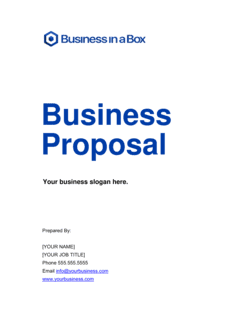
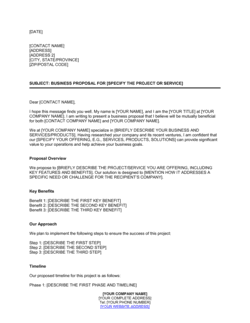
Business Proposal Template

Free Word download β€’ Edit online β€’ Save & share with Drive β€’ Export to PDF

18 pagesβ€’35–50 min to fillβ€’Difficulty: Complex
Learn more ↓
FreeBusiness Proposal Template

At a glance

What it is
A Business Proposal is a structured document a vendor, consultant, or service provider sends to a prospective client to outline a proposed solution, define the scope of work, present pricing, and make the case for why their approach is the right choice. This free Word download gives you a professionally formatted starting point you can edit online and export as PDF to send to prospects in under an hour.
When you need it
Use it when responding to a client request for proposal, pitching new business to a warm prospect, or formalizing a verbal agreement into a written scope and price before a contract is signed.
What's inside
Executive summary, client problem statement, proposed solution, detailed scope of work, project timeline and milestones, pricing and payment terms, team credentials, and next steps β€” everything a decision-maker needs to say yes.

What is a Business Proposal?

A Business Proposal is a structured document a vendor, consultant, or service provider submits to a prospective client to present a specific solution to a specific problem, define the scope and cost of the engagement, and make the case for why their approach is the right choice. Unlike a business plan β€” which describes a company's overall strategy for internal or investor audiences β€” a business proposal is always client-facing and deal-specific. It moves a prospect from interest to decision by translating a discovery conversation into a concrete, priced, time-bound offer that a decision-maker can review, approve, and act on.

Why You Need This Document

Relying on verbal agreements, email threads, or informal quotes leaves three things unresolved: what exactly is included, what it costs, and when it will be done. When those gaps are undocumented, scope expands without additional compensation, payment timelines become vague, and disputes over deliverables damage client relationships. A written business proposal closes all three gaps before work begins β€” it creates alignment on scope, anchors the client's expectations to a timeline, and establishes a payment schedule that protects your cash flow. Proposals that include a clear next step and an expiry date also move deals faster: prospects with a defined deadline make decisions; those without one defer indefinitely. This template gives you a professionally structured, client-ready format that you can customize in under an hour and send while the conversation is still fresh.

Which variant fits your situation?

If your situation is…Use this template
Responding to a formal government or enterprise RFP with specified criteriaRequest for Proposal Response
Proposing a technology implementation or software projectIT Project Proposal
Pitching a marketing campaign or creative services engagementMarketing Proposal
Proposing consulting or advisory services on a retainer basisConsulting Proposal
Bidding on a construction or renovation projectConstruction Proposal
Proposing a research study or academic partnershipResearch Proposal
Requesting internal budget approval for a new initiativeProject Proposal

Common mistakes to avoid

❌ Opening with your company history instead of the client's problem

Why it matters: Decision-makers read the first paragraph to judge whether you understand them. A company-first opening signals a generic, templated approach and triggers immediate disengagement.

Fix: Lead with a precise restatement of the client's problem or goal β€” ideally using language from their RFP or discovery call β€” before introducing your company or solution.

❌ No out-of-scope section

Why it matters: Without it, clients assume any adjacent task is included. Scope creep is the most common cause of project profitability collapse and client relationship damage.

Fix: Add an explicit out-of-scope list directly below the deliverables. Even two or three bullet points prevent the most common boundary disputes.

❌ Single lump-sum payment due at project completion

Why it matters: It increases the perceived financial risk for the client and eliminates your leverage if the client delays final approval to defer payment.

Fix: Structure payment in at least two milestones β€” an upfront deposit of 30–40% and a balance due at delivery or a defined midpoint milestone.

❌ No proposal expiry date

Why it matters: Without a deadline, proposals sit unactioned for weeks or months. When the client finally responds, your pricing and availability may no longer apply, creating an awkward renegotiation.

Fix: State a clear validity period β€” typically 14 to 30 days from the proposal date β€” and remind the client in your follow-up email.

❌ Timeline with no client dependencies noted

Why it matters: When a client misses a feedback deadline and the project falls behind, they blame the vendor. Undocumented dependencies make that dispute nearly impossible to win.

Fix: For every phase that requires client input, mark the dependency explicitly in the timeline: 'Phase 2 start date assumes receipt of brand assets by [DATE].'

❌ Credentials section placed at the front of the proposal

Why it matters: Clients skip company-first proposals because the structure signals that the vendor cares more about selling themselves than solving the problem.

Fix: Move the about-us and case studies section to after the solution and scope. Establish relevance first, then credibility.

The 10 key sections, explained

Cover page and introduction

Executive summary

Problem statement

Proposed solution

Scope of work and deliverables

Timeline and milestones

Investment and payment terms

About us and credentials

Terms, conditions, and assumptions

Next steps and call to action

How to fill it out

  1. 1

    Customize the cover page for the specific client

    Replace all placeholder fields with the client's company name, your company name, the proposal date, and a specific project title that reflects their situation.

    πŸ’‘ A proposal titled 'Website Redesign for Greenfield Medical Group' performs better than one titled 'Web Services Proposal' β€” specificity signals preparation.

  2. 2

    Write the problem statement in the client's language

    Use words and phrases from your discovery call or the client's RFP. If they said 'we're losing leads at the top of the funnel,' mirror that language in the problem statement.

    πŸ’‘ Read the problem statement aloud to a colleague who knows nothing about the client. If they can't identify what the client actually struggles with, rewrite it.

  3. 3

    Define the scope with explicit inclusions and exclusions

    List every deliverable and activity you will provide, then write a separate out-of-scope list for the adjacent work you will not do. Specify revision rounds per deliverable.

    πŸ’‘ One hour spent tightening the scope section prevents 10 hours of scope-creep disputes mid-project.

  4. 4

    Build the timeline from the delivery date backward

    Start from the client's required completion date and work backward to assign phase durations. Flag every point where the schedule depends on client input or approvals.

    πŸ’‘ Add a 10–15% buffer to each phase if this is your first project with this client β€” unknown approval cycles are the most common schedule killer.

  5. 5

    Price the engagement with a milestone-based payment schedule

    State the total fee, then break it into at least two or three payments tied to project milestones. Specify when each payment is due and your late-payment policy.

    πŸ’‘ A 30–40% upfront deposit filters out low-commitment prospects and covers your costs through discovery and early phases.

  6. 6

    Add relevant credentials and a specific case study

    Select one or two past projects most similar to this engagement. Include a one-paragraph outcome summary with a specific result β€” not just a client logo.

    πŸ’‘ A case study that names a measurable result ('reduced onboarding time by 40%') is worth more than five client logos with no context.

  7. 7

    Set a proposal expiry date and a clear next step

    Add a validity period of 14–30 days and specify exactly what the client should do to accept β€” sign, reply by email, or click a link. State what you will do within 24–48 hours of acceptance.

    πŸ’‘ Proposals without an expiry date stay in prospect inboxes indefinitely. A firm deadline creates the urgency needed to trigger a decision.

  8. 8

    Export as PDF and send with a personal cover note

    Export the completed proposal as PDF and attach it to a brief email that restates the core value in two to three sentences and names the expiry date.

    πŸ’‘ Send the proposal within 24 hours of your last client conversation. Win rates drop significantly for proposals delivered more than 48 hours after a live discussion.

Frequently asked questions

What is a business proposal?

A business proposal is a document a vendor, consultant, or service provider submits to a prospective client to outline a proposed solution, define the scope and cost of work, and make the case for why their approach is the right choice. It is distinct from a contract β€” a proposal wins the business, while a contract governs the execution. Most proposals become the basis for a subsequent service agreement or statement of work.

What is the difference between a solicited and unsolicited proposal?

A solicited proposal is submitted in response to a client's formal request β€” an RFP, RFQ, or verbal request for a quote. An unsolicited proposal is sent proactively to a prospect who has not explicitly asked for one. Solicited proposals respond to stated requirements; unsolicited proposals must first create awareness of the problem before presenting the solution. This template covers both scenarios.

How long should a business proposal be?

For most service engagements, 4–10 pages is the effective range. Short enough to be read in full by a busy decision-maker, long enough to cover scope, timeline, pricing, and credentials credibly. Government or enterprise RFP responses can run 20–50 pages when mandated by the issuing organization. Proposals for simple, transactional services β€” a one-day workshop or a small design project β€” can be as brief as 2 pages.

Is a business proposal legally binding?

Generally, no β€” a proposal is an offer, not a contract. It becomes legally binding only when both parties sign it or when a client's written acceptance is paired with a consideration (such as a deposit payment). For this reason, many businesses follow an accepted proposal with a formal service agreement or statement of work that explicitly establishes the binding terms. If you intend the signed proposal to function as a contract, include acceptance and payment terms and have both parties sign.

What is the difference between a business proposal and a business plan?

A business plan describes a company's overall strategy, market, and financial projections β€” primarily for internal planning or capital raising. A business proposal is targeted at a specific prospective client and proposes a specific solution to their specific problem at a specific price. The two documents serve entirely different audiences and purposes.

How soon after a client meeting should I send a proposal?

Within 24–48 hours of the last substantive conversation. Research consistently shows that proposal win rates decline the longer you wait β€” clients lose momentum, competing vendors move faster, and internal budgets shift. If you need more time to scope accurately, send a brief email within 24 hours confirming the timeline for your full proposal.

Should a business proposal include pricing?

Yes, in almost every case. Proposals without pricing force a follow-up conversation that delays the decision and signals uncertainty about your own value. State the total fee, the payment schedule, and what is included. If the scope is genuinely variable, provide a range with a clear explanation of what drives the final number.

What is the difference between a business proposal and a quote?

A quote is a short price statement β€” typically one page or less β€” focused on cost and delivery for a straightforward, well-defined product or service. A business proposal contextualizes the price with a problem statement, proposed solution, methodology, timeline, and credentials. Use a quote for transactional work; use a proposal when the client needs to understand why your approach is worth the investment before approving it.

How do I follow up on a submitted proposal?

Send a brief follow-up email 3–5 business days after submission if you have not heard back. Refer to a specific element in the proposal rather than a generic 'just checking in' message β€” for example, 'I wanted to confirm you received the proposal and answer any questions about the project timeline.' If the proposal has a stated expiry date, reference it in the follow-up.

How this compares to alternatives

vs Statement of Work

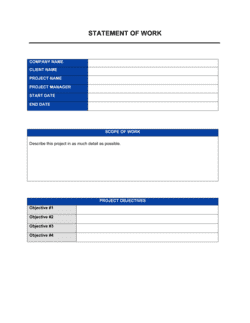
A statement of work is a binding contractual document that governs an active engagement β€” it is executed after the proposal is accepted. A business proposal is a sales document designed to win the work. The SOW picks up where the accepted proposal leaves off and adds legal enforceability, change-order procedures, and formal acceptance criteria.

vs Service Agreement

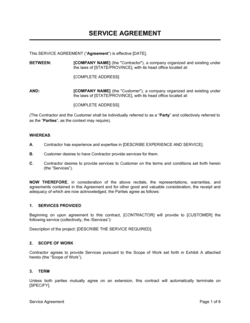
A service agreement is a master contract covering the ongoing terms of a vendor-client relationship β€” liability, IP, confidentiality, and payment β€” applicable across multiple projects. A business proposal is project-specific and non-binding until accepted. Many businesses use both: a proposal to win a specific project and a service agreement as the umbrella contract.

vs Project Proposal

A project proposal is typically an internal document submitted to secure budget or executive approval for a new initiative within an organization. A business proposal is an external sales document sent to a prospective client. The audiences, objectives, and tone are distinct β€” though both documents share a problem-solution-cost structure.

vs Business Plan

A business plan describes a company's overall strategy, market, and financial model β€” primarily for investors, lenders, or internal strategic planning. A business proposal is client-specific: it proposes a defined solution to a defined problem at a defined price. A business plan is about the company; a business proposal is about the client.

Industry-specific considerations

Professional Services

Proposals define billable scope, hourly or project-based pricing, and revision limits β€” the specificity of the scope section directly determines project profitability.

Creative and Marketing Agencies

Creative proposals must balance strategic rationale with budget clarity; including a phased scope allows clients to approve a pilot before committing to a full campaign.

Construction and Trades

Proposals itemize labor and materials separately, reference site-specific assumptions, and include a change-order clause to handle conditions discovered after work begins.

Technology and SaaS

IT and software proposals require a clear technical approach section, acceptance criteria for each deliverable, and explicit assumptions about client-side infrastructure and access.

Consulting and Advisory

Consulting proposals emphasize methodology and team credentials, use phased discovery-then-delivery structures, and typically tie pricing to defined outcomes rather than hours.

Nonprofit and Education

Grant-funded organizations often require proposals to align deliverables with program objectives and reporting requirements, with budget justification presented line by line.

Template vs pro β€” what fits your needs?

PathBest forCostTime
Use the templateFreelancers, consultants, and small businesses pitching service engagements up to $50KFree1–3 hours per proposal
Template + professional reviewAgencies or consultants responding to competitive RFPs or proposals above $50K$200–$800 for a business writer or sales consultant review1–2 days
Custom draftedEnterprise bids, government RFP responses, or complex multi-phase engagements above $250K$1,500–$5,000+ for a professional proposal writer1–3 weeks

Glossary

Scope of Work
A detailed description of the specific tasks, deliverables, and boundaries of a project β€” what is and is not included.
Executive Summary
A one-page overview at the front of the proposal that states the client's problem, your proposed solution, and the expected outcome.
RFP (Request for Proposal)
A formal document issued by a buyer inviting vendors to submit proposals against a defined set of requirements and evaluation criteria.
Deliverable
A specific, tangible output produced as part of a project β€” a report, a design file, a deployed feature, or a completed installation.
Milestone
A scheduled checkpoint in a project timeline marking the completion of a significant phase or deliverable.
Retainer
A recurring fee arrangement where a client pays a fixed monthly amount for ongoing access to services or a set number of hours.
Value Proposition
A clear statement of the specific benefit a client receives from choosing your solution over alternatives, expressed in terms of their outcome.
Terms and Conditions
The contractual rules governing the engagement β€” payment schedule, revision limits, IP ownership, and cancellation policy.
Acceptance Criteria
The measurable standards a deliverable must meet for the client to formally approve it as complete.
Assumptions
Conditions the vendor presumes to be true when scoping and pricing the project β€” violations of which may trigger a change order.

Part of your Business Operating System

This document is one of 3,000+ business & legal templates included in Business in a Box.

  • Fill-in-the-blanks β€” ready in minutes
  • 100% customizable Word document
  • Compatible with all office suites
  • Export to PDF and share electronically

Create your document in 3 simple steps.

From template to signed document β€” all inside one Business Operating System.
1
Download or open template

Access over 3,000+ business and legal templates for any business task, project or initiative.

2
Edit and fill in the blanks with AI

Customize your ready-made business document template and save it in the cloud.

3
Save, Share, Send, Sign

Share your files and folders with your team. Create a space of seamless collaboration.

Save time, save money, and create top-quality documents.

β˜…β˜…β˜…β˜…β˜…

"Fantastic value! I'm not sure how I'd do without it. It's worth its weight in gold and paid back for itself many times."

Managing Director Β· Mall Farm
Robert Whalley
Managing Director, Mall Farm Proprietary Limited
β˜…β˜…β˜…β˜…β˜…

"I have been using Business in a Box for years. It has been the most useful source of templates I have encountered. I recommend it to anyone."

Business Owner Β· 4+ years
Dr Michael John Freestone
Business Owner
β˜…β˜…β˜…β˜…β˜…

"It has been a life saver so many times I have lost count. Business in a Box has saved me so much time and as you know, time is money."

Owner Β· Upstate Web
David G. Moore Jr.
Owner, Upstate Web

Run your business with a system β€” not scattered tools

Stop downloading documents. Start operating with clarity. Business in a Box gives you the Business Operating System used by over 250,000 companies worldwide to structure, run, and grow their business.

Free Forever PlanΒ Β·Β No credit card required