- Hyperlink
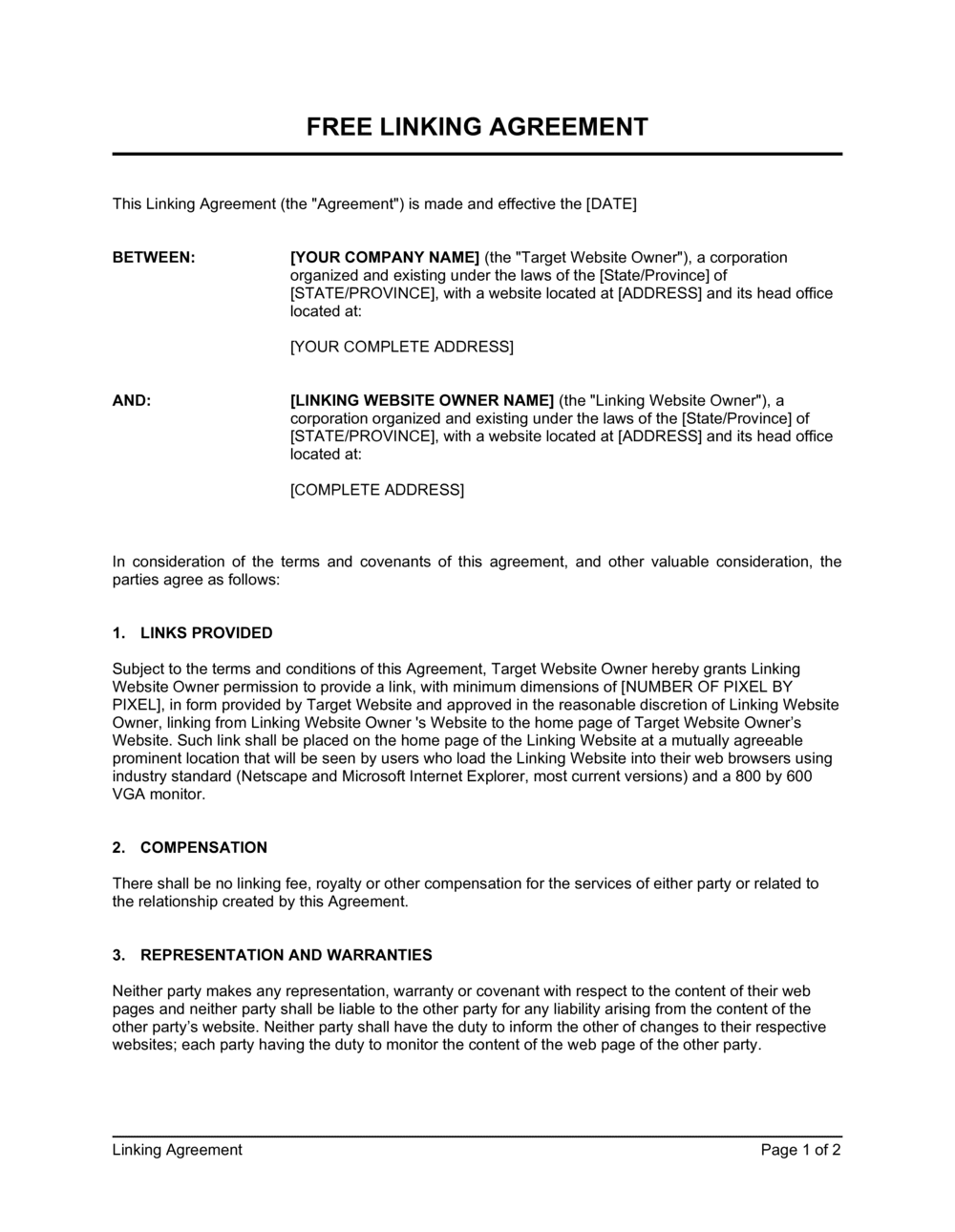
- A clickable reference in a webpage that directs a user to another webpage, file, or resource when selected.
- Reciprocal Linking
- An arrangement where two website owners each place a link on their site pointing to the other's site, typically to share traffic or improve search visibility.
- Anchor Text
- The visible, clickable words used to create a hyperlink — for example, 'learn more here' — which can affect how search engines interpret the linked page's topic.
- Linking Party
- The party who places or hosts the hyperlink on their website pointing to the other party's content.
- Linked Party
- The party whose website or content is the destination of the hyperlink placed by the linking party.
- Deep Link
- A hyperlink that points to a specific internal page of a website rather than its homepage, directing users to a precise resource.
- Nofollow Attribute
- An HTML tag added to a hyperlink instructing search engine crawlers not to pass ranking authority from the linking page to the destination page.
- Framing
- Displaying another website's content inside a bordered frame on your own site — a practice that may create false impressions of affiliation and is typically prohibited in linking agreements.
- Representations and Warranties
- Contractual statements by each party that certain facts are true — such as owning the content they are linking to or having authority to enter the agreement.
- Indemnification
- A contractual obligation by one party to compensate the other for losses, claims, or damages arising from a specified cause — here, typically a breach of the link standards or IP provisions.
- Termination for Convenience
- A clause allowing either party to end the agreement at any time without cause, typically with a defined notice period such as 30 days.