1
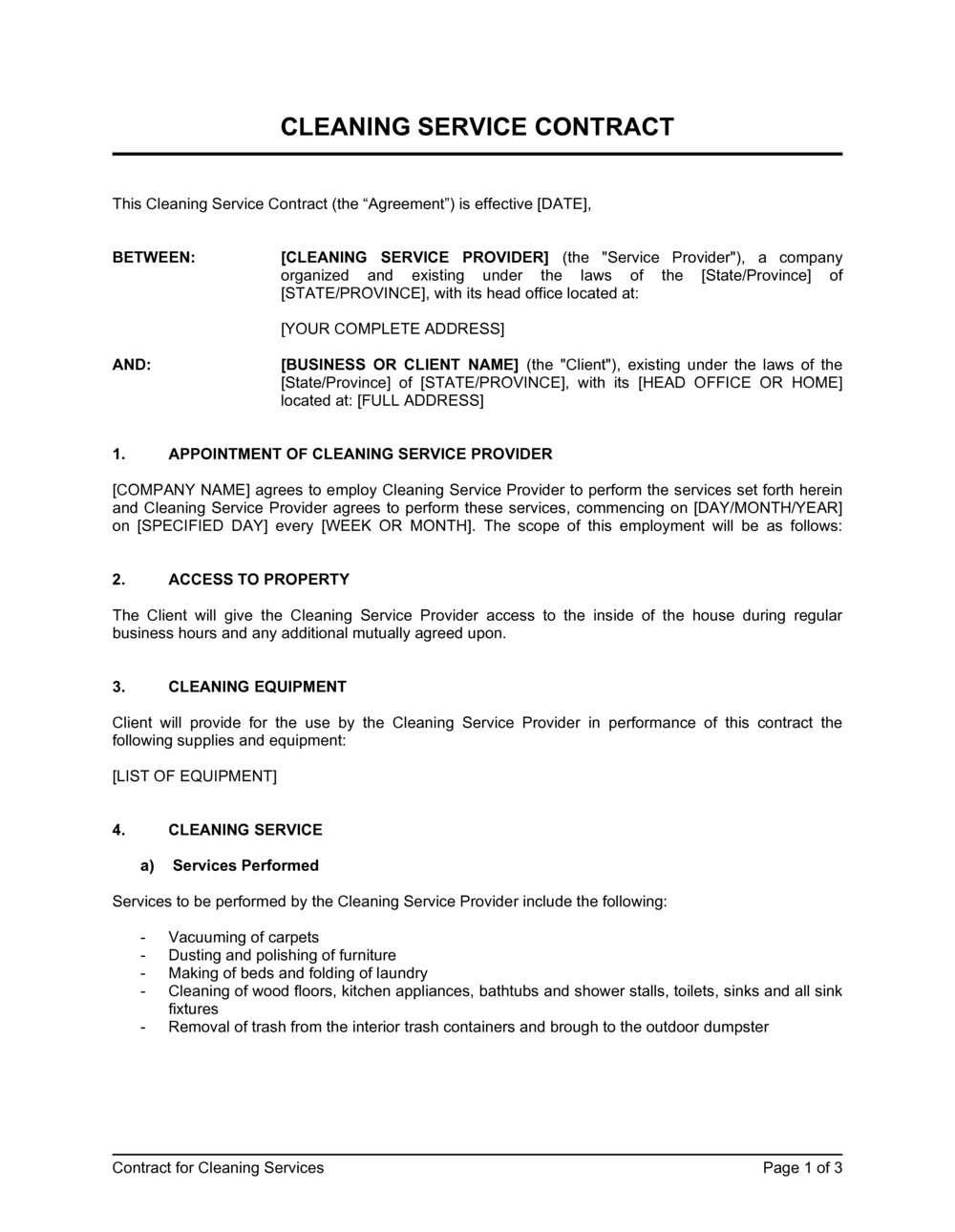
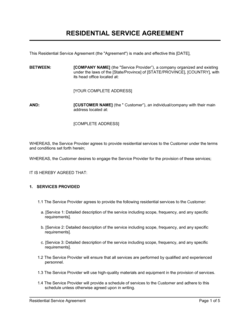
Enter the legal names of both parties and the property address
Use the cleaning company's registered legal entity name and the client's full legal name or company name. Enter the complete property address, including suite or unit number, and describe the specific areas covered.
💡 For commercial clients, confirm the legal entity name against the client's business registration — 'ABC Corp' and 'ABC Corporation' are treated as different entities in some jurisdictions.
2
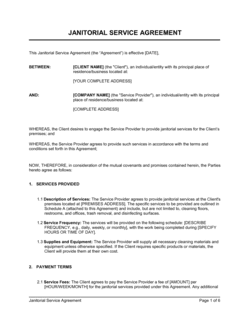
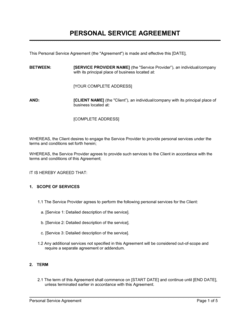
Define the scope of services with a task-level list
List every cleaning task included in each visit and add a separate exclusions list for tasks that are out of scope. Attach a Schedule A if the task list is long enough to disrupt the flow of the main contract.
💡 Walk the property with the client before finalizing the scope list — unspoken expectations about items like inside-oven cleaning or window tracks are the single most common source of cleaning disputes.
3
Set the service schedule, frequency, and cancellation window
Specify the day(s) and time window for visits, how often services recur, and the minimum notice both parties must provide to reschedule or cancel a visit without penalty.
💡 For recurring contracts, define whether a client-initiated cancellation with less than 48 hours' notice triggers a cancellation fee equal to a portion of the visit price — this is standard practice for professional cleaning companies.
4
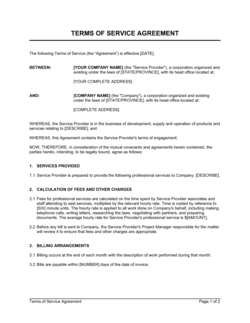
Complete the fees, payment terms, and rate-adjustment clause
Enter the per-visit or monthly fee, the due date, accepted payment methods, the late-payment fee percentage, and the annual rate-increase notice period.
💡 For commercial accounts, confirm the client's accounts-payable process and required invoice format before finalizing payment terms — mismatched terms are the leading cause of slow payment in commercial cleaning.
5
Specify supply responsibilities and property access method
State whether the service provider or client supplies cleaning products, note any client-required specialty products, and document how keys, codes, or fobs will be issued, stored, and returned.
💡 If the client provides access codes, add a clause requiring them to notify you at least 48 hours before any code change — an unreachable property on a scheduled visit is a billable no-show in most professional cleaning contracts.
6
Insert insurance minimums and request a certificate of insurance
Fill in the minimum liability coverage amount (typically $1,000,000 per occurrence for residential, $2,000,000 for commercial), confirm workers' compensation requirements, and note whether a fidelity bond is required.
💡 If you are the client, do not sign until you have received and verified an actual Certificate of Insurance — not just a verbal confirmation.
7
Set the liability cap and damage-reporting window
Enter the per-visit damage liability cap and the client's reporting window — 24 hours is the industry standard. Add a disclosure requirement for fragile or high-value items.
💡 As a cleaning company, photograph the property at the start of every new engagement. Timestamped photos are the most effective defense against disputed damage claims.
8
Sign before the first service visit
Both parties must sign the contract before any cleaning work begins. Distribute a fully executed copy to both parties and store it with the client file.
💡 Use an e-signature tool to timestamp execution — a signed contract with a verifiable timestamp eliminates 'I never agreed to that' disputes far more effectively than a paper copy exchanged by mail.