1
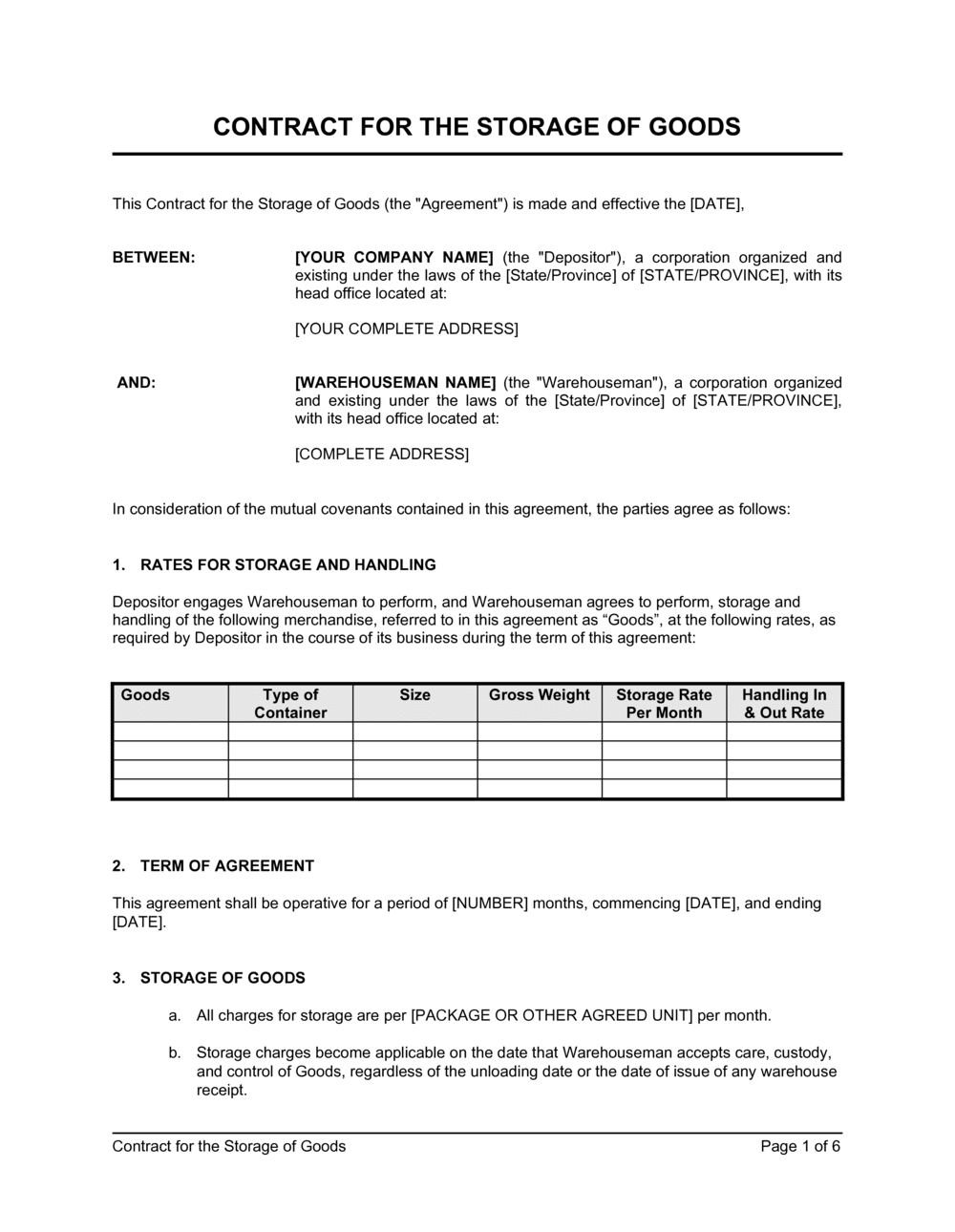
Identify both parties with their full legal names
Enter the depositor's and storer's registered legal entity names, addresses, and authorized representative names. Confirm the entity type (corporation, LLC, sole proprietor) for each party.
💡 Cross-check the storer's entity name against the facility's operating license — facilities often operate under a trade name that differs from the registered legal entity.
2
Describe the goods specifically and completely
List the type, quantity, unit of measure, and condition of the goods at the time of delivery. For high-value goods, attach a schedule with serial numbers, SKUs, or lot numbers.
💡 Photograph the goods and attach the images as an exhibit at signing — this creates an objective condition baseline that eliminates disputes over pre-existing damage.
3
Set the storage term and renewal terms
Enter the start date, the initial term duration, and whether the agreement auto-renews on a month-to-month basis. Set the notice period required to terminate or decline renewal.
💡 Month-to-month renewals give both parties flexibility but remove pricing certainty — consider a fixed initial term with a right of first refusal to renew at a stated rate.
4
Define the fee structure and payment schedule
Choose a billing unit (per pallet, per square foot, per pound, or flat monthly) and enter the rate. Set the payment due date, applicable late-payment interest rate, and the point at which access may be suspended for non-payment.
💡 Include a fee escalation clause — for example, CPI plus 2% annually — to avoid renegotiating the contract every year as costs rise.
5
Allocate insurance obligations clearly
Specify which party insures the goods, the minimum coverage amount, the policy type required (all-risk property for the depositor; bailee's liability for the storer), and the obligation to provide certificates of insurance.
💡 Require the depositor to declare the replacement value of goods in writing at the start of the agreement — this figures directly into how much insurance each party needs to carry.
6
Set the liability cap at a level both parties understand
Enter the storer's maximum liability per unit or per event. Make sure this figure is disclosed plainly to the depositor before signing, particularly if it is lower than the goods' market value.
💡 If the depositor's goods exceed the liability cap, note in the agreement that the depositor may elect to purchase additional declared-value coverage for a supplemental fee.
7
Define access procedures and lien rights
Enter business hours, the notice period required for access, and the process for emergency retrieval. Complete the lien clause with the number of days of non-payment that trigger it and the required notice period before a lien sale.
💡 Check your state or provincial warehouse lien statute before filling in these numbers — many jurisdictions mandate minimum notice periods and sale procedures that cannot be contracted around.
8
Sign before goods are delivered
Both parties must execute the agreement before or at the time of first delivery. Attach a delivery receipt or warehouse receipt signed by both parties at handover as an exhibit.
💡 Use a dated delivery receipt referencing the contract number to establish the precise moment custody transferred — this is the timestamp that governs liability from that point forward.