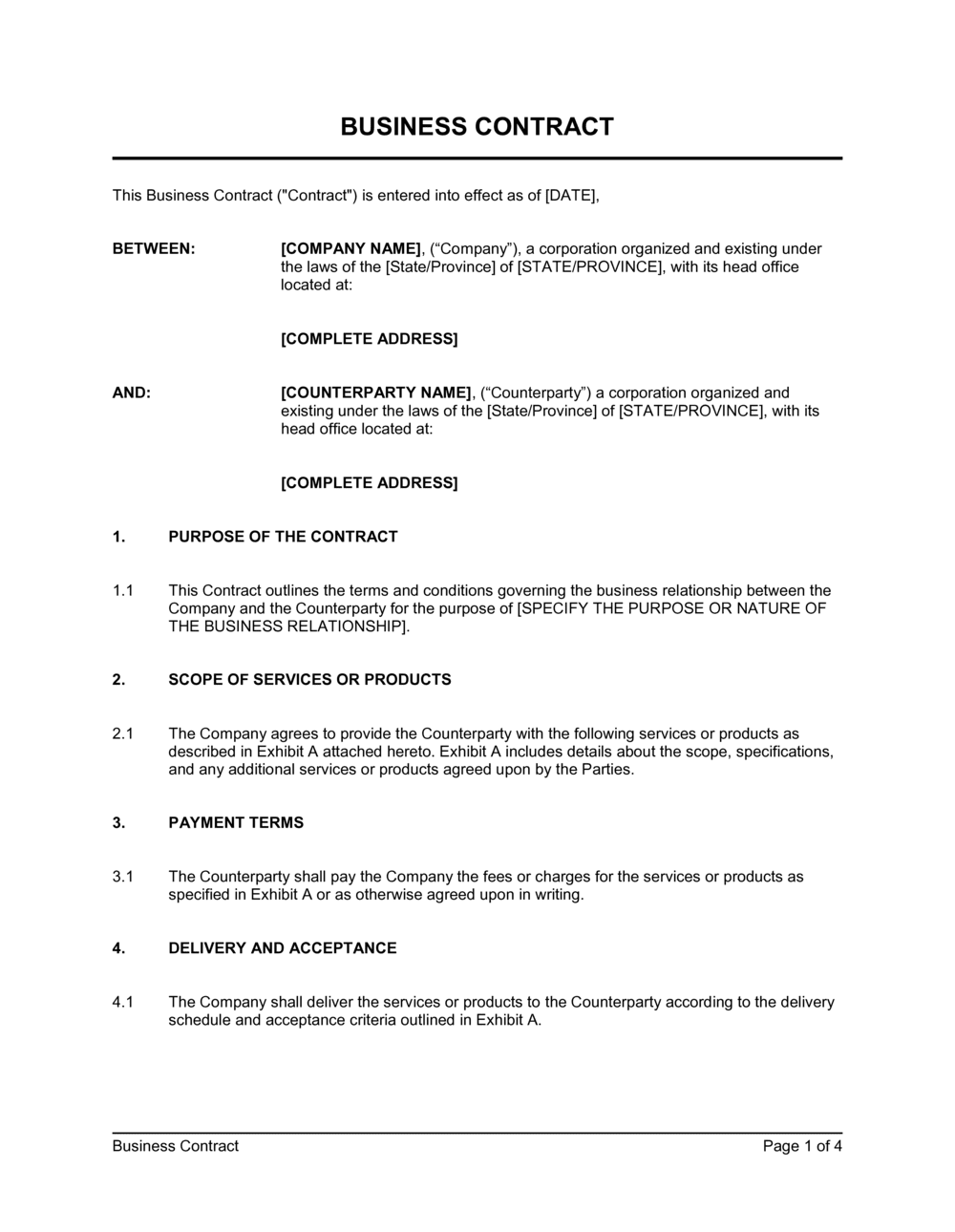
- Parties
- The businesses or legal entities entering into the contract, each identified by their full registered name and address.
- Scope of Work
- A precise description of what one party will deliver — services, goods, or outcomes — including any exclusions.
- Deliverable
- A specific, measurable output (report, product batch, software build, completed installation) that triggers acceptance and payment.
- Limitation of Liability
- A clause capping the maximum financial exposure either party can face under the contract, typically expressed as a multiple of fees paid.
- Indemnification
- An obligation by one party to compensate the other for losses, damages, or legal costs arising from a specified breach or act.
- Force Majeure
- A clause excusing non-performance caused by events outside a party's reasonable control — such as natural disasters, strikes, or government orders.
- Intellectual Property Assignment
- Language transferring ownership of work product or inventions created under the contract from the creator to the commissioning party.
- Governing Law
- The jurisdiction whose laws will be used to interpret and enforce the contract, regardless of where either party is located.
- Termination for Cause
- The right to end a contract immediately, without paying further fees or notice, when the other party commits a material breach.
- Termination for Convenience
- The right to end a contract before the term expires without a breach, typically requiring advance written notice and payment for work completed.
- Entire Agreement Clause
- A provision stating that the written contract supersedes all prior emails, proposals, and verbal understandings between the parties.
- Material Breach
- A failure to perform a contractual obligation significant enough to deprive the other party of the benefit they contracted for, triggering termination rights.