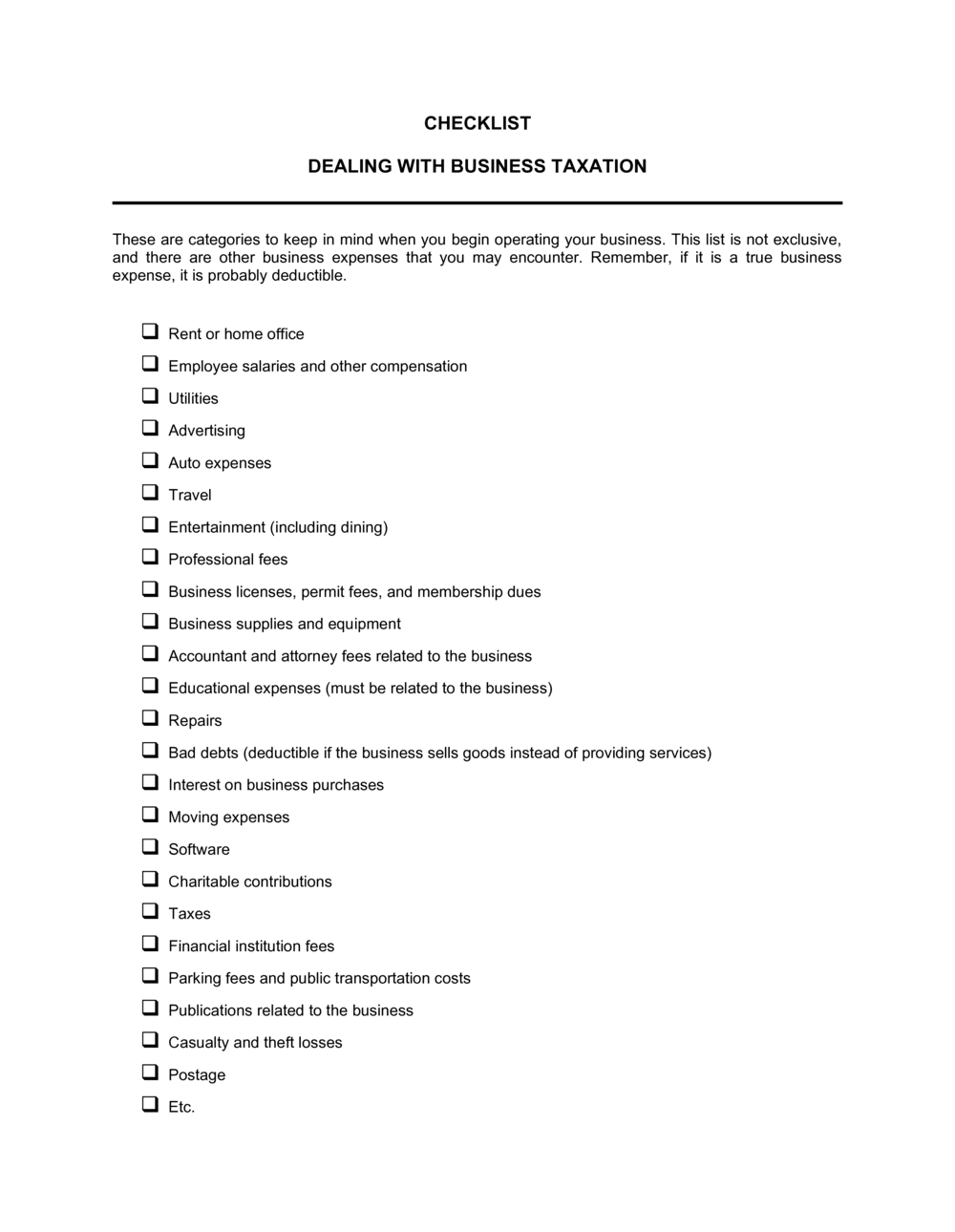
- Ordinary and Necessary Expense
- IRS standard for deductibility β the expense must be common in your industry and helpful for your business, not extravagant or personal.
- Schedule C
- The IRS form sole proprietors and single-member LLCs use to report business profit or loss and claim deductions against self-employment income.
- Section 179 Deduction
- An IRS provision allowing businesses to deduct the full purchase price of qualifying equipment or software in the year of purchase rather than depreciating it over time.
- Depreciation
- The annual deduction that spreads the cost of a long-term asset β such as equipment or a vehicle β over its useful life rather than expensing it all in one year.
- Home Office Deduction
- A deduction for the portion of your home used exclusively and regularly for business, calculated either by the simplified method ($5 per sq ft, up to 300 sq ft) or the regular method (actual expenses Γ business-use percentage).
- Self-Employment Tax
- The 15.3% federal tax covering Social Security and Medicare that self-employed individuals pay on net business income; one-half is itself deductible as a business expense.
- Substantiation
- The documentation required to support a claimed deduction β receipts, invoices, bank statements, or mileage logs β that must be retained in case of an audit.
- Qualified Business Income (QBI) Deduction
- A deduction of up to 20% of pass-through business income available to eligible sole proprietors, partnerships, and S-corps under IRC Section 199A.
- Mixed-Use Expense
- An expense that covers both business and personal use β such as a phone or vehicle β where only the business-use percentage is deductible.
- Startup Costs
- Expenses incurred before a business opens, deductible up to $5,000 in the first year with the remainder amortized over 180 months under IRS rules.