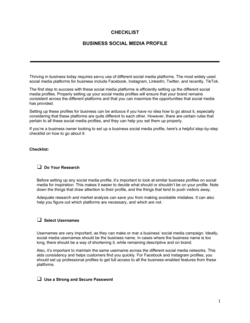
Checklist Becoming A Sustainable Business and Achieving Social Impact

Free download β€’ Use as a template β€’ Print or share

2 pagesβ€’15–25 min to useβ€’Difficulty: Standard
Learn more ↓
FreeChecklist Becoming A Sustainable Business and Achieving Social Impact Template

At a glance

What it is
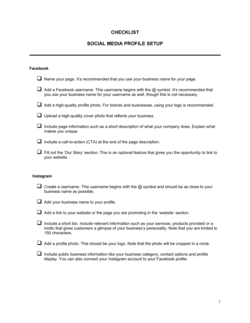
A Sustainable Business and Social Impact Checklist is a structured self-assessment form that helps founders and operators evaluate their company's progress across six dimensions: governance, environmental footprint, supply-chain ethics, community engagement, employee wellbeing, and ESG or B Corp-style criteria. This free Word download gives you a ready-to-use checklist you can edit online, assign owners to each item, and export as PDF for board or stakeholder reporting.
When you need it
Use it when preparing for a B Corp certification application, completing an annual ESG review, responding to investor or customer due-diligence questionnaires, or establishing a baseline before launching a formal sustainability program.
What's inside
Checklist sections covering governance and ethics, environmental impact, supply-chain responsibility, community and social programs, employee wellbeing and DEI, and ESG reporting readiness β€” each with yes/no/in-progress status fields and a notes column for evidence or next steps.

What is a Sustainable Business and Social Impact Checklist?

A Sustainable Business and Social Impact Checklist is a structured self-assessment form that helps founders and operators evaluate their company's current practices across six core dimensions: governance and ethics, environmental footprint, supply-chain responsibility, community engagement, employee wellbeing and DEI, and ESG reporting readiness. Each section presents specific yes/no/in-progress items β€” covering criteria drawn from B Corp certification standards, GRI reporting frameworks, and institutional investor ESG questionnaires β€” alongside a notes column for attaching evidence or assigning remediation owners. Unlike a formal report or certification application, the checklist is designed to be completed in a single working session and updated annually as the business progresses.

Why You Need This Document

Without a structured assessment, sustainability commitments exist as intentions rather than verifiable practices β€” and the gap between the two becomes visible at exactly the wrong moment: during investor due diligence, a supplier audit, or a B Corp application review. Companies that have never completed a formal gap analysis consistently underestimate how many foundational items are missing, from a documented code of conduct to pay-equity data to Scope 2 emissions figures. This checklist gives you a concrete baseline in a format that can be shared with a board, a lender, or a certification body, with supporting evidence attached. Starting from a completed checklist with honest gap analysis is faster, cheaper, and more credible than commissioning a consultant to discover the same gaps β€” and it positions your team to close them before they become obstacles to growth.

Which variant fits your situation?

If your situation is…Use this template
Preparing a formal B Corp certification applicationB Impact Assessment Preparation Checklist
Reporting ESG metrics to investors or a boardESG Report Template
Auditing a supplier's ethical and environmental practicesSupplier Code of Conduct
Setting company-wide sustainability targets and KPIsSustainability Strategic Plan
Documenting employee wellbeing and DEI initiativesDiversity and Inclusion Policy
Onboarding new hires on sustainability responsibilitiesEmployee Code of Conduct
Tracking carbon footprint reduction progress over timeCarbon Footprint Tracking Spreadsheet

Common mistakes to avoid

❌ Completing the checklist without assigned owners

Why it matters: Sections completed by committee or left to a single overloaded person contain guesses rather than verified data, undermining the assessment's credibility.

Fix: Assign one named owner per section before distributing the checklist, and confirm each owner has access to the underlying data or policies they need to answer accurately.

❌ Marking items YES without attaching evidence

Why it matters: External reviewers β€” B Lab assessors, investors, and procurement teams β€” verify claims; unsupported YES responses get downgraded to IN PROGRESS or flagged as misrepresentation.

Fix: Link or reference a specific document, date, or data source in the notes column for every YES response before submitting the checklist to any external party.

❌ Treating the checklist as a one-time exercise

Why it matters: Sustainability commitments drift without structured accountability cycles β€” a checklist completed once and filed away produces no measurable improvement in the following year.

Fix: Schedule annual reviews at the same time each year and assign a calendar reminder to the section owners at least six weeks before the review date.

❌ Skipping the product and service impact section

Why it matters: B Corp assessments and sophisticated ESG questionnaires weight product impact heavily β€” a company with strong governance but unexamined product harms scores lower than operators expect.

Fix: Complete a basic lifecycle assessment or impact mapping exercise for your core product or service before submitting any external certification or investor questionnaire.

The 8 key fields, explained

Governance and ethics

Environmental footprint

Supply chain ethics

Community engagement

Employee wellbeing and DEI

ESG reporting readiness

Product and service impact

Certifications and third-party validation

How to fill it out

  1. 1

    Identify your primary assessment purpose

    Before completing any section, note whether this checklist is for internal baseline-setting, B Corp certification preparation, investor ESG due diligence, or a supplier questionnaire. The purpose determines which sections to prioritize and how much supporting evidence to attach.

    πŸ’‘ Add a cover page stating the assessment date, the person completing it, and the intended audience β€” this turns the checklist into a referenceable document rather than a one-off exercise.

  2. 2

    Assign a section owner for each category

    Designate one person responsible for completing and maintaining each section β€” governance to legal or the CEO, environmental to operations, DEI to HR. Unowned sections consistently remain blank.

    πŸ’‘ Set a completion deadline of no more than two weeks per section. Open-ended checklists rarely get finished.

  3. 3

    Complete each field with a status and supporting note

    For every item, select YES, NO, or IN PROGRESS and add a brief note citing the specific policy, program, or data source that supports the answer. Unsupported YES responses will not hold up under external review.

    πŸ’‘ Keep supporting documents β€” policies, audit reports, certification letters β€” in a shared folder referenced by the notes column so any reviewer can verify claims in under two minutes.

  4. 4

    Score gaps and prioritize remediation

    After completing all sections, count your NO and IN PROGRESS responses. Group them by effort required β€” quick wins (under 30 days), medium-term projects (30–90 days), and longer initiatives. Assign each gap an owner and a target completion date.

    πŸ’‘ Focus first on gaps in governance and ESG reporting readiness β€” these are the highest-weight categories in both B Corp assessments and institutional investor questionnaires.

  5. 5

    Share with leadership and set a review cadence

    Export the completed checklist as PDF and present it to the leadership team or board with the gap analysis. Establish an annual review cycle β€” or semi-annual if you are actively pursuing certification.

    πŸ’‘ Attach the checklist to a board agenda item rather than circulating it cold β€” stakeholders who review it in context ask better questions and commit to remediation faster.

  6. 6

    Update and re-score after each review cycle

    Treat the checklist as a living document. At each annual review, mark previously IN PROGRESS items as YES or NO based on what was actually completed, and add new items that reflect regulatory or stakeholder changes.

    πŸ’‘ Version-control each completed checklist with a date in the filename β€” year-over-year comparisons are the single most convincing evidence of genuine progress in B Corp and ESG assessments.

Frequently asked questions

What is a sustainable business checklist?

A sustainable business checklist is a structured self-assessment form that helps a company evaluate its current practices across governance, environmental impact, supply-chain ethics, community engagement, employee wellbeing, and ESG reporting. It identifies gaps between current practice and recognized sustainability standards β€” such as B Corp certification criteria or GRI reporting requirements β€” and prioritizes the actions needed to close them.

Who should complete this checklist?

Founders and CEOs use it for baseline assessments before investor due diligence or certification applications. Operations managers use it to audit day-to-day practices. CSR and ESG leads use it to structure annual stakeholder reports. Procurement teams use adapted versions to screen suppliers. In each case, the most useful completion involves designated section owners with direct access to the relevant data.

How does this checklist relate to B Corp certification?

B Corp certification, administered by B Lab, uses the B Impact Assessment β€” a detailed scored questionnaire covering workers, community, environment, customers, and governance. This checklist covers the same six domains at a higher level, making it a practical starting point to identify gaps before investing the 10–40 hours typically required for a full B Impact Assessment. Companies that score well on this checklist generally enter the B Impact Assessment with fewer surprises.

What is the difference between ESG and CSR?

CSR (Corporate Social Responsibility) is a broad, often voluntary set of programs a company runs to benefit society β€” community donations, volunteer days, green initiatives. ESG is a structured measurement and disclosure framework investors use to assess non-financial risk and impact across environmental, social, and governance dimensions. CSR describes what a company does; ESG describes how it measures, reports, and is accountable for those activities.

How often should this checklist be completed?

An annual review aligned to the fiscal year is the standard cadence for most companies. If you are actively pursuing B Corp certification or responding to investor ESG questionnaires, a semi-annual review is more appropriate. Each completed checklist should be dated and version-controlled so year-over-year progress is documented and verifiable.

Do I need a sustainability consultant to use this checklist?

No β€” the checklist is designed for internal completion by operators without specialist sustainability knowledge. A consultant adds value when you are preparing a formal B Corp application above the 80-point threshold, when a material ESG risk requires third-party validation, or when you need to produce a public GRI-aligned sustainability report for institutional investors. For internal gap analysis and baseline setting, the template is sufficient on its own.

What certifications does this checklist help prepare for?

The checklist covers criteria relevant to B Corp certification, ISO 14001 (environmental management), GRI-aligned sustainability reporting, UN SDG alignment, Fair Trade sourcing standards, and general institutional investor ESG questionnaires. It is not a substitute for the official application process of any of these frameworks but covers enough common ground to accelerate preparation for all of them.

What happens if my company scores poorly on the checklist?

A low score identifies specific gaps β€” which is precisely the checklist's purpose. Group the gaps by effort required, assign owners, and set realistic timelines. Most companies completing a first assessment find that governance documentation and ESG reporting readiness are the fastest wins, while supply-chain ethics and product impact assessments require longer timelines. A low first score with a clear remediation plan is more credible to external reviewers than a high score with no supporting evidence.

How this compares to alternatives

vs ESG Report Template

An ESG report is a formal public disclosure document structured for investors, regulators, and stakeholders β€” typically 20–40 pages with quantified metrics and narrative. This checklist is an internal assessment tool used to identify gaps and prepare the data that feeds into an ESG report. Complete the checklist first; use the report to communicate results externally.

vs Code of Conduct

A code of conduct defines the behavioral and ethical standards all employees and partners must follow β€” it is one item in the governance section of this checklist. The checklist evaluates whether a code of conduct exists and is enforced, alongside 30+ other sustainability criteria. You need both: the code sets the standard; the checklist verifies it is being met.

vs Supplier Code of Conduct

A supplier code of conduct is the document you issue to vendors to communicate your ethical sourcing requirements. This checklist includes a supply-chain ethics section that asks whether such a code is in place and whether suppliers have been screened against it. The two documents work in tandem β€” the code of conduct is the requirement; the checklist tracks compliance.

vs Strategic Plan Template

A strategic plan sets multi-year goals, initiatives, and KPIs across all business functions β€” sustainability may be one workstream within it. This checklist focuses exclusively on sustainability and social impact domains at the operational level. Use the checklist to assess current state and identify gaps, then embed the highest-priority remediation actions as initiatives in the strategic plan.

Industry-specific considerations

Consumer goods and retail

Supply-chain ethics and packaging sustainability are highest-weight criteria; consumer-facing brands face direct reputational risk from unverified supplier claims.

Technology / SaaS

Data center energy consumption and electronic waste are key environmental factors; DEI and employee wellbeing sections carry particular weight given talent competition.

Food and beverage

Agricultural supply-chain traceability, water use, and Fair Trade or organic certification status are the primary assessment drivers.

Professional services

Governance, DEI, and community engagement dominate the assessment; environmental footprint is relatively low but pro bono and social-value work is a distinguishing factor.

Template vs pro β€” what fits your needs?

PathBest forCostTime
Use the templateInternal baseline assessments, B Corp preparation, and annual ESG gap analysis for companies without a dedicated sustainability teamFree2–4 hours to complete all sections
Template + professional reviewCompanies preparing a first public ESG disclosure or responding to a formal investor due-diligence questionnaire$500–$2,000 for a sustainability consultant review session1–2 weeks
Custom draftedCompanies pursuing B Corp certification above the 80-point threshold, GRI-aligned public reporting, or regulated ESG disclosure (e.g., EU CSRD)$3,000–$15,000 for a full sustainability advisory engagement4–12 weeks

Glossary

ESG
Environmental, Social, and Governance β€” a framework investors and stakeholders use to evaluate a company's non-financial impact and risk profile.
B Corp Certification
A third-party certification awarded by B Lab to for-profit companies that meet verified standards of social and environmental performance, accountability, and transparency.
Double Materiality
The principle that companies should assess both how sustainability issues affect their financial performance and how their operations affect society and the environment.
Scope 1, 2, and 3 Emissions
A GHG Protocol classification: Scope 1 covers direct emissions, Scope 2 covers purchased energy, and Scope 3 covers all indirect upstream and downstream emissions in the value chain.
Supply Chain Due Diligence
The process of identifying, assessing, and addressing social and environmental risks within a company's supplier network.
DEI
Diversity, Equity, and Inclusion β€” organizational commitments to building a workforce that reflects diverse backgrounds and ensures equitable opportunity and belonging.
Stakeholder Capitalism
A business model that holds companies accountable to all stakeholders β€” employees, communities, suppliers, and the environment β€” not only shareholders.
Living Wage
A wage level sufficient to cover basic needs β€” housing, food, healthcare, and transport β€” in the geographic area where the employee lives, distinct from the statutory minimum wage.
GRI Standards
The Global Reporting Initiative framework β€” the most widely used set of international standards for sustainability disclosure and reporting.
SDGs (Sustainable Development Goals)
The 17 global goals adopted by the United Nations in 2015, used by businesses to align and communicate their social and environmental impact objectives.

Part of your Business Operating System

This document is one of 3,000+ business & legal templates included in Business in a Box.

  • Fill-in-the-blanks β€” ready in minutes
  • 100% customizable Word document
  • Compatible with all office suites
  • Export to PDF and share electronically

Create your document in 3 simple steps.

From template to signed document β€” all inside one Business Operating System.
1
Download or open template

Access over 3,000+ business and legal templates for any business task, project or initiative.

2
Edit and fill in the blanks with AI

Customize your ready-made business document template and save it in the cloud.

3
Save, Share, Send, Sign

Share your files and folders with your team. Create a space of seamless collaboration.

Save time, save money, and create top-quality documents.

β˜…β˜…β˜…β˜…β˜…

"Fantastic value! I'm not sure how I'd do without it. It's worth its weight in gold and paid back for itself many times."

Managing Director Β· Mall Farm
Robert Whalley
Managing Director, Mall Farm Proprietary Limited
β˜…β˜…β˜…β˜…β˜…

"I have been using Business in a Box for years. It has been the most useful source of templates I have encountered. I recommend it to anyone."

Business Owner Β· 4+ years
Dr Michael John Freestone
Business Owner
β˜…β˜…β˜…β˜…β˜…

"It has been a life saver so many times I have lost count. Business in a Box has saved me so much time and as you know, time is money."

Owner Β· Upstate Web
David G. Moore Jr.
Owner, Upstate Web

Run your business with a system β€” not scattered tools

Stop downloading documents. Start operating with clarity. Business in a Box gives you the Business Operating System used by over 250,000 companies worldwide to structure, run, and grow their business.

Start freeΒ Β·Β No credit card required