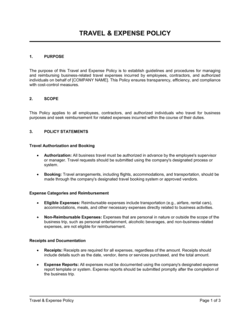
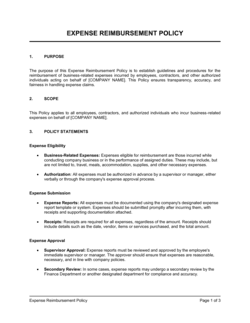
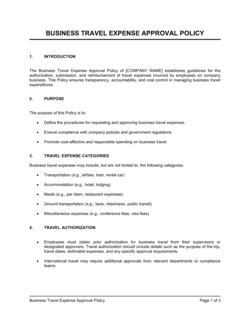
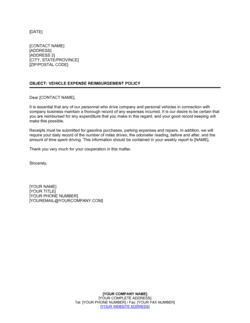
Expense Policy Template

Free Word download β€’ Edit online β€’ Save & share with Drive β€’ Export to PDF

3 pagesβ€’20–30 min to fillβ€’Difficulty: Standard
Learn more ↓
FreeExpense Policy Template

At a glance

What it is
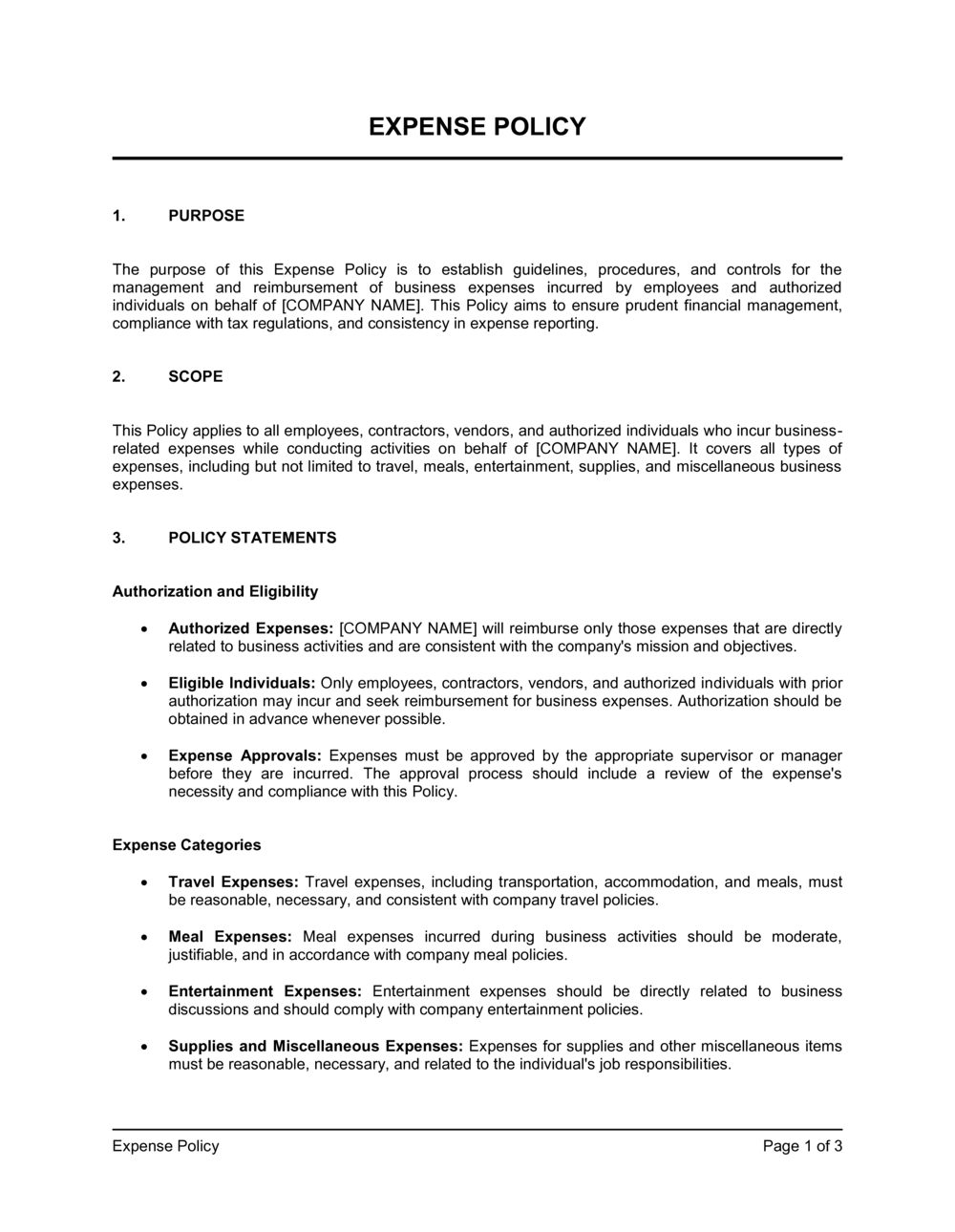
An Expense Policy is a formal internal document that defines which employee expenditures the company will reimburse, what spending limits apply, what documentation is required, and how claims are submitted and approved. This free Word download gives you a ready-to-edit framework you can tailor to your organization's size and structure, then export as PDF for distribution to your team.
When you need it
Use it when onboarding your first employees who will incur business costs, when expense claims are being submitted inconsistently, or when an audit or investor review surfaces the absence of a formal spending policy.
What's inside
Scope and eligibility, categories of reimbursable and non-reimbursable expenses, per-diem and spending limits by expense type, receipt and documentation requirements, the approval and reimbursement workflow, and consequences for non-compliance.

What is an Expense Policy?

An Expense Policy is a formal internal document that defines the rules governing employee business spending β€” which costs the company will reimburse, what limits apply to each expense category, what documentation employees must provide, and how claims move through the approval and payment process. Unlike an ad hoc reimbursement decision or an informal norm, a written expense policy creates a consistent, auditable standard that applies equally to every employee across every department. It functions as both a financial control and an employee communication tool, removing ambiguity about what is acceptable before money is spent rather than after.

Why You Need This Document

Without a written expense policy, finance teams make inconsistent reimbursement decisions that breed resentment and erode trust between employees and management. A manager who approves one employee's $200 client dinner while rejecting another's identical claim has no written standard to point to β€” and no defensible basis for the difference. The financial costs compound quickly: undocumented reimbursements can disqualify the company from IRS accountable plan treatment, turning routine expense payments into taxable wages for employees and creating payroll tax liability for the company. Auditors and investors requesting evidence of internal financial controls expect to see a written expense policy β€” its absence signals operational immaturity that raises questions about the reliability of financial statements. This template gives you a complete, ready-to-customize framework that closes these gaps in under a day.

Which variant fits your situation?

If your situation is…Use this template
Policy covering only travel and accommodation costsTravel and Expense Policy
Form employees submit with each expense claimExpense Report
Policy covering credit card usage for company purchasesCorporate Credit Card Policy
Policy covering employee per-diem meal and lodging allowancesPer Diem Policy
Comprehensive internal controls document covering spending and procurementProcurement Policy
Reimbursement request for a single one-off expenseExpense Reimbursement Form
Policy embedded in a full employee handbookEmployee Handbook

Common mistakes to avoid

❌ No explicit non-reimbursable list

Why it matters: Without named exclusions, employees submit personal charges in good faith and disputes become subjective. Finance wastes time adjudicating borderline cases with no written standard to cite.

Fix: Add a dedicated non-reimbursable section naming at least 8–10 specific items drawn from past disputes and common industry pain points.

❌ Setting a single approval threshold for all expense categories

Why it matters: A $200 blanket limit blocks routine office supply orders but allows a $199 personal dinner without scrutiny. Flat thresholds misalign approval effort with actual financial risk.

Fix: Set category-specific limits β€” for example, $50 for office supplies with no approval, $150 for meals with manager approval, and $500 for any single travel expense.

❌ Accepting credit card statements instead of itemized receipts

Why it matters: A card statement shows a total amount but not the individual items charged. Personal purchases are easily hidden within a larger business transaction and will pass casual review.

Fix: State explicitly in the documentation section that only vendor-issued itemized receipts are accepted, and that credit card statements alone are insufficient.

❌ No submission deadline

Why it matters: Without a cutoff, employees submit expenses months after the fact, distorting monthly financial statements and creating accrual mismatches that complicate audits and tax filings.

Fix: Set a 30-day submission deadline and a hard late-submission rule β€” expenses older than 60 days require finance director approval and will not be guaranteed reimbursement.

❌ Omitting a corporate credit card section

Why it matters: Employees with company cards often assume different rules apply. Without a unified policy, card holders skip receipt documentation and reconciliation deadlines that out-of-pocket claimants follow.

Fix: Add a dedicated section covering card usage, prohibited transactions, monthly reconciliation deadlines, and personal liability for unauthorized charges.

❌ Publishing the policy without employee acknowledgements

Why it matters: A policy employees have not signed cannot be enforced as a condition of employment or used as grounds for disciplinary action without documented notice.

Fix: Distribute the policy with a signature block or digital acknowledgement form, and file signed copies in each employee's HR record.

The 10 key sections, explained

Purpose and scope

Reimbursable expense categories

Non-reimbursable expenses

Spending limits and pre-approval thresholds

Receipt and documentation requirements

Submission timeline

Approval and reimbursement workflow

Corporate credit card usage

Non-compliance and consequences

Policy review and amendments

How to fill it out

  1. 1

    Define the scope and eligible employees

    Identify which workers the policy covers β€” full-time employees, part-time employees, contractors, and interns. State whether the policy applies globally or only to specific offices or regions.

    πŸ’‘ If contractors are covered, confirm in the contractor agreement that they are bound by this policy; a policy alone does not automatically bind non-employees.

  2. 2

    List reimbursable categories with specific limits

    Enumerate each expense category you will cover and set a dollar ceiling for each. Use IRS standard meal and lodging rates as a starting reference for domestic travel limits.

    πŸ’‘ Check the current IRS per-diem rates (published annually at gsa.gov) before setting meal and lodging limits β€” aligning with them simplifies tax treatment for employees.

  3. 3

    Write an explicit non-reimbursable list

    Name the specific items you will not cover. Include common edge cases β€” alcohol above a dollar threshold, personal entertainment, traffic fines, and seat upgrades β€” so there is no room for interpretation.

    πŸ’‘ Base the non-reimbursable list on your last 12 months of expense disputes. The items that caused the most arguments are exactly what to name explicitly.

  4. 4

    Set tiered pre-approval thresholds

    Create at least two tiers: a no-approval-needed floor, a manager-approval tier, and a finance-director-approval tier. Calibrate thresholds to your company's typical transaction sizes.

    πŸ’‘ For a company with average travel spend of $800–$1,200 per trip, a $500 manager-approval threshold and a $2,000 finance threshold are reasonable starting points.

  5. 5

    Specify receipt and documentation standards

    State that itemized receipts β€” not credit card statements β€” are required for all expenses above $25 (or your chosen threshold). For meals and entertainment, require attendee names, business relationship, and meeting purpose.

    πŸ’‘ Require digital receipt uploads through a named tool (Expensify, Concur, or a shared folder) rather than paper β€” this cuts reconciliation time significantly.

  6. 6

    Define the submission deadline and reimbursement timeline

    Set a hard submission deadline β€” 30 days is standard β€” and specify the payment cycle. State separately what happens to late submissions.

    πŸ’‘ Sync the expense submission deadline with your payroll cutoff date so approved claims can be included in the next pay cycle without a separate payment run.

  7. 7

    Map the approval workflow with named roles

    Write out each step in the process β€” who submits, who reviews, who approves, and who processes payment β€” with the role title, not a person's name, so the workflow survives personnel changes.

    πŸ’‘ Include a backup approver for each role to prevent reimbursement bottlenecks when a manager is on leave.

  8. 8

    Communicate the policy and collect acknowledgements

    Distribute the final policy to all in-scope employees and collect a signed acknowledgement that they have read and understood it. Store acknowledgements in the employee file.

    πŸ’‘ Add a one-page summary or FAQ to the distribution β€” a 10-page policy sent without context has a very low read rate among non-finance staff.

Frequently asked questions

What is an expense policy?

An expense policy is an internal company document that defines which employee expenditures will be reimbursed, what spending limits apply per category, what documentation must accompany each claim, and how the approval and payment process works. It creates a consistent, auditable standard for managing business spending and reduces disputes between employees and finance teams.

What should an expense policy include?

A complete expense policy covers scope and eligibility, a list of reimbursable and non-reimbursable categories with specific dollar limits, pre-approval thresholds, receipt and documentation requirements, a submission deadline, the step-by-step approval and reimbursement workflow, corporate credit card rules if applicable, and consequences for non-compliance. Missing any of these creates enforcement gaps that lead to inconsistent decisions and disputes.

How do I set spending limits in an expense policy?

Set limits at the category level rather than using a single blanket threshold. A practical starting point: align meal limits with current IRS per-diem rates for domestic travel, set hotel limits to reflect median rates in your most-visited cities, and set client entertainment limits that reflect your company's typical deal size. Review and update limits annually to reflect actual cost changes.

What is the difference between an expense policy and an expense report?

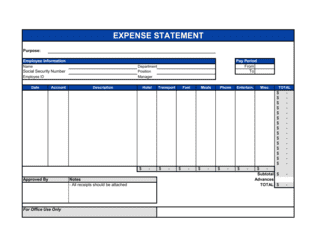
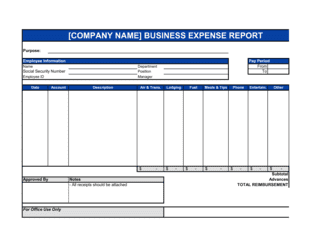
An expense policy defines the rules β€” what is reimbursable, what the limits are, and how the process works. An expense report is the form employees fill out to submit individual claims under that policy. The policy governs the relationship; the expense report is the transactional document that triggers each reimbursement.

How often should an expense policy be updated?

Review the policy at least annually, aligning the review with your fiscal year-end or the IRS's annual per-diem rate update (published each October). Trigger an unscheduled review whenever your business model changes significantly β€” adding remote workers, entering new markets, or issuing company credit cards for the first time. A policy more than two years old is almost certainly out of date on at least one dollar threshold.

What are the tax implications of an expense reimbursement policy?

Under IRS accountable plan rules, reimbursements made under a qualifying policy β€” requiring a business purpose, adequate substantiation, and return of excess advances β€” are not treated as employee income and are not subject to payroll tax. Reimbursements that do not meet these requirements must be included in the employee's taxable wages. Aligning your expense policy with accountable plan requirements reduces tax exposure for both employer and employee. Consult a tax advisor to confirm your policy qualifies.

Can a company refuse to reimburse an expense not covered by the policy?

Yes β€” a written expense policy gives the company a documented basis for declining claims that fall outside approved categories or exceed stated limits. In most jurisdictions, employees are not entitled to reimbursement for personal expenses or amounts above agreed limits. Consistent enforcement of the written policy is the key β€” selective application creates grounds for discrimination or unfair treatment claims.

How do I enforce an expense policy?

Enforcement requires three things: written acknowledgement from each employee that they have received and read the policy, consistent application by managers who approve claims, and a documented consequence for non-compliance stated in the policy itself. Spot-audit a sample of approved expense reports quarterly to catch pattern violations early. Software tools like Expensify or Concur can automate policy limit checks at submission, reducing the manual review burden.

How this compares to alternatives

vs Expense Report

An expense report is the transaction-level form an employee submits to claim reimbursement for specific costs. An expense policy is the governing document that defines what can be claimed, at what limits, and through what process. The policy sets the rules; the expense report executes a single claim under those rules. Both are needed β€” the report without the policy creates inconsistent approvals; the policy without the report creates no audit trail.

vs Employee Handbook

An employee handbook covers the full scope of workplace policies β€” code of conduct, leave, benefits, and HR procedures. An expense policy focuses exclusively on spending rules and reimbursement processes. Many companies include a summary of the expense policy in the handbook but maintain a standalone detailed document that finance can update independently without triggering a full handbook revision.

vs Procurement Policy

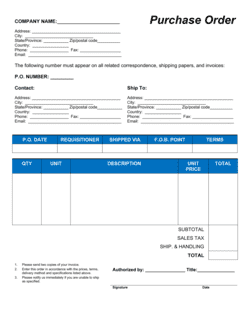
A procurement policy governs how the company purchases goods and services through formal vendor relationships β€” RFPs, purchase orders, approved vendor lists, and contract thresholds. An expense policy governs employee out-of-pocket spending and reimbursement claims. The distinction matters: procurement controls what the company buys; expense policy controls what employees spend and claim back.

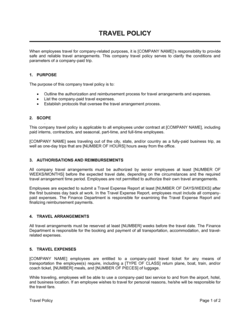
vs Travel Policy

A travel policy is a narrower document focused specifically on business travel β€” booking rules, preferred vendors, class-of-travel limits, and per-diem rates for specific cities. An expense policy covers the full range of reimbursable business costs including travel, meals, entertainment, office supplies, and equipment. Companies with significant travel spend often maintain both, with the travel policy operating as a detailed addendum to the broader expense policy.

Industry-specific considerations

Professional services

Client entertainment and travel make up the majority of reimbursable spend, requiring strict documentation of business purpose and attendee details for both tax and billing pass-through purposes.

Technology / SaaS

Remote and distributed teams require clear rules on home-office equipment purchases, co-working space memberships, and software subscriptions, which often fall outside traditional travel-focused expense frameworks.

Construction and field services

Field workers routinely purchase materials and equipment on the spot, requiring mobile receipt capture, project-code tracking for job-cost accounting, and daily per-diem rules for crews on multi-day sites.

Retail and hospitality

High employee turnover and hourly staffing mean the policy must be simple enough for non-desk workers to follow, with clear rules on uniform purchases, tool allowances, and travel to off-site training.

Template vs pro β€” what fits your needs?

PathBest forCostTime
Use the templateSmall businesses and startups establishing their first formal expense rulesFree2–4 hours
Template + professional reviewMid-size companies with corporate credit card programs, remote teams, or international travel spend$200–$500 (finance or HR advisor review)1–2 days
Custom draftedEnterprises with complex multi-jurisdiction operations, regulated industries, or ERP integration requirements$1,000–$3,000 (finance consultant or policy specialist)1–3 weeks

Glossary

Reimbursable Expense
A business cost paid out of pocket by an employee that the company agrees to repay, provided it meets the policy requirements.
Non-Reimbursable Expense
A personal or unauthorized expenditure the company explicitly will not repay, such as alcohol above a stated limit or personal entertainment.
Per Diem
A fixed daily allowance paid to employees for meals and incidental expenses while traveling on business, eliminating the need for itemized receipts below the threshold.
Spending Limit
A maximum dollar amount an employee is authorized to spend in a specific category β€” such as $75 per night for meals β€” without prior approval.
Pre-Approval
Written authorization obtained before incurring an expense, typically required for costs above a defined threshold or for non-standard categories.
Receipt
A vendor-issued document showing the date, amount, vendor name, and items purchased β€” required to substantiate a reimbursement claim.
Expense Report
A standardized form employees complete to itemize, document, and submit business expenses for reimbursement.
Approval Workflow
The defined chain of reviewers β€” typically direct manager, then finance β€” who must authorize an expense claim before payment is issued.
Substantiation
The IRS and CRA requirement that business expenses be supported by records showing the amount, time, place, business purpose, and business relationship involved.
Misappropriation
The fraudulent submission of personal expenses as business expenses, which constitutes grounds for termination and, above certain thresholds, criminal liability.

Part of your Business Operating System

This document is one of 3,000+ business & legal templates included in Business in a Box.

  • Fill-in-the-blanks β€” ready in minutes
  • 100% customizable Word document
  • Compatible with all office suites
  • Export to PDF and share electronically

Create your document in 3 simple steps.

From template to signed document β€” all inside one Business Operating System.
1
Download or open template

Access over 3,000+ business and legal templates for any business task, project or initiative.

2
Edit and fill in the blanks with AI

Customize your ready-made business document template and save it in the cloud.

3
Save, Share, Send, Sign

Share your files and folders with your team. Create a space of seamless collaboration.

Save time, save money, and create top-quality documents.

β˜…β˜…β˜…β˜…β˜…

"Fantastic value! I'm not sure how I'd do without it. It's worth its weight in gold and paid back for itself many times."

Managing Director Β· Mall Farm
Robert Whalley
Managing Director, Mall Farm Proprietary Limited
β˜…β˜…β˜…β˜…β˜…

"I have been using Business in a Box for years. It has been the most useful source of templates I have encountered. I recommend it to anyone."

Business Owner Β· 4+ years
Dr Michael John Freestone
Business Owner
β˜…β˜…β˜…β˜…β˜…

"It has been a life saver so many times I have lost count. Business in a Box has saved me so much time and as you know, time is money."

Owner Β· Upstate Web
David G. Moore Jr.
Owner, Upstate Web

Run your business with a system β€” not scattered tools

Stop downloading documents. Start operating with clarity. Business in a Box gives you the Business Operating System used by over 250,000 companies worldwide to structure, run, and grow their business.

Start freeΒ Β·Β No credit card required